Culinary Advisor
A cooking platform built around craft, culture, and the stories behind what we eat.
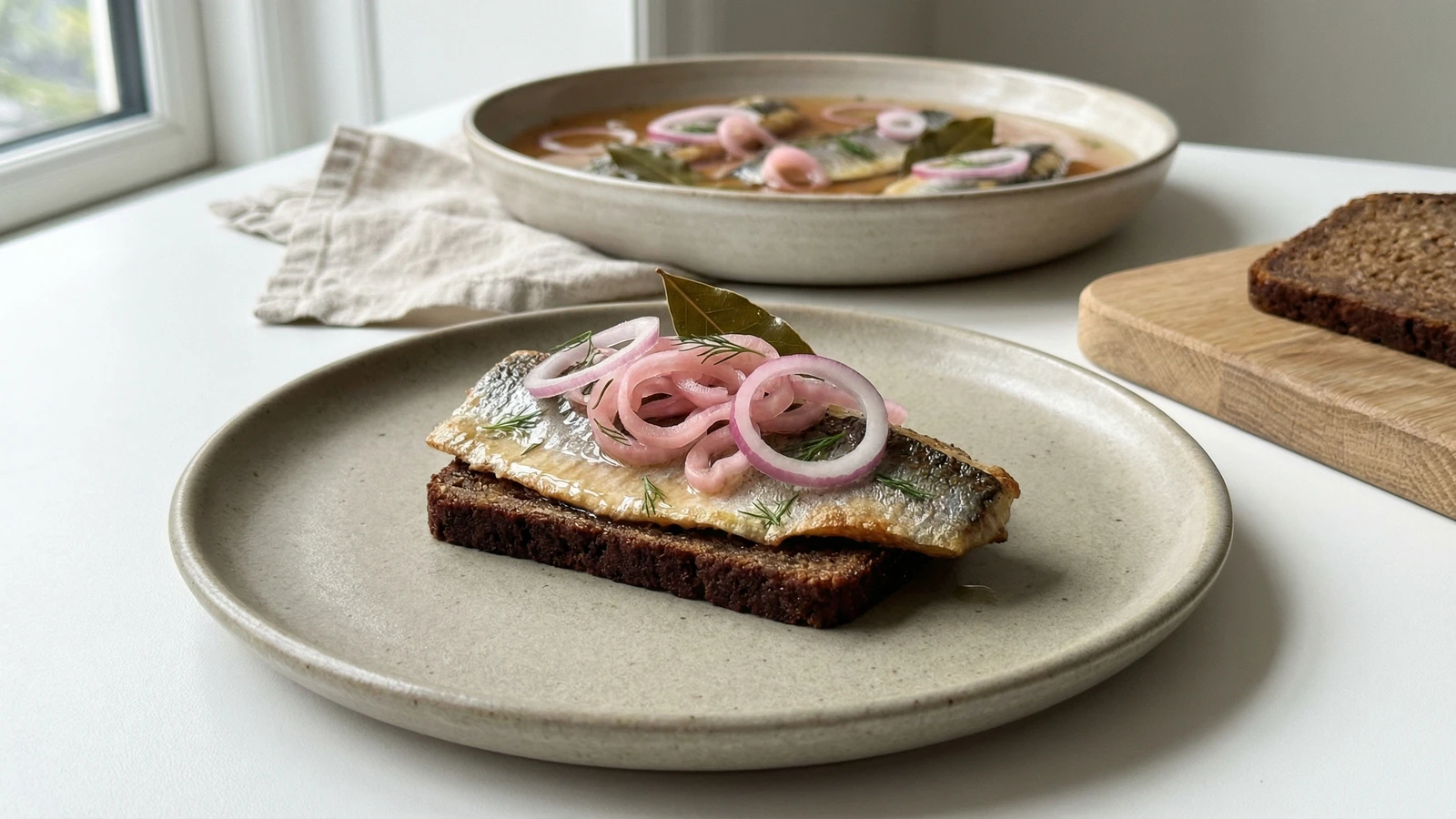
Stegte Sild i Eddike
Created by Chef Freja
Fried herring laid hot into a sweet-sour vinegar bath with bay leaf and onion, cured overnight, then served cold on dark rugbrod. The Danish Easter and Christmas lunch classic that makes itself while you sleep.
The Easter table in Denmark is a cold table. Paaskefrokost means lunch, and lunch in April means herring in every form the Danish kitchen has ever invented: pickled, curried, marinated in dill, and this one, fried first and then laid into a sweet-sour vinegar bath to rest overnight.
Stegte sild i eddike is the herring dish that breaks the rhythm. All the other sild on the table are raw and cured. This one has been through the pan first, dusted in rye flour and fried in butter until the skin crackles, then slipped while still warm into a hot brine of vinegar, sugar, bay leaf, and sliced onion. The warm fish drinks the vinegar in. By morning the flesh is firm and bright with acid, the onion has gone soft and pink, and the bay leaf has left its quiet resinous thread through everything.
You make it the day before. That's not a shortcut, it's the whole point. The joy of waiting is built into this dish. You cook in the evening, you go to bed, and in the morning the Easter table has something on it that you did not have to think about. The same is true at Christmas: the julefrokost lunch belongs to the cook who planned ahead, and this is one of the dishes that makes that planning worth it.
Pay attention to one moment in particular: when the hot fish meets the hot brine. That's where the magic sits. If either is cold, the fish stays rubbery and the flavor stops at the surface. Hot to hot, and the herring opens up and takes the vinegar all the way in. You'll know when it's right.
Herring preserved in vinegar and spices is one of the oldest techniques in the Danish kitchen, stretching back to the Middle Ages when the vast shoals in the Oresund strait made Denmark one of the richest herring fisheries in Europe. The fried version, stegte sild i eddike, is a later domestic variation, a nineteenth-century household dish that turned a simple pan-fried fish into something that could sit on the cold table alongside the older raw-cured herrings. It was codified in Froken Jensens Kogebog, the 1901 cookbook that shaped much of modern Danish home cooking, and has held its place on the paaskefrokost and julefrokost tables ever since.
The technique, the tradition, and the story behind every dish.
Discover Culinary AdvisorIngredients
fresh herring fillets
Quantity
8 (about 600g)
scaled and pin-boned
rye flour
Quantity
4 tablespoons
for dusting
fine sea salt
Quantity
to taste
black pepper
Quantity
freshly ground, to taste
unsalted butter
Quantity
30g
neutral oil
Quantity
1 tablespoon
white wine vinegar
Quantity
300ml
water
Quantity
150ml
caster sugar
Quantity
150g
bay leaves
Quantity
2
whole black peppercorns
Quantity
1 teaspoon
whole allspice berries
Quantity
1 teaspoon
red onion
Quantity
1
sliced into thin rings
carrot (optional)
Quantity
1 small
peeled and sliced into thin coins
dark rugbrod
Quantity
4 thick slices, to serve
softened butter
Quantity
to spread
red onion
Quantity
extra rings, to serve
fresh dill
Quantity
small bunch, fronds picked
| Ingredient | Quantity |
|---|---|
| fresh herring filletsscaled and pin-boned | 8 (about 600g) |
| rye flourfor dusting | 4 tablespoons |
| fine sea salt | to taste |
| black pepper | freshly ground, to taste |
| unsalted butter | 30g |
| neutral oil | 1 tablespoon |
| white wine vinegar | 300ml |
| water | 150ml |
| caster sugar | 150g |
| bay leaves | 2 |
| whole black peppercorns | 1 teaspoon |
| whole allspice berries | 1 teaspoon |
| red onionsliced into thin rings | 1 |
| carrot (optional)peeled and sliced into thin coins | 1 small |
| dark rugbrod | 4 thick slices, to serve |
| softened butter | to spread |
| red onion | extra rings, to serve |
| fresh dill | small bunch, fronds picked |
Equipment Needed
- •Heavy frying pan
- •Small saucepan for the brine
- •Wide, shallow glass or ceramic dish with a lid, around 20cm by 25cm
- •Sharp serrated knife for the rugbrod
Instructions
- 1
Make the brine
Pour the vinegar, water, and sugar into a small saucepan. Add the bay leaves, peppercorns, and allspice. Bring the whole thing to a gentle simmer over medium heat, stirring just until the sugar dissolves. Let it bubble quietly for two minutes so the spices release their oils into the liquid. Take it off the heat and leave it on the stove. It needs to stay hot. The hot brine is half the technique of this dish, and a cold brine will not give you the same result.
Taste the brine with a clean spoon. It should be sharp and sweet in equal measure, the kind of balance that makes your mouth water. Adjust with a pinch more sugar or a splash more vinegar if you need to. - 2
Prepare the herring
Pat the herring fillets completely dry with kitchen paper. Water is the enemy of crisp skin. Season both sides lightly with salt and pepper. Spread the rye flour on a plate and press each fillet into it, coating both sides, then shake off the excess. Rye flour instead of plain flour is a small detail that matters here: it browns darker, tastes nuttier, and ties the fish to the rugbrod it will eventually sit on.
- 3
Fry the herring
Heat the butter and oil together in a heavy frying pan over medium-high heat. Butter alone burns before the fish is ready. Oil alone tastes of nothing. Together they give you the golden crust and the nutty richness you want. When the butter is foaming and smells faintly of hazelnuts, lay the fillets in skin-side down. Don't crowd the pan. Work in two batches if you need to. Fry for about two minutes until the skin is deep gold and crackling, then flip and cook for one minute more. The fish should be just cooked through, firm to the touch, and the coating should be crisp.
The sound tells you everything. A steady sizzle means the pan is right. Silence means the pan is too cold. Spitting and smoke means it's too hot and the butter is burning. - 4
Layer into the brine
While the fish is still warm from the pan, lay the fillets into a clean glass or ceramic dish, arranging them snugly in a single layer or two. Scatter the sliced red onion (and carrot coins if using) between and over the fillets. Now pour the hot brine over the top, bay leaves and spices and all. The liquid should just cover the fish.This is the moment the dish is made. Hot fish meeting hot brine opens the flesh and lets the vinegar travel all the way through, not just across the surface. If either is cold, the cure stays shallow and the fish stays rubbery.
- 5
Cure overnight
Let the dish cool to room temperature on the counter, about an hour, then cover and move it to the fridge. Leave it for at least twelve hours, ideally a full day. This is the joy of waiting. You cook in the evening and in the morning something has happened that you didn't have to watch over: the flesh has firmed, the onion has gone soft and pink, and the bay leaf has left its quiet resinous thread through everything. The fish is now ready and will keep in the brine for up to four days in the fridge.
- 6
Build the smorrebrod
Spread each slice of rugbrod with a thin layer of softened butter, going right to the edges. The butter is there as a barrier so the vinegar doesn't soak the bread. Lift a herring fillet out of the brine, let it drip for a moment, and lay it across the rugbrod slightly off-centre so the dark bread still shows at the edges. Top with a small heap of the pickled onion from the dish, add a few fresh raw red onion rings for crunch, and finish with fronds of fresh dill. Serve cold, with a knife and fork. This is how we greet each other at the Easter table.
There is a grammar to smorrebrod: butter first, fish second, garnish last. The order is the architecture, and the architecture is the dish.
Chef Tips
- •The season decides the herring. The best Danish herring is caught in spring and early summer, when the fat content is at its peak. If you can find fresh spring herring at the fishmonger, this dish becomes something extraordinary. The rest of the year, good-quality fresh or well-frozen fillets work perfectly well.
- •Use a glass or ceramic dish for the curing, never metal. Vinegar reacts with metal and will leave a dull taste in the fish. A wide, shallow dish that holds the fillets in a single layer is ideal.
- •Rye flour for dusting is the small detail that sets this apart. Plain flour works if that's what you have, but rye flour browns darker, tastes nuttier, and ties the fish to the rugbrod that will carry it.
- •Pour a small shot of cold aquavit alongside if the meal calls for it. That's how this dish has been eaten at Danish lunch tables for more than a century, and there's a reason the tradition has held.
Advance Preparation
- •This is a make-ahead dish by design. Fry and brine the herring at least twelve hours before you plan to serve it, and ideally a full twenty-four.
- •Once cured, the herring keeps in its brine in the fridge for up to four days. The flavor actually deepens on day two and day three, so this is one of the first dishes to prepare when building a Danish lunch spread.
- •The brine itself can be made earlier in the day and kept warm on the back of the stove until the fish is fried. What matters is that both are hot at the moment they meet.
Frequently Asked Questions
Nutrition Information
1 serving (about 245g)
Where cooking meets culture.
Culinary mentorship, cultural storytelling, and the editorial depth that makes cooking meaningful.
Explore Culinary Advisor