Culinary Advisor
A cooking platform built around craft, culture, and the stories behind what we eat.
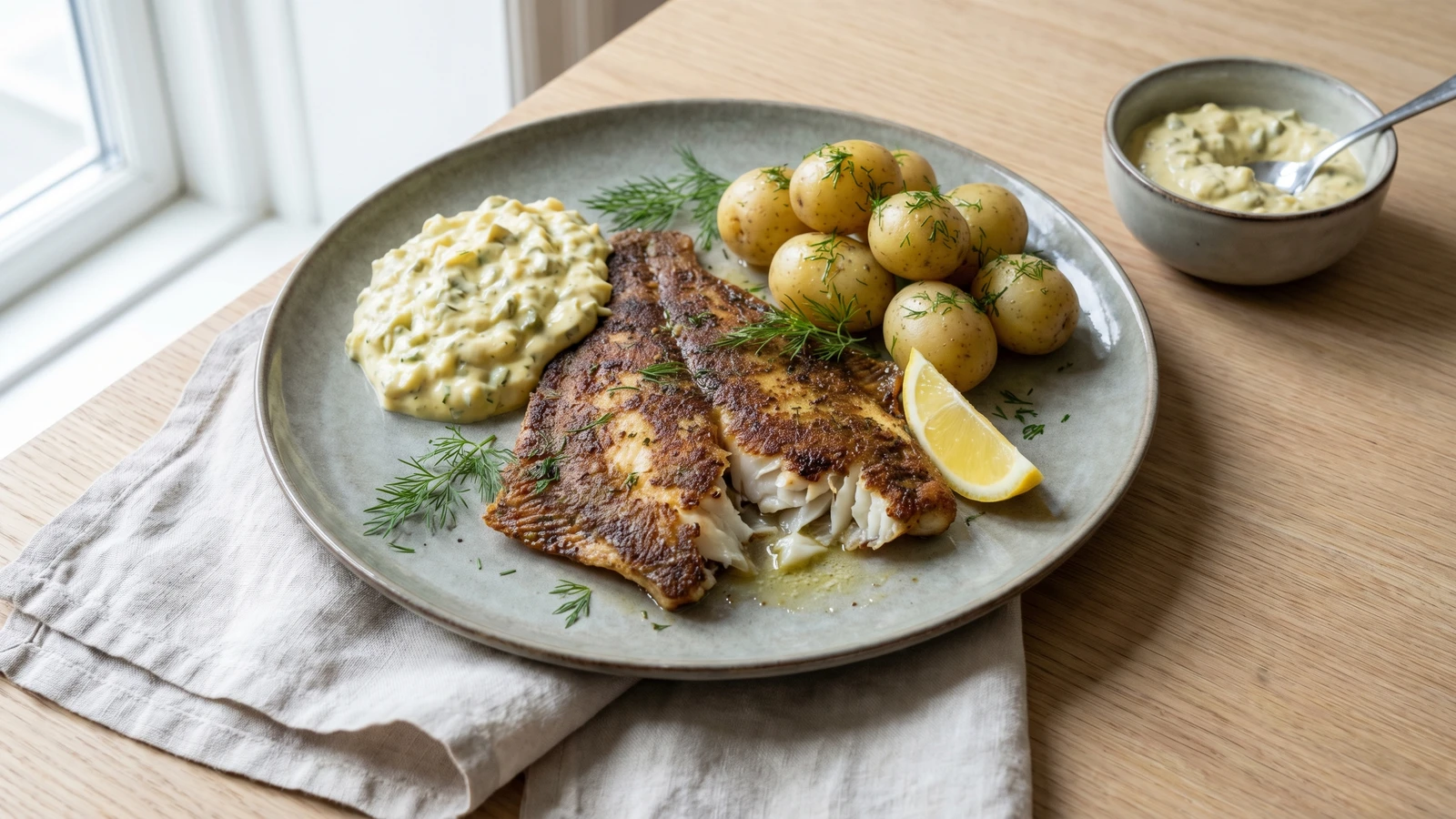
Stegt Rodspaettefilet med Remoulade og Nye Kartofler
Created by Chef Freja
Plaice fillets dredged in dark rye flour and fried golden in browned butter, with cold remoulade and the first new potatoes of June. The plate that every coastal kro in Denmark builds its summer menu around.
June in Denmark is when the nye kartofler come. You see them at the market before you taste them, small and pale and covered in thin papery skin that rubs off under your thumb. A few weeks later the rodspaette is at its peak, heavy and firm from feeding in the cold waters off the Danish coasts. When these two arrive together, you know what to cook. You don't need a recipe to tell you. The season decides.
Stegt rodspaettefilet is the dish you find at every kro along the Danish coast, those old country inns where the menu hasn't changed much in a hundred years because it doesn't need to. The plaice is dredged in dark rye flour, not wheat, because rye gives the crust a nutty, earthy character that belongs with the browned butter and the sea. It's fried fast in a hot pan until the outside is golden and the inside is barely set, still tender enough that it yields under your fork. Beside it, a cold spoonful of remoulade, the tangy, crunchy, slightly sweet Danish condiment that cuts through the richness of the butter. And a pile of nye kartofler, warm, buttered, scattered with dill.
The technique is simple, but there are two moments that matter. The first is the butter. You brown it past the foam stage until it smells like hazelnuts, and that smell is your signal, the difference between good and forgettable. The second is timing: dredge the fish in rye flour only when the butter is ready, because the flour absorbs moisture fast and a pre-dredged fillet turns soft and gummy in the pan. Watch for those two things and the rest takes care of itself. You'll know when it's right.
Rodspaette, the European plaice, has been fished from Danish waters since the Viking age, and the tradition of pan-frying flatfish in butter is documented in Danish household cookbooks from the 1800s. The use of rye flour for dredging, rather than wheat, likely developed because rye was the dominant grain in Denmark for centuries, cheaper and more available than wheat, and cooks discovered that it gave a crisper, more flavorful crust. The pairing with nye kartofler is inseparable from the calendar: new potatoes arrive in Danish soil in late May and June, exactly when the summer plaice catch begins, and the kro tradition of serving them together reflects a time when the kitchen followed the land and the sea without question.
The technique, the tradition, and the story behind every dish.
Discover Culinary AdvisorIngredients
fresh plaice fillets (rodspaettefileter)
Quantity
8 fillets, about 600g total
skin on
dark stone-ground rye flour (rugmel)
Quantity
3 tablespoons
fine sea salt
Quantity
to taste
white pepper
Quantity
freshly ground, to taste
unsalted butter (for frying)
Quantity
80g
neutral oil
Quantity
1 tablespoon
lemon
Quantity
1
cut into wedges
fresh dill sprigs
Quantity
to serve
mayonnaise
Quantity
200ml
pickled cucumber (syltede agurker)
Quantity
100g
finely chopped
capers
Quantity
2 tablespoons
finely chopped
white onion
Quantity
1 tablespoon
finely chopped
mild Danish mustard (sennep)
Quantity
1 teaspoon
curry powder
Quantity
1 teaspoon
lemon juice
Quantity
1 teaspoon
sugar
Quantity
pinch
small new potatoes (nye kartofler)
Quantity
800g
scrubbed, unpeeled
coarse sea salt
Quantity
for the boiling water
unsalted butter (for the potatoes)
Quantity
30g
fresh dill
Quantity
small bunch
chopped
flaky sea salt
Quantity
to finish
| Ingredient | Quantity |
|---|---|
| fresh plaice fillets (rodspaettefileter)skin on | 8 fillets, about 600g total |
| dark stone-ground rye flour (rugmel) | 3 tablespoons |
| fine sea salt | to taste |
| white pepper | freshly ground, to taste |
| unsalted butter (for frying) | 80g |
| neutral oil | 1 tablespoon |
| lemoncut into wedges | 1 |
| fresh dill sprigs | to serve |
| mayonnaise | 200ml |
| pickled cucumber (syltede agurker)finely chopped | 100g |
| capersfinely chopped | 2 tablespoons |
| white onionfinely chopped | 1 tablespoon |
| mild Danish mustard (sennep) | 1 teaspoon |
| curry powder | 1 teaspoon |
| lemon juice | 1 teaspoon |
| sugar | pinch |
| small new potatoes (nye kartofler)scrubbed, unpeeled | 800g |
| coarse sea salt | for the boiling water |
| unsalted butter (for the potatoes) | 30g |
| fresh dillchopped | small bunch |
| flaky sea salt | to finish |
Equipment Needed
- •Large heavy frying pan, 28cm or wider
- •Thin fish spatula or palette knife
- •Large pot for the potatoes
- •Kitchen paper for drying the fillets
Instructions
- 1
Make the remoulade
Stir together the mayonnaise, chopped pickled cucumber, capers, onion, mustard, curry powder, lemon juice, and the pinch of sugar in a bowl. Taste it. The balance should be creamy, tangy, and just barely sweet, with enough texture from the chopped vegetables that every bite has crunch. Cover and set it in the fridge. Remoulade improves with thirty minutes of sitting, time for the flavors to talk to each other.
Chop the pickled cucumber and capers fine but not to a paste. You want to feel them in the remoulade, tiny bursts of salt and acid alongside the creaminess. That texture is what makes Danish remoulade different from a flavored mayonnaise. - 2
Boil the nye kartofler
Put the scrubbed new potatoes into a large pot and cover with cold water. Add coarse sea salt generously, about a tablespoon per litre. Bring to a steady boil and cook until a thin knife slides into the center of the largest potato with no resistance at all, usually fifteen to eighteen minutes depending on their size. Drain them and let them sit in the hot pot with the lid off for a minute. The residual heat dries the surface, and a dry potato takes butter better than a wet one.
Start the potatoes in cold water, not boiling. Cold water lets the heat travel inward evenly. Potatoes dropped into boiling water cook from the outside in, leaving a chalky core while the edges begin to fall apart. - 3
Dress the potatoes
While the potatoes are still warm, toss them gently with the butter and chopped dill. The butter melts on contact and coats each potato in a thin glossy layer. Finish with a scatter of flaky sea salt. Set them aside, loosely covered. They're happy to wait while you fry the fish.
- 4
Prepare the rodspaette
Pat the plaice fillets completely dry with kitchen paper, both sides. This is the most important step before the pan. Moisture is the enemy of a crisp skin, and plaice is a wet fish. Season both sides with fine salt and white pepper. White pepper is traditional here because it disappears into the pale flesh. Black pepper would leave dark specks on a fish that's meant to look clean and golden.
If the fillets are very thin at the tail end, fold that thin tip underneath so the fillet cooks evenly. Otherwise the tail dries out and curls while the thicker part is still translucent. - 5
Dredge in rugmel
Spread the dark rye flour on a plate. Just before each fillet goes into the pan, press it into the flour on both sides and shake off the excess. Do this one at a time, not in advance. Rye flour absorbs moisture quickly, and if you dredge too early, the coating turns gummy and won't crisp. Rye flour, not wheat, is what gives stegt rodspaette its particular character: a thin, nutty, slightly earthy crust that wheat flour can't replicate. The flavor of the rye belongs with the butter and the fish. It's the same reason Danes eat their fish on rugbrod. Rye and the sea are old friends.
Use dark stone-ground rugmel if you can find it. The coarser grind gives a better texture in the pan, tiny crisp granules rather than a smooth coat. If you only have regular rye flour, it still works. Just make sure it's rye. - 6
Brown the butter
Set a large heavy frying pan over medium-high heat. Add half the butter and the oil. The oil raises the smoke point, which gives the butter time to brown without burning. Watch it. The butter will foam, then the foam will begin to subside, and the liquid underneath will shift from yellow to gold to a deep amber. When it smells like hazelnuts, when it smells warm and toasty and sweet, that's browned butter. That's where you want to be. Not before, not after. Before gives you cooked butter that tastes of nothing special. After gives you black butter that tastes of bitterness and regret.
If the butter starts to go dark too fast, pull the pan off the heat for a few seconds. You can always slow it down. You cannot undo a burnt pan. - 7
Fry the rodspaette
Lay the first batch of dredged fillets into the browned butter, skin side down. You should hear a steady, confident sizzle. If it's quiet, the pan isn't hot enough. If it screams and spits, it's too hot. Cook without moving them for two to three minutes. The edges will turn golden and the rye flour crust will set into something crisp and deeply colored. Flip carefully with a thin spatula. Cook the other side for one to two minutes, until the flesh is white and just firm. A plaice fillet is thin. It cooks fast. Overcooking is the only real danger here, and you'll know you've gone too far when the flesh feels stiff under the spatula instead of gently yielding. Transfer to a warm plate and repeat with the remaining butter and fillets.
Don't crowd the pan. Two or three fillets at a time is enough. Crowding drops the temperature and the fish steams instead of frying. Steamed fish in rye flour is a sad, soft thing. Give each fillet its space. - 8
Plate and serve
Lay the fried rodspaette fillets on warm plates, golden side up so the crust catches the light. Spoon a generous mound of remoulade to the side, not on top of the fish, because the cool remoulade against the warm crisp fillet is the whole point and you don't want it to soften the crust. Arrange the buttered nye kartofler alongside. Finish with fresh dill sprigs and a wedge of lemon. Serve immediately. This is not a dish that waits. The crust, the butter, the warmth of the fish against the cool tang of the remoulade: that contrast lasts about five minutes, and those five minutes are the entire reason you cooked it. Tak for mad.
Chef Tips
- •Ask your fishmonger for fresh plaice fillets, skin on. The skin crisps beautifully in the rye flour and adds structure to the fillet so it doesn't fall apart in the pan. If you can't find plaice, dab or sole are close cousins that cook the same way. Avoid thick white fish here. This dish needs a thin, flat fillet.
- •Use real butter, not margarine, and not clarified butter either. Clarified butter won't burn, but it also won't brown, and the browning is the whole flavor foundation. The milk solids in whole butter are what create that hazelnut aroma when they toast.
- •Remoulade is better made a few hours ahead, or even the night before. The flavors settle and the texture softens. A just-made remoulade tastes sharp and separate. A rested one tastes like itself.
- •Drink a cold Danish pilsner with this, or a glass of dry white wine. Nothing heavy. The fish is delicate, and you want the drink to stay out of its way.
Advance Preparation
- •The remoulade can and should be made up to a day ahead. Keep it covered in the fridge.
- •The nye kartofler can be boiled and buttered up to thirty minutes before serving and kept loosely covered. They hold well at room temperature.
- •The fish must be fried just before serving. It does not wait. Plan the frying as your last step, with the plates warm and the table set.
Frequently Asked Questions
Nutrition Information
1 serving (about 430g)
Where cooking meets culture.
Culinary mentorship, cultural storytelling, and the editorial depth that makes cooking meaningful.
Explore Culinary Advisor