Culinary Advisor
A cooking platform built around craft, culture, and the stories behind what we eat.
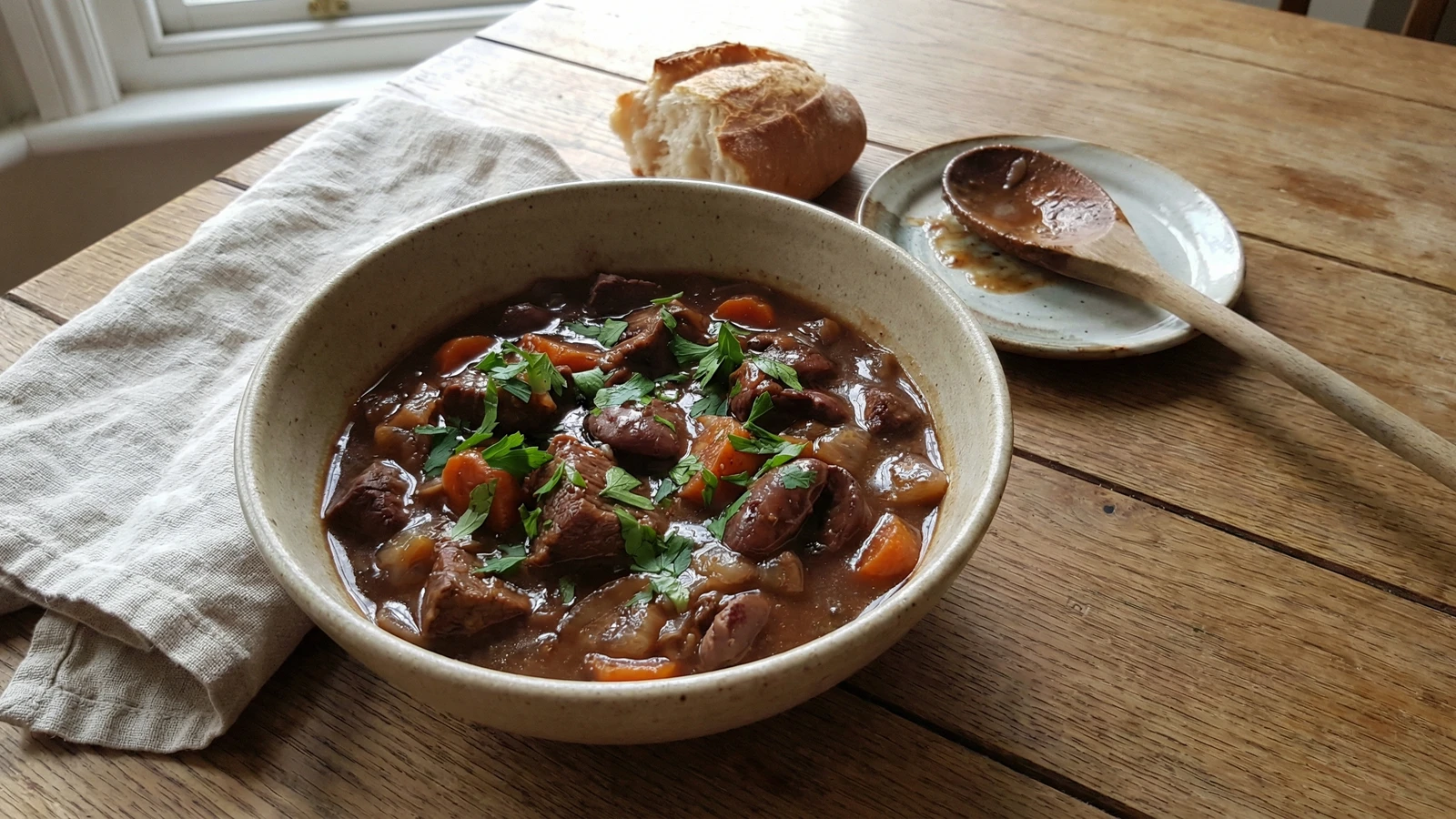
Steak and Kidney Stew
Created by Chef Thomas
A dark, savoury stew of braising steak and ox kidney, slow-cooked in ale and Worcestershire until the meat falls apart and the gravy thickens into something that belongs on the coldest night of the year.
January rain on the kitchen window and something slow on the hob. That is the setting for this stew. It asks for a grey afternoon, the heating on, nowhere to be. The kind of day when the best plan you can make is no plan at all.
Steak and kidney. It sounds old-fashioned, and it is. But old-fashioned is not a criticism in my kitchen. This has all the depth and dark savour of the pie, without the pastry standing between you and what matters. The braising steak goes tender and giving after two hours at a murmur. The kidney, which people are nervous of, loses its edge and becomes rich and almost sweet, adding a mineral depth that nothing else quite replicates. The gravy is the thing, though. Dark ale, a good splash of Worcestershire, the sticky residue from browning the meat: it builds into something that smells like the kind of evening you want to sit down in and not get up from.
I make this when the cold has properly arrived and the garden has nothing left to offer. The market decides the rest: a piece of braising steak from the butcher who knows what I want before I ask, some kidney wrapped in paper, a few carrots still caked in mud. I wrote it down in the notebook last February: steak, kidney, dark beer, rain. That was the whole entry. It was enough.
A recipe is a conversation, not a contract. The quantities here are a guide. More onion won't hurt. Less kidney is fine if you're feeding someone who needs convincing. Trust your nose. It knows before you do. When the kitchen smells like everything is where it should be, dinner is ready.
The technique, the tradition, and the story behind every dish.
Discover Culinary AdvisorIngredients
braising steak
Quantity
600g
cut into generous chunks
ox kidney
Quantity
200g
trimmed of core and sinew, diced
plain flour
Quantity
2 tablespoons
seasoned with salt and pepper
beef dripping or vegetable oil
Quantity
2 tablespoons
onions
Quantity
2
roughly chopped
carrots
Quantity
2
peeled and cut into thick coins
celery
Quantity
2 sticks
sliced
garlic
Quantity
2 cloves
crushed
tomato purée
Quantity
1 tablespoon
good beef stock
Quantity
500ml
dark ale or stout
Quantity
200ml
Worcestershire sauce
Quantity
2 tablespoons
bay leaves
Quantity
2
thyme
Quantity
a few sprigs
fine sea salt
Quantity
to taste
black pepper
Quantity
to taste
flat-leaf parsley (optional)
Quantity
a handful
roughly chopped
| Ingredient | Quantity |
|---|---|
| braising steakcut into generous chunks | 600g |
| ox kidneytrimmed of core and sinew, diced | 200g |
| plain flourseasoned with salt and pepper | 2 tablespoons |
| beef dripping or vegetable oil | 2 tablespoons |
| onionsroughly chopped | 2 |
| carrotspeeled and cut into thick coins | 2 |
| celerysliced | 2 sticks |
| garliccrushed | 2 cloves |
| tomato purée | 1 tablespoon |
| good beef stock | 500ml |
| dark ale or stout | 200ml |
| Worcestershire sauce | 2 tablespoons |
| bay leaves | 2 |
| thyme | a few sprigs |
| fine sea salt | to taste |
| black pepper | to taste |
| flat-leaf parsley (optional)roughly chopped | a handful |
Equipment Needed
- •Heavy-bottomed casserole dish or Dutch oven with lid
- •Wooden spoon
- •Sharp knife for trimming kidney
Instructions
- 1
Brown the meat
Toss the steak and kidney in the seasoned flour, shaking off the excess. Get a heavy casserole dish properly hot with the dripping or oil. You want a haze of heat, not a gentle warmth. Brown the meat in batches, giving each piece space and time to build a dark crust on all sides. Don't crowd the pan. Crowded meat steams, and steamed meat is grey and sad. This is where the flavour starts. Set the browned meat aside.
If the kidney smells strong when you unwrap it, that's fine. Soak it in milk for half an hour if it bothers you, but a good ox kidney from a decent butcher won't need it. The flavour mellows completely in the long cooking. - 2
Soften the vegetables
Turn the heat down. Add the onions, carrots, and celery to the same pan with its sticky, dark residue. Stir them through the fat and let them soften for eight to ten minutes, until the onions have gone translucent and everything has picked up the colour from the bottom of the pan. Add the garlic and the tomato purée, stir for a minute until the purée darkens and smells sweet rather than sharp.
- 3
Build the gravy
Pour in the ale. It will hiss and bubble. Let it reduce by half, scraping the bottom of the pan with a wooden spoon to lift all the stuck-on bits. That dark crust is flavour. Every scrap matters. Add the stock, the Worcestershire sauce, the bay leaves, and the thyme. Return the meat to the pan. The liquid should nearly cover everything. If it doesn't, add a splash more stock. Bring to a gentle simmer.
A dark ale or stout gives depth. Something bitter and malty, not sweet. If you don't keep beer in the house, use all stock instead and add an extra splash of Worcestershire. It won't be the same, but it will still be good. - 4
Slow braise
Put the lid on, slightly ajar so a thin ribbon of steam escapes, and let it cook at the gentlest simmer you can manage. The surface should barely tremble. Two hours, maybe a little longer. Check it now and then, not because it needs you, but because lifting the lid and breathing in is one of the better things about cooking this. If the liquid drops too low, add a splash of stock. If it looks thin, push the lid back a little further.
This can also go in the oven at 150C/130C fan if you prefer. Some stews behave better with heat coming from all sides rather than just below. Either way works. - 5
Season and serve
The stew is ready when the meat yields to a fork without resistance and the gravy has thickened to something dark and glossy that coats the back of a spoon. Fish out the bay leaves and the thyme stalks. Taste it. Season again. It will almost certainly need more salt than you think. Ladle it into warm bowls, scatter the parsley over the top if you've got it, and put it on the table with bread or mash or nothing at all except a spoon.
Chef Tips
- •Ask your butcher to prepare the kidney for you. A good butcher will trim the core and sinew, dice it to whatever size you like, and wrap it in paper. If you're doing it yourself, the white fatty core pulls away easily with a sharp knife. Don't be squeamish about it. The reward is worth the five minutes.
- •Brown the meat in small batches and give it time. This step is not optional. The dark crust on each piece is where most of the stew's flavour lives. Rush it and you'll spend two hours simmering something that never quite arrives.
- •This stew improves overnight. If you can make it a day ahead and reheat it, the flavour deepens and the gravy thickens further. It's one of those rare dishes that is genuinely better the second time.
- •Serve it simply. Mashed potatoes are the classic, and for good reason: they catch the gravy. But a good piece of bread, something with a thick crust you can tear and drag through the bowl, does the same job with less washing up.
Advance Preparation
- •The stew can be made up to two days ahead and refrigerated. Reheat gently on the hob, adding a splash of stock if the gravy has thickened too much. It genuinely improves with a night in the fridge.
- •Freezes well for up to three months. Defrost overnight in the fridge and reheat slowly. The texture of the meat holds up better than you'd expect.
Frequently Asked Questions
Nutrition Information
1 serving (about 450g)
Where cooking meets culture.
Culinary mentorship, cultural storytelling, and the editorial depth that makes cooking meaningful.
Explore Culinary Advisor