Culinary Advisor
A cooking platform built around craft, culture, and the stories behind what we eat.
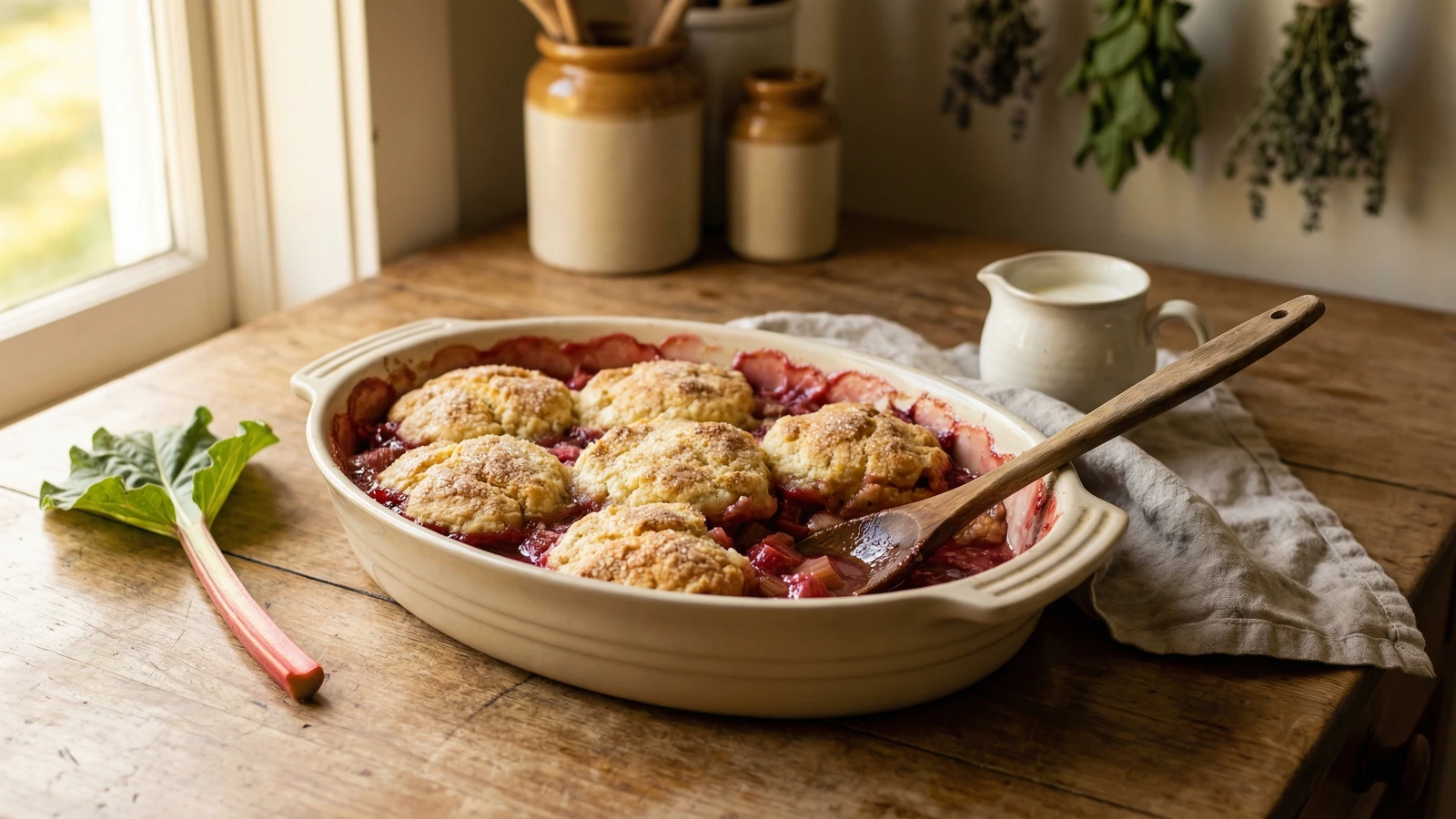
Spring Rhubarb Cobbler with Buttermilk Biscuits
Created by Chef Ally
The first fruit of spring, sliced and sugared until its ruby juices run, then crowned with tender buttermilk biscuits that bake golden while the filling bubbles beneath. This is what April tastes like.
Rhubarb announces spring before almost anything else. While the rest of the garden still sleeps, those pink and crimson stalks push through cold soil, tart and alive and impossible to ignore. At the market, they arrive in bundles with leaves still attached, and you should buy them that way. The leaves are a sign of freshness, even though you will cut them off and compost them.
A cobbler asks almost nothing of the cook. You slice the rhubarb, toss it with sugar to draw out its juices, then drop buttermilk biscuit dough on top and let the oven do the rest. The fruit softens and thickens into something between a sauce and a jam. The biscuits bake golden on top while their bottoms absorb just enough of that ruby liquid to turn slightly jammy. This is the whole point.
I do not add strawberries. The pairing is common, but it masks what makes rhubarb remarkable: that pucker, that brightness, that insistence on being itself. Let things taste of what they are. A drizzle of cold cream at the table is all it needs.
The technique, the tradition, and the story behind every dish.
Discover Culinary AdvisorIngredients
fresh rhubarb stalks
Quantity
2 pounds
granulated sugar (for filling)
Quantity
1 cup (200g)
cornstarch
Quantity
2 tablespoons
vanilla extract (for filling)
Quantity
1 teaspoon
orange
Quantity
zest of 1 small
fine sea salt (for filling)
Quantity
pinch
all-purpose flour
Quantity
2 cups (250g)
granulated sugar (for biscuits)
Quantity
1/3 cup (65g), plus 2 tablespoons for topping
baking powder
Quantity
1 tablespoon
baking soda
Quantity
1/2 teaspoon
fine sea salt (for biscuits)
Quantity
3/4 teaspoon
cold unsalted butter
Quantity
6 tablespoons (85g)
cut into small pieces
cold buttermilk
Quantity
3/4 cup
large egg
Quantity
1
vanilla extract (for biscuits)
Quantity
1 teaspoon
heavy cream or cold pouring cream
Quantity
for serving
| Ingredient | Quantity |
|---|---|
| fresh rhubarb stalks | 2 pounds |
| granulated sugar (for filling) | 1 cup (200g) |
| cornstarch | 2 tablespoons |
| vanilla extract (for filling) | 1 teaspoon |
| orange | zest of 1 small |
| fine sea salt (for filling) | pinch |
| all-purpose flour | 2 cups (250g) |
| granulated sugar (for biscuits) | 1/3 cup (65g), plus 2 tablespoons for topping |
| baking powder | 1 tablespoon |
| baking soda | 1/2 teaspoon |
| fine sea salt (for biscuits) | 3/4 teaspoon |
| cold unsalted buttercut into small pieces | 6 tablespoons (85g) |
| cold buttermilk | 3/4 cup |
| large egg | 1 |
| vanilla extract (for biscuits) | 1 teaspoon |
| heavy cream or cold pouring cream | for serving |
Equipment Needed
- •9 by 13 inch baking dish or 10-inch cast iron skillet
- •Rimmed baking sheet
- •Pastry cutter or your fingertips
Instructions
- 1
Select and prepare the rhubarb
Look for stalks that are firm and crisp, snapping cleanly when bent. Color varies from pale green to deep crimson depending on the variety, and both are good. Trim away any leaves (they are not edible) and the very bottom of each stalk. Wash well and slice crosswise into pieces about one inch thick. Uniformity matters here so everything cooks at the same rate.
Thinner stalks tend to be more tender. If yours are thick as your thumb, cut them in half lengthwise first. - 2
Macerate the fruit
Place the sliced rhubarb in a large bowl. Add the cup of sugar, cornstarch, vanilla, orange zest, and a pinch of salt. Toss everything together with your hands until the rhubarb is evenly coated. Let it sit for fifteen to twenty minutes while you make the biscuit dough. The sugar will draw out the juices and you will see a pink syrup pooling at the bottom. This is what you want.
- 3
Make the biscuit dough
Whisk together the flour, one-third cup sugar, baking powder, baking soda, and salt in a large bowl. Add the cold butter pieces and work them into the flour using your fingertips or a pastry cutter until the mixture resembles coarse crumbs with some pea-sized butter pieces remaining. These bits of butter create flaky layers.
Cold butter is essential. If your kitchen is warm, put the cut butter in the freezer for ten minutes before starting. - 4
Add the wet ingredients
In a small bowl or measuring cup, whisk together the buttermilk, egg, and vanilla. Pour this into the flour mixture and stir with a fork just until a shaggy dough forms. Stop when you no longer see dry flour. The dough should be sticky and rough, not smooth. Overworking makes tough biscuits.
- 5
Assemble the cobbler
Heat your oven to 375 degrees. Transfer the macerated rhubarb and all its juices to a 9 by 13 inch baking dish or a 10-inch cast iron skillet. Spread it into an even layer. Drop the biscuit dough in eight generous spoonfuls over the fruit, spacing them roughly evenly. They will spread as they bake, so leave room between them. Sprinkle the remaining two tablespoons of sugar over the biscuit tops.
- 6
Bake until bubbling and golden
Place the dish on a rimmed baking sheet to catch any drips. Bake for 45 to 50 minutes, until the biscuits are deeply golden on top and the rhubarb filling is bubbling visibly around the edges. The juices should look thick and syrupy, not thin and watery. If the biscuits brown too quickly, tent loosely with foil for the last ten minutes.
- 7
Rest and serve warm
Let the cobbler cool for at least fifteen minutes before serving. This is difficult but necessary. The filling needs time to set slightly, and the biscuits firm up as they cool. Serve warm, not hot, with cold cream poured generously over each portion. The contrast of warm fruit and cold cream is the whole experience.
If you have access to raw cream from a local dairy, this is the moment for it. The richness is unmatched.
Chef Tips
- •Buy rhubarb with leaves attached when possible. They tell you the stalks were cut recently. Wilted leaves mean the rhubarb has been sitting too long.
- •The amount of sugar can be adjusted based on your rhubarb. Taste a raw piece. If it makes you wince, use the full cup. If it is only mildly tart, you can reduce by a few tablespoons.
- •A scoop of good vanilla ice cream works if you do not have cream, though I prefer the simplicity of cold cream poured from a pitcher at the table.
- •Leftover cobbler keeps, covered, at room temperature for a day. Reheat in a 350 degree oven for fifteen minutes to revive the biscuits.
Advance Preparation
- •The biscuit dough can be made and refrigerated for up to two hours before assembly. Cold dough actually bakes better.
- •The rhubarb can be sliced and held in a covered bowl in the refrigerator for one day. Toss with sugar just before baking.
- •Cobbler is best the day it is made. The biscuits soften overnight and lose their texture.
Frequently Asked Questions
Nutrition Information
1 serving (about 185g)
Where cooking meets culture.
Culinary mentorship, cultural storytelling, and the editorial depth that makes cooking meaningful.
Explore Culinary Advisor