Culinary Advisor
A cooking platform built around craft, culture, and the stories behind what we eat.
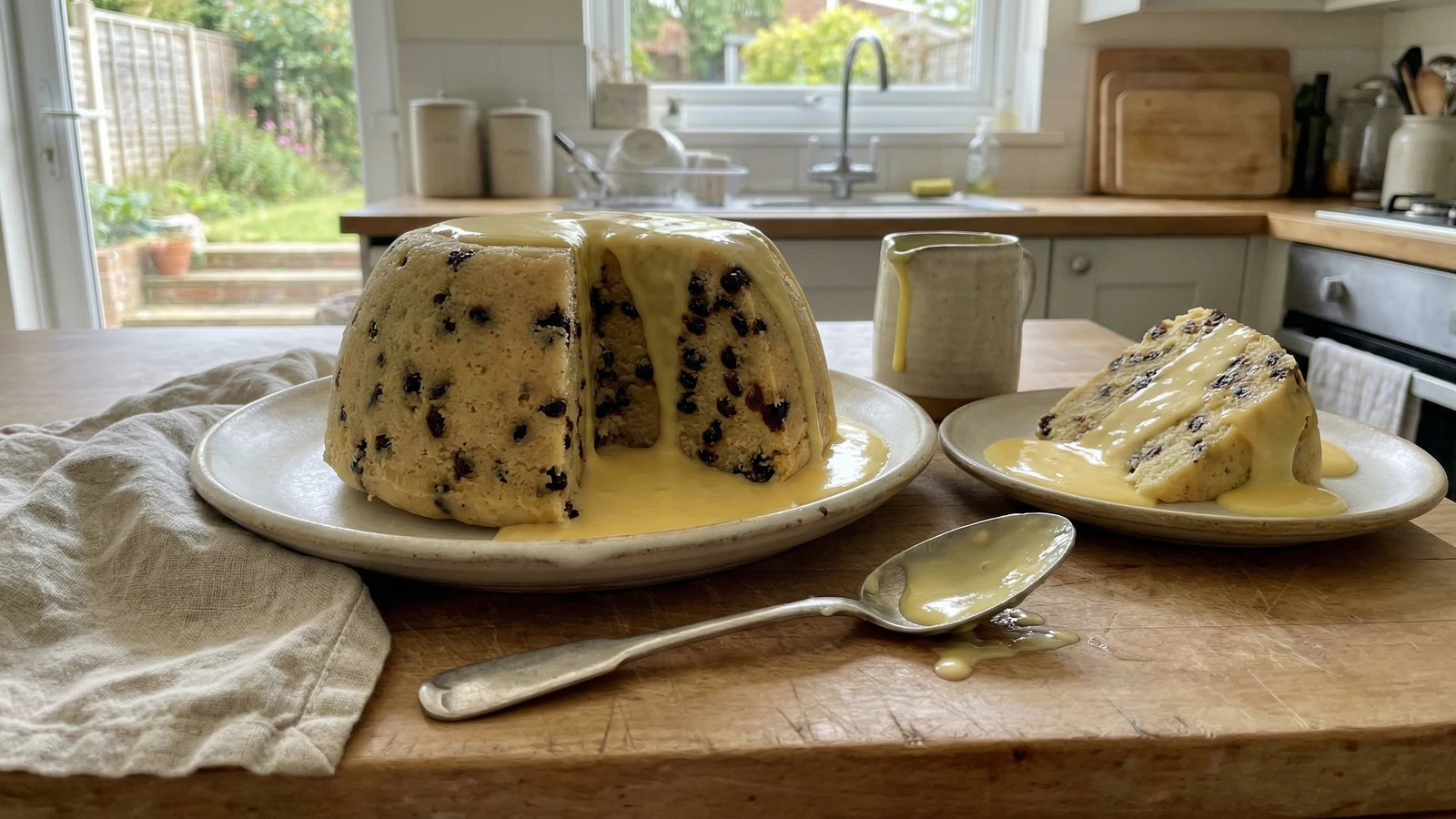
Spotted Dick
Created by Chef Thomas
A steamed suet pudding studded with currants and lemon zest, turned out in a warm golden dome and drowned in custard, the kind of thing you make when the weather has finally given up pretending.
This is a pudding for the dark end of the year. November, December, January, the months when it gets dark at four and the radiators click on in the afternoon and you start wanting things that sit heavily in a bowl. A summer kitchen has no use for spotted dick. A winter kitchen can't really do without it.
I know the name makes people laugh. It has made people laugh for about two hundred years, and it will carry on making people laugh, and that's fine. But the pudding itself is entirely serious. Suet, flour, sugar, currants, a little lemon zest to lift it, milk to bring it together. Steamed slowly in a basin until the kitchen smells warm and sweet and faintly of childhood, even if it wasn't yours. We're only making dinner. We're only making pudding. It's the same thing.
The custard isn't optional. Spotted dick without custard is a plain slice of sweetened bread, and that's not what we came here for. Make your own if you have the time and the patience. Use a good bought one if you don't. No one has ever turned down a second helping because the custard came from a carton.
I wrote it down in the notebook the first time I made it, years ago now: suet, currants, lemon, rain. Four words. It's never needed more than that.
The technique, the tradition, and the story behind every dish.
Discover Culinary AdvisorIngredients
self-raising flour
Quantity
250g
shredded beef suet
Quantity
125g
golden caster sugar
Quantity
75g
currants
Quantity
150g
unwaxed lemon
Quantity
1
zested
fine sea salt
Quantity
1/2 teaspoon
whole milk
Quantity
150ml
soft butter
Quantity
1 tablespoon
for greasing
custard
Quantity
to serve
| Ingredient | Quantity |
|---|---|
| self-raising flour | 250g |
| shredded beef suet | 125g |
| golden caster sugar | 75g |
| currants | 150g |
| unwaxed lemonzested | 1 |
| fine sea salt | 1/2 teaspoon |
| whole milk | 150ml |
| soft butterfor greasing | 1 tablespoon |
| custard | to serve |
Equipment Needed
- •1-litre pudding basin
- •Large, deep saucepan with tight-fitting lid
- •Kitchen string
- •Baking parchment and foil
- •Trivet or upturned saucer
Instructions
- 1
Prepare the basin
Butter a 1-litre pudding basin generously, right up to the rim. Cut a round of baking parchment for the bottom if you're nervous about turning it out later, though honestly, a well-buttered basin rarely lets you down. Set a large, deep saucepan on the hob with a trivet or an upturned saucer in the bottom, and put the kettle on to boil. You want the water ready when the pudding is.
No trivet? A folded tea towel on the bottom of the pan works. The point is to keep the basin off direct heat so the bottom doesn't scorch. - 2
Mix the dry ingredients
In a large bowl, stir together the flour, suet, sugar, currants, lemon zest and salt. Use your hands. Get the suet properly distributed through the flour so there are no clumps, and make sure the currants are coated and scattered evenly. The mixture should look pale and dry and speckled, like tweed.
Vegetable suet works perfectly well if you prefer it. The pudding won't know the difference and neither will most people eating it. - 3
Bring it together
Pour in the milk and stir with a wooden spoon, then finish with your hands. You want a soft, slightly sticky dough that holds together when pressed. Not wet, not dry. If it feels tight, add another splash of milk. If it feels loose, a dusting more flour. Trust your hands. They know.
- 4
Fill and cover the basin
Scrape the dough into the prepared basin and smooth the top gently. It should come about three-quarters of the way up, no higher. Puddings rise. Cover with a round of baking parchment, then a sheet of pleated foil over the top. The pleat gives the pudding room to expand. Tie it down firmly with kitchen string under the rim, making a loop across the top for lifting.
- 5
Steam slowly
Lower the basin into the pan and pour the boiling water around it until it reaches halfway up the sides. Cover with a tight lid and set the heat to a steady, gentle simmer. Two hours. Check the water level once or twice and top up with more boiling water from the kettle if it's dropping. The kitchen will slowly start to smell of warm suet and lemon and something deeply, unmistakably Sunday.
Never let the pan boil dry. This is the one thing you can't come back from. Set a quiet timer to remind yourself to check. - 6
Turn out and serve
Lift the basin out carefully with oven gloves and the string loop. Cut away the foil and parchment. Run a palette knife around the edge, put a warm plate over the top, and invert. Give it a firm, confident shake. The pudding should slide out in a pale golden dome, studded dark with currants. Serve in thick wedges with custard poured over the top, enough that it pools around the base.
Chef Tips
- •Good currants make a real difference. The cheap ones can be dusty and tired, barely raisins at all. Look for plump, dark, slightly sticky ones. If they feel dry, soak them for ten minutes in a splash of warm water or tea and pat them dry before adding.
- •The lemon zest is the quiet hero here. It keeps the pudding from tipping into heaviness and gives the suet somewhere bright to go. Don't skip it, and don't use bottled zest. A fresh lemon, finely grated, nothing else.
- •If you want to make it feel a little more grown-up, a splash of dark rum or brandy stirred into the milk is a kind thing to do on a cold evening. Not essential, but not unwelcome.
- •Leftovers reheat brilliantly. Wrap a slice in foil and steam it gently for ten minutes, or microwave it for thirty seconds with a little milk poured over. The texture comes right back.
Advance Preparation
- •The dough can be mixed a few hours ahead and kept in the basin, covered, in the fridge. Bring it back to room temperature before steaming or add ten minutes to the cooking time.
- •A cooked spotted dick keeps in the fridge for up to three days and reheats beautifully by re-steaming for twenty minutes or reheating individual slices in a microwave.
- •It also freezes well, whole or in slices, wrapped tightly. Defrost overnight in the fridge and re-steam to serve.
Frequently Asked Questions
Nutrition Information
1 serving (about 125g)
Where cooking meets culture.
Culinary mentorship, cultural storytelling, and the editorial depth that makes cooking meaningful.
Explore Culinary Advisor