Culinary Advisor
A cooking platform built around craft, culture, and the stories behind what we eat.
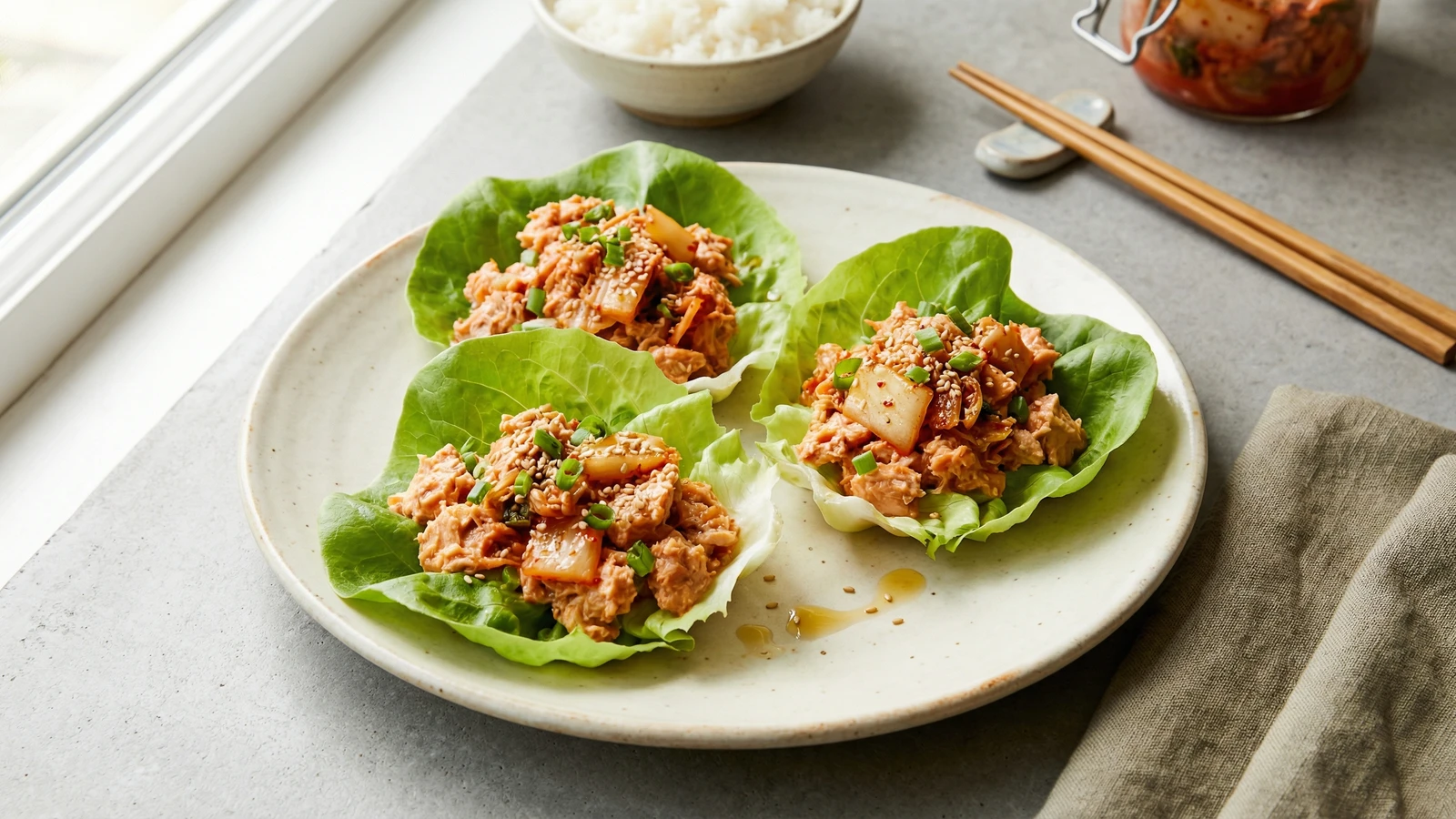
Spicy Kimchi Tuna Salad
Created by
Canned tuna reborn with the funky heat of aged kimchi, the sweet fire of gochujang, and the nutty depth of toasted sesame. This is pantry cooking with a backbone, ready in fifteen minutes but tasting like you meant it.
American tuna salad is honest food. It fed generations of office workers and schoolchildren from identical metal lunchboxes. But honest does not mean timid, and somewhere along the way we forgot that mayonnaise is merely a canvas waiting for bolder brushstrokes.
Korean cooks understood fermentation long before it became a wellness trend. Kimchi is not a garnish. It is a flavor engine, packed with lactic tang, residual heat from gochugaru, and that particular savory depth that Koreans call gamchilmat and the rest of us struggle to name. Mixed into humble canned tuna, it transforms a lunch-counter staple into something you would proudly serve at a dinner party.
The secret lies in using both the kimchi and its brine. That cloudy, pungent liquid is concentrated flavor. The brine also contains natural emulsifiers from fermentation, which help bind the dressing into something silky rather than broken. Do not pour it down the drain. It is the most valuable thing in the jar.
This salad improves with resting. Unlike leafy greens that collapse under dressing, tuna and kimchi need time to exchange flavors. Make it in the morning, eat it for lunch. Make it Saturday afternoon, serve it at a Sunday gathering. The funk mellows, the heat integrates, and what seemed bold at first becomes balanced.
The technique, the tradition, and the story behind every dish.
Discover Culinary AdvisorIngredients
solid white albacore tuna
Quantity
2 cans (5 ounces each)
drained
napa cabbage kimchi
Quantity
1 cup
drained and roughly chopped
kimchi brine
Quantity
3 tablespoons
reserved from the jar
mayonnaise
Quantity
1/4 cup
gochujang
Quantity
1 tablespoon
toasted sesame oil
Quantity
2 teaspoons
rice vinegar
Quantity
1 teaspoon
soy sauce
Quantity
1/2 teaspoon
scallions
Quantity
3
thinly sliced, white and green parts separated
toasted sesame seeds
Quantity
1 tablespoon
Persian cucumber
Quantity
1 small
diced
fresh ginger
Quantity
1 teaspoon
grated
butter lettuce or romaine hearts
Quantity
for serving
cooked short-grain rice or seaweed snacks (optional)
Quantity
for serving
| Ingredient | Quantity |
|---|---|
| solid white albacore tunadrained | 2 cans (5 ounces each) |
| napa cabbage kimchidrained and roughly chopped | 1 cup |
| kimchi brinereserved from the jar | 3 tablespoons |
| mayonnaise | 1/4 cup |
| gochujang | 1 tablespoon |
| toasted sesame oil | 2 teaspoons |
| rice vinegar | 1 teaspoon |
| soy sauce | 1/2 teaspoon |
| scallionsthinly sliced, white and green parts separated | 3 |
| toasted sesame seeds | 1 tablespoon |
| Persian cucumberdiced | 1 small |
| fresh gingergrated | 1 teaspoon |
| butter lettuce or romaine hearts | for serving |
| cooked short-grain rice or seaweed snacks (optional) | for serving |
Equipment Needed
- •Medium mixing bowl
- •Whisk
- •Rubber spatula
- •Microplane or fine grater for ginger
Instructions
- 1
Build the dressing base
In a medium bowl, combine the mayonnaise, gochujang, sesame oil, rice vinegar, soy sauce, and grated ginger. Whisk vigorously until the gochujang dissolves completely into the mayonnaise. The mixture should be smooth and uniformly coral-colored. This is your emulsified base, and it must be homogeneous before you add anything else.
Gochujang varies wildly in heat and sweetness between brands. Taste your paste before committing to the full tablespoon. You can always add more. - 2
Incorporate the kimchi brine
Add the reserved kimchi brine to your dressing one tablespoon at a time, whisking after each addition. The brine contains natural emulsifiers from fermentation that help bind everything together. Watch the consistency: you want a dressing that coats a spoon but flows easily. Three tablespoons is a guideline, not a commandment.
The brine is where the funk lives. If your kimchi is young and mild, you may want an extra splash. Well-aged kimchi brine packs serious punch. - 3
Prepare the tuna properly
Turn the drained tuna into a separate bowl. Using a fork, break it into rough flakes of varying size. Some pieces should remain chunky, about the size of a hazelnut. Others can fall apart. This textural variation matters. Tuna mashed to paste has no character. Tuna left in dense chunks won't marry with the dressing.
- 4
Combine with intention
Add the chopped kimchi, diced cucumber, and scallion whites to the tuna. Pour the dressing over everything and fold gently with a spatula, turning from the bottom to coat evenly without crushing the tuna into mush. The goal is integration, not homogeneity. You should see distinct pieces of kimchi, flashes of cucumber, the coral dressing binding it all.
- 5
Rest for flavor marriage
Cover the bowl and refrigerate for at least fifteen minutes, or up to four hours. This rest period allows the dressing to penetrate the tuna and the flavors to meld into something greater than the sum of ingredients. The salad improves with time. Thirty minutes is better than fifteen. An hour is better still.
Unlike leafy salads that wilt under dressing, this protein salad benefits from resting. The kimchi and tuna exchange flavors, creating something unified. - 6
Taste and adjust
Before serving, taste the salad. The resting period concentrates flavors. You may want a squeeze of fresh lime for brightness, another dash of sesame oil for richness, or a pinch of sugar if the funk has grown too aggressive. Trust your palate. These adjustments are not failures of the recipe. They are the act of cooking.
- 7
Serve with proper accompaniments
Spoon generous portions into butter lettuce cups or onto crisp romaine leaves. The cool crunch of fresh lettuce balances the funky richness of the salad. Scatter scallion greens and sesame seeds over the top. Serve with warm short-grain rice alongside, or with seaweed snacks for scooping if you want to skip the grain entirely.
Chef Tips
- •Seek out kimchi that has been fermenting for at least two weeks. Young kimchi is crunchy and pleasant but lacks the deep funk that makes this salad sing. The best kimchi for this purpose smells almost cheesy, aggressively sour, unapologetically alive.
- •Solid white albacore packs cleaner flavor and firmer texture than chunk light. The extra dollar per can is money well spent. Oil-packed tuna works if you drain it thoroughly, but water-packed integrates more cleanly with the creamy dressing.
- •This salad pairs beautifully with a cold, crisp lager or a dry Riesling. The carbonation and acidity cut through the richness, and the slight sweetness in either beverage tempers the gochujang heat.
- •For meal prep, store the dressed salad and the lettuce cups separately. The salad keeps beautifully for three days refrigerated. The lettuce should stay dry until the moment of serving.
Advance Preparation
- •The dressed salad can be made up to three days ahead and stored refrigerated. Flavors deepen and meld with time. Stir before serving and adjust seasonings.
- •The dressing base (without kimchi brine) can be whisked together up to one week ahead and refrigerated. Add brine when ready to dress the salad.
- •Toast sesame seeds in larger batches and store in an airtight container for up to one month. Having them ready makes this a true fifteen-minute meal.
Frequently Asked Questions
Nutrition Information
1 serving (about 195g)
Where cooking meets culture.
Culinary mentorship, cultural storytelling, and the editorial depth that makes cooking meaningful.
Explore Culinary Advisor