Culinary Advisor
A cooking platform built around craft, culture, and the stories behind what we eat.
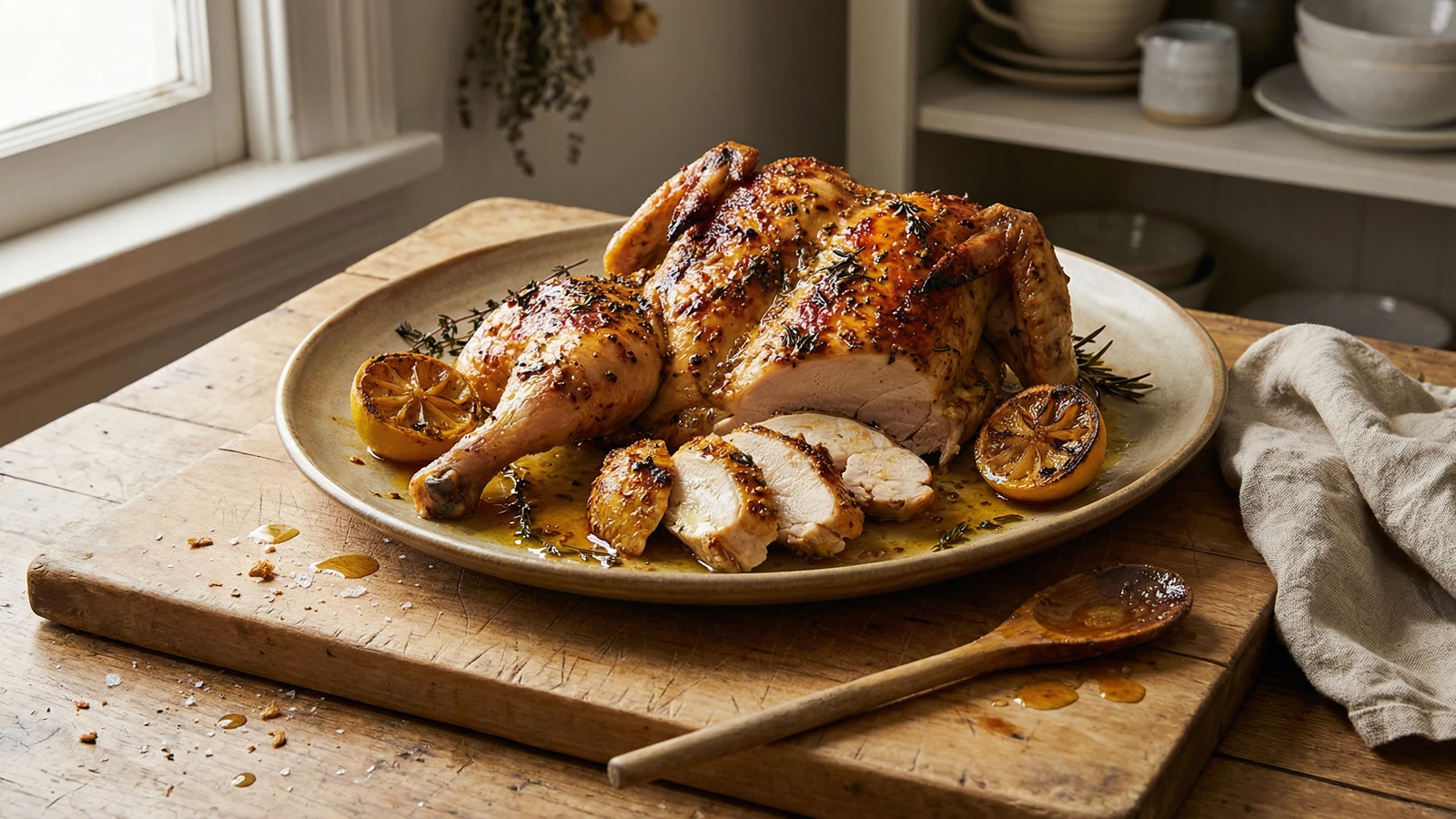
Spatchcocked Chicken with Herbs and Mustard
Created by Chef Thomas
A whole chicken pressed flat, rubbed with mustard and herbs, and roasted hard until the skin crackles and the kitchen smells like the kind of evening you want to sit down to.
The kitchen smells of mustard and thyme and something catching in the heat of the oven. It's been forty minutes. The skin has gone deep gold, blistered where the mustard has caramelised, the herbs darkened at the edges. This is not a Sunday roast. It's a Wednesday bird, faster and more direct, split flat on the board and cooked in the time it takes to make a salad and set the table.
Spatchcocking is the best thing you can do to a chicken if you haven't got two hours to spare. You cut the backbone out, press the whole thing flat, and suddenly it roasts in under an hour with every inch of skin exposed to the heat. No pale, flabby patches. No fighting with string. Just a bird that lies flat and cooks evenly and comes out with the kind of all-over crispness that a whole roast can only dream about.
The mustard does two things. It seasons the meat from the outside in, sharp and savoury, and it helps the skin turn properly golden, almost lacquered. Mix it with garlic and whatever herbs the garden has going: thyme and rosemary if they're there, but don't go to war over it. A recipe is a conversation, not a contract. Use what you've got and trust your nose.
I wrote it down in the notebook last autumn. "Spatchcocked. Mustard. Thyme from the pot by the door. Enough for four, just." That's all it needed.
The technique, the tradition, and the story behind every dish.
Discover Culinary AdvisorIngredients
whole chicken
Quantity
1, about 1.5-1.8kg
Dijon mustard
Quantity
2 tablespoons
wholegrain mustard
Quantity
1 tablespoon
olive oil
Quantity
3 tablespoons
garlic
Quantity
4 cloves
crushed to a paste
thyme
Quantity
small bunch
leaves stripped
rosemary
Quantity
a few sprigs
leaves finely chopped
lemon
Quantity
1
halved
flaky sea salt
Quantity
to taste
black pepper
Quantity
to taste
freshly ground
unsalted butter
Quantity
30g
softened
| Ingredient | Quantity |
|---|---|
| whole chicken | 1, about 1.5-1.8kg |
| Dijon mustard | 2 tablespoons |
| wholegrain mustard | 1 tablespoon |
| olive oil | 3 tablespoons |
| garliccrushed to a paste | 4 cloves |
| thymeleaves stripped | small bunch |
| rosemaryleaves finely chopped | a few sprigs |
| lemonhalved | 1 |
| flaky sea salt | to taste |
| black pepperfreshly ground | to taste |
| unsalted buttersoftened | 30g |
Equipment Needed
- •Sturdy kitchen scissors or poultry shears
- •Large roasting tin or lipped baking tray
- •Meat thermometer (useful, not essential)
Instructions
- 1
Spatchcock the bird
Turn the chicken breast-side down on a board. With a pair of sturdy kitchen scissors, cut along both sides of the backbone and lift it out. It takes a bit of nerve the first time, and more force than you'd expect, but the scissors will do the work if they're sharp. Flip the bird over and press down hard on the breastbone with the heel of your hand until you hear it crack and the whole thing lies flat. That's it. You've just halved the cooking time and doubled the amount of skin exposed to the heat.
Keep the backbone. Drop it in a bag in the freezer. When you've collected three or four, make stock. Free flavour, just waiting for its moment. - 2
Make the mustard rub
In a small bowl, mix both mustards with the olive oil, crushed garlic, thyme leaves, chopped rosemary, and a generous grinding of pepper. It should look rough and loose, more paste than sauce. Taste it on your finger. It should be sharp, herby, and full of character. If it needs more mustard, add more. Your kitchen, your rules.
- 3
Season and rub the chicken
Pat the chicken dry with kitchen paper. This matters more than almost anything else you'll do. Wet skin doesn't crisp. Dry skin does. Salt it generously on both sides, flaky salt, scattered from a height so it falls evenly. Now work the softened butter under the breast skin with your fingers, easing it away from the meat gently. Spread the mustard mixture over every surface you can reach: the top, the underside, under the skin where the butter is. Don't be delicate. Use your hands. The bird should be thoroughly, generously coated.
Take the chicken out of the fridge a good half hour before it goes in the oven. A cold bird in a hot oven means the outside cooks before the inside has caught up. Room temperature is where good roasting starts. - 4
Roast at high heat
Set the oven as hot as it will comfortably go. 220C fan, or thereabouts. Put the chicken skin-side up on a roasting tin or a baking tray with a lip. Tuck the lemon halves alongside, cut-side down. Slide it into the oven and leave it alone. No basting. No opening the door to check. The heat does the work. After thirty-five to forty-five minutes, the skin will have gone deep golden and blistered in places, the mustard caught and caramelised, the herbs darkened at the edges. The juices, when you pierce the thickest part of the thigh, should run clear with no trace of pink. If you've got a thermometer, you're looking for 74C at the thigh. If you haven't, trust the juices.
Every oven lies. Yours runs hot or cold or has a corner where things catch. You know this already. Watch the bird, not the clock. - 5
Rest before carving
Lift the chicken onto a warm plate or a board and let it rest for ten minutes. Not five, not a quick pause while you set the table. Ten proper minutes, loosely covered. The meat relaxes. The juices, which have been driven to the centre by the heat, seep back through the flesh. Squeeze the roasted lemon halves over the top, they'll be soft and sticky and intensely flavoured. Scrape up whatever has collected in the roasting tin: the caramelised mustard, the herby pan juices, the sticky bits at the edges. Spoon it all over the chicken. This is the best sauce you'll make tonight, and you didn't have to do anything to earn it.
- 6
Carve and serve
Carve it however feels natural. The legs pull away easily from a spatchcocked bird, and the breast slices cleanly against the bone. Don't overthink this. Put it on a warm plate with whatever you've cooked alongside, a green salad, some roasted roots, bread to soak up the juices, and carry it to the table. There are few better feelings than putting a warm plate of chicken in front of someone on an ordinary evening.
Chef Tips
- •Get the best chicken you can afford. A bird that has lived well will taste like something. You'll notice it most here, where the cooking is simple and the flavours have nowhere to hide. The difference between a good chicken and a sad one is the difference between dinner and a disappointment.
- •Two mustards are better than one. Dijon brings the sharp, clean heat. Wholegrain brings texture and a rounded warmth. Together they coat the skin properly and caramelise into something sticky and savoury in the oven. If you've only got one, use that. It'll still be good.
- •Don't skip the resting. It feels like wasted time when you're hungry and the kitchen smells like it does, but a rested chicken is juicy and calm. A chicken carved straight from the oven bleeds its juices onto the board and the meat tightens up. Ten minutes. Pour yourself a glass of something. The chicken will wait.
- •The roasted lemon halves are not decoration. They collapse in the heat and turn sweet and sticky. Squeeze them over the carved bird and let the juice run into the pan drippings. It lifts everything.
Advance Preparation
- •The chicken can be spatchcocked and rubbed with the mustard mixture up to a day ahead. Cover and refrigerate. The longer the mustard sits on the skin, the more flavour it carries into the meat. Take it out of the fridge thirty minutes before roasting.
- •Leftover chicken keeps well in the fridge for two days. It's good cold, pulled into rough pieces over a bitter leaf salad, or in a sandwich with mustard and watercress. The bones go into the stock pot.
Frequently Asked Questions
Nutrition Information
1 serving (about 220g)
Where cooking meets culture.
Culinary mentorship, cultural storytelling, and the editorial depth that makes cooking meaningful.
Explore Culinary Advisor