Culinary Advisor
A cooking platform built around craft, culture, and the stories behind what we eat.
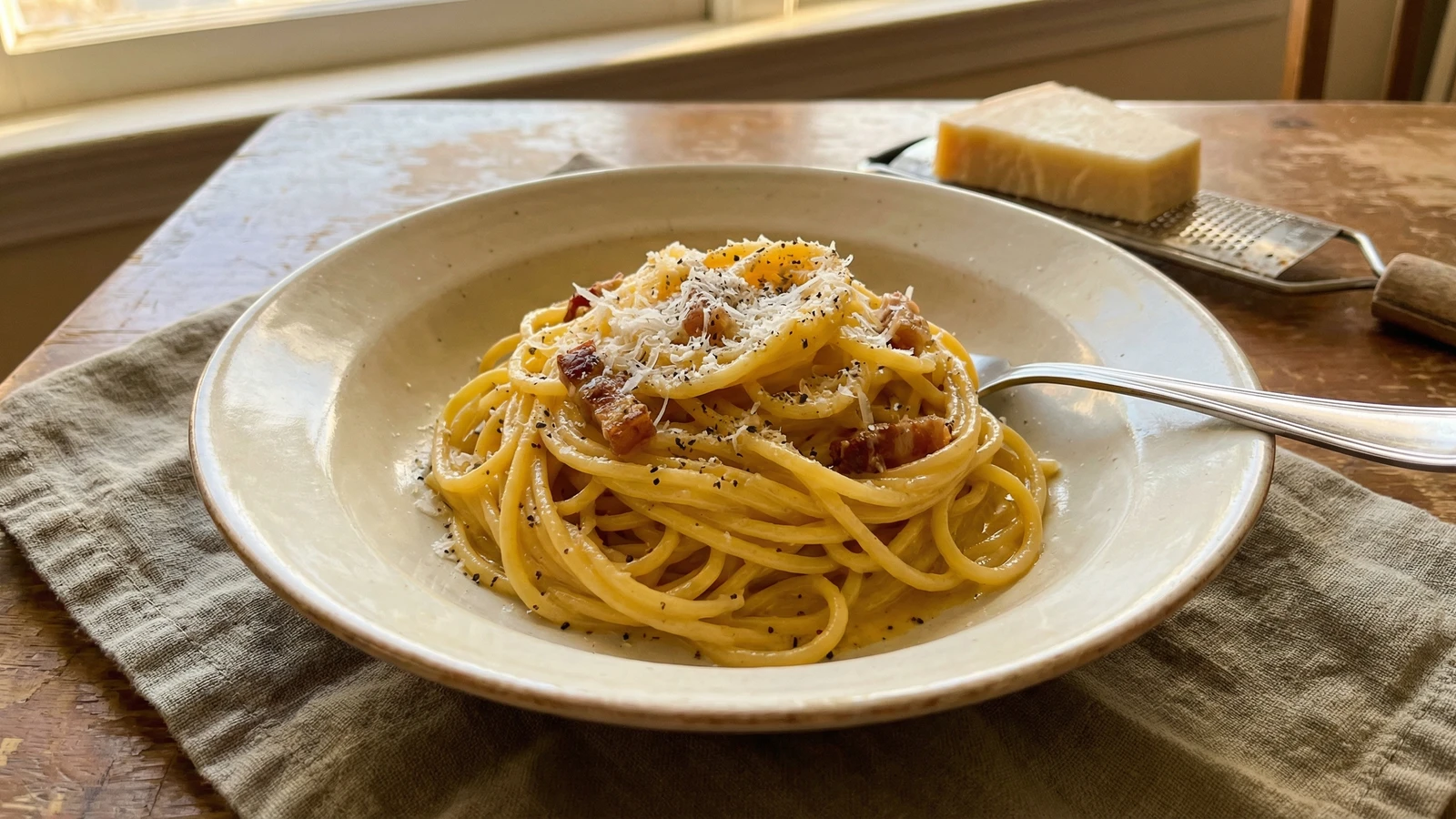
Spaghetti Carbonara
Created by Chef Ally
Four ingredients transformed by timing and heat into something greater than their parts: silky egg, sharp aged cheese, crispy cured pork, and the bite of black pepper coating every strand of pasta.
Start with the guanciale. This is cured pork jowl, fattier and sweeter than pancetta, aged with black pepper and sometimes a hint of garlic. If you cannot find it, ask your butcher to order it. Or find an Italian market that cures their own. The difference matters. When you render guanciale slowly, the fat turns golden and the meat crisps at the edges, releasing a perfume that fills your kitchen with promise.
Carbonara is Roman. The recipe asks for four ingredients and rewards you only if those ingredients are right. Pecorino Romano, aged and sharp. Eggs from chickens that lived well, with yolks so orange they stain the sauce gold. Black pepper cracked moments before it hits the pan, still releasing its volatile oils.
The technique is simple but unforgiving. You are not cooking the eggs with direct heat. You are using the warmth of the pasta and a splash of starchy water to transform yolk and cheese into a sauce that clings to every strand. Work too slowly and the sauce breaks. Work too hot and you have scrambled eggs. This is the challenge. This is also the joy.
Every meal is a meaningful choice. When you source guanciale from someone who cures it properly, pecorino from a producer who ages it with care, eggs from a farmer who treats the birds well, you are building a food system worth believing in. And the carbonara will taste like it.
The technique, the tradition, and the story behind every dish.
Discover Culinary AdvisorIngredients
dried spaghetti or rigatoni
Quantity
1 pound (450g)
guanciale
Quantity
8 ounces (225g)
cut into small batons
large egg yolks
Quantity
4
whole eggs
Quantity
2
at room temperature
Pecorino Romano
Quantity
1 1/2 cups (120g)
finely grated, plus more for serving
black pepper
Quantity
generous amount
freshly cracked
kosher salt
Quantity
for pasta water
| Ingredient | Quantity |
|---|---|
| dried spaghetti or rigatoni | 1 pound (450g) |
| guancialecut into small batons | 8 ounces (225g) |
| large egg yolks | 4 |
| whole eggsat room temperature | 2 |
| Pecorino Romanofinely grated, plus more for serving | 1 1/2 cups (120g) |
| black pepperfreshly cracked | generous amount |
| kosher salt | for pasta water |
Equipment Needed
- •Large pot for pasta (at least 6 quarts)
- •12-inch skillet or sauté pan
- •Microplane or fine grater
- •Tongs for tossing pasta
Instructions
- 1
Start the pasta water
Fill your largest pot with water and bring it to a rolling boil. Salt it generously until it tastes like the sea. This is your only chance to season the pasta itself. The water should be abundant because you will need some of it later to build the sauce.
- 2
Render the guanciale
Place the guanciale in a cold pan, then set it over medium-low heat. Let the fat render slowly, about eight to ten minutes. You want the meat to crisp at its edges while releasing its sweet, peppery fat into the pan. Do not rush this. The rendered fat is your cooking medium, your flavor base, your connection to the pig and the person who cured it.
Starting in a cold pan prevents the outside from seizing before the fat has time to melt away from the meat. - 3
Prepare the egg mixture
While the guanciale renders, whisk together the egg yolks, whole eggs, and most of the pecorino in a bowl. Add a generous grinding of black pepper. The mixture should be thick, almost paste-like. Set it beside the stove where you can reach it quickly.
- 4
Cook the pasta
Drop the spaghetti into the boiling water and cook until just shy of al dente, about one minute less than the package suggests. The pasta will finish cooking in the pan. Before draining, save at least two cups of the starchy cooking water. This cloudy liquid is essential.
- 5
Combine pasta and guanciale
When the guanciale is crisp and golden, remove the pan from heat. Let it cool for one minute. This is important. Transfer the drained pasta directly into the pan with the guanciale and rendered fat. Toss to coat every strand.
- 6
Create the sauce
With the pan still off the heat, pour the egg mixture over the pasta. Toss vigorously, lifting and turning the strands so the residual heat cooks the eggs into a silky coating without scrambling them. Add splashes of pasta water as needed, a few tablespoons at a time, until the sauce clings to each strand and pools slightly in the bottom of the pan. The consistency should be loose and creamy, not tight or gluey.
If the eggs begin to curdle into bits, add more pasta water immediately and toss faster. The starch helps smooth things out. - 7
Finish and serve
Taste. Adjust with more pepper, more cheese, or a pinch of salt if needed. The guanciale and pecorino are both salty, so go carefully. Serve immediately in warmed bowls, topped with the remaining pecorino and another generous crack of black pepper. Carbonara waits for no one.
Chef Tips
- •Seek out guanciale from an Italian butcher or specialty market. Pancetta is acceptable, bacon is not. The sweetness of the jowl fat is irreplaceable.
- •Pecorino Romano must be aged and sharp. Parmesan is a different dish entirely. Grate it yourself on a microplane for the finest texture.
- •Room temperature eggs are essential. Cold eggs seize when they hit the hot pasta, creating curds instead of sauce.
- •The pan comes off the heat before the egg mixture goes in. Remember this. The residual warmth is enough.
- •Carbonara is best in cooler months when you crave richness. In summer, consider a lighter pasta with fresh tomatoes and basil instead.
Advance Preparation
- •The egg and cheese mixture can be whisked together up to one hour ahead and kept at room temperature.
- •Guanciale can be cut into batons a day ahead and refrigerated.
- •Carbonara cannot be reheated successfully. Make it, serve it, eat it.
Frequently Asked Questions
Nutrition Information
1 serving (about 320g)
Where cooking meets culture.
Culinary mentorship, cultural storytelling, and the editorial depth that makes cooking meaningful.
Explore Culinary Advisor