Culinary Advisor
A cooking platform built around craft, culture, and the stories behind what we eat.
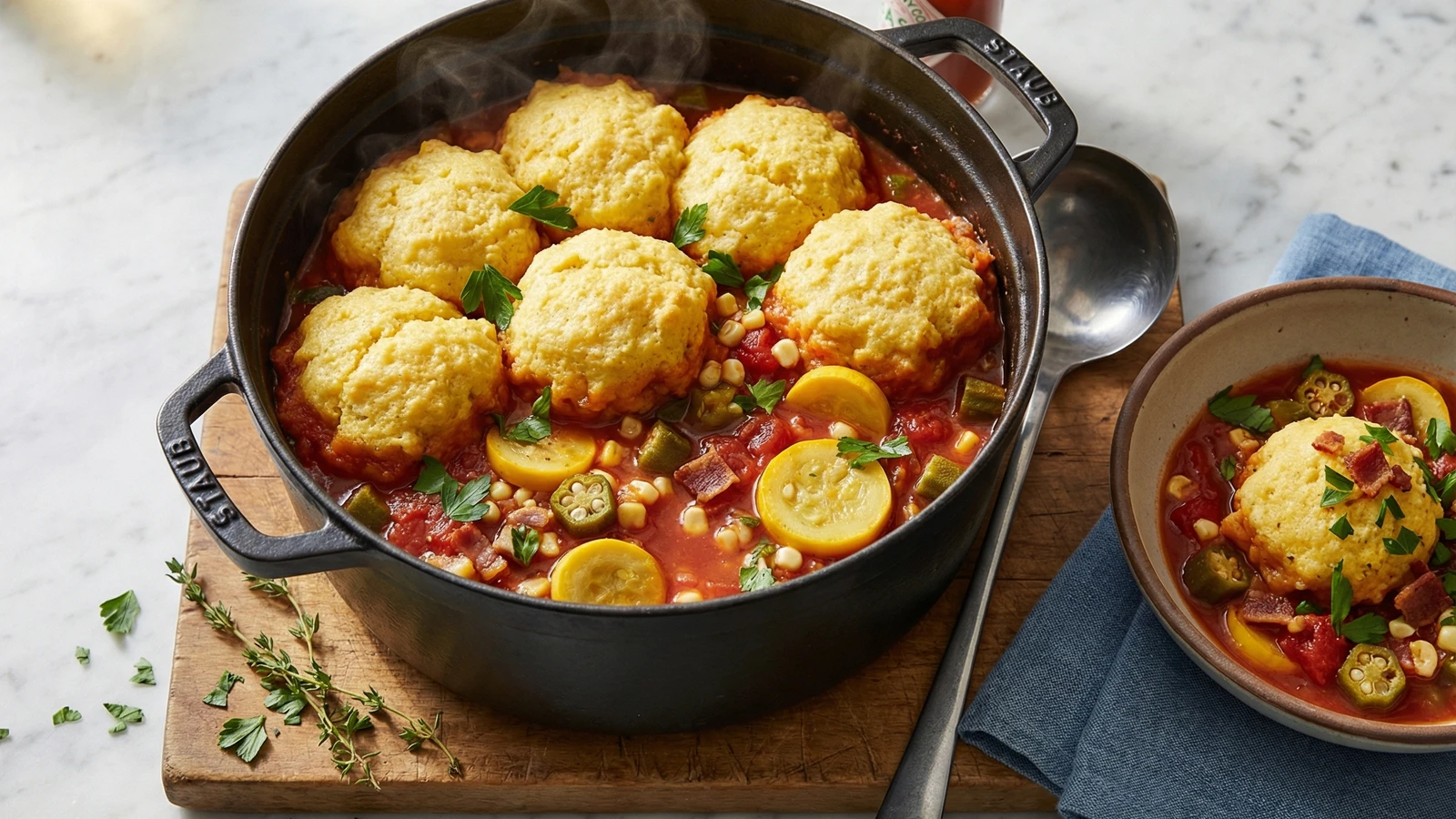
Southern Summer Vegetable Stew with Cornmeal Dumplings
Created by
Peak-season squash, okra, and vine-ripe tomatoes simmered low and slow in bacon-kissed pot liquor, then crowned with pillowy cornmeal dumplings that steam to golden perfection right in the pot. This is the dish that made porch suppers famous.
This stew belongs to the women who cooked through Southern summers before air conditioning. They understood something we've forgotten: summer vegetables, treated with respect and simmered gently, create their own sauce. No stock required. The tomatoes break down into a silky broth. The okra releases its natural thickener. The squash melts at the edges while holding its shape at the center. This is pot liquor in its purest form.
I first encountered this style of cooking in a kitchen outside Charleston, watching a grandmother who measured nothing and tasted constantly. She dropped her cornmeal dumplings onto the simmering vegetables with the confidence of someone who'd done it a thousand times. The lid went on. Twenty minutes later, she lifted it to reveal golden puffs that had steamed to impossible lightness while absorbing the savory vapors rising from below.
The genius of this dish lies in its democracy. Every summer vegetable belongs here. Use what your garden offers or what looks best at the farmers market. Yellow squash and zucchini are traditional, but pattypans work beautifully. Fresh corn cut from the cob adds sweetness. Lima beans or field peas contribute heft. The only rule is ripeness. Mealy supermarket tomatoes have no place in this pot. Wait for August. Wait for tomatoes that smell like tomatoes. The stew will reward your patience.
This feeds a crowd and travels well, making it ideal for potlucks and covered-dish suppers. The dumplings are best served within an hour of cooking, but the stew base improves overnight. Make the vegetables a day ahead, refrigerate, then reheat gently and add fresh dumplings just before serving.
The technique, the tradition, and the story behind every dish.
Discover Culinary AdvisorIngredients
thick-cut bacon
Quantity
4 slices
cut into 1/2-inch pieces
yellow onion
Quantity
1 large
diced
garlic
Quantity
4 cloves
minced
mixed summer squash (yellow squash and zucchini)
Quantity
2 pounds
cut into 1-inch pieces
fresh okra
Quantity
1 pound
sliced 1/2-inch thick
ripe tomatoes
Quantity
2 pounds
cored and roughly chopped
fresh corn kernels
Quantity
2 cups (about 4 ears)
fresh lima beans or butter beans
Quantity
1 cup
vegetable or chicken stock
Quantity
4 cups
tomato paste
Quantity
2 tablespoons
apple cider vinegar
Quantity
1 tablespoon
smoked paprika
Quantity
2 teaspoons
dried thyme
Quantity
1 teaspoon
cayenne pepper
Quantity
1/2 teaspoon
bay leaves
Quantity
2
kosher salt
Quantity
to taste
freshly ground black pepper
Quantity
to taste
fine yellow cornmeal
Quantity
1 1/2 cups
all-purpose flour
Quantity
1/2 cup
sugar
Quantity
1 tablespoon
baking powder
Quantity
2 teaspoons
baking soda
Quantity
1/2 teaspoon
fine sea salt
Quantity
3/4 teaspoon
buttermilk
Quantity
1 cup
egg
Quantity
1 large
unsalted butter
Quantity
3 tablespoons
melted
fresh flat-leaf parsley (optional)
Quantity
for serving
chopped
hot sauce (optional)
Quantity
for serving
| Ingredient | Quantity |
|---|---|
| thick-cut baconcut into 1/2-inch pieces | 4 slices |
| yellow oniondiced | 1 large |
| garlicminced | 4 cloves |
| mixed summer squash (yellow squash and zucchini)cut into 1-inch pieces | 2 pounds |
| fresh okrasliced 1/2-inch thick | 1 pound |
| ripe tomatoescored and roughly chopped | 2 pounds |
| fresh corn kernels | 2 cups (about 4 ears) |
| fresh lima beans or butter beans | 1 cup |
| vegetable or chicken stock | 4 cups |
| tomato paste | 2 tablespoons |
| apple cider vinegar | 1 tablespoon |
| smoked paprika | 2 teaspoons |
| dried thyme | 1 teaspoon |
| cayenne pepper | 1/2 teaspoon |
| bay leaves | 2 |
| kosher salt | to taste |
| freshly ground black pepper | to taste |
| fine yellow cornmeal | 1 1/2 cups |
| all-purpose flour | 1/2 cup |
| sugar | 1 tablespoon |
| baking powder | 2 teaspoons |
| baking soda | 1/2 teaspoon |
| fine sea salt | 3/4 teaspoon |
| buttermilk | 1 cup |
| egg | 1 large |
| unsalted buttermelted | 3 tablespoons |
| fresh flat-leaf parsley (optional)chopped | for serving |
| hot sauce (optional) | for serving |
Equipment Needed
- •6 to 8 quart Dutch oven or heavy-bottomed pot with tight-fitting lid
- •Wooden spoon
- •Two soup spoons for dropping dumplings
- •Ladle for serving
Instructions
- 1
Render the bacon
Set a large Dutch oven or heavy-bottomed pot over medium heat. Add the bacon pieces and cook, stirring occasionally, until the fat has rendered and the bacon is crisp and golden, about 8 minutes. You'll hear the sizzle calm as the moisture cooks out. The kitchen will smell like every good Southern meal you've ever had. Use a slotted spoon to transfer the bacon to a paper towel-lined plate, leaving the rendered fat in the pot.
Don't skip the bacon. Even two slices provide the smoky foundation this stew needs. Vegetarians can substitute 3 tablespoons of good olive oil plus a pinch of smoked salt, but understand you're making a different dish. - 2
Build the aromatic base
Add the diced onion to the bacon fat and cook until softened and translucent, about 5 minutes. The onion should turn golden at the edges but not brown. Add the garlic and cook for 30 seconds more, just until fragrant. Stir in the tomato paste and smoked paprika, cooking for another minute to toast the spices and deepen their flavor. The paste will darken slightly and begin to stick to the pot. This is good. You're building fond.
- 3
Add the tomatoes
Add the chopped tomatoes to the pot and stir well, scraping up any browned bits from the bottom. Let the tomatoes cook until they begin to break down and release their juices, about 5 minutes. Use your wooden spoon to crush any large pieces against the side of the pot. The tomatoes will transform from distinct chunks into a rough, chunky sauce. This is your pot liquor base taking shape.
- 4
Simmer the vegetables
Pour in the stock and add the bay leaves, dried thyme, cayenne, and a generous pinch of salt and pepper. Bring to a gentle boil, then reduce heat to maintain a lazy simmer. Add the lima beans first since they take longest to cook. After 10 minutes, add the squash, okra, and corn. Stir gently to combine. The stew should bubble slowly, just enough to see occasional movement at the surface. Cover and simmer for 25 to 30 minutes, until the squash is tender but not falling apart and the lima beans yield easily to a fork.
Fresh okra will thicken the stew naturally as it cooks. If you're concerned about sliminess, add a splash more vinegar. The acid helps. Frozen okra works in a pinch but lacks the texture of fresh. - 5
Season and balance
Stir in the apple cider vinegar and taste the broth. It should be savory, slightly sweet from the corn and tomatoes, with a whisper of heat at the finish. Adjust salt and pepper as needed. The vinegar brightens everything without tasting distinctly sour. Remove the bay leaves. The stew base is now complete.
- 6
Make the dumpling batter
While the vegetables simmer, prepare the dumpling batter. In a medium bowl, whisk together the cornmeal, flour, sugar, baking powder, baking soda, and salt. In a smaller bowl or measuring cup, beat together the buttermilk, egg, and melted butter. Pour the wet ingredients into the dry and stir with a fork just until combined. The batter will be thick and slightly lumpy. Do not overmix. Gluten development is your enemy here. A few streaks of flour are preferable to tough dumplings.
The batter can sit for 10 minutes while the stew finishes simmering. This rest allows the cornmeal to hydrate, producing more tender dumplings. - 7
Drop the dumplings
Ensure the stew is at a steady, gentle simmer. Using two soup spoons, drop rounded tablespoons of batter onto the surface of the stew, spacing them about an inch apart. You should get 12 to 14 dumplings. They will look rough and ungainly. This is correct. They'll puff and smooth as they steam. Do not stir after adding the dumplings. Do not lift the lid to check on them.
- 8
Steam until golden
Cover the pot tightly and cook for 18 to 20 minutes without lifting the lid. I mean this. The steam trapped inside is doing the cooking. Every time you peek, you release heat and extend the cooking time. After 18 minutes, the dumplings should have doubled in size, feel firm to gentle pressure, and show golden tops where they rose above the liquid. Insert a toothpick into the center of one dumpling. It should come out clean.
If your dumplings sink instead of floating, your stew wasn't at a strong enough simmer when you added them. They'll still cook through but won't have the same light texture. - 9
Finish and serve
Remove the pot from heat. Scatter the reserved bacon pieces over the top along with the chopped parsley. Ladle generous portions into shallow bowls, making sure each serving gets plenty of vegetables, broth, and at least one dumpling. Pass hot sauce at the table for those who want it. This stew is best served immediately while the dumplings are at their lightest, though leftovers reheat surprisingly well the next day.
Chef Tips
- •Seek out farmers market tomatoes at peak ripeness. They should smell intensely of tomato and yield slightly to pressure. Underripe tomatoes will make the stew taste flat. If good fresh tomatoes aren't available, substitute one 28-ounce can of whole San Marzano tomatoes, crushed by hand.
- •The stew base (without dumplings) can be made up to two days ahead. Cool completely, refrigerate, then reheat to a simmer before adding freshly made dumpling batter. This actually improves the flavor as the vegetables continue to meld.
- •For a vegetarian version, omit the bacon and use a good olive oil to sauté the aromatics. Add a teaspoon of smoked salt or a splash of liquid smoke to approximate the depth the pork provides.
- •Yellow cornmeal produces the most traditional dumplings, but white cornmeal works equally well. Avoid instant or self-rising cornmeal, which will throw off the leavening balance.
- •This travels beautifully to potlucks. Transport the stew base warm in your Dutch oven, then drop the dumplings and let them steam during the first 20 minutes of the gathering. You'll arrive with freshly cooked dumplings.
Advance Preparation
- •Vegetables can be cut and refrigerated up to 24 hours ahead. Store tomatoes separately from squash and okra.
- •Stew base (completed through step 5) keeps refrigerated for up to 3 days. Flavors deepen as it sits.
- •Dumpling batter should be made fresh, just before cooking. It does not hold well.
- •Assembled stew with dumplings is best within 2 hours. Dumplings will absorb liquid and become dense if held longer.
Frequently Asked Questions
Nutrition Information
1 serving (about 370g)
Where cooking meets culture.
Culinary mentorship, cultural storytelling, and the editorial depth that makes cooking meaningful.
Explore Culinary Advisor