Culinary Advisor
A cooking platform built around craft, culture, and the stories behind what we eat.
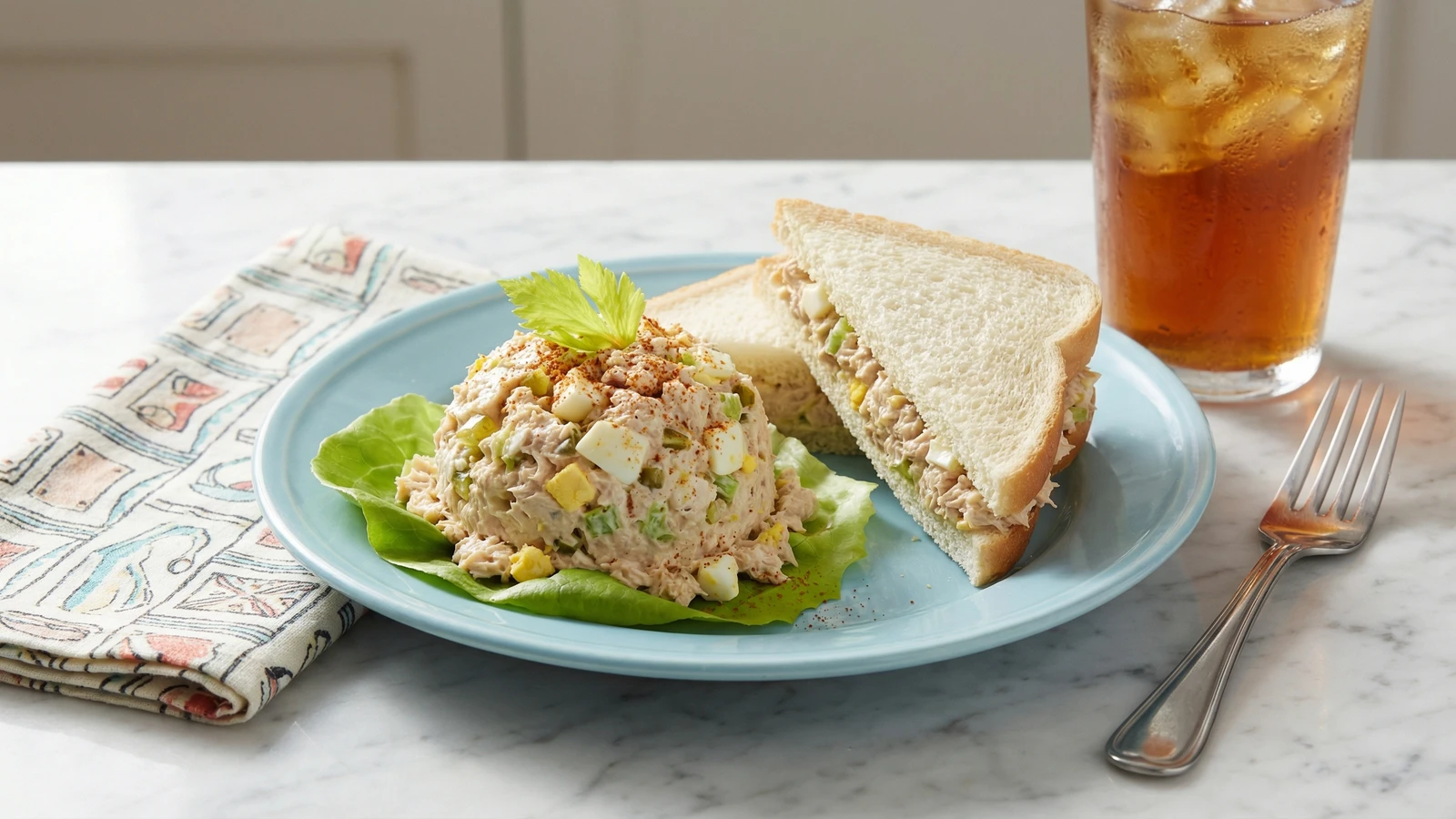
Southern-Style Tuna Salad
Created by
A proper Southern tuna salad with flaky albacore, creamy mayonnaise, sweet pickle relish, and chunks of hard-boiled egg, all balanced with celery crunch and a whisper of lemon. This is the lunch counter classic done right.
The tuna salad sandwich built the American lunch counter. From Woolworth's to Walgreens, from roadside diners to church fellowship halls, this humble preparation fed a nation that needed good food fast, long before fast food existed. In the South, we made it our own with Duke's mayonnaise and sweet pickle relish, additions that transformed a simple protein salad into something worth remembering.
I've eaten tuna salad in every state of the union and made it in more kitchens than I can count. The bad versions outnumber the good by a depressing margin. Too much mayonnaise turns it into wallpaper paste. Too little makes it dry and sad. Canned tuna of poor quality tastes like the ocean's disappointment. But when you build this salad with care, with proper ingredients and honest technique, it rewards you with a lunch that satisfies completely.
The key is texture. You need the crunch of celery against the give of egg, the flaky resistance of good tuna against the creaminess of the dressing. Every bite should offer variety. This requires restraint with the mixing. Fold, don't mash. And give it time in the refrigerator. Tuna salad improves with rest, the flavors knitting together into something greater than the sum of their parts.
The technique, the tradition, and the story behind every dish.
Discover Culinary AdvisorIngredients
solid white albacore tuna in water
Quantity
2 cans (5 ounces each)
drained
mayonnaise
Quantity
1/2 cup
preferably Duke's
sweet pickle relish
Quantity
2 tablespoons
large eggs
Quantity
2
celery stalks
Quantity
2
finely diced (about 1/2 cup)
yellow onion
Quantity
2 tablespoons
finely minced
fresh lemon juice
Quantity
1 tablespoon
Dijon mustard
Quantity
1/2 teaspoon
celery salt
Quantity
1/4 teaspoon
black pepper
Quantity
1/4 teaspoon
freshly ground
cayenne pepper
Quantity
pinch
kosher salt
Quantity
to taste
butter lettuce leaves (optional)
Quantity
for serving
soft white bread (optional)
Quantity
8 slices
| Ingredient | Quantity |
|---|---|
| solid white albacore tuna in waterdrained | 2 cans (5 ounces each) |
| mayonnaisepreferably Duke's | 1/2 cup |
| sweet pickle relish | 2 tablespoons |
| large eggs | 2 |
| celery stalksfinely diced (about 1/2 cup) | 2 |
| yellow onionfinely minced | 2 tablespoons |
| fresh lemon juice | 1 tablespoon |
| Dijon mustard | 1/2 teaspoon |
| celery salt | 1/4 teaspoon |
| black pepperfreshly ground | 1/4 teaspoon |
| cayenne pepper | pinch |
| kosher salt | to taste |
| butter lettuce leaves (optional) | for serving |
| soft white bread (optional) | 8 slices |
Equipment Needed
- •Small saucepan with lid
- •Medium mixing bowl
- •Fine-mesh strainer
- •Rubber spatula
Instructions
- 1
Cook the eggs properly
Place eggs in a single layer in a small saucepan and cover with cold water by one inch. Set over high heat and bring to a full rolling boil. The moment you see big, aggressive bubbles, remove the pan from heat, cover with a tight-fitting lid, and let stand exactly twelve minutes. This produces a fully set yolk without that gray-green ring of overcooked sulfur that ruins so many egg salads.
Older eggs peel easier than fresh ones. If your eggs are from this week, add a half teaspoon of baking soda to the cooking water. The alkalinity loosens the membrane. - 2
Shock and peel
Transfer eggs immediately to a bowl of ice water. Let them sit for five minutes. The rapid cooling stops the cooking and contracts the egg away from the shell. Tap each egg gently on the counter, roll it under your palm to crack the shell all over, then peel under a thin stream of running water. The water gets under the membrane and makes the job nearly effortless.
- 3
Prepare the tuna
Open your tuna cans and drain them thoroughly, pressing gently with a fork to extract excess liquid. Transfer the tuna to a medium mixing bowl. Using two forks, flake the fish into pieces of varying size. You want some substantial chunks for texture alongside finer shreds that will bind with the dressing. This isn't baby food. Leave it rough.
Solid white albacore has better texture and cleaner flavor than chunk light. It costs more. It's worth it. - 4
Build the dressing
In a small bowl, whisk together the mayonnaise, pickle relish, lemon juice, Dijon mustard, celery salt, black pepper, and cayenne. The mustard isn't here for flavor so much as chemistry. It contains lecithin, a natural emulsifier that helps bind the dressing and keeps it from weeping liquid onto your bread. Whisk until completely smooth and uniform in color.
- 5
Chop the eggs
Using a sharp knife, chop the hard-boiled eggs into roughly quarter-inch pieces. Some will crumble into smaller bits. Good. That variation gives you creamy richness from the fine pieces and satisfying bites of egg throughout. Add the chopped eggs to the bowl with the tuna.
- 6
Add crunch elements
Scatter the diced celery and minced onion over the tuna and eggs. The celery provides essential crunch, that textural contrast that keeps every bite interesting. The onion adds a subtle sharpness that lifts the whole salad. Mince the onion fine so it distributes evenly rather than announcing itself in random bites.
- 7
Fold and dress
Pour the dressing over the tuna mixture. Using a rubber spatula, fold everything together with gentle strokes, turning from the bottom up. The goal is complete coating without mashing the tuna into paste. Ten to twelve folds should do it. The salad should look cohesive but not homogenized. Taste now and adjust salt. The tuna brings its own salinity, so go easy.
If the salad seems dry, add mayonnaise one tablespoon at a time. If it seems too heavy, a squeeze more lemon juice will brighten everything. - 8
Rest for flavor development
Cover the bowl and refrigerate for at least thirty minutes before serving. This resting time is not optional. The flavors need time to marry. The celery salt will bloom. The pickle relish will mellow into the background. The lemon will soften any fishiness. What comes out of the refrigerator will taste notably better than what went in.
- 9
Serve properly
Taste once more and adjust seasonings. Serve the salad mounded on butter lettuce leaves for a lighter presentation, or spread generously between slices of soft white bread for the sandwich that defined Southern lunch counters for a century. The bread should be fresh enough to compress slightly under the weight of the filling without falling apart.
Chef Tips
- •Duke's mayonnaise is the Southern standard for a reason. It's tangier than Hellmann's and contains no sugar, letting the sweet pickle relish provide all the sweetness you need. If you can't find Duke's, add an extra half teaspoon of lemon juice to Hellmann's.
- •Drain your tuna thoroughly. Excess liquid dilutes the dressing and makes soggy sandwiches. Press it gently in a fine-mesh strainer if your cans seem particularly wet.
- •For a make-ahead lunch, store the dressed salad and bread separately. Assemble sandwiches just before eating. Dressed tuna salad keeps three days refrigerated; assembled sandwiches turn to mush within hours.
- •This salad improves dramatically after a night in the refrigerator. The flavors deepen and the textures settle. Make it the evening before if time allows.
- •Butter lettuce is ideal for serving because its soft, cupped leaves cradle the salad without competing for attention. Iceberg works but offers nothing. Romaine is too assertive.
Advance Preparation
- •Hard-boiled eggs can be cooked up to five days ahead and stored unpeeled in the refrigerator.
- •The complete salad keeps refrigerated for three days. The flavor peaks on day two.
- •Do not freeze tuna salad. The mayonnaise breaks and the texture becomes unpleasant.
Frequently Asked Questions
Nutrition Information
1 serving (about 200g with 2 slices bread)
Where cooking meets culture.
Culinary mentorship, cultural storytelling, and the editorial depth that makes cooking meaningful.
Explore Culinary Advisor