Culinary Advisor
A cooking platform built around craft, culture, and the stories behind what we eat.
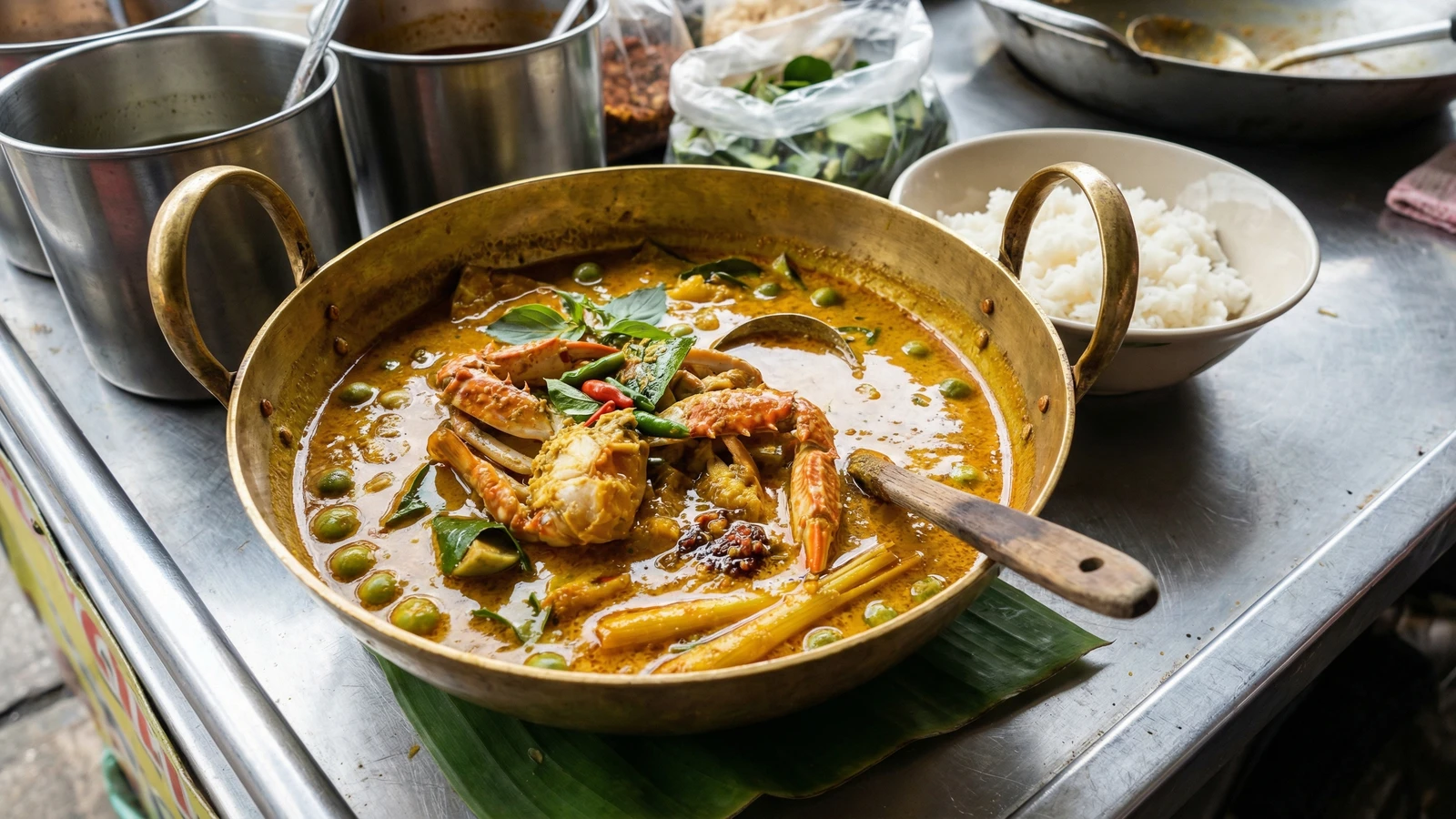
Southern Crab Curry (Gaeng Pu)
Created by
A turmeric-gold kreung tam pounded heavy with dried chilies and fresh kha min, cracked coconut cream carrying sweet crab meat. The southern peninsula doesn't do subtle, and neither does this curry.
The south pounds harder than anyone. That's not an opinion. It's physics.
Southern Thai kreung tam uses more turmeric, more dried chili, and more shrimp paste than any other regional tradition in this country. Where a Central Thai green curry paste is fragrant and herbal, a Southern paste is aggressive, golden, and built to overpower the funk of fresh seafood. Ajarn always said: the kreung tam is the foundation of everything. In the south, that foundation is stained yellow with kha min (turmeric) and loaded with prik haeng (dried long chilies) in quantities that would terrify a Bangkok cook.
Gaeng pu is a coconut curry, which means the paste gets cracked in the thick head of coconut cream before anything else touches the pot. You cook the kreung tam in that fat until the oil separates, until the kitchen smells like the Andaman coast and the Gulf of Thailand collided. That cracking step is where the curry develops its body. Skip it and you get thin, flat, lifeless soup with crab in it. Do it right and the paste blooms, the coconut fat carries the turmeric and chili into every molecule of liquid, and the curry turns that deep, burnished gold that tells you it's Southern before you even taste it.
The crab goes in whole. Cleaned, cracked, but whole. The shells release their juices into the curry as it simmers. You eat this with your hands, pulling meat from shells, sucking the curry-soaked joints, getting turmeric stains under your fingernails that won't come out for two days. That's how they eat it in Nakhon Si Thammarat. That's how they eat it in Songkhla. That's how you should eat it.
Fish sauce for salt. Palm sugar barely there, just enough to round the edges. Lime squeezed at the table if you want brightness. Dried chilies for a deep, slow-building heat that sits in the back of your throat. The four pillars hold, but the south tilts the balance hard toward spice and away from sweet. This isn't Central Thai comfort food. This is coastal cooking with conviction.
Gaeng pu belongs to the Southern Thai (pak tai) culinary tradition, shaped by the Malay Peninsula's geography: two coastlines (Andaman Sea and Gulf of Thailand) delivering an abundance of fresh crab, and coconut palms covering the interior. The heavy use of fresh and dried turmeric in Southern pastes likely reflects centuries of trade contact with South Asia and the Malay world, where turmeric is a foundational spice. Southern curries diverged from Central Thai traditions by favoring dried chilies over fresh, using kapi (shrimp paste) more aggressively, and keeping sweetness minimal, a flavor profile that aligns more closely with Malay and Peranakan cooking than with the balanced sweet-sour-salty approach of Bangkok.
The technique, the tradition, and the story behind every dish.
Discover Culinary AdvisorIngredients
blue crabs
Quantity
2 large (about 800g total)
cleaned, quartered, claws cracked
coconut cream (hua kathi)
Quantity
400ml
thick first pressing only
coconut milk (hang kathi)
Quantity
300ml
thin second pressing
Southern curry paste (kreung tam gaeng pu)
Quantity
3 tablespoons
see paste instructions
fish sauce (nam pla)
Quantity
2 tablespoons
palm sugar (nam tan pip)
Quantity
1 teaspoon
kaffir lime leaves (bai makrut)
Quantity
3
torn
lemongrass (takhrai)
Quantity
2 stalks
cut into 2-inch pieces, bruised
Thai pea eggplant (makhuea phuang)
Quantity
150g
bird's eye chilies (prik khi nu)
Quantity
5
bruised
Thai sweet basil leaves (bai horapha)
Quantity
1 handful
for finishing
dried long red chilies (prik haeng)
Quantity
15
soaked 15 minutes, drained
fresh turmeric (kha min)
Quantity
1 tablespoon
sliced
dried turmeric powder (phong kha min)
Quantity
1 teaspoon
garlic
Quantity
7 cloves
sliced
shallots
Quantity
5
sliced
lemongrass (takhrai), for paste
Quantity
3 stalks
tender inner core only, sliced thin
galangal (kha)
Quantity
1 tablespoon
sliced
kaffir lime zest (phiu makrut)
Quantity
1 teaspoon
shrimp paste (kapi)
Quantity
1 tablespoon
white peppercorns (prik thai khao)
Quantity
1 teaspoon
coriander seeds (luk phak chi)
Quantity
1 teaspoon
toasted
cumin seeds (yi ra)
Quantity
1/2 teaspoon
toasted
| Ingredient | Quantity |
|---|---|
| blue crabscleaned, quartered, claws cracked | 2 large (about 800g total) |
| coconut cream (hua kathi)thick first pressing only | 400ml |
| coconut milk (hang kathi)thin second pressing | 300ml |
| Southern curry paste (kreung tam gaeng pu)see paste instructions | 3 tablespoons |
| fish sauce (nam pla) | 2 tablespoons |
| palm sugar (nam tan pip) | 1 teaspoon |
| kaffir lime leaves (bai makrut)torn | 3 |
| lemongrass (takhrai)cut into 2-inch pieces, bruised | 2 stalks |
| Thai pea eggplant (makhuea phuang) | 150g |
| bird's eye chilies (prik khi nu)bruised | 5 |
| Thai sweet basil leaves (bai horapha)for finishing | 1 handful |
| dried long red chilies (prik haeng)soaked 15 minutes, drained | 15 |
| fresh turmeric (kha min)sliced | 1 tablespoon |
| dried turmeric powder (phong kha min) | 1 teaspoon |
| garlicsliced | 7 cloves |
| shallotssliced | 5 |
| lemongrass (takhrai), for pastetender inner core only, sliced thin | 3 stalks |
| galangal (kha)sliced | 1 tablespoon |
| kaffir lime zest (phiu makrut) | 1 teaspoon |
| shrimp paste (kapi) | 1 tablespoon |
| white peppercorns (prik thai khao) | 1 teaspoon |
| coriander seeds (luk phak chi)toasted | 1 teaspoon |
| cumin seeds (yi ra)toasted | 1/2 teaspoon |
Equipment Needed
- •Heavy granite mortar and pestle (krok hin), at least 7 inches diameter
- •Heavy-bottomed pot or deep wok
- •Crab crackers or back of a heavy knife for cracking claws
Instructions
- 1
Toast the dry spices
Put the coriander seeds and cumin seeds in a dry pan over medium heat. Shake the pan for two minutes until the seeds darken a shade and the kitchen fills with a warm, earthy smell. The moment they start popping, pull them off the heat. Grind them to a powder in the mortar. This is the Southern influence: toasted dry spices in a curry paste. You won't find this in a Central Thai green curry. The peninsula's trade routes brought coriander and cumin south centuries ago, and they stayed.
Toast the spices dry. No oil. Oil steams the seeds instead of toasting them, and you lose the nuttiness. Watch them closely. Thirty seconds separates toasted from burnt. - 2
Pound the kreung tam
Start with the dried chilies and peppercorns in your granite mortar (krok hin). Pound until the chilies break down into a fibrous, rough paste. This takes time. Southern pastes use fifteen, twenty, sometimes thirty dried chilies. Don't be scared by the number. Dried long chilies bring deep, fruity heat, not the sharp burn of fresh bird's eye. Add the toasted spice powder. Pound it in. Then the lemongrass, galangal, and kaffir lime zest. Pound each addition until it's incorporated before adding the next. Then the fresh turmeric and dried turmeric powder together. The paste should be turning deep gold now, staining the mortar, staining your hands. Add the garlic, then the shallots. Last, the kapi (shrimp paste). Pound until the whole mass is a rough, wet paste that holds together. The aroma should be unmistakable: turmeric, chili, shrimp paste, the smell of every Southern market from Chumphon to Yala.
Krok ก่อน. The mortar transforms. A blender chops. In Southern pastes especially, where you need fibrous dried chilies broken down and turmeric oils fully released, the mortar is the only tool that does the job right. Your arm will ache. That means you're doing it correctly. - 3
Crack the coconut cream
Pour the thick coconut cream into a heavy pot or wok over medium-high heat. No oil. The coconut cream IS the oil. Stir occasionally and let it reduce. After five to seven minutes, the cream will split: you'll see clear, shimmering oil separating from the white solids. The surface will look broken, almost curdled. That's exactly right. This is called cracking the coconut cream, and it's the single most important step in any Southern coconut curry. If you don't crack it, the paste can't fry, and if the paste can't fry, the curry tastes raw and flat.
Use real coconut cream from a can or, better, freshly pressed. The kind labeled 'first pressing' or with at least 20% fat content. Low-fat coconut milk will not crack. It will just simmer and frustrate you. - 4
Fry the paste
Add three tablespoons of the kreung tam to the cracked coconut cream. Stir it into the separated oil and fry. The paste should sizzle and darken slightly. The turmeric will turn the oil a deep, burnished gold. Fry for three to four minutes, stirring constantly, until the paste is fragrant and the oil pools visibly around the edges of the mixture. You should smell toasted turmeric and dried chili rising off the pot. If it smells raw and sharp, keep frying. If the oil is gleaming gold and the paste smells roasted, you're there.
- 5
Add the crab
Lay the crab pieces into the pot, shell side down. Toss them once through the fried paste so every piece gets coated in that golden oil. Let the crab sear in the paste for one minute. The shells will start turning orange where they meet the heat. That color change tells you the heat is right.
Use fresh crab. Not frozen, not pasteurized meat in a tub. Fresh blue crab or mud crab, still heavy in the hand. The shells release their juices into the curry as it simmers, and that liquid is half the flavor. A frozen crab gives you nothing. - 6
Build the curry
Pour in the thin coconut milk. Add the lemongrass stalks, torn kaffir lime leaves, and bruised bird's eye chilies. Bring it to a gentle simmer. Not a boil. A boil breaks the coconut and makes the curry greasy. A simmer keeps it emulsified. Let the crab cook for eight to ten minutes. The shells should be fully red-orange and the meat should be white and pulling away from the joints. Add the pea eggplant in the last three minutes. They need just enough time to soften slightly while keeping their bitter pop.
- 7
Season and finish
Add the fish sauce. Add the palm sugar, just a teaspoon, enough to round the sharp edges but not enough to taste sweet. The south doesn't do sweet. Taste the curry. It should be: spicy first, salty second, coconut richness third, with a subtle bitterness from the pea eggplant cutting through the fat. If it's flat, more nam pla. If the chili is too aggressive, another pinch of palm sugar. If it needs brightness, squeeze lime at the table. Kill the heat. Scatter the Thai sweet basil over the top. The leaves wilt in the residual heat. Ladle the curry into bowls, making sure every serving gets crab, eggplant, and a good pour of that golden, chili-flecked broth. Serve with steamed jasmine rice. Eat with your hands.
Ajarn always said: add sour last, add sour slowly. For gaeng pu, the lime is served at the table, not cooked into the curry. The cook controls salt and heat. The eater controls sour. That's the Southern way.
Chef Tips
- •Southern curry paste uses both fresh and dried turmeric. Fresh turmeric gives you pungent, peppery heat and bright golden color. Dried turmeric adds earthiness and deeper staining power. Together, they create the signature color of Southern Thai curries that no other region matches. Your mortar, your cutting board, your fingernails: all of it will be yellow for days. That's how you know the paste is right.
- •Fifteen dried long chilies (prik haeng) sounds extreme if you're used to Central Thai pastes. It's not. Dried long chilies are milder than fresh bird's eye by a wide margin. They bring fruity, smoky depth and deep red color. The actual sharp heat comes from the fresh prik khi nu bruised into the curry at the simmering stage. Two types of chili, two types of heat. That's the Southern approach.
- •Pea eggplant (makhuea phuang) are those small, green, bitter clusters that look like oversized peas. They pop when you bite them and release a sharp, vegetal bitterness that cuts through coconut fat. If you can't find them, leave them out entirely. Do not substitute regular eggplant. Regular eggplant is soft and sweet. The whole point of makhuea phuang is bitterness and crunch. Different ingredient, different function.
- •Fresh crab is non-negotiable. The shell releases juices into the curry as it simmers, and those juices are where the sweetness and depth of the broth come from. Crab meat alone, picked from the shell, gives you protein. Crab in the shell gives you a curry. The south is surrounded by ocean. Use what the ocean gives you, whole.
Advance Preparation
- •The kreung tam can be pounded a day ahead and stored in an airtight container in the refrigerator. The flavors actually deepen overnight as the turmeric and chili oils meld. Make extra and freeze portions for up to a month.
- •Crabs should be cleaned and portioned the same day you cook. Ask your fishmonger to clean and quarter them if you're not comfortable doing it yourself. Keep them on ice until you're ready to cook.
- •Coconut cream and coconut milk can be measured and separated ahead of time. Keep the thick cream and thin milk in separate containers so you can crack the cream first without scrambling.
Frequently Asked Questions
Nutrition Information
1 serving (about 400g)
Where cooking meets culture.
Culinary mentorship, cultural storytelling, and the editorial depth that makes cooking meaningful.
Explore Culinary Advisor