Culinary Advisor
A cooking platform built around craft, culture, and the stories behind what we eat.
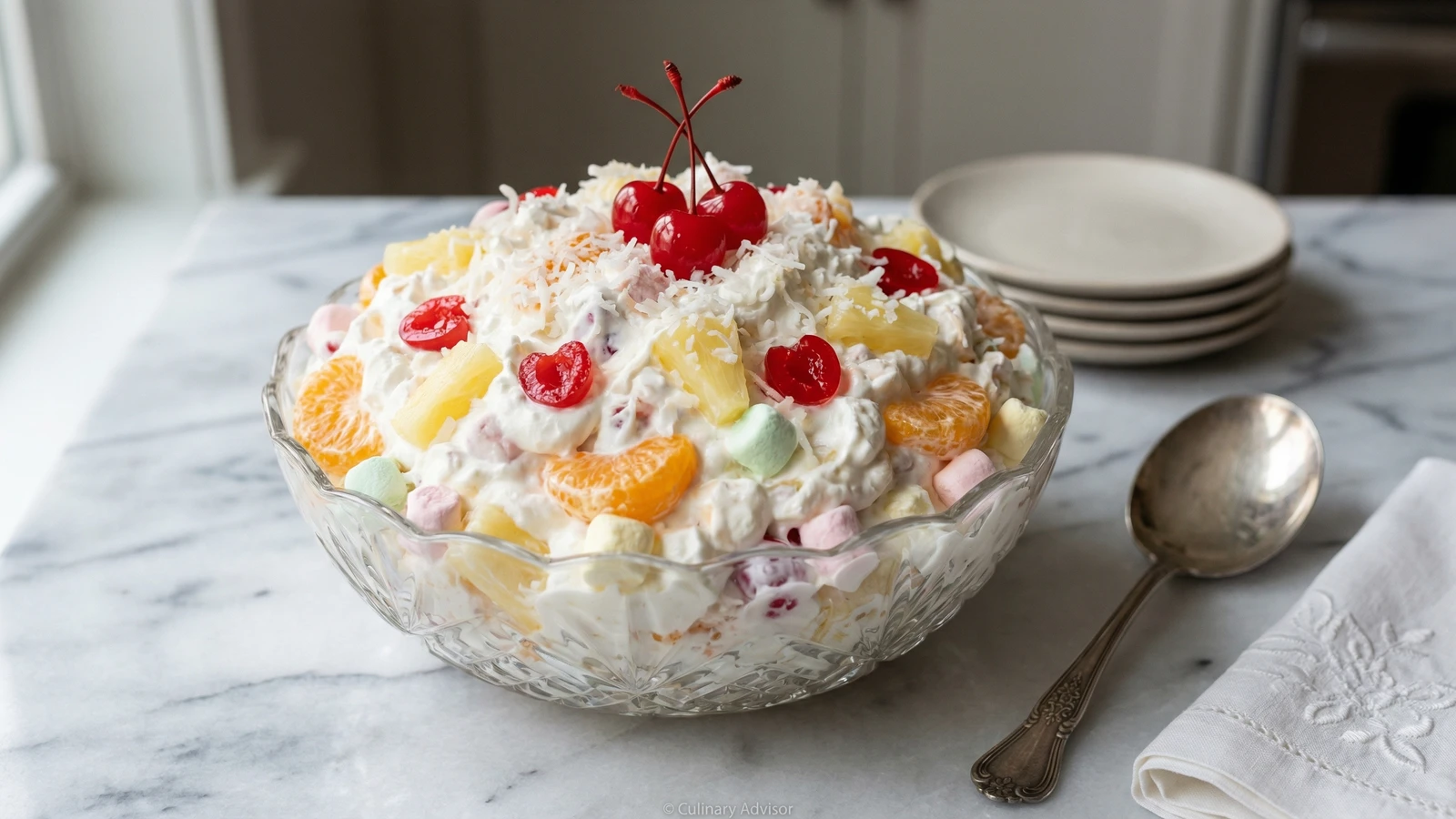
Southern Ambrosia Salad
Created by
The Southern fruit salad that graced every church supper, holiday table, and family reunion for a century, featuring tender mandarin oranges, pineapple, and coconut suspended in billowy sweetened cream.
Ambrosia takes its name from the food of the Greek gods. That seems about right. For generations of Southerners, this fruit salad represented something celestial: the dish that appeared only on Sundays, at holidays, at celebrations when ordinary food wouldn't do.
The recipe came together in the late 1800s when canned fruit and shredded coconut became available to American home cooks. What had been exotic ingredients transformed into pantry staples, and clever Southern women created something greater than the sum of its parts. By the 1920s, marshmallows joined the party. Maraschino cherries followed. The dish evolved the way all honest food does, shaped by what people loved.
I've eaten ambrosia at church potlucks in Alabama, Easter dinners in Georgia, and Christmas Eve suppers in Tennessee. The versions vary, but the spirit remains constant. This is celebration food. It appears when people gather, when tables groan under the weight of abundance, when someone has taken the time to make something special. Your grandmother made this. Her grandmother made it before her. Now you will too.
The technique, the tradition, and the story behind every dish.
Discover Culinary AdvisorIngredients
sour cream
Quantity
2 cups (16 oz)
heavy whipping cream
Quantity
1 cup
very cold
powdered sugar
Quantity
3 tablespoons
pure vanilla extract
Quantity
1 teaspoon
mandarin orange segments
Quantity
2 cans (11 oz each)
well drained
pineapple chunks
Quantity
1 can (20 oz)
well drained
sweetened shredded coconut
Quantity
1 cup
miniature marshmallows
Quantity
2 cups
maraschino cherries
Quantity
1 jar (10 oz)
drained and halved
pecans (optional)
Quantity
1/2 cup
chopped
sweetened shredded coconut
Quantity
for garnish
| Ingredient | Quantity |
|---|---|
| sour cream | 2 cups (16 oz) |
| heavy whipping creamvery cold | 1 cup |
| powdered sugar | 3 tablespoons |
| pure vanilla extract | 1 teaspoon |
| mandarin orange segmentswell drained | 2 cans (11 oz each) |
| pineapple chunkswell drained | 1 can (20 oz) |
| sweetened shredded coconut | 1 cup |
| miniature marshmallows | 2 cups |
| maraschino cherriesdrained and halved | 1 jar (10 oz) |
| pecans (optional)chopped | 1/2 cup |
| sweetened shredded coconut | for garnish |
Equipment Needed
- •Large mixing bowl
- •Fine-mesh strainer
- •Hand mixer or stand mixer with whisk attachment
- •Rubber spatula
- •Serving bowl (cut glass if you have it)
Instructions
- 1
Drain the fruit thoroughly
Here is where most ambrosia goes wrong. Set a fine-mesh strainer over a bowl and drain your mandarin oranges for at least fifteen minutes. Do the same with the pineapple chunks in a separate strainer. Excess liquid is the enemy of proper ambrosia. It turns your dressing watery and sad within hours. Press gently with paper towels to absorb remaining moisture, but don't crush the delicate oranges.
Reserve the pineapple juice. It makes an excellent addition to sweet tea or a morning smoothie. - 2
Whip the cream
Pour the cold heavy cream into a chilled mixing bowl. Beat with a hand mixer or whisk attachment until soft peaks form, about two minutes. Add the powdered sugar and vanilla, then continue beating until you reach medium peaks that hold their shape but still look silky. Don't take it further. Stiff peaks give ambrosia a gummy texture rather than the cloud-like quality you want.
- 3
Build the dressing
In your largest mixing bowl, place the sour cream. Add the whipped cream in three additions, folding gently with a rubber spatula after each. Use broad strokes from the bottom of the bowl upward, turning the bowl as you work. The goal is a uniform, billowy dressing that holds its body. Vigorous stirring deflates the whipped cream and ruins the texture.
Some old recipes call for mayonnaise instead of sour cream. Your grandmother may have made it that way. Both are correct. Sour cream gives a cleaner tang; mayonnaise adds richness. - 4
Fold in the fruit
Add the drained mandarin oranges and pineapple chunks to the dressing. Fold gently, taking care not to break the orange segments. They should remain whole, suspended in the cream like little sunset moons. A heavy hand here produces fruit mush instead of distinct bites.
- 5
Add coconut and marshmallows
Sprinkle the shredded coconut over the fruit mixture and fold to incorporate. Add the miniature marshmallows and fold again. The marshmallows will begin absorbing moisture from the dressing immediately, softening from pillowy to pleasantly chewy over time. This is a feature, not a flaw.
- 6
Finish with cherries and pecans
Scatter the halved maraschino cherries and pecans (if using) over the top and fold once or twice to partially incorporate. You want some cherries visible on the surface, their ruby color promising sweetness to come. Transfer to a serving bowl or leave in your mixing bowl if it's presentable.
Reserve a handful of cherries and a tablespoon of coconut for garnishing just before serving. - 7
Chill before serving
Cover tightly with plastic wrap pressed directly against the surface and refrigerate for at least two hours, preferably overnight. This resting time is not optional. The flavors marry, the coconut softens, and the marshmallows transform into something more interesting than they were at the start. When ready to serve, garnish with reserved cherries and a light snowfall of coconut.
Chef Tips
- •The quality of canned fruit matters more than you might think. Look for mandarin oranges packed in their own juice rather than heavy syrup. The flavor is cleaner and you avoid excess sweetness that can make ambrosia cloying.
- •For a more sophisticated take, toast the coconut lightly in a dry skillet until golden before adding. It adds a nutty depth that elevates the whole dish. Watch it carefully though. Coconut goes from golden to burnt in the time it takes to answer the telephone.
- •Some families add fresh grapes, sliced bananas, or even canned fruit cocktail. There is no wrong way to make ambrosia, only your family's way. Honor your traditions.
- •This salad travels beautifully to potlucks. Transport it in a cooler with ice packs and garnish after you arrive. It holds well for four to five hours under refrigeration.
Advance Preparation
- •Ambrosia improves overnight. Make it the day before your gathering and refrigerate. The flavors meld and the texture becomes more cohesive.
- •You can whip the cream and fold it with the sour cream up to six hours ahead. Keep refrigerated and fold in the remaining ingredients two hours before serving.
- •Drain your fruit the night before and refrigerate in separate containers. This gives the best texture in the finished dish.
- •Leftovers keep well for two to three days refrigerated, though the marshmallows will continue softening. Some prefer it this way.
Frequently Asked Questions
Nutrition Information
1 serving (about 185g)
Where cooking meets culture.
Culinary mentorship, cultural storytelling, and the editorial depth that makes cooking meaningful.
Explore Culinary Advisor