Culinary Advisor
A cooking platform built around craft, culture, and the stories behind what we eat.
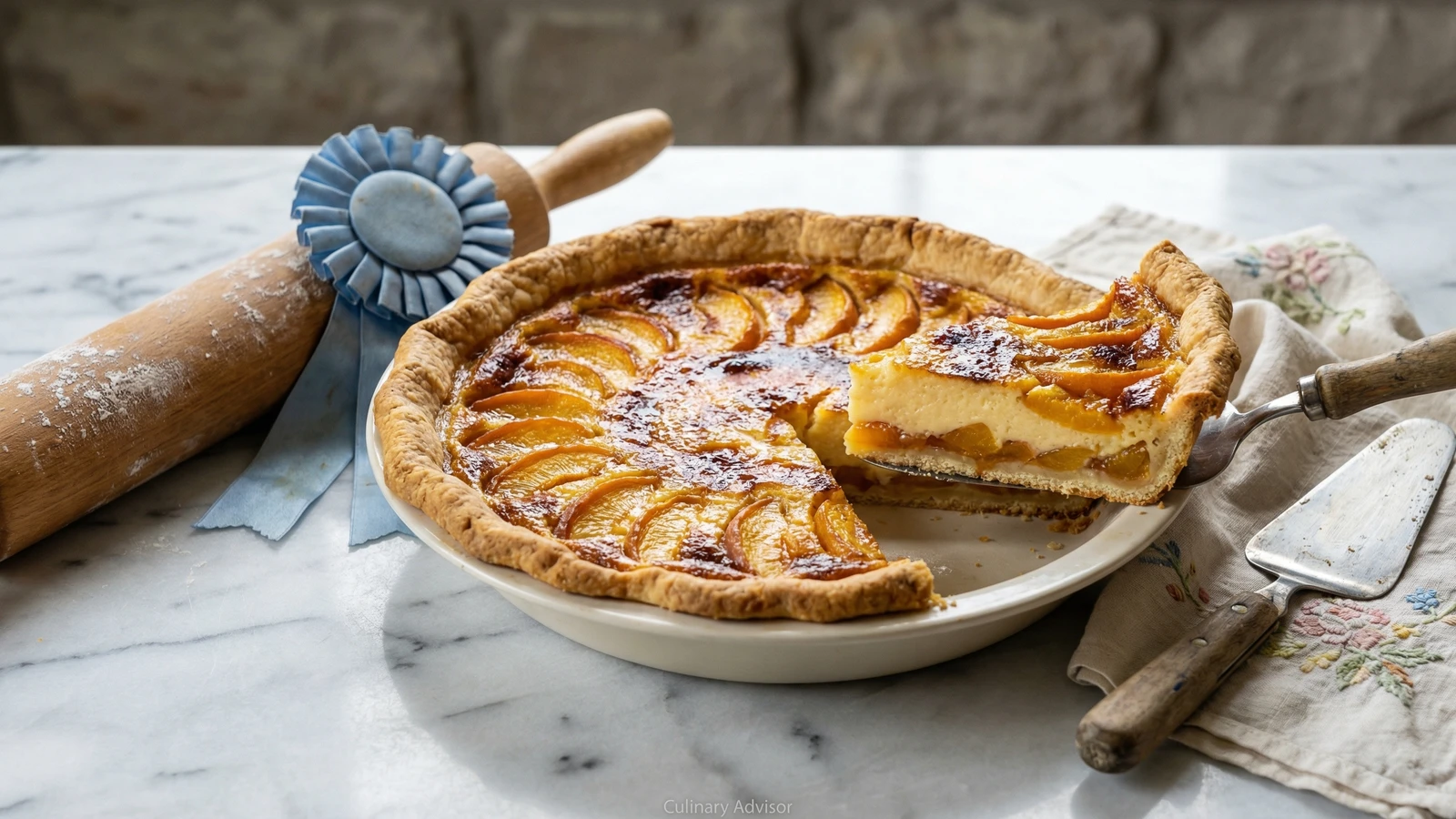
South Dakota German Kuchen Pie
A pillowy yeasted crust cradling ripe fruit beneath a trembling layer of sweet cream custard, baked until golden and served with the pride of generations of German-Russian grandmothers who carried this recipe across an ocean and a continent.
The kuchen arrived in South Dakota tucked inside the memories of German-Russian immigrants who settled the prairie in the 1870s and 1880s. These were Volga Germans and Black Sea Germans, families who had lived in Russia for generations at Catherine the Great's invitation before hardship pushed them westward again. They brought wheat farming expertise to the Dakotas. They brought their faith, their language, their stoic determination. And they brought kuchen.
This is not a pie in the American sense. The crust is a tender yeasted dough, enriched with butter and eggs, somewhere between bread and brioche. It rises in the pan before receiving its cargo of sliced fruit and that signature custard, a simple mixture of cream, eggs, and sugar that sets into something trembling and golden during the final bake. Every German-Russian grandmother had her version. Some used sour cream. Others added a whisper of cinnamon. The fruit changed with the seasons: peaches and plums in summer, apples in fall, rhubarb when spring finally broke the prairie winter.
South Dakota made kuchen its official state dessert in 2000, but the recognition was long overdue. Walk into any church basement potluck, county fair baking competition, or family reunion from Aberdeen to Sioux Falls, and you'll find kuchen. The old women still make it from memory, their hands knowing the dough's readiness better than any recipe card could explain. This version honors their tradition while giving you the measurements and techniques to succeed on your first attempt.
The technique, the tradition, and the story behind every dish.
Discover Culinary AdvisorIngredients
active dry yeast
Quantity
2 1/4 teaspoons (1 packet)
warm water
Quantity
1/4 cup
110°F
whole milk
Quantity
3/4 cup
warmed to lukewarm
granulated sugar (for dough)
Quantity
1/4 cup
fine sea salt
Quantity
1/2 teaspoon
large egg (for dough)
Quantity
1
at room temperature
unsalted butter
Quantity
4 tablespoons
melted and cooled slightly
all-purpose flour
Quantity
2 1/2 to 3 cups
ripe peaches
Quantity
3 cups sliced (about 4 medium)
or canned peaches, drained
granulated sugar (for fruit)
Quantity
1/2 cup
ground cinnamon
Quantity
1 teaspoon
large egg yolks
Quantity
3
heavy cream
Quantity
1 cup
granulated sugar (for custard)
Quantity
1/2 cup
pure vanilla extract
Quantity
1 teaspoon
nutmeg
Quantity
pinch
freshly grated
| Ingredient | Quantity |
|---|---|
| active dry yeast | 2 1/4 teaspoons (1 packet) |
| warm water110°F | 1/4 cup |
| whole milkwarmed to lukewarm | 3/4 cup |
| granulated sugar (for dough) | 1/4 cup |
| fine sea salt | 1/2 teaspoon |
| large egg (for dough)at room temperature | 1 |
| unsalted buttermelted and cooled slightly | 4 tablespoons |
| all-purpose flour | 2 1/2 to 3 cups |
| ripe peachesor canned peaches, drained | 3 cups sliced (about 4 medium) |
| granulated sugar (for fruit) | 1/2 cup |
| ground cinnamon | 1 teaspoon |
| large egg yolks | 3 |
| heavy cream | 1 cup |
| granulated sugar (for custard) | 1/2 cup |
| pure vanilla extract | 1 teaspoon |
| nutmegfreshly grated | pinch |
Equipment Needed
- •9-inch deep-dish pie plate or springform pan
- •Rimmed baking sheet
- •Large mixing bowl
- •Wooden spoon
- •Wire cooling rack
Instructions
- 1
Proof the yeast
Sprinkle the yeast over the warm water in a small bowl. The water should feel comfortably warm on your wrist, like a pleasant bath. Let stand until the surface turns foamy and smells pleasantly yeasty, about five to ten minutes. If nothing happens, your yeast is dead. Start over with fresh yeast and water that isn't too hot.
Water above 115°F kills yeast. When in doubt, err cooler. Lukewarm always works. - 2
Build the dough
In a large mixing bowl, combine the proofed yeast mixture with the lukewarm milk, sugar, salt, egg, and melted butter. Whisk until the egg is fully incorporated. Add two cups of flour and stir with a wooden spoon until a shaggy dough forms. Continue adding flour, a quarter cup at a time, until the dough pulls away from the sides of the bowl and feels soft but not sticky. You may not need all three cups.
- 3
Knead until supple
Turn the dough onto a lightly floured surface and knead for six to eight minutes. Push the heel of your hand into the dough, fold it over, rotate a quarter turn, and repeat. The finished dough should feel smooth as a baby's cheek, springing back when you poke it with a finger. It will be slightly tacky but not stick aggressively to your hands.
German-Russian grandmothers kneaded by feel, not time. When the dough feels alive under your hands and bounces back cheerfully, it's ready. - 4
First rise
Place the dough in a greased bowl, turning once to coat the top. Cover with a clean kitchen towel or plastic wrap. Set in a warm, draft-free spot until doubled in size, about one hour to ninety minutes. The prairie kitchens where this recipe was born had wood stoves radiating gentle warmth. A turned-off oven with just the light on works well in modern homes.
- 5
Prepare the fruit
While the dough rises, prepare your peaches. If using fresh, bring a pot of water to boil and blanch whole peaches for thirty seconds, then plunge into ice water. The skins will slip off easily. Slice into half-inch wedges. Toss the slices with half a cup of sugar and the cinnamon. Let sit while you prepare the pan, allowing juices to release.
Canned peaches work beautifully when fresh aren't in season. Drain them thoroughly and pat dry. The German-Russian settlers preserved summer's bounty and baked kuchen year-round. - 6
Shape the crust
Punch down the risen dough to release trapped gases. Grease a nine-inch deep-dish pie plate or a nine-inch springform pan generously with butter. Press the dough evenly into the bottom and up the sides of the pan, building a rim about one inch high. The dough should be roughly a quarter-inch thick across the bottom. Cover loosely and let rest fifteen minutes.
- 7
Arrange the fruit
Arrange the sugared peach slices in concentric circles over the dough, starting from the outer edge and working toward the center. Overlap them slightly like fallen dominoes. Pack them in generously. The fruit will shrink as it bakes, and you want abundance in every slice. Pour any accumulated juices from the bowl over the fruit.
- 8
Make the custard
Whisk together the egg yolks, heavy cream, half cup sugar, vanilla, and nutmeg in a medium bowl until smooth and uniform. The mixture should be pale yellow and pour like heavy cream. Don't whip air into it. You want a custard that sets gently, not a soufflé that puffs and falls.
- 9
Assemble and bake
Preheat your oven to 350°F. Pour the custard evenly over the arranged fruit, letting it pool in the valleys between peach slices. Some custard will soak into the dough. This is correct. Place the kuchen on a rimmed baking sheet to catch any drips. Bake for forty-five to fifty minutes, until the custard is set with just a slight wobble in the center and the crust has turned deep golden brown.
The baking sheet beneath your pan is insurance. Custard has a way of bubbling over, and cleaning burnt sugar from an oven floor is no one's idea of a pleasant afternoon. - 10
Cool and serve
Let the kuchen cool in its pan for at least thirty minutes before slicing. The custard continues to set as it cools. Serve warm or at room temperature. In South Dakota, you'll find it alongside morning coffee as often as after dinner. Leftover kuchen keeps at room temperature, covered, for two days, though it rarely survives that long.
Chef Tips
- •The traditional fruits of South Dakota kuchen follow the prairie seasons: rhubarb in spring, peaches and plums in summer, apples and pears in fall. Prune plum kuchen, made with small Italian prunes halved and arranged cut-side up, is particularly beloved in communities with strong German-Russian heritage.
- •Some old recipes call for sour cream in place of heavy cream for the custard. This produces a tangier, slightly more complex flavor that pairs especially well with stone fruits. Substitute equal parts sour cream for the heavy cream if you want to try this variation.
- •For county fair glory, brush the crust edge with an egg wash before baking and dust the finished kuchen with powdered sugar just before serving. Presentation matters when blue ribbons are at stake.
- •The dough freezes beautifully. After the first rise, punch down, wrap tightly in plastic, and freeze for up to three months. Thaw overnight in the refrigerator, then press into your pan and proceed with the recipe.
Advance Preparation
- •The dough can be made the day before and refrigerated after the first rise. It will continue to rise slowly in the cold. Let it come to room temperature for thirty minutes before pressing into the pan.
- •Assembled kuchen is best baked immediately. The custard will soak into the dough if left sitting too long before baking.
- •Baked kuchen keeps well at room temperature for two days, loosely covered. Refrigerate after that, but bring to room temperature before serving for the best texture.
Frequently Asked Questions
Nutrition Information
1 serving (about 460g)
Where cooking meets culture.
Culinary mentorship, cultural storytelling, and the editorial depth that makes cooking meaningful.
Explore Culinary Advisor