Culinary Advisor
A cooking platform built around craft, culture, and the stories behind what we eat.
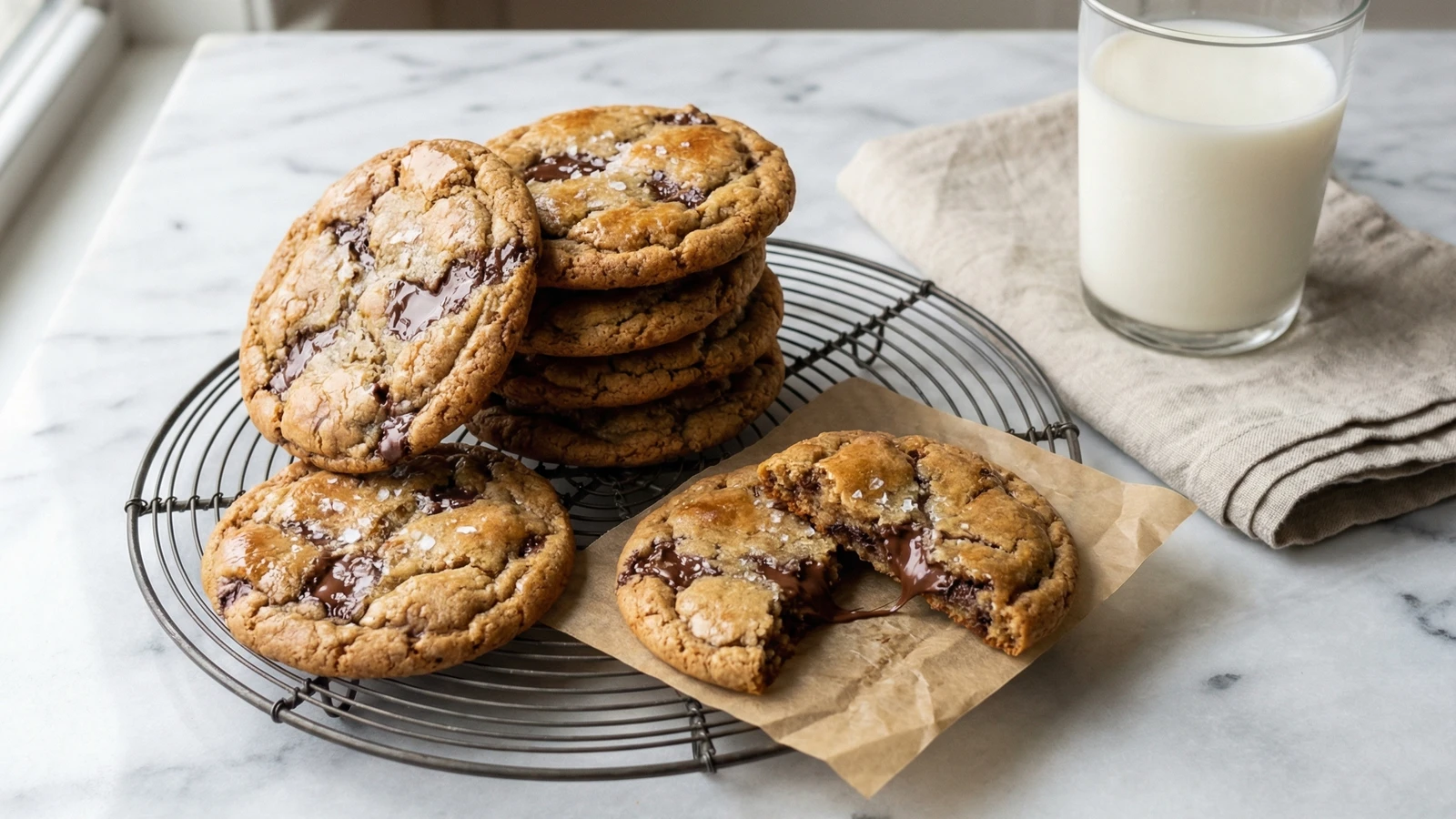
Sourdough Discard Chocolate Chip Cookies
Created by
Tangy, chewy cookies that transform your neglected sourdough discard into something magnificent. The fermentation adds depth that plain butter cookies can only dream about.
Every sourdough baker knows the guilt. That jar of discard accumulating in the refrigerator, fed and forgotten, too precious to dump down the drain but too unfocused to inspire action. These cookies solve that problem while improving on the original Toll House formula Ruth Wakefield never imagined.
The magic happens because sourdough discard brings three things to a cookie: acidity, fermentation byproducts, and residual yeast activity. The acidity tenderizes gluten while balancing sweetness. Those fermentation compounds add a subtle complexity, almost like a whisper of brown butter without the extra work. And the residual yeast creates tiny pockets of air that make the interior impossibly chewy while the edges crisp.
I stumbled onto this combination years ago when a student asked what to do with her discard. We experimented for weeks, adjusting ratios until we found the sweet spot: enough discard to matter, not so much that you're eating sourdough bread shaped like a cookie. The result is a cookie with depth. One that makes people pause and ask what's different.
You can use discard straight from the refrigerator, cold and sluggish. You can use discard that's been sitting for a week. The older and more sour your discard, the more pronounced the tang. Both work. Neither is wrong. This is forgiving, zero-waste baking at its finest.
The technique, the tradition, and the story behind every dish.
Discover Culinary AdvisorIngredients
sourdough discard, unfed
Quantity
1 cup (113g)
all-purpose flour
Quantity
2 1/4 cups (280g)
baking soda
Quantity
1 teaspoon
fine sea salt
Quantity
1 teaspoon
unsalted butter, softened
Quantity
1 cup (2 sticks, 227g)
granulated sugar
Quantity
3/4 cup (150g)
dark brown sugar
Quantity
3/4 cup (165g)
packed
large eggs, room temperature
Quantity
2
pure vanilla extract
Quantity
2 teaspoons
semisweet chocolate chips
Quantity
2 cups (340g)
flaky sea salt (optional)
Quantity
for finishing
| Ingredient | Quantity |
|---|---|
| sourdough discard, unfed | 1 cup (113g) |
| all-purpose flour | 2 1/4 cups (280g) |
| baking soda | 1 teaspoon |
| fine sea salt | 1 teaspoon |
| unsalted butter, softened | 1 cup (2 sticks, 227g) |
| granulated sugar | 3/4 cup (150g) |
| dark brown sugarpacked | 3/4 cup (165g) |
| large eggs, room temperature | 2 |
| pure vanilla extract | 2 teaspoons |
| semisweet chocolate chips | 2 cups (340g) |
| flaky sea salt (optional) | for finishing |
Equipment Needed
- •Stand mixer or hand mixer
- •2-tablespoon cookie scoop
- •Two rimmed baking sheets
- •Wire cooling rack
Instructions
- 1
Whisk dry ingredients
In a medium bowl, whisk together the flour, baking soda, and fine sea salt until thoroughly combined. The baking soda is critical here. It reacts with the acidity in your sourdough discard to create lift. Set aside.
Weigh your flour if possible. Scooped flour can vary by 30% and throw off the texture completely. - 2
Cream butter and sugars
In a large bowl or stand mixer fitted with the paddle attachment, beat the softened butter with both sugars on medium speed for 3 to 4 minutes. You're looking for a pale, fluffy mixture that has roughly doubled in volume. Scrape down the sides halfway through. This aeration is the foundation of your cookie's texture.
Dark brown sugar contains more molasses than light, which adds moisture and chewiness. Don't substitute light brown sugar if you want that characteristic dense center. - 3
Add eggs and vanilla
Add the eggs one at a time, beating well after each addition until fully incorporated. The mixture may look slightly curdled after the first egg. That's fine. It will smooth out. Add the vanilla extract and beat for another 30 seconds. The batter should look smooth and glossy.
- 4
Incorporate sourdough discard
Add the sourdough discard all at once and mix on low speed until just combined, about 30 seconds. The discard will thin the batter noticeably. Don't worry. The flour will bring it back. Give your discard a good stir before measuring since it tends to separate in the jar.
Cold discard straight from the refrigerator works perfectly. No need to bring it to room temperature or feed it first. - 5
Add flour mixture
Add the flour mixture in two additions, mixing on low speed just until the last streaks of flour disappear. Overmixing develops gluten and creates tough cookies. Stop the mixer while you can still see a few traces of flour, then finish incorporating by hand with a rubber spatula.
- 6
Fold in chocolate
Fold in the chocolate chips with your spatula, distributing them evenly throughout the dough. The dough will be soft and sticky at this point, which is exactly right. Resist the urge to add more flour.
- 7
Chill the dough
Cover the bowl tightly with plastic wrap and refrigerate for at least 2 hours, or overnight. This rest is not optional. Chilling solidifies the butter for better spreading control and allows the flour to fully hydrate. The flavors meld and deepen. The sourdough tang becomes more pronounced. Patience here pays dividends.
For the most complex flavor, chill the dough for 24 to 72 hours. The longer rest allows the sourdough cultures to continue working slowly, building depth that shorter rests cannot achieve. - 8
Preheat and prepare
When ready to bake, position racks in the upper and lower thirds of your oven and preheat to 375°F. Line two baking sheets with parchment paper. Remove dough from refrigerator while oven heats.
- 9
Portion the dough
Scoop dough into 2-tablespoon portions (roughly 45g each) and place on prepared sheets, leaving 3 inches between cookies. They spread considerably. A cookie scoop ensures uniform size and even baking. Roll each portion into a rough ball, then gently flatten the top slightly with your palm.
For bakery-style cookies with irregular edges and pools of chocolate, tear each dough ball in half and smash the two halves back together with the ragged edges facing up. - 10
Bake until golden
Bake for 10 to 12 minutes, rotating the pans front to back and switching racks halfway through. The cookies are done when the edges are golden brown and set but the centers still look slightly underdone and puffy. They will continue cooking on the hot pan. Pull them when they look not quite done. This is the secret to chewy centers.
- 11
Finish and cool
Remove from oven and immediately sprinkle each cookie with a few flakes of finishing salt while the chocolate is still molten. Let cookies cool on the baking sheet for 5 minutes, during which they'll deflate slightly and the centers will set. Transfer to a wire rack to cool completely. Or eat them warm, which is your right as the baker.
Chef Tips
- •Your discard's age affects the final flavor. Week-old discard produces cookies with noticeable tang. Freshly fed discard that's been sitting just a day creates subtler complexity. Neither is wrong, just different. Experiment to find your preference.
- •For maximum chocolate impact, use a mix of chips and roughly chopped chocolate bars. The chips hold their shape; the chopped pieces create those coveted chocolate streaks and pools.
- •These cookies freeze beautifully as portioned dough balls. Freeze on a sheet pan, then transfer to a freezer bag. Bake directly from frozen at 375°F for 13 to 15 minutes. No thawing required.
- •If your discard is extremely sour and liquid, use a bit less. If it's thick and paste-like, you can use the full amount. Consistency varies wildly between starters, which is part of the charm.
Advance Preparation
- •Dough must chill at least 2 hours and can rest in the refrigerator for up to 5 days, improving in flavor each day.
- •Portioned dough balls freeze for up to 3 months. Label with date and baking temperature.
- •Baked cookies keep in an airtight container at room temperature for 5 days, though they rarely last that long.
Frequently Asked Questions
Nutrition Information
1 serving (about 42g)
Where cooking meets culture.
Culinary mentorship, cultural storytelling, and the editorial depth that makes cooking meaningful.
Explore Culinary Advisor