Culinary Advisor
A cooking platform built around craft, culture, and the stories behind what we eat.
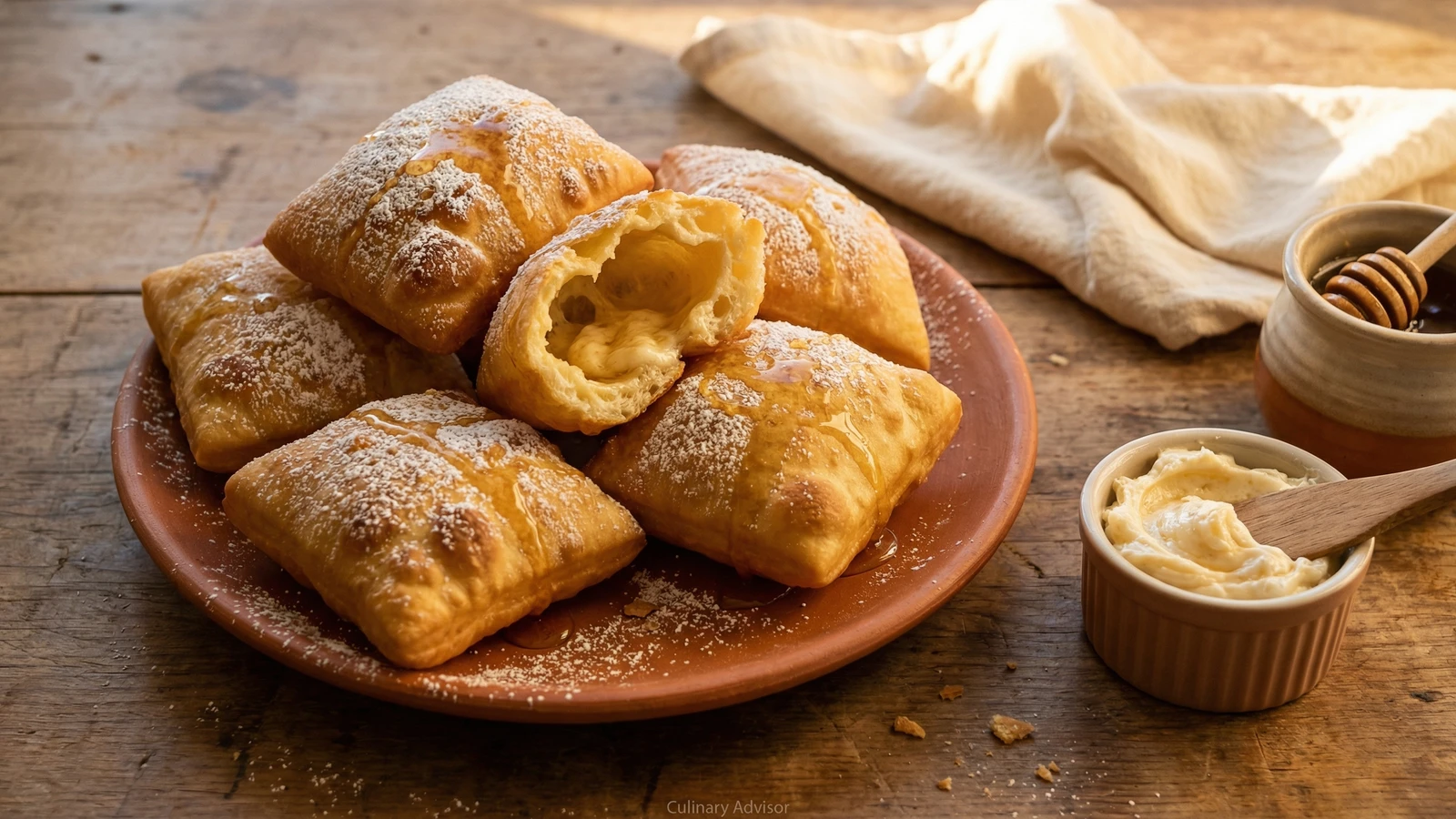
Sopapillas with Honey Butter
Created by Chef Remy
Puffy, golden pillows of fried dough dusted in powdered sugar and torn open to reveal steamy hollows just begging for a generous swipe of whipped honey butter, the kind of treat that makes you feel like a kid at a county fair.
The first time I watched sopapillas puff up in hot oil, I understood something about the magic of food. You start with the simplest ingredients on earth: flour, water, a bit of fat. You roll it thin, drop it into screaming hot oil, and within seconds that flat little square transforms into a golden pillow, hollow inside, ready to hold whatever sweetness you can imagine.
This is country cooking at its finest. No fancy equipment, no exotic ingredients, just honest technique passed down through generations. My grandmother Evangeline made a version of these she called oreilles de cochon, pig's ears, twisted into spirals and drizzled with cane syrup. Same principle, same joy. The Southwestern folks claim sopapillas as their own, and they're right to be proud. But good fried dough belongs to every culture that figured out what happens when flour meets hot oil.
At Lagniappe, we serve these with whipped honey butter that melts into the hollow centers like a dream. The honey butter is my addition to the tradition, because in Louisiana we believe there's no such thing as too much butter. You tear open that warm pillow, stuff it with sweet golden butter, and for a moment everything else in the world can wait.
The technique, the tradition, and the story behind every dish.
Discover Culinary AdvisorIngredients
all-purpose flour
Quantity
2 cups (250g)
baking powder
Quantity
2 teaspoons
fine sea salt
Quantity
1 teaspoon
vegetable shortening or cold unsalted butter
Quantity
2 tablespoons
warm water
Quantity
3/4 cup
about 110°F
vegetable oil or peanut oil
Quantity
about 3 inches deep
for frying
powdered sugar
Quantity
for dusting
unsalted butter (for honey butter)
Quantity
1/2 cup (1 stick/113g)
softened
Louisiana cane honey or wildflower honey
Quantity
1/4 cup
fine sea salt (for honey butter)
Quantity
1/8 teaspoon
ground cinnamon (optional)
Quantity
pinch
| Ingredient | Quantity |
|---|---|
| all-purpose flour | 2 cups (250g) |
| baking powder | 2 teaspoons |
| fine sea salt | 1 teaspoon |
| vegetable shortening or cold unsalted butter | 2 tablespoons |
| warm waterabout 110°F | 3/4 cup |
| vegetable oil or peanut oilfor frying | about 3 inches deep |
| powdered sugar | for dusting |
| unsalted butter (for honey butter)softened | 1/2 cup (1 stick/113g) |
| Louisiana cane honey or wildflower honey | 1/4 cup |
| fine sea salt (for honey butter) | 1/8 teaspoon |
| ground cinnamon (optional) | pinch |
Equipment Needed
- •Large Dutch oven or deep heavy pot
- •Deep-fry thermometer
- •Rolling pin
- •Slotted spoon or spider strainer
- •Wire cooling rack
Instructions
- 1
Make the honey butter first
In a medium bowl, beat the softened butter with a wooden spoon or hand mixer until light and creamy, about two minutes. Drizzle in the honey while beating, then add the salt and cinnamon. Keep beating until everything comes together into a fluffy, golden spread. Taste it. That's the bayou way. Adjust the honey if you want it sweeter. Set aside at room temperature while you make the dough.
Louisiana cane honey has a deeper, more complex flavor than clover honey. If you can find it, use it. The difference shows. - 2
Build the dough
Whisk together the flour, baking powder, and salt in a large bowl. Add the shortening and work it into the flour using your fingertips or a pastry cutter. Rub and pinch until the mixture looks like coarse cornmeal with a few pea-sized pieces remaining. Those little fat pockets create flaky layers when the dough hits the hot oil.
- 3
Add the water
Make a well in the center and pour in the warm water. Stir with a fork, pulling flour from the edges into the center. Once a shaggy dough forms, turn it onto a lightly floured surface and knead gently for about two minutes. You're not making bread here. The dough should be smooth, soft, and slightly tacky but not sticky. If it clings to your hands, dust with a bit more flour.
Warm water activates the baking powder and relaxes the gluten, making the dough easier to roll. Cold water produces tough sopapillas that won't puff properly. - 4
Rest the dough
Shape the dough into a ball, cover with a clean kitchen towel, and let it rest for twenty minutes. This rest is not optional. The gluten needs time to relax, or your sopapillas will shrink back when you roll them and refuse to puff in the oil. Patience here pays off with pillowy results.
- 5
Heat the oil
Pour oil into a large Dutch oven or deep heavy pot to a depth of three inches. Heat over medium-high until a deep-fry thermometer reads 375°F. This temperature is critical. Too cool and the sopapillas absorb oil and turn greasy. Too hot and they brown before the inside cooks through and puffs. At Lagniappe, we test the oil with a small scrap of dough. It should sizzle immediately and float to the surface within seconds.
- 6
Roll and cut
Divide the dough in half. Roll one portion on a lightly floured surface to about one-eighth inch thickness. Cut into three-inch squares or triangles using a sharp knife or pizza cutter. Clean cuts help the sopapillas puff evenly. Do not twist the cutter or knife, just press straight down. Keep the other half of dough covered while you work.
- 7
Fry to golden perfection
Slide two or three pieces of dough into the hot oil without crowding the pot. They will sink, then rise to the surface within seconds. Use a slotted spoon to gently press them under the oil repeatedly for the first thirty seconds. This encourages even puffing. Fry until golden brown on the bottom, about one minute, then flip and fry the other side until equally golden, another thirty to forty-five seconds. The sopapillas should be puffed up like little pillows, hollow inside.
That repeated dunking motion is the secret to maximum puff. Without it, sopapillas often stay flat or only partially inflate. - 8
Drain and dust
Transfer fried sopapillas to a wire rack set over a baking sheet or to a plate lined with paper towels. Let excess oil drain for just a moment, then dust generously with powdered sugar while still warm. The sugar will melt slightly and cling to the surface. Continue frying remaining dough, letting the oil return to 375°F between batches.
- 9
Serve immediately
Pile the warm sopapillas on a platter with the honey butter alongside. Show your guests how it's done: tear open a corner of the pillow, slather honey butter inside, and let it melt into the steamy hollow. Drizzle extra honey over the top if you like. These wait for no one. The magic lives in that moment when warm dough meets sweet butter.
Chef Tips
- •The dough can be made ahead and refrigerated overnight. Let it come to room temperature for thirty minutes before rolling, or it will fight you.
- •If your sopapillas aren't puffing, check your oil temperature first. Then check your dough thickness. Too thick and they won't puff; too thin and they'll crisp before the air pocket forms. One-eighth inch is the sweet spot.
- •Leftover sopapillas can be reheated in a 350°F oven for five minutes, but they'll never be as good as fresh. Make only what you'll eat. Trust me on this.
- •For a savory version, skip the powdered sugar and serve with butter and sea salt, or stuff with seasoned ground beef and cheese. Same dough, different destination.
Advance Preparation
- •Honey butter can be made up to one week ahead and stored refrigerated. Bring to room temperature before serving so it's soft enough to spread.
- •Dough can be made and refrigerated for up to 24 hours. Let it warm up slightly before rolling.
- •Do not fry sopapillas ahead. They must be served immediately after frying for best texture.
Frequently Asked Questions
Nutrition Information
1 serving (about 35g)
Where cooking meets culture.
Culinary mentorship, cultural storytelling, and the editorial depth that makes cooking meaningful.
Explore Culinary Advisor