Culinary Advisor
A cooking platform built around craft, culture, and the stories behind what we eat.
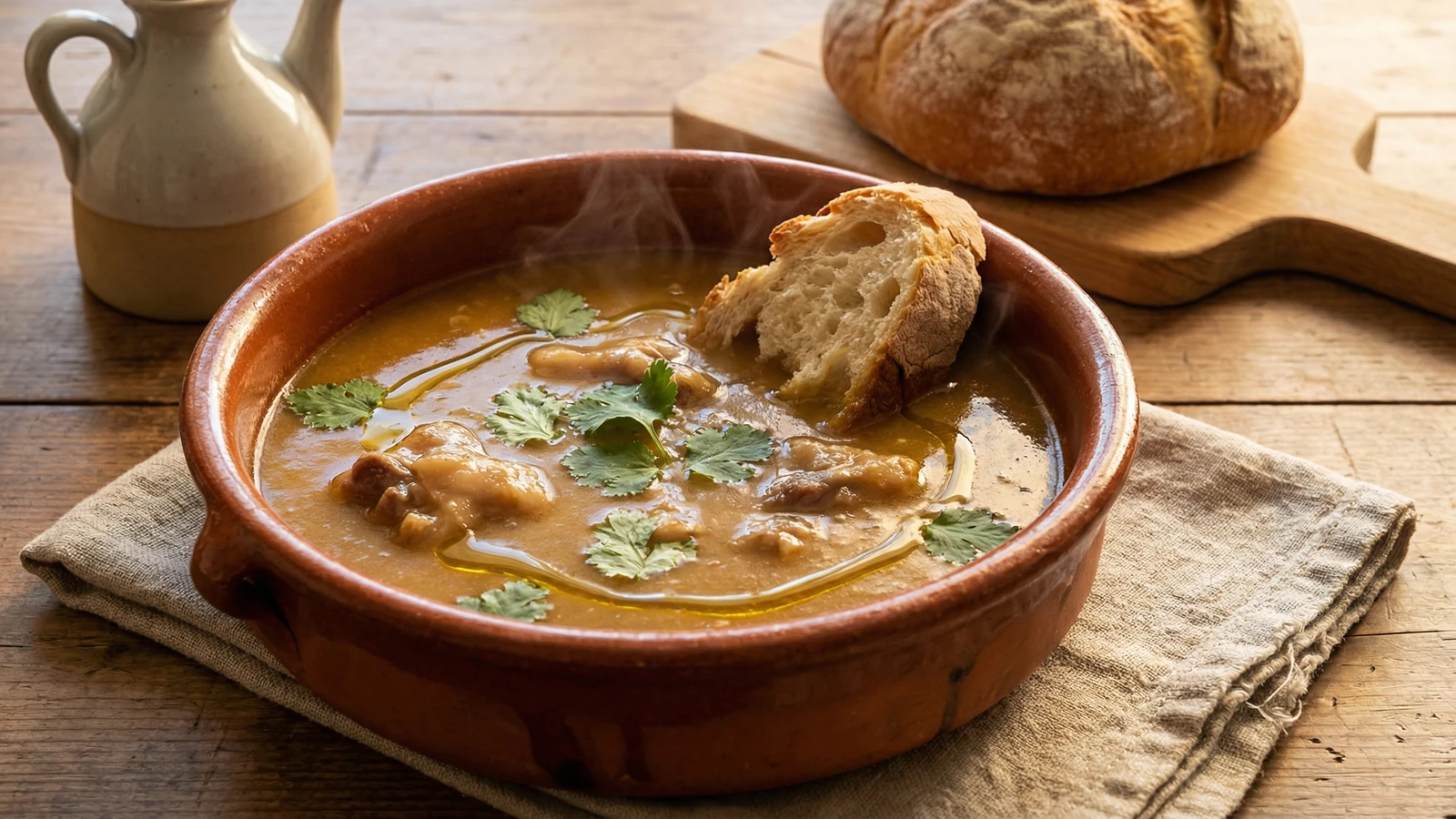
Sopa de Pezinhos de Coentrada
Created by
The lamb trotter soup of Alentejo, where nothing was wasted and everything was transformed. Collagen-rich broth, sharp with garlic and coentros, bread to drink it all in. Offal cooking at its finest.
This is a dish most people have never heard of. That's exactly why I'm documenting it.
Sopa de pezinhos de coentrada belongs to the old Alentejo, to the grandmothers who learned to make something extraordinary from the parts nobody wanted. Lamb trotters. Feet. The bits the butcher used to give away or throw to the dogs. In the hands of someone who knew what she was doing, those feet became liquid silk.
I found this recipe in a village outside Évora, sitting with a woman named Dona Amélia who was ninety-three years old. Her hands shook when she talked, but they were steady when she showed me how to clean the trotters, how long to simmer them, when to add the coentros. She learned it from her mother, who learned it from hers. She has no grandchildren who cook. "When I go, it goes with me," she said. Not if I can help it.
The broth turns silky from the collagen. The garlic hits you first, then the sharp brightness of coentros, then a splash of vinegar that cuts through the richness. You eat it with bread, always, the bread soaking up every drop. This is survival food. Genius food. The kind of cooking that proves poverty breeds creativity. Uma cozinha sem alma é só combustível. This dish has more soul than anything on a restaurant menu.
Sopa de pezinhos emerged from Alentejo's tradition of whole-animal cooking, where rural poverty demanded that nothing be wasted. Lamb and goat trotters provided free protein and precious collagen for families who couldn't afford prime cuts. The dish nearly disappeared as younger generations moved to cities, but it survives in villages where the oldest women still remember how their mothers made it.
The technique, the tradition, and the story behind every dish.
Discover Culinary AdvisorIngredients
lamb trotters (pezinhos)
Quantity
1 kg
cleaned and split by butcher
water
Quantity
2.5 liters
onion
Quantity
1 large
quartered
bay leaves
Quantity
2
black peppercorns
Quantity
1 teaspoon
coarse salt
Quantity
1 teaspoon, plus more to taste
garlic
Quantity
8 cloves
minced
extra virgin olive oil (azeite)
Quantity
1/2 cup
fresh cilantro (coentros)
Quantity
2 large bunches
roughly chopped
white wine vinegar
Quantity
3 tablespoons
day-old bread
Quantity
6 thick slices
black pepper
Quantity
freshly ground, to taste
| Ingredient | Quantity |
|---|---|
| lamb trotters (pezinhos)cleaned and split by butcher | 1 kg |
| water | 2.5 liters |
| onionquartered | 1 large |
| bay leaves | 2 |
| black peppercorns | 1 teaspoon |
| coarse salt | 1 teaspoon, plus more to taste |
| garlicminced | 8 cloves |
| extra virgin olive oil (azeite) | 1/2 cup |
| fresh cilantro (coentros)roughly chopped | 2 large bunches |
| white wine vinegar | 3 tablespoons |
| day-old bread | 6 thick slices |
| black pepper | freshly ground, to taste |
Equipment Needed
- •Large heavy pot (6-8 liters)
- •Fine mesh sieve
- •Deep soup bowls
Instructions
- 1
Clean the trotters
If your butcher hasn't done it already, scrub the trotters thoroughly under cold running water. Remove any hair by singeing over a flame or scraping with a knife. Split them lengthwise if not already done. This is peasant cooking. Don't be squeamish. These humble feet are about to become something beautiful.
Ask your butcher to clean and split the trotters. A good butcher will do this for you. If they look at you strangely, find a Portuguese or halal butcher who understands offal. - 2
Start the broth
Place the trotters in a large heavy pot. Cover with the cold water. Add the quartered onion, bay leaves, peppercorns, and salt. Bring to a boil over high heat. The moment it boils, reduce to a bare simmer. Skim off any foam that rises to the surface in the first 15 minutes. This keeps the broth clean.
Cold water start is important. It draws out more collagen than dropping trotters into boiling water. - 3
Simmer slowly
Let the trotters simmer gently for 2 and a half to 3 hours. The broth should barely bubble. You'll know it's ready when the meat falls easily from the bones and the liquid has turned slightly viscous, almost silky. Dona Amélia told me: "When you stir and it feels heavier than water, you're close." She was right.
If you refrigerate this broth overnight, it will set like jelly. That's the collagen. That's the goal. - 4
Prepare the meat
Remove the trotters from the broth and let them cool slightly. Pick the meat from the bones and chop it into small pieces. Discard the bones, cartilage, and any tough bits. Strain the broth through a fine sieve and return it to the pot. Add the chopped meat back to the broth.
- 5
Build the coentrada
In a small pan, warm the olive oil over medium-low heat. Add the minced garlic and cook for just 30 seconds, until fragrant but not browned. Remove from heat immediately. Add most of the chopped coentros to the oil (reserve some for garnish) and stir. The residual heat will bloom the herbs. This garlic and cilantro mixture is the coentrada, the soul of the soup.
Don't brown the garlic. The moment you smell it, pull the pan off the heat. Burned garlic is bitter garlic. - 6
Finish the soup
Bring the broth and meat back to a gentle simmer. Stir in the coentrada mixture. Add the vinegar. Taste and adjust the salt. The vinegar is essential. It cuts through the richness of the collagen and brightens everything. Without it, the soup can feel heavy. With it, you can eat bowl after bowl.
- 7
Serve with bread
Place a thick slice of day-old bread in each deep bowl. Ladle the hot soup over the bread, making sure each bowl gets plenty of meat. The bread should drink the broth but hold its shape. Scatter the reserved coentros on top. Drizzle with your best azeite. Serve immediately, while steam still rises. This is food that doesn't wait.
Chef Tips
- •The quality of the trotters matters. Look for lamb rather than mutton if you can find it. Younger animals have more delicate flavor and cleaner collagen. Portuguese, halal, or Greek butchers are your best sources.
- •You can make this with kid goat trotters (cabrito) as well. In some parts of Alentejo, goat is more traditional than lamb. The method is identical.
- •The soup improves on the second day. The collagen firms up overnight, and when you reheat it, the texture becomes even more luxurious. Make a big batch.
- •If the broth doesn't set when chilled, you didn't simmer long enough or you used too much water. Next time, cook longer or start with less liquid. The jelly is the proof.
- •Some villages add a handful of dried pennyroyal (poejo) along with the coentros. If you can find it, try it. It adds a minty edge that's traditional in parts of Alentejo.
Advance Preparation
- •The broth can and should be made a day ahead. Refrigerate overnight; the fat will solidify on top for easy removal, and the broth will set into a rich jelly. Reheat gently before adding the coentrada.
- •The coentrada (garlic and cilantro in oil) must be made fresh, just before serving. Coentros loses its brightness if it sits.
- •Day-old bread is essential. If your bread is too fresh, slice it and leave it uncovered overnight to dry.
Frequently Asked Questions
Nutrition Information
1 serving (about 450g)
Where cooking meets culture.
Culinary mentorship, cultural storytelling, and the editorial depth that makes cooking meaningful.
Explore Culinary Advisor