Culinary Advisor
A cooking platform built around craft, culture, and the stories behind what we eat.
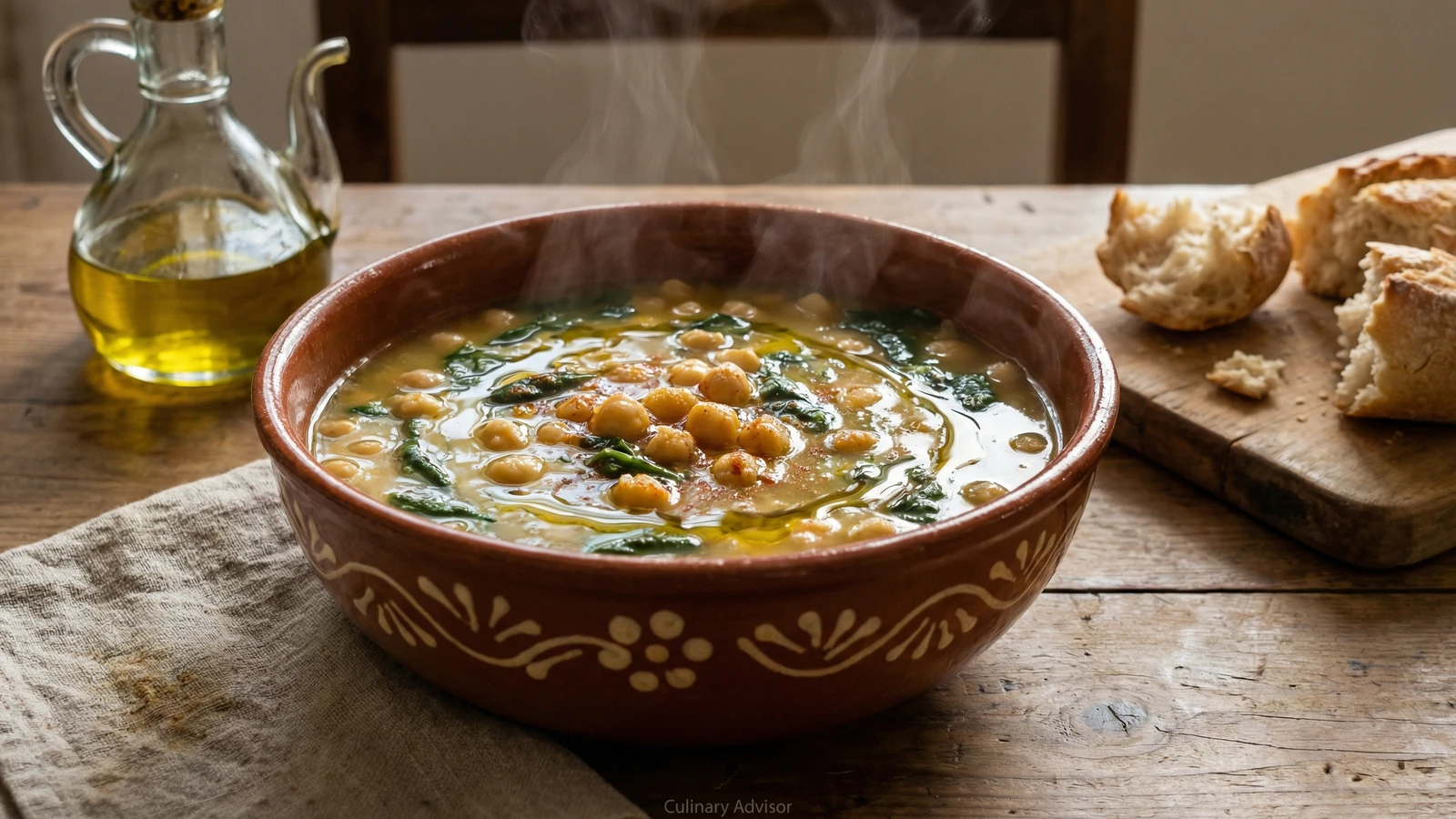
Sopa de Grão com Espinafres
Created by
The soup of Quaresma and cold evenings, where humble chickpeas meet tender spinach in golden broth. Pão, azeite, sempre. This is what comfort tastes like in Portugal.
Every grandmother in Portugal has a version of this soup. Every single one. And when you ask them for the recipe, they'll wave their hand and say "um pouco disto, um pouco daquilo." A little of this, a little of that. That's how this soup works. It doesn't demand precision. It demands patience and good ingredients.
Avó Leonor made this every Friday during Quaresma, the forty days of Lent when meat disappeared from the table. But the truth is, she made it year-round because it's cheap, it's warming, and it fills you up without asking much of you. Chickpeas she'd soak overnight in a clay pot by the window. Spinach from whoever had extra in the garden. Azeite from Alentejo, always. The good stuff, because you taste it directly.
The secret, if there is one, is the refogado. Onion and garlic cooked slow in olive oil until they practically dissolve. That's your flavor foundation. Rush it and you've made something ordinary. Take your time and you've made something that tastes like it simmered for hours even when it didn't.
At my Mesa da Avó dinners, I serve this soup in the winter months with thick slices of broa and a cruet of azeite on the table. People always look surprised that something so simple can taste so complete. That's the genius of Portuguese cooking. We don't complicate what should be humble. We respect it.
Sopa de grão has been a Lenten staple in Portugal since the Middle Ages, when the Catholic Church forbade meat during the forty days before Easter. Chickpeas, introduced to the Iberian Peninsula by the Moors, became the protein that sustained families through weeks of abstinence. The addition of spinach varies by region: in Alentejo, you might find couve instead, while coastal areas sometimes add a splash of vinegar.
The technique, the tradition, and the story behind every dish.
Discover Culinary AdvisorIngredients
dried chickpeas
Quantity
300g
soaked overnight in cold water
bay leaf
Quantity
1
extra virgin olive oil (azeite)
Quantity
1/4 cup, plus more for serving
onion
Quantity
1 large
diced
garlic
Quantity
4 cloves
minced
sweet paprika (pimentão doce)
Quantity
1 teaspoon
water or vegetable broth
Quantity
1.5 liters
fresh spinach
Quantity
300g
roughly chopped
sea salt
Quantity
1 teaspoon, or to taste
black pepper
Quantity
freshly ground, to taste
crusty bread
Quantity
for serving
| Ingredient | Quantity |
|---|---|
| dried chickpeassoaked overnight in cold water | 300g |
| bay leaf | 1 |
| extra virgin olive oil (azeite) | 1/4 cup, plus more for serving |
| oniondiced | 1 large |
| garlicminced | 4 cloves |
| sweet paprika (pimentão doce) | 1 teaspoon |
| water or vegetable broth | 1.5 liters |
| fresh spinachroughly chopped | 300g |
| sea salt | 1 teaspoon, or to taste |
| black pepper | freshly ground, to taste |
| crusty bread | for serving |
Equipment Needed
- •Large heavy-bottomed pot for the refogado and soup
- •Separate pot for cooking chickpeas
- •Deep soup bowls
- •Olive oil cruet for the table
Instructions
- 1
Cook the chickpeas
Drain the soaked chickpeas and place them in a large pot with the bay leaf. Cover with fresh cold water by about 8 centimeters. Bring to a boil, then reduce to a gentle simmer. Cook uncovered until the chickpeas are completely tender, about 1 hour to 1 hour 15 minutes. They should crush easily between your fingers. Don't salt the water yet. Salt toughens the skins.
Save that cooking liquid. It's liquid gold for the soup, full of starch and flavor. Don't even think about throwing it away. - 2
Build the refogado
While the chickpeas cook, start your refogado. In a separate heavy pot, warm the olive oil over medium-low heat. Add the diced onion and a pinch of salt. Cook slowly, stirring occasionally, until the onion turns soft and golden, about 12 to 15 minutes. Não tenhas pressa. Add the garlic and cook for another minute until fragrant. Stir in the paprika and let it bloom in the oil for 30 seconds. The kitchen should smell of sweet smoke and good azeite.
Avó Leonor always said: a refogado rushed is a refogado ruined. The onion needs to go from raw to golden to nearly melting. That's where the depth comes from. - 3
Combine and simmer
When the chickpeas are tender, add them to the refogado along with about 1 liter of their cooking liquid. Add more water or broth if needed to reach your desired consistency. Season with salt and pepper. Bring to a simmer and let everything cook together for 15 minutes so the flavors marry. Taste and adjust the seasoning.
- 4
Add the spinach
Add the chopped spinach to the pot in handfuls, stirring each addition until it wilts before adding more. The spinach cooks in just 2 to 3 minutes. It should be tender but still bright green. Overcook it and it turns army green and bitter. Remove the bay leaf.
- 5
Serve with azeite
Ladle the soup into deep bowls. Drizzle each serving generously with your best olive oil. As avós sabem. The grandmothers know. The azeite at the end is not optional. It's what makes the soup. Serve immediately with thick slices of crusty bread for dipping. Some families crack a poached egg into each bowl. Some don't. Both are correct.
Chef Tips
- •If time is against you, canned chickpeas work. Drain them, rinse them, and add them with store-bought vegetable broth. It won't be the same, but it'll still be good. Use two 400g cans and skip the first step entirely.
- •Some grandmothers from Beira add a small potato to the soup and mash it at the end to thicken the broth. Others think this is heresy. I stay out of these debates.
- •A poached egg dropped into each bowl turns this from light supper into a full meal. Crack the egg directly into the hot soup after ladling, cover for 3 minutes, and let the residual heat set the white while keeping the yolk runny.
- •This soup is even better the next day, though the spinach will lose its bright color. If reheating, add a handful of fresh spinach at the end to bring the green back.
Advance Preparation
- •Chickpeas must soak overnight, 8 to 12 hours minimum. Plan ahead.
- •The soup base (without spinach) can be made a day ahead and refrigerated. Add fresh spinach when reheating.
- •Cooked chickpeas keep refrigerated for 3 days in their cooking liquid. Make extra and freeze some for next time.
Frequently Asked Questions
Nutrition Information
1 serving (about 330g)
Where cooking meets culture.
Culinary mentorship, cultural storytelling, and the editorial depth that makes cooking meaningful.
Explore Culinary Advisor