Culinary Advisor
A cooking platform built around craft, culture, and the stories behind what we eat.
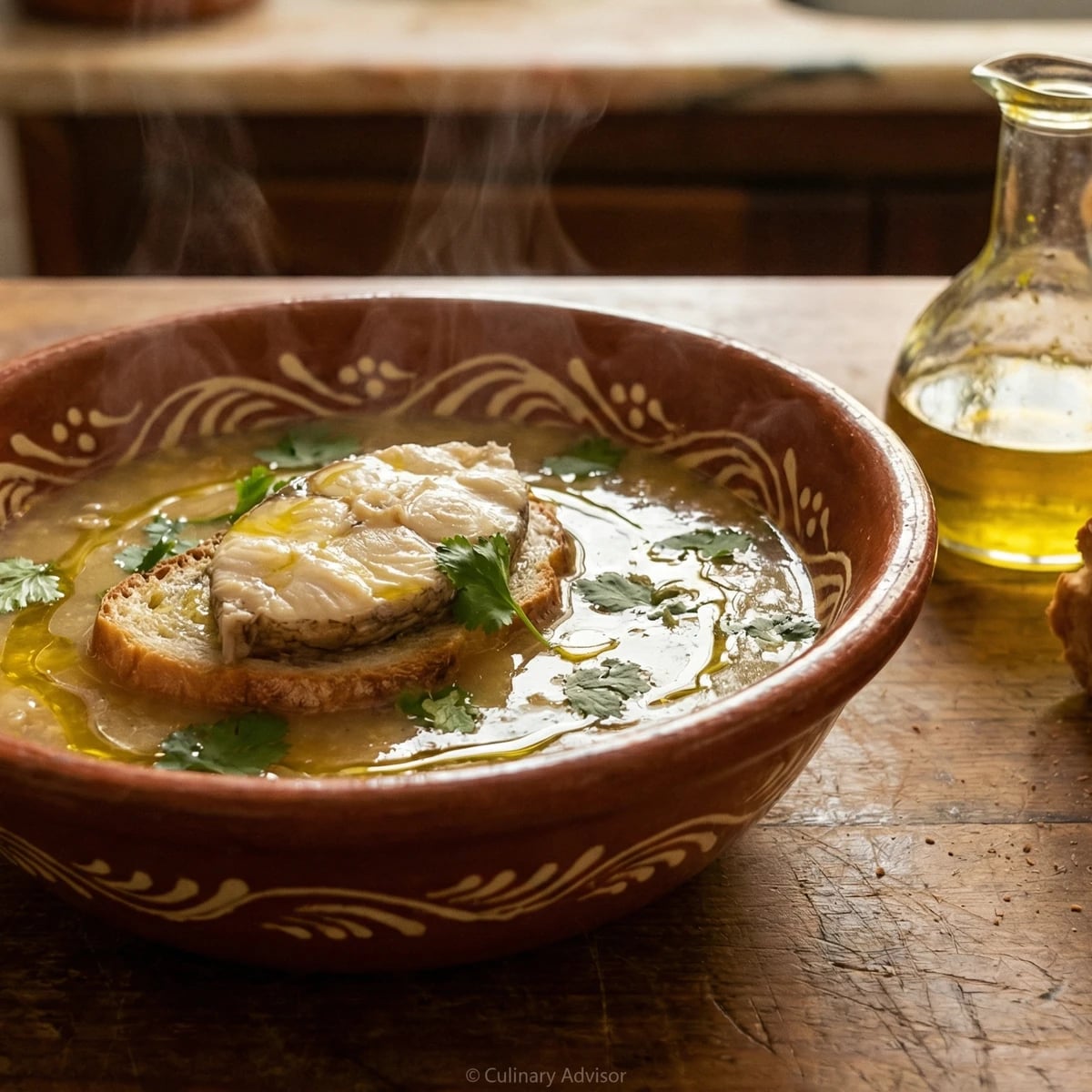
Sopa de Cação
Created by Chef Margarida
Dogfish shark marinated in vinha d'alhos, simmered and ladled over thick bread. Coastal Alentejo in a bowl. A dish the grandmothers made that we're in danger of forgetting.
I almost never tasted this dish. By the time I started documenting recipes, most of the grandmothers who knew how to make sopa de cação had already passed. I found it in Sines, at the kitchen table of a woman in her nineties whose husband had been a fisherman. She laughed when I asked about it. "Ninguém quer saber disso," she said. Nobody wants to know about that anymore.
But I want to know. This soup tells the story of coastal Alentejo, where the fishermen brought in cação and their wives transformed it into something remarkable. The fish is nothing special on its own. It can be strong, almost ammonia-sharp if not treated properly. But the vinha d'alhos marinade, that ancient combination of vinegar and garlic and coentros, changes everything. It softens the fish, takes away the harshness, leaves behind something delicate and clean.
The bread is not optional. This is a sopa, which in Alentejo means bread is the foundation. Thick slices of pão alentejano at the bottom of the bowl, drinking the broth, turning soft but not dissolving. The fish on top. Coentros everywhere, that sharp green brightness that tells you this is southern Portugal.
At Mesa da Avó, I serve this soup as a tribute to the coastal grandmothers. Most of my guests have never heard of it. That's exactly why I make it. A cozinha é memória, and some memories need to be saved before they disappear completely.
Ingredients
dogfish shark (cação)
Quantity
600g
cut into thick steaks
garlic cloves
Quantity
4
smashed
fresh cilantro (coentros)
Quantity
1 large bunch
stems and leaves separated
| Ingredient | Quantity |
|---|---|
| dogfish shark (cação)cut into thick steaks | 600g |
| garlic clovessmashed | 4 |
| fresh cilantro (coentros)stems and leaves separated | 1 large bunch |