Culinary Advisor
A cooking platform built around craft, culture, and the stories behind what we eat.
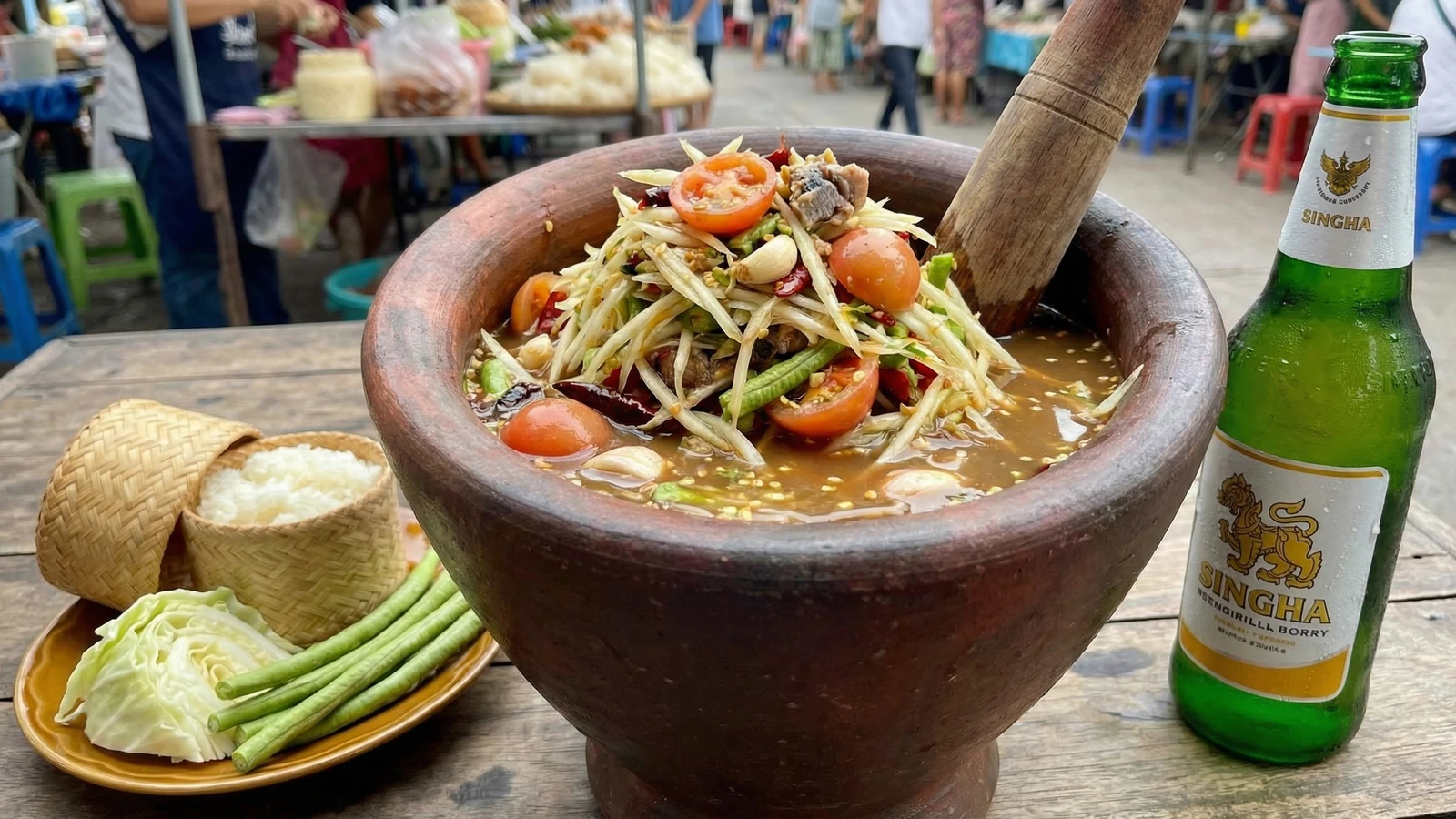
Fermented Fish Papaya Salad (Som Tam Pla Ra)
Created by
This is the som tam Bangkok doesn't want to talk about. Pla ra gives it a funk that no amount of fish sauce can replicate. Isan doesn't apologize for fermented fish. Isan puts it in the mortar and pounds harder.
Pla ra. That's the line. On one side: the Bangkok version, the cleaned-up som tam Thai with peanuts and dried shrimp, sweet enough to sell to tourists. On the other side: this. The Isan original. The one my mother pounded six days a week for twenty-five years at our stall in Khlong Toei.
Som tam pla ra is the dish that separates people who eat Thai food from people who understand it. The governing principle is the same as every Thai dish: fish sauce for salt, palm sugar for sweet, lime for sour, chili for heat. The four pillars. But here, the first pillar gets reinforced. You still use nam pla. And then you add pla ra (fermented fish), which brings a depth of umami and funk that fish sauce alone cannot touch. Pla ra is fish (usually snakehead or gourami) fermented in salt and rice bran for months, sometimes years. The proteins break down into amino acids. The funk is fermentation doing its work. It's not dirt. It's science.
Ajarn always said: the four pillars are the law, but how you express them is what defines a region. Central Thai expresses salt through fish sauce alone. Isan expresses salt through fish sauce plus pla ra. That's not a substitution. That's a different dialect of the same language.
The technique is the krok din (clay mortar with wooden pestle). Not granite. Clay and wood bruise the papaya without crushing it. The rough interior of the unglazed clay grips the ingredients while the wooden pestle does the work gently. Every som tam vendor from Udon Thani to Ubon Ratchathani uses clay and wood. Granite is for curry pastes. This is a pounded salad. Different tool, different job.
My mother never strained her pla ra through cheesecloth. She scooped it straight from the jar, chunks and all. The pieces of fermented fish in the mortar are part of the texture. If you're straining it, you're already moving toward the Bangkok version. If you want the real thing, leave the funk in.
Som tam pla ra predates the now-ubiquitous som tam Thai by generations. The dish originates in Isan (northeastern Thailand) and Laos, where pla ra (ปลาร้า), a fermented freshwater fish preparation, has been a staple protein source and seasoning for centuries. When Isan workers migrated to Bangkok in large numbers during the mid-20th century economic boom, they brought som tam with them. Bangkok vendors gradually adapted it into som tam Thai by removing the pla ra and adding peanuts and dried shrimp to appeal to Central Thai palates. The Isan original never changed. In the northeast, asking for som tam without pla ra is like asking for tom yam without lime.
The technique, the tradition, and the story behind every dish.
Discover Culinary AdvisorIngredients
green papaya (malakor)
Quantity
2 cups
shredded into long thin strands
garlic
Quantity
3 cloves
bird's eye chilies (prik khi nu)
Quantity
5, or more to taste
pla ra (fermented fish)
Quantity
2 tablespoons
liquid and chunks, unsieved
fish sauce (nam pla)
Quantity
1.5 tablespoons
palm sugar (nam tan pip)
Quantity
1 tablespoon
lime juice (nam manao)
Quantity
3 tablespoons (about 2-3 limes)
cherry tomatoes
Quantity
5
halved
long beans (thua fak yao)
Quantity
2
cut into 1.5-inch pieces
sticky rice (khao niew)
Quantity
for serving
raw cabbage and long beans
Quantity
for eating alongside
| Ingredient | Quantity |
|---|---|
| green papaya (malakor)shredded into long thin strands | 2 cups |
| garlic | 3 cloves |
| bird's eye chilies (prik khi nu) | 5, or more to taste |
| pla ra (fermented fish)liquid and chunks, unsieved | 2 tablespoons |
| fish sauce (nam pla) | 1.5 tablespoons |
| palm sugar (nam tan pip) | 1 tablespoon |
| lime juice (nam manao) | 3 tablespoons (about 2-3 limes) |
| cherry tomatoeshalved | 5 |
| long beans (thua fak yao)cut into 1.5-inch pieces | 2 |
| sticky rice (khao niew) | for serving |
| raw cabbage and long beans | for eating alongside |
Equipment Needed
- •Large clay mortar with wooden pestle (krok din), at least 8 inches diameter. Not granite. Clay and wood for som tam, always.
- •Long spoon for tossing ingredients in the mortar
- •Thai papaya shredder or sharp knife for shredding green papaya
Instructions
- 1
Pound garlic and chilies
Drop the garlic and bird's eye chilies into the clay mortar (krok din). Pound them to a rough, chunky paste. Not smooth. You want pieces. The garlic should be smashed and fragrant, the chilies cracked open with seeds exposed. Three, four firm strikes with the wooden pestle. The aroma should hit you, sharp and aggressive. That's your aromatic base. Every som tam starts here.
Five chilies is moderate heat by Isan standards. My mother used ten as her baseline. Your tolerance is yours. But heat is one of the four pillars. It belongs in the dish. Start with five, adjust next time. - 2
Bruise the long beans
Add the long bean pieces to the mortar. Give them a few solid strikes. You're bruising, not destroying. The beans should crack slightly, soften at the edges, but still hold their shape. They'll release a grassy, vegetal flavor into the dressing as you work.
- 3
Add the tomatoes
Drop in the halved cherry tomatoes. One or two light pounds, just enough to split them open and release their juice into the mortar. The tomato juice becomes part of the dressing. Don't crush them to nothing. You want them burst but still visible, their seeds and juice mixing into the garlic-chili base.
- 4
Build the pla ra dressing
Now the pla ra goes in. Two tablespoons, scooped straight from the jar, liquid and chunks together. Don't strain it. The small pieces of fermented fish are part of the texture and the flavor. Add the fish sauce, palm sugar, and lime juice. Use the pestle to stir and dissolve the sugar into the liquid. Taste this dressing before the papaya goes in. It should be: sour first (the lime), salty and funky second (the pla ra and nam pla working together), sweet barely registering (Isan som tam is not sweet like the Bangkok version), and the heat building underneath.
The palm sugar here is restrained. One tablespoon, just enough to take the razor edge off the lime and fish sauce. In som tam Thai, the sugar is doubled or tripled. That's how Bangkok softened the dish. Isan keeps the sour and funk dominant. Don't be tempted to add more sugar. The balance is correct.Pla ra smells strong in the jar. That's normal. Once it hits the lime juice and gets pounded with everything else, the funk integrates and becomes savory depth, not stink. Trust the process. - 5
Pound the green papaya
Add the shredded green papaya to the mortar. Here's where technique matters. Hold the pestle in one hand and a long spoon in the other. Strike down with the pestle, then use the spoon to toss and fold the papaya through the dressing. Strike, toss, fold. Strike, toss, fold. You're bruising the papaya strands so they absorb the pla ra dressing while keeping their crunch. Ten to fifteen strikes. Not more. The papaya should look glossy and slightly limp, coated in the dressing, but still crunchy when you bite down. Grab a strand and taste it. Crunchy? Dressed? Sour-funky-salty with heat building? You're done. If the funk is shy, add a splash more pla ra. If the sour is too sharp, a tiny pinch more sugar. Pound, taste, adjust. That's the method.
A food processor will not work. A bag-and-rolling-pin will not work. The mortar bruises the cell walls of the papaya so the dressing penetrates the strands. A blade cuts cleanly and the dressing slides off. The texture is fundamentally different. Krok ก่อน, krok ก่อน. - 6
Serve immediately
Scrape the som tam out of the mortar onto a plate or serve it straight from the krok din. Pile the raw cabbage wedges and extra long beans alongside. Bring the sticky rice in a kratip (woven basket). Eat immediately. Pinch off a ball of sticky rice, press it into the som tam, pick up a strand of papaya and some dressing. That's a bite. The combination of sticky rice, funky pla ra dressing, crunchy papaya, and raw vegetables is the design. Som tam does not hold. The lime starts breaking down the papaya within minutes. Pound it, eat it. That's the rule.
Chef Tips
- •Pla ra (ปลาร้า) is fermented fish, not fish sauce. They are related the way wine is related to vinegar: same origin, completely different product. Fish sauce is a clear liquid. Pla ra is thick, muddy, full of fish pieces. The flavor is deeper, funkier, more complex. You cannot substitute extra fish sauce for pla ra. The funk IS the dish. Find pla ra at any Thai or Southeast Asian grocery store, usually in glass jars or plastic tubs. Look for brands from Isan (Udon Thani, Khon Kaen). Once opened, it keeps in the fridge for months.
- •Some cooks boil their pla ra briefly before using it, claiming it's safer and mellows the flavor. In Isan, plenty of vendors use it raw straight from the jar. If your pla ra is from a reputable producer and has been properly fermented (months, not weeks), it's safe. The salt concentration and fermentation process handle the microbiology. But if you're unsure of your source, a quick boil and cool won't ruin the dish. It changes the funk slightly, rounds it out. Either way is fine. Just don't skip the pla ra entirely.
- •Green papaya must be shredded, not diced. Use a Thai papaya shredder (a hand-held tool that scores the papaya so you can shave off thin strands) or a sharp knife to cut long, thin matchstick-like strands. The strands need surface area to absorb the dressing when they're bruised in the mortar. Cubes won't absorb. Shreds will.
- •The Isan version uses less sugar than som tam Thai. Noticeably less. If your som tam pla ra tastes sweet, you've drifted into Bangkok territory. The balance should lean sour and funky with heat, not sweet. Palm sugar is there to soften the edges, not to dominate.
Advance Preparation
- •Green papaya can be shredded and stored in cold water for up to 2 hours to keep it crisp. Drain and squeeze dry before adding to the mortar. Wet papaya dilutes the dressing.
- •Som tam pla ra cannot be made ahead. The lime juice degrades the papaya within minutes, turning crunch into limp. The pla ra dressing oxidizes and loses its brightness. Pound and eat. There are no leftovers. If you need more, pound another batch. That's what the vendors do.
Frequently Asked Questions
Nutrition Information
1 serving (about 265g)
Where cooking meets culture.
Culinary mentorship, cultural storytelling, and the editorial depth that makes cooking meaningful.
Explore Culinary Advisor