Culinary Advisor
A cooking platform built around craft, culture, and the stories behind what we eat.
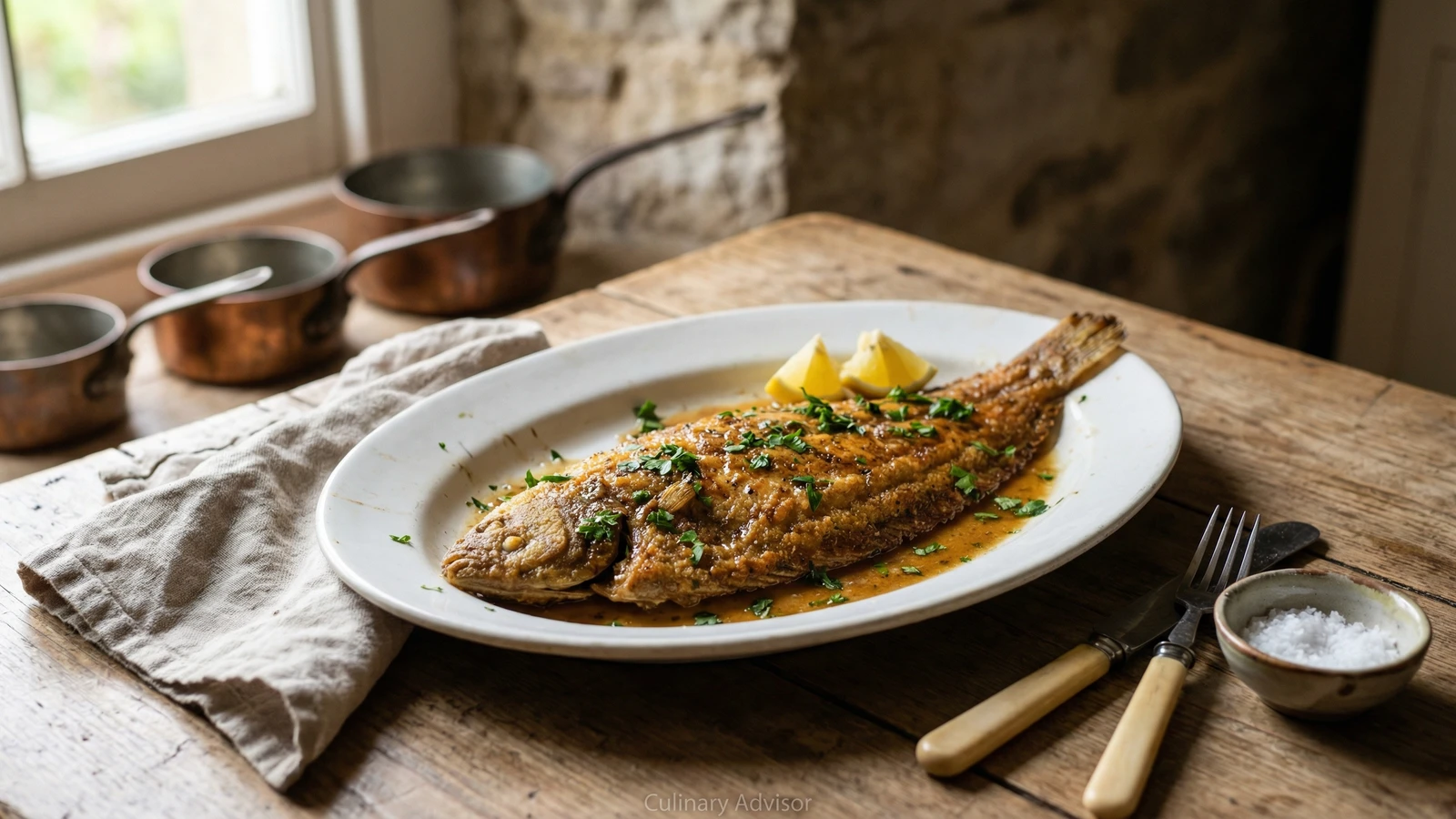
Sogliola alla Mugnaia
Created by Chef Graziella
Dover sole dredged in the lightest veil of flour, fried in foaming butter until golden, finished with brown butter, lemon, and parsley. A dish that proves restraint is the highest form of technique.
The miller's wife knew something important: fish needs very little. A dusting of flour, butter turning the color of hazelnuts, a squeeze of lemon at the end. That is all. The French call this meunière. The Italians of Lombardy and the northern lakes call it alla mugnaia. The name means the same thing, and so does the lesson.
This is a dish that exposes every weakness in your technique. The fish must be impeccably fresh; there is nothing to hide behind. The flour must be barely there. The butter must foam but not burn. The cooking time is measured in minutes. And you must serve it the instant it leaves the pan, because sole alla mugnaia that sits on the pass for even two minutes becomes sole that should have stayed in the kitchen.
I do not make this dish for crowds. I make it for one or two people I care about, people willing to sit down the moment I call them. The reward for this urgency is a fish of extraordinary delicacy, its flesh sweet and mild, its crust gossamer thin and golden, everything bound together by butter that has been cooked just to the edge of burning and pulled back at the last moment.
Sole alla mugnaia traveled to Italy from France, where sole meunière had been a restaurant standard since the 19th century. Northern Italian cooks, particularly in Milan and the lake regions of Lombardy, adopted the technique for the delicate fish from the Adriatic. The preparation remains nearly identical across the border, differing only in small gestures of seasoning.
The technique, the tradition, and the story behind every dish.
Discover Culinary AdvisorIngredients
Dover sole
Quantity
2 whole (about 12 ounces each)
cleaned and skinned
all-purpose flour
Quantity
1/2 cup
kosher salt
Quantity
to taste
white pepper
Quantity
to taste
freshly ground
unsalted butter
Quantity
6 tablespoons
divided
fresh lemon juice
Quantity
2 tablespoons (about 1 lemon)
flat-leaf parsley
Quantity
2 tablespoons
chopped
lemon wedges
Quantity
1 lemon
cut into wedges
| Ingredient | Quantity |
|---|---|
| Dover solecleaned and skinned | 2 whole (about 12 ounces each) |
| all-purpose flour | 1/2 cup |
| kosher salt | to taste |
| white pepperfreshly ground | to taste |
| unsalted butterdivided | 6 tablespoons |
| fresh lemon juice | 2 tablespoons (about 1 lemon) |
| flat-leaf parsleychopped | 2 tablespoons |
| lemon wedgescut into wedges | 1 lemon |
Equipment Needed
- •Large skillet (12-inch), preferably not nonstick
- •Two flexible spatulas for turning
- •Warm serving plates
Instructions
- 1
Prepare the fish
Remove the sole from refrigeration 15 minutes before cooking. The fish must not be ice cold when it meets the pan. Pat both sides completely dry with paper towels. Moisture is the enemy of a golden crust. Season both sides with salt and white pepper.
White pepper is traditional here because black specks on a pale fish look careless. If you have only black pepper, use it. The dish will taste the same. - 2
Dredge in flour
Spread the flour on a large plate. Dredge each sole in the flour, coating both sides evenly. Shake off all excess flour vigorously. The coating should be barely visible, a whisper of flour, not a blanket. Too much flour creates a pasty, heavy crust that overwhelms the delicate fish.
- 3
Heat the butter
In a skillet large enough to hold one fish without crowding (or use two pans simultaneously), melt 3 tablespoons of butter over medium-high heat. Watch the butter carefully. It will foam, then the foam will subside, then it will begin to turn the color of hazelnuts. This is beurre noisette. The moment you smell nuts, the butter is ready.
If your pan is too small and you crowd the fish, it will steam instead of fry. The flour will turn soggy. Better to cook one fish at a time and keep the first warm in a low oven. - 4
Cook the first side
Lay the sole in the foaming butter, presentation side down (the side that faced up when the fish swam). Do not move it. Let it cook undisturbed for 3 to 4 minutes. The edges will turn golden. You will see the color climbing up the sides of the fish. When the fish is golden brown on the bottom and cooked halfway through, it is time to turn it.
- 5
Turn and finish
Using two spatulas if necessary to support the whole fish, turn it gently. Cook the second side for 2 to 3 minutes more. The fish is done when the flesh is opaque and flakes easily when pressed with a finger near the backbone. Do not overcook. A sole overcooked by even one minute becomes dry and fibrous. Transfer immediately to warm plates.
- 6
Make the sauce
If frying in batches, wipe out any burnt flour bits and repeat with remaining butter and fish. For the sauce, add the remaining butter to the pan over medium heat. Let it foam and turn nutty brown again. Remove from heat instantly. Add the lemon juice (it will sputter and hiss; stand back) and the parsley. Swirl the pan once to combine.
- 7
Serve immediately
Spoon the brown butter sauce over the fish while it still sizzles. Serve at once with lemon wedges. The sole waits for no one. Once sauced, it must reach the table within seconds, not minutes. Invite your guests to begin eating immediately.
Chef Tips
- •Dover sole is the correct fish. It has a firmness and sweetness that other flatfish cannot match. If unavailable, lemon sole or grey sole will serve, but the dish will be less refined. Never attempt this with tilapia or other substitutes.
- •The flour must be shaken off until the fish looks nearly naked. Hold the fish up and slap it gently against your palm. If flour falls off, there is too much. What you keep out matters.
- •Brown butter turns to burnt butter in seconds. The window between perfection and failure is very small. Have everything ready before you begin. There is no time to search for the lemon.
- •If you cannot find whole sole, use skinned fillets. They cook faster, perhaps 2 minutes per side. The presentation is less dramatic but the flavor remains true.
Advance Preparation
- •There is no advance preparation for this dish. It is cooked and served in the same breath. You may juice the lemon and chop the parsley ahead, but the fish cannot wait.
- •Have your guests seated before you begin cooking. This is not a dish that forgives delay.
Frequently Asked Questions
Nutrition Information
1 serving (about 300g)
Where cooking meets culture.
Culinary mentorship, cultural storytelling, and the editorial depth that makes cooking meaningful.
Explore Culinary Advisor