Culinary Advisor
A cooking platform built around craft, culture, and the stories behind what we eat.
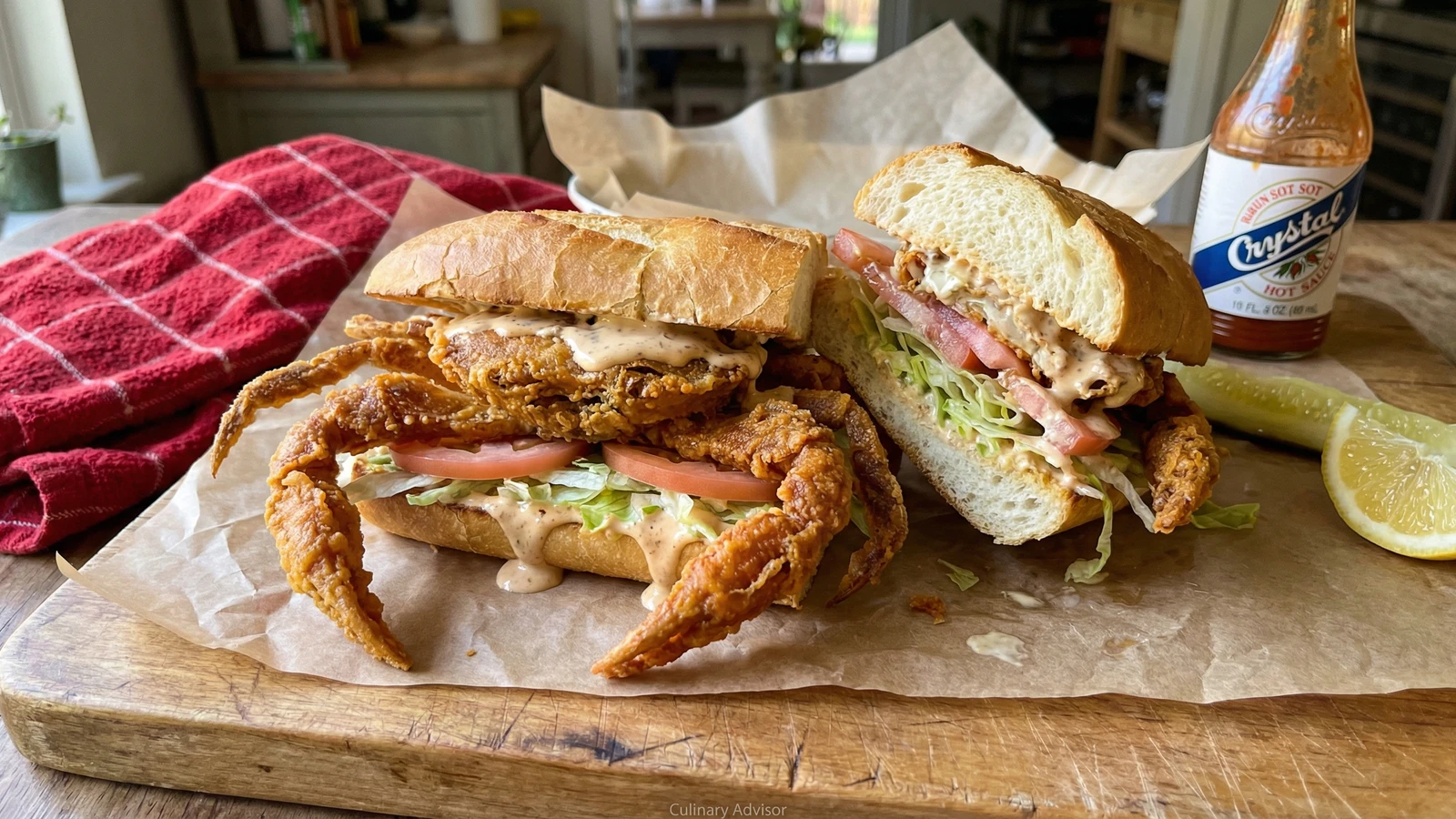
Soft Shell Crab Po' Boy
Created by Chef Remy
Crispy whole soft shell crabs, their shells shattering with each bite, tucked into crusty French bread with cool shredded lettuce and a remoulade sauce so good you'll want to eat it with a spoon.
When soft shell season hits Louisiana, everything else can wait. These crabs have just molted their hard shells, leaving behind sweet, tender meat encased in a shell so delicate you eat the whole thing. That's the magic. You're not picking meat from a crab. You're eating the entire creature, legs and all, fried golden and stuffed into bread.
My grandmother Evangeline used to say that God gave Louisiana soft shell crabs as an apology for the humidity. She wasn't wrong. The season runs from late April through September, peaking in May and June when the crabs are plentiful and the price drops enough that regular folks can afford them. At Lagniappe, we sell more soft shell po' boys in those two months than any other sandwich all year combined.
The technique is straightforward but demands your attention. You're working with a whole crab that's been cleaned and dredged in seasoned flour, then fried in butter until the shell turns crispy and the meat inside stays sweet and moist. Overcook it and you've got rubber. Undercook it and the shell stays chewy. There's a window of about ninety seconds where perfection lives. That's the bayou way: simple ingredients, honest technique, and paying attention to what's happening in your pan.
The technique, the tradition, and the story behind every dish.
Discover Culinary AdvisorIngredients
whole soft shell crabs
Quantity
4
cleaned
all-purpose flour
Quantity
1 cup
fine yellow cornmeal
Quantity
1/2 cup
Cajun seasoning
Quantity
2 teaspoons
garlic powder
Quantity
1 teaspoon
smoked paprika
Quantity
1 teaspoon
cayenne pepper
Quantity
1/2 teaspoon
kosher salt
Quantity
1 teaspoon
black pepper
Quantity
1/2 teaspoon
freshly ground
unsalted butter
Quantity
4 tablespoons
vegetable oil
Quantity
2 tablespoons
Louisiana French bread
Quantity
4 pieces (about 8 inches each)
split lengthwise
iceberg lettuce
Quantity
1 cup
shredded
Creole tomatoes
Quantity
2 ripe
sliced thin
dill pickle slices (optional)
Quantity
for serving
mayonnaise
Quantity
1 cup
Creole mustard
Quantity
2 tablespoons
prepared horseradish
Quantity
1 tablespoon
sweet pickle relish
Quantity
2 tablespoons
capers
Quantity
1 tablespoon
drained and minced
green onions
Quantity
2
minced
garlic
Quantity
1 clove
minced
hot sauce
Quantity
1 teaspoon
smoked paprika (for remoulade)
Quantity
1/2 teaspoon
lemon
Quantity
half
juiced
| Ingredient | Quantity |
|---|---|
| whole soft shell crabscleaned | 4 |
| all-purpose flour | 1 cup |
| fine yellow cornmeal | 1/2 cup |
| Cajun seasoning | 2 teaspoons |
| garlic powder | 1 teaspoon |
| smoked paprika | 1 teaspoon |
| cayenne pepper | 1/2 teaspoon |
| kosher salt | 1 teaspoon |
| black pepperfreshly ground | 1/2 teaspoon |
| unsalted butter | 4 tablespoons |
| vegetable oil | 2 tablespoons |
| Louisiana French breadsplit lengthwise | 4 pieces (about 8 inches each) |
| iceberg lettuceshredded | 1 cup |
| Creole tomatoessliced thin | 2 ripe |
| dill pickle slices (optional) | for serving |
| mayonnaise | 1 cup |
| Creole mustard | 2 tablespoons |
| prepared horseradish | 1 tablespoon |
| sweet pickle relish | 2 tablespoons |
| capersdrained and minced | 1 tablespoon |
| green onionsminced | 2 |
| garlicminced | 1 clove |
| hot sauce | 1 teaspoon |
| smoked paprika (for remoulade) | 1/2 teaspoon |
| lemonjuiced | half |
Equipment Needed
- •12-inch cast iron skillet or heavy-bottomed pan
- •Wire cooling rack
- •Thin metal spatula
- •Kitchen shears
- •Splatter screen
Instructions
- 1
Make the remoulade
Combine the mayonnaise, Creole mustard, horseradish, pickle relish, capers, green onions, garlic, hot sauce, smoked paprika, and lemon juice in a bowl. Whisk until smooth and let it sit in the refrigerator while you prepare everything else. Remoulade improves as the flavors marry. Taste it. Adjust the heat if you want more kick. At Lagniappe, we make ours with enough horseradish to clear your sinuses, but you should season to your own taste.
Make this a day ahead if you can. The flavors develop overnight into something special. - 2
Clean the crabs
If your fishmonger hasn't already cleaned your crabs, here's how you do it. Lift one pointed side of the top shell and remove the feathery gills underneath. Do the same on the other side. Flip the crab over and pull off the triangular apron on the belly. Finally, cut off the face just behind the eyes with kitchen shears. Rinse gently and pat completely dry with paper towels. Wet crabs won't crisp properly.
Ask your fishmonger to clean the crabs for you. Most will do it gladly, and it saves you the trouble. - 3
Build your dredge
Whisk together the flour, cornmeal, Cajun seasoning, garlic powder, smoked paprika, cayenne, salt, and black pepper in a shallow dish. This is where your flavor starts. The cornmeal adds crunch. The spices bloom in the hot butter. Run your finger through it and taste. You should feel the cayenne at the back of your throat but not be overwhelmed. Adjust now, not later.
- 4
Dredge the crabs
Press each crab firmly into the seasoned flour mixture, coating both sides completely. Lift the top shell and dust underneath too. Get flour into every crevice, into the leg joints, everywhere. Shake off the excess gently and set the coated crabs on a wire rack. Let them rest for five minutes. This brief wait helps the coating adhere and prevents it from sliding off in the pan.
- 5
Heat your pan
Set your largest skillet (cast iron if you have it, twelve inches at minimum) over medium-high heat. Add the butter and oil together. The oil raises the smoke point so your butter won't burn. When the butter foams and the foam begins to subside, you're ready. The fat should shimmer but not smoke. If it's smoking, pull the pan off the heat and let it cool for thirty seconds.
- 6
Fry the crabs
Lay the crabs in the pan top-shell down, working in batches if needed. Don't crowd them. They need space to crisp, not steam. Let them cook undisturbed for three to four minutes until the edges turn golden and the coating sets. You'll hear active sizzling. That's good. Flip carefully with a thin spatula, supporting the whole body so legs don't snap off. Cook another two to three minutes until the second side is equally golden and the shell feels crisp when you press it gently.
The crabs will pop and spatter. A splatter screen saves your forearms and your stovetop. - 7
Rest and toast
Transfer the fried crabs to a wire rack set over a sheet pan. Season immediately with a light sprinkle of salt while they're hot. The residual heat will finish cooking them through. While they rest (just two minutes), toast your French bread cut-side down in the same pan. The bread will pick up all that seasoned butter and become golden and fragrant. This step is not optional.
- 8
Assemble the po' boys
Spread remoulade generously on both cut sides of each piece of bread. Don't be shy. Layer shredded lettuce on the bottom half, followed by tomato slices and pickles if you're using them. Nestle a whole fried crab on top, legs splaying out the sides the way they should. Close the sandwich and press gently. The bread should give but not squash. Serve immediately while the crab is still warm and the bread still has its crunch.
The proper way to eat this is with both hands, leaning forward so the juices drip onto your plate and not your shirt.
Chef Tips
- •Buy your soft shell crabs live if you can find them, or frozen from a reputable source. Fresh crabs should smell like the ocean, never fishy or ammonia-like. If something smells off, walk away.
- •Louisiana French bread has a specific character: shatteringly crisp crust, cottony soft interior. If you can't find it, look for a baguette with a thin, crispy crust. Soft sandwich bread is a tragedy on a po' boy.
- •The crabs will continue cooking from residual heat after you pull them from the pan. Better to err slightly on the underdone side than to overcook them into tough, chewy disappointment.
- •Dress the sandwich right before serving. Remoulade will soften the bread if it sits too long. At Lagniappe, we assemble to order for exactly this reason.
- •If cayenne isn't your thing, cut it in half. You can always add hot sauce at the table, but you can't take the heat back out.
Advance Preparation
- •Remoulade can be made up to 5 days ahead and refrigerated. The flavor improves after a day.
- •The seasoned dredge can be mixed and stored in an airtight container for up to a month.
- •Soft shell crabs must be fried fresh. There is no making this ahead. Plan accordingly.
Frequently Asked Questions
Nutrition Information
1 serving (about 310g)
Where cooking meets culture.
Culinary mentorship, cultural storytelling, and the editorial depth that makes cooking meaningful.
Explore Culinary Advisor