Culinary Advisor
A cooking platform built around craft, culture, and the stories behind what we eat.
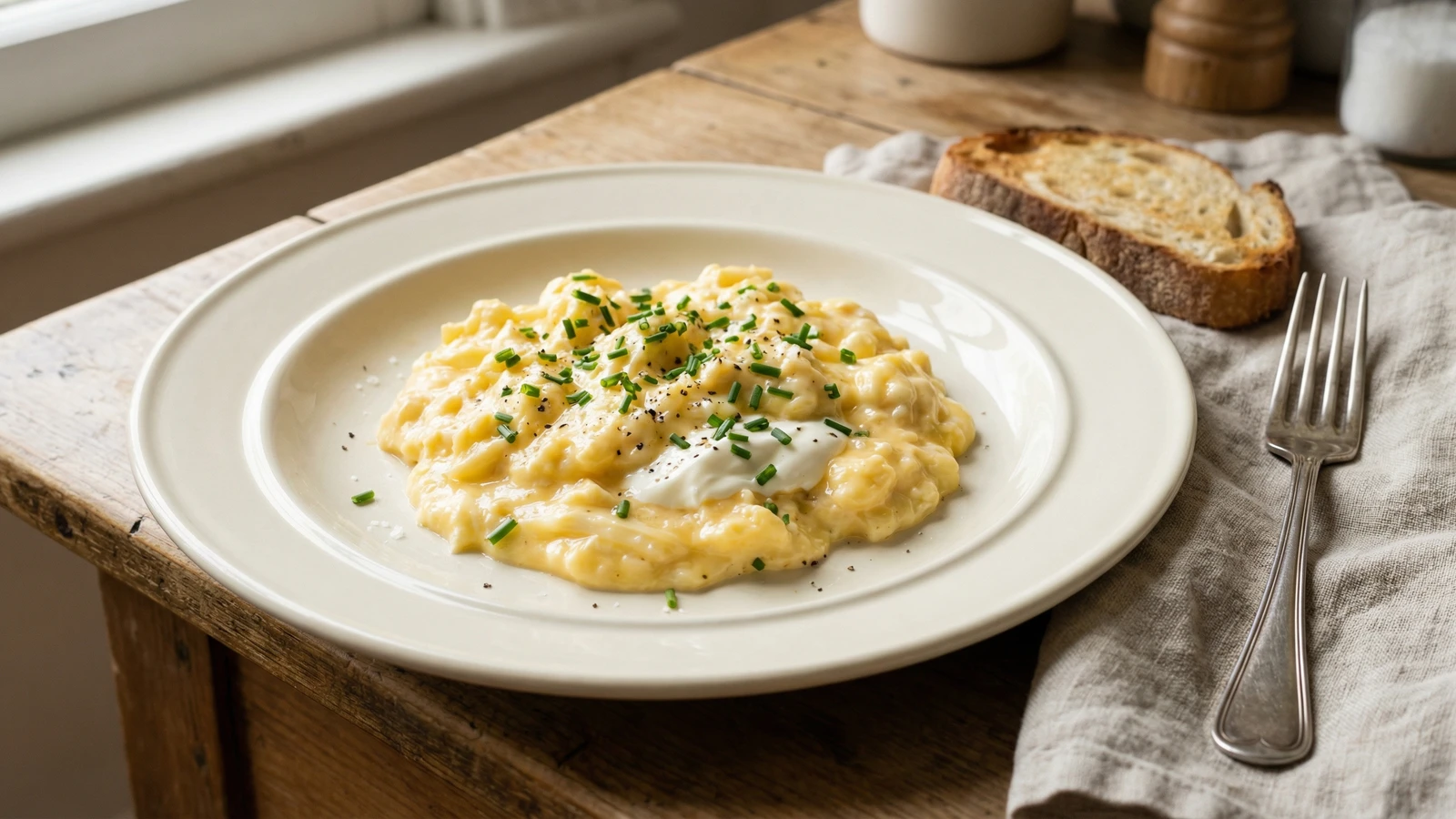
Soft-Scrambled Eggs with Chives and Crème Fraîche
Created by Chef Ally
The French understood something essential about eggs: cook them slowly, finish them with cream, and let their richness speak without interference. Ten patient minutes at the stove is all that separates ordinary scrambled eggs from something transcendent.
Start with the eggs. They should come from hens that lived outdoors, ate well, and had space to move. You will taste the difference immediately. The yolks of pastured eggs are deeper orange, richer in flavor, and they scramble into something that pale factory eggs simply cannot match. Find a farmer. Go to a market. Ask questions. Your choices shape the food system.
The technique here is almost embarrassingly simple. Low heat. Constant stirring. Patience. The French call these oeufs brouillés, and they treat them as a measure of a cook's restraint. Anyone can scramble eggs quickly over high heat. It takes discipline to stand at the stove for ten minutes, stirring, waiting, resisting the urge to rush.
Crème fraîche at the end is not optional. It stops the cooking, adds a subtle tang, and creates a texture so silky that you will wonder what you have been doing wrong all these years. Fresh chives bring brightness and color. That is all. Let things taste of what they are.
The technique, the tradition, and the story behind every dish.
Discover Culinary AdvisorIngredients
large eggs
Quantity
6
preferably pasture-raised
unsalted butter
Quantity
2 tablespoons
cut into small pieces
fine sea salt
Quantity
1/4 teaspoon
crème fraîche
Quantity
2 tablespoons
fresh chives
Quantity
1 tablespoon
finely snipped
black pepper
Quantity
to taste
freshly cracked
flaky sea salt (optional)
Quantity
for finishing
| Ingredient | Quantity |
|---|---|
| large eggspreferably pasture-raised | 6 |
| unsalted buttercut into small pieces | 2 tablespoons |
| fine sea salt | 1/4 teaspoon |
| crème fraîche | 2 tablespoons |
| fresh chivesfinely snipped | 1 tablespoon |
| black pepperfreshly cracked | to taste |
| flaky sea salt (optional) | for finishing |
Equipment Needed
- •10-inch nonstick pan or well-seasoned skillet
- •Rubber spatula (not a wooden spoon)
- •Kitchen scissors for chives
Instructions
- 1
Crack and season eggs
Crack eggs into a cold nonstick pan or well-seasoned skillet. Do not whisk them in a bowl first. Add the butter in pieces and a pinch of fine sea salt. The eggs should pool around the butter, yolks sitting whole alongside the whites.
- 2
Begin low heat
Set the pan over the lowest heat your stove will hold. Begin stirring immediately with a rubber spatula, moving the eggs constantly across the bottom and sides of the pan. The butter will melt and mingle with the eggs as they warm together.
Patience is the only technique here. If your heat is too high, you will know immediately because the eggs will set in sheets instead of soft curds. - 3
Stir constantly
Keep stirring, scraping the bottom and folding the eggs over themselves. After three or four minutes, you will see small curds beginning to form in the liquid. The transformation is slow and then sudden. Stay with it. The eggs will look loose and wet for what feels like too long, then come together all at once.
- 4
Remove from heat early
When the eggs are still slightly wetter than you want them, pull the pan from the heat entirely. They will continue cooking in the residual warmth. The finished texture should be creamy and barely holding together, like soft custard that moves when you tilt the pan.
If the eggs ever begin to look dry or rubbery, you have gone too far. Start again. There is no recovering overcooked eggs. - 5
Finish with crème fraîche
Stir in the crème fraîche while the eggs are still in the pan but off the heat. The cool cream stops the cooking and adds richness that butter alone cannot give. Taste. Adjust salt if needed.
- 6
Plate and garnish
Spoon the eggs gently onto warm plates. Scatter snipped chives over the top. Add a few flakes of good sea salt and a crack of black pepper. Serve immediately with toast or nothing at all. These eggs need very little.
Chef Tips
- •The quality of your eggs matters more than any technique. Seek out pasture-raised eggs from a farmer you can talk to. The orange yolks and clean flavor are worth the trip to the market.
- •If you cannot find crème fraîche, you can make a quick version by stirring a tablespoon of buttermilk into a cup of heavy cream and letting it sit at room temperature overnight. It will thicken and develop that characteristic tang.
- •Warm your plates. Cold ceramic will chill these delicate eggs before you take your first bite. Run them under hot water or place them in a low oven while you cook.
- •Chives should be snipped with scissors, not chopped with a knife. The scissors cut cleanly without bruising. Bruised herbs turn dark and taste dull.
Advance Preparation
- •Soft scrambled eggs cannot be made ahead. They must move from pan to plate to table without pause. This is a dish that asks for your presence.
- •You can snip chives a few hours ahead and keep them in a small bowl covered with a damp towel. Their flavor fades quickly once cut, so do not go further than the morning of.
Frequently Asked Questions
Nutrition Information
1 serving (about 180g)
Where cooking meets culture.
Culinary mentorship, cultural storytelling, and the editorial depth that makes cooking meaningful.
Explore Culinary Advisor