Culinary Advisor
A cooking platform built around craft, culture, and the stories behind what we eat.
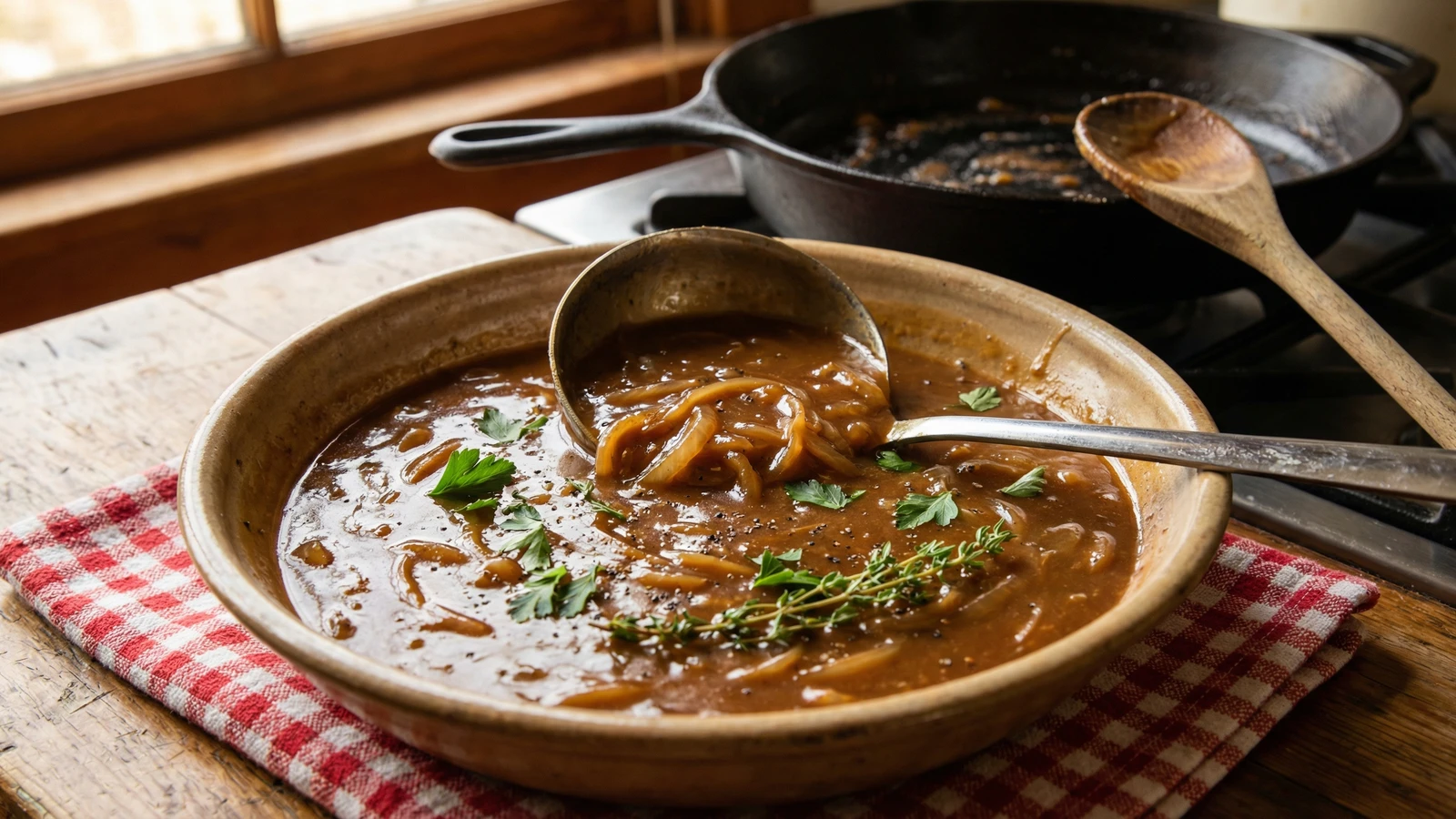
Smothering Gravy
Created by Chef Remy
The mother sauce of Cajun country cooking, built on a brick-colored roux and enough onions to make you weep, then simmered until it clings to your spoon like it means it.
This gravy is the backbone of Cajun smothering. Every pork chop, every piece of chicken, every round steak that ever got smothered in Louisiana started right here. My grandmother Evangeline called it the workhorse of her kitchen. She kept a pot on the back of the stove most days, ready to transform whatever protein came through the door.
The secret lives in two places: the roux and the onions. You want that roux taken past peanut butter, past milk chocolate, all the way to a deep brick color. That's where the flavor hides. Takes patience and a strong arm, but there's no substitute. As for the onions, you use more than feels reasonable. They cook down to almost nothing, releasing their sweetness into the gravy, becoming one with the roux until you can't tell where one ends and the other begins.
At Lagniappe, we make this gravy fresh every morning. It's the foundation for half the menu. I've watched hundreds of home cooks learn this technique in my classes, and the moment they taste their first proper smothering gravy, something clicks. They understand what Louisiana cooking is really about: building flavor in layers, trusting the process, and never rushing what deserves time.
The technique, the tradition, and the story behind every dish.
Discover Culinary AdvisorIngredients
vegetable oil or lard
Quantity
1/2 cup
all-purpose flour
Quantity
1/2 cup
yellow onions
Quantity
3 large
halved and thinly sliced
celery
Quantity
1 cup
diced
green bell pepper
Quantity
1 medium
diced
garlic
Quantity
6 cloves
minced
chicken or beef stock
Quantity
4 cups
warm
bay leaves
Quantity
2
fresh thyme
Quantity
4 sprigs
Worcestershire sauce
Quantity
1 tablespoon
Cajun seasoning
Quantity
1 teaspoon
black pepper
Quantity
1/2 teaspoon
freshly ground
cayenne pepper
Quantity
1/4 teaspoon, or to taste
kosher salt
Quantity
to taste
hot sauce (optional)
Quantity
for finishing
fresh parsley
Quantity
2 tablespoons
chopped
| Ingredient | Quantity |
|---|---|
| vegetable oil or lard | 1/2 cup |
| all-purpose flour | 1/2 cup |
| yellow onionshalved and thinly sliced | 3 large |
| celerydiced | 1 cup |
| green bell pepperdiced | 1 medium |
| garlicminced | 6 cloves |
| chicken or beef stockwarm | 4 cups |
| bay leaves | 2 |
| fresh thyme | 4 sprigs |
| Worcestershire sauce | 1 tablespoon |
| Cajun seasoning | 1 teaspoon |
| black pepperfreshly ground | 1/2 teaspoon |
| cayenne pepper | 1/4 teaspoon, or to taste |
| kosher salt | to taste |
| hot sauce (optional) | for finishing |
| fresh parsleychopped | 2 tablespoons |
Equipment Needed
- •Large Dutch oven or heavy-bottomed pot (5-quart minimum)
- •Flat-edged wooden spoon or roux whisk
- •Second pot for warming stock
Instructions
- 1
Prepare your mise en place
Before you touch that stove, get everything measured and within arm's reach. Once the roux starts, you cannot walk away. Slice those onions thin, they'll melt into the gravy better. Dice the celery and bell pepper into pieces roughly the same size. Mince your garlic. Have your stock warming in a separate pot on low heat. Cold stock hitting hot roux causes it to seize and clump.
Warm stock is not optional. I've seen too many home cooks ruin a perfect roux by pouring cold liquid into it. The temperature shock creates lumps that no amount of whisking will fix. - 2
Build the roux
Heat the oil in a large, heavy-bottomed pot or Dutch oven over medium heat. When it shimmers, add the flour all at once. Stir immediately with a wooden spoon or flat-edged roux whisk, scraping the entire bottom of the pot with each pass. The mixture will foam slightly at first, then settle into a paste. Keep stirring. Do not stop. Do not answer the phone. Do not check your messages.
A flat-edged wooden spoon or roux whisk lets you scrape the corners where flour likes to hide and burn. Round spoons leave those corners vulnerable. - 3
Take the roux to brick
Continue stirring constantly as the roux progresses through its color stages. First it will turn blond, smelling like pie crust. Then peanut butter, with a nuttier aroma. Then milk chocolate. Keep going. You want brick: a deep reddish-brown that smells like roasted coffee and toasted pecans. This takes 25 to 35 minutes. The color should be even throughout, no light streaks. If you see black specks, you burned it. Start over.
Lower your heat if the roux is darkening faster than you can stir. A medium-low roux takes longer but forgives more easily. Speed is the enemy of a beginning roux-maker. - 4
Add the trinity
The moment your roux reaches brick color, add all the sliced onions at once. They will sizzle and steam aggressively. This is good. It stops the roux from cooking further. Stir the onions into the roux until they are coated and glistening. Add the celery and bell pepper. Reduce heat to medium-low and continue cooking, stirring frequently, until the vegetables are soft and the onions have turned translucent and begun to caramelize, about 15 minutes.
Those onions will seem like far too many. Trust me. They cook down to a fraction of their volume, concentrating their sweetness into the gravy. - 5
Bloom the garlic and seasonings
Push the vegetables to the side and add the minced garlic to the exposed pot bottom. Let it sizzle for 30 seconds until fragrant, then stir it into the vegetables. Add the Cajun seasoning, black pepper, and cayenne. Stir for another minute to bloom the spices. Your kitchen should smell like Louisiana right about now.
- 6
Add the stock
Pour in the warm stock in a steady stream, stirring constantly. The gravy will bubble and thicken immediately. Add the bay leaves and thyme sprigs. Bring to a gentle simmer, then reduce heat to low. The surface should show lazy bubbles every few seconds, not a rolling boil.
Use chicken stock for smothering poultry, beef stock for smothering pork or beef. Both work, but matching stock to protein deepens the connection between gravy and meat. - 7
Simmer and develop flavor
Let the gravy simmer uncovered for 20 to 25 minutes, stirring occasionally. The gravy will thicken as it reduces and the flavors will marry. Stir in the Worcestershire sauce. Taste, taste, taste. Adjust salt, add more cayenne if you want heat, splash in hot sauce if that's your preference. The gravy should coat a spoon and slowly drip off, not run like water.
- 8
Finish and serve
Remove bay leaves and thyme stems. Stir in fresh parsley. Your smothering gravy is ready. Use it immediately over browned pork chops or chicken, or cool and store for later. The gravy will thicken as it sits; thin with a splash of stock when reheating.
Chef Tips
- •The roux is everything. A light roux makes a pale, mild gravy. A dark roux brings depth and that characteristic Louisiana flavor. Do not shortchange the time.
- •Lard makes a more authentic-tasting gravy than vegetable oil. If you can find good lard, use it. Your great-grandmother would approve.
- •This gravy freezes beautifully for up to three months. I keep containers in my freezer for nights when I want smothered pork chops but don't have an hour to spare.
- •For a richer gravy, stir in two tablespoons of butter at the very end, off the heat. It adds a glossy finish and rounds out the flavors.
- •The onion-to-everything-else ratio seems wrong. It is not. In Cajun smothering, onions are the star. The trinity is usually equal parts, but smothering gravy breaks that rule on purpose.
Advance Preparation
- •Smothering gravy can be made up to 5 days ahead and refrigerated. The flavors improve with time as everything settles together.
- •Freeze in 1-cup portions for up to 3 months. Thaw overnight in the refrigerator and thin with stock when reheating.
- •The roux itself can be made in large batches and frozen in ice cube trays. Pop out a few cubes whenever you need to build a quick gravy or gumbo.
Frequently Asked Questions
Nutrition Information
1 serving (about 190g)
Where cooking meets culture.
Culinary mentorship, cultural storytelling, and the editorial depth that makes cooking meaningful.
Explore Culinary Advisor