Culinary Advisor
A cooking platform built around craft, culture, and the stories behind what we eat.
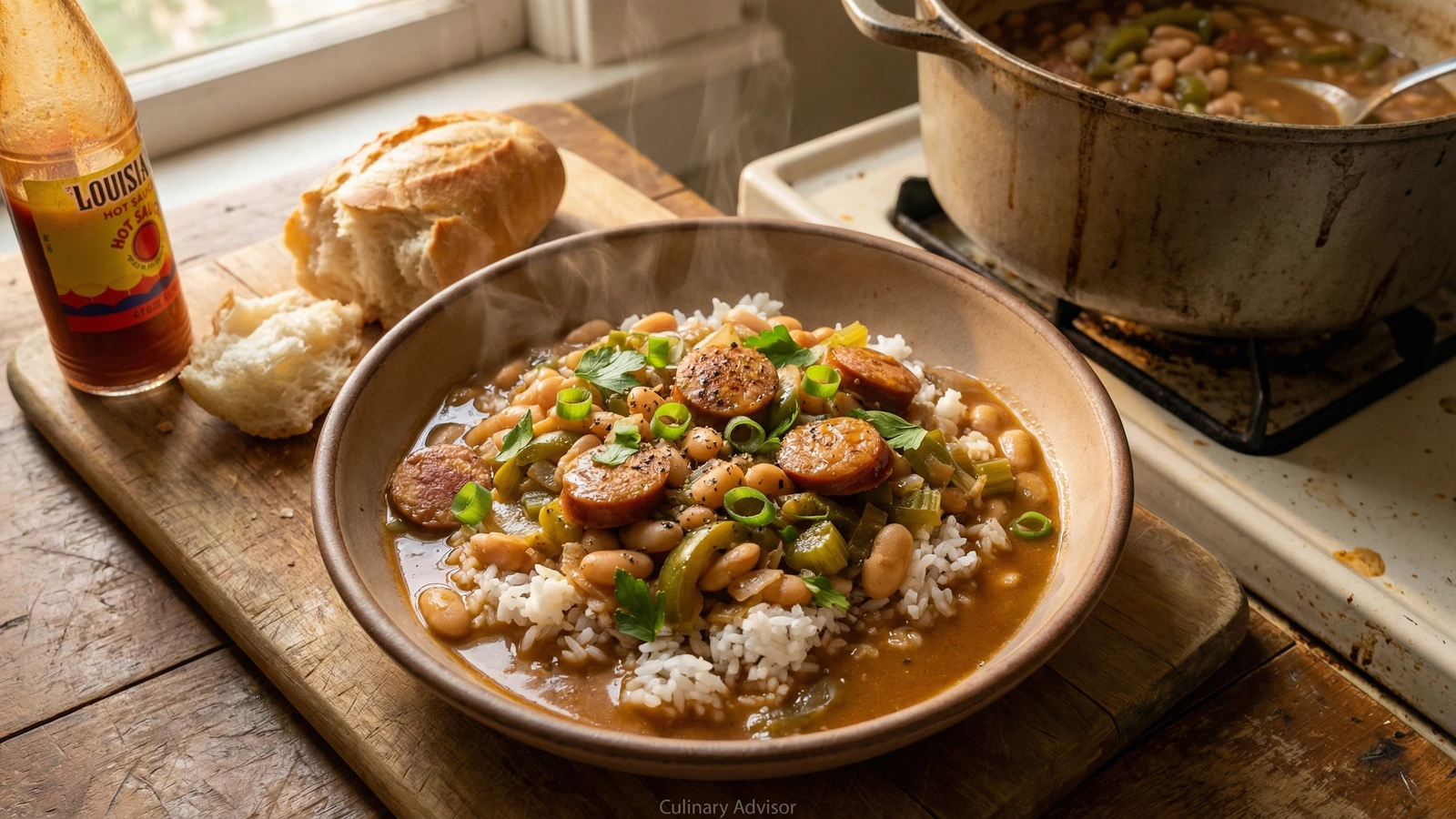
Smothered White Beans Cajun-Style
Created by Chef Remy
Creamy white beans simmered until they melt into their own gravy, rich with smoked sausage and the holy trinity, ladled over rice the way four generations of bayou cooks have done it.
Smothered beans taught me patience. You cannot rush this dish. The magic happens when you let the beans break down on their own time, releasing starch into the cooking liquid until it becomes thick and creamy without you adding a thing. That's the bayou way.
My grandmother Evangeline made these beans every Monday, same as her mother before her. Monday was wash day in Louisiana, and you needed something that could simmer unattended while you worked. She'd put the pot on early, check it when she could, and by suppertime the whole house smelled like heaven. The beans would be creamy, the gravy thick enough to coat a spoon, the smoked sausage perfuming everything it touched.
At Lagniappe, we serve these beans alongside blackened catfish and dirty rice. But I'll tell you a secret: I eat them straight from the pot with nothing but hot French bread. You don't need a silver fork to eat good food. You need good food, and these beans deliver.
The key is building flavor in layers. Season your sausage before it hits the pot. Season your trinity when it goes in. Taste as you go and adjust at the end. Trust your palate. The beans will tell you what they need if you're paying attention.
The technique, the tradition, and the story behind every dish.
Discover Culinary AdvisorIngredients
dried Great Northern or navy beans
Quantity
1 pound
picked over and rinsed
smoked sausage or andouille
Quantity
1 pound
sliced into half-moons
unsalted butter
Quantity
4 tablespoons
yellow onion
Quantity
1 large
diced
celery stalks
Quantity
2
diced
green bell pepper
Quantity
1
diced
garlic
Quantity
6 cloves
minced
chicken stock or water
Quantity
8 cups
bay leaves
Quantity
2
dried thyme
Quantity
1 teaspoon
smoked paprika
Quantity
1 teaspoon
cayenne pepper
Quantity
1/2 teaspoon, or to taste
kosher salt
Quantity
1 teaspoon, plus more to taste
black pepper
Quantity
1/2 teaspoon
freshly ground
green onions
Quantity
4
sliced thin
fresh parsley
Quantity
2 tablespoons
chopped
hot sauce (optional)
Quantity
for serving
cooked white rice
Quantity
for serving
| Ingredient | Quantity |
|---|---|
| dried Great Northern or navy beanspicked over and rinsed | 1 pound |
| smoked sausage or andouillesliced into half-moons | 1 pound |
| unsalted butter | 4 tablespoons |
| yellow oniondiced | 1 large |
| celery stalksdiced | 2 |
| green bell pepperdiced | 1 |
| garlicminced | 6 cloves |
| chicken stock or water | 8 cups |
| bay leaves | 2 |
| dried thyme | 1 teaspoon |
| smoked paprika | 1 teaspoon |
| cayenne pepper | 1/2 teaspoon, or to taste |
| kosher salt | 1 teaspoon, plus more to taste |
| black pepperfreshly ground | 1/2 teaspoon |
| green onionssliced thin | 4 |
| fresh parsleychopped | 2 tablespoons |
| hot sauce (optional) | for serving |
| cooked white rice | for serving |
Equipment Needed
- •Large Dutch oven or heavy-bottomed pot (6-quart minimum)
- •Wooden spoon for stirring and mashing
- •Ladle for serving
Instructions
- 1
Quick-soak the beans
Place beans in a large Dutch oven and cover with water by three inches. Bring to a rolling boil for two minutes, then remove from heat, cover, and let sit for one hour. This quick soak does the same work as overnight soaking but gets you cooking sooner. Drain and rinse the beans.
If you have time, soak overnight in cold water instead. Either way works fine. The goal is hydrated beans that cook evenly. - 2
Brown the sausage
Wipe out the Dutch oven and set it over medium-high heat. Add the sausage slices in a single layer. Let them sizzle undisturbed until the edges turn golden and the fat renders out, about four minutes per side. You want color and caramelization. That fond on the bottom of the pot is flavor you're building. Remove the sausage to a plate but leave every drop of that rendered fat in the pot.
If your sausage is lean and renders little fat, add two tablespoons of butter or bacon drippings to compensate. - 3
Cook the trinity
Reduce heat to medium and add the butter to the pot. When it foams, add the onion, celery, and bell pepper. This is the holy trinity, the foundation of Cajun cooking. Season with half the salt and pepper right now. Cook, stirring occasionally and scraping up that beautiful fond, until the vegetables soften and the onions turn translucent, about eight to ten minutes. The kitchen should smell like a Louisiana grandmother's house.
- 4
Add garlic and spices
Push the vegetables to the edges and add the garlic to the center of the pot where the heat is strongest. Let it sizzle for thirty seconds until fragrant, then stir everything together. Add the thyme, smoked paprika, and cayenne. Stir to coat the vegetables in the spices and toast for one minute. You'll smell the paprika bloom and the cayenne will tickle your nose. That's how you know the spices are waking up.
- 5
Add beans and liquid
Add the drained beans to the pot and stir to coat them with the seasoned vegetables. Pour in the chicken stock. It should cover the beans by about two inches. Add the bay leaves. Bring everything to a boil, then reduce to a gentle simmer. You want lazy bubbles rising, not a rolling boil. A hard boil breaks the beans apart before they can release their starch properly.
Chicken stock adds depth, but water works if that's what you have. The sausage and seasonings carry enough flavor. - 6
Simmer low and slow
Cover the pot with the lid slightly ajar and let the beans simmer for two to two and a half hours. Stir every thirty minutes or so, scraping the bottom to prevent sticking. Add more stock or water if the level drops below the beans. About halfway through, return the browned sausage to the pot. The beans are done when they're creamy and tender, some breaking apart and thickening the liquid into a gravy.
- 7
Mash for thickness
Here's the secret to that authentic smothered texture. Using the back of your wooden spoon, mash about a quarter of the beans against the side of the pot. Stir them back in. This releases extra starch and creates that thick, velvety gravy that clings to rice. If you want it thicker, mash more. If you want it brothier, leave more beans whole. You're the cook. Trust your instincts.
Some folks use a potato masher for this step. Either way works. You want some beans creamy, some still holding their shape. - 8
Season and finish
Remove the bay leaves. Taste, taste, taste. This is when you adjust. Add more salt if it needs it, more cayenne if you want heat, more black pepper for warmth. The beans should taste rich, smoky, and deeply satisfying. Stir in most of the green onions and parsley, reserving some for garnish. Let everything simmer together for five more minutes so the flavors marry.
- 9
Serve over rice
Ladle the beans generously over bowls of hot white rice. The gravy will pool around the edges, mixing with the rice into something wonderful. Scatter the remaining green onions and parsley on top. Set a bottle of hot sauce on the table for those who want it. When the last bite is as good as the first, you've done it right.
Chef Tips
- •Look for andouille from a Louisiana producer if you can find it. The commercial stuff from big brands is fine, but real Louisiana andouille has a coarser texture and deeper smoke flavor that makes all the difference.
- •Don't salt the beans heavily at the start. Salting too early can toughen the skins. Season the trinity, then adjust at the end when the beans are tender.
- •Leftover beans thicken considerably in the refrigerator. Add a splash of stock when reheating and stir over low heat until loosened to your liking.
- •For a smokier pot, add a ham hock or a few pieces of tasso with the sausage. At Lagniappe, we sometimes use both.
Advance Preparation
- •Beans can be made up to four days ahead and refrigerated. The flavor improves as they sit. Reheat gently with added stock.
- •The full pot freezes beautifully for up to three months. Thaw overnight in the refrigerator before reheating.
Frequently Asked Questions
Nutrition Information
1 serving (about 320g)
Where cooking meets culture.
Culinary mentorship, cultural storytelling, and the editorial depth that makes cooking meaningful.
Explore Culinary Advisor