Culinary Advisor
A cooking platform built around craft, culture, and the stories behind what we eat.
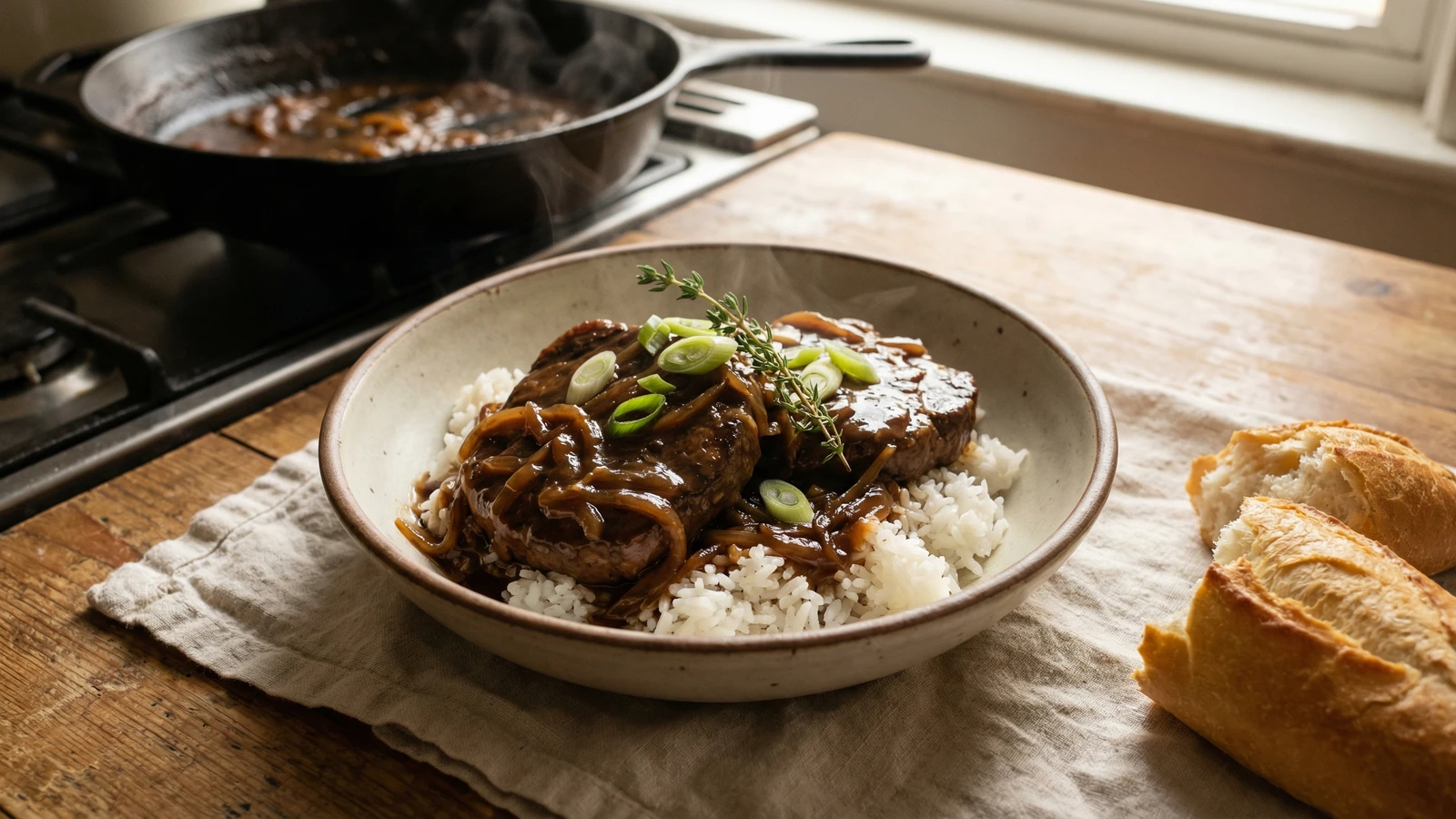
Smothered Seven Steaks
Created by Chef Remy
Tough, affordable round steaks transformed into fork-tender perfection, swimming in a dark, silky onion gravy that takes patience to build but rewards every minute of waiting.
This is the dish that fed large families on small budgets across Louisiana for generations. Round steak costs next to nothing because it's tough as shoe leather if you cook it wrong. But cook it right, low and slow in a smothering gravy, and it becomes something extraordinary. My grandmother Evangeline made this every other week when I was growing up. She'd pound those steaks thin with the edge of a plate, season them proper, and let them braise until you could cut them with a hard look.
The secret is patience. You're not just cooking meat in gravy. You're transforming it. The collagen breaks down, the fibers relax, and what started as a cheap, chewy cut becomes tender enough to fall apart on your fork. The onions are just as important as the meat. You need mountains of them, sliced thin, cooked down until they're dark and sweet and barely recognizable. That's where your gravy gets its soul.
At Lagniappe, we serve this over rice with a pile of those smothered onions right on top. Nothing fancy. Just honest food that sticks to your ribs and makes you grateful for the simple things. That's the bayou way.
The technique, the tradition, and the story behind every dish.
Discover Culinary AdvisorIngredients
beef round steak
Quantity
2 pounds
cut into 6 portions, about 1/2 inch thick
kosher salt
Quantity
2 teaspoons, divided
black pepper
Quantity
1 teaspoon
freshly ground
garlic powder
Quantity
1 teaspoon
onion powder
Quantity
1 teaspoon
cayenne pepper
Quantity
1/2 teaspoon
smoked paprika
Quantity
1/2 teaspoon
all-purpose flour
Quantity
1/2 cup
vegetable oil or bacon drippings
Quantity
1/4 cup
yellow onions
Quantity
3 large
halved and thinly sliced
green bell pepper
Quantity
1 medium
diced
celery
Quantity
2 stalks
diced
garlic
Quantity
4 cloves
minced
beef broth
Quantity
2 cups
low sodium
Worcestershire sauce
Quantity
1 tablespoon
bay leaves
Quantity
2
fresh thyme
Quantity
4 sprigs
green onions
Quantity
1/2 cup
sliced
cooked white rice
Quantity
for serving
| Ingredient | Quantity |
|---|---|
| beef round steakcut into 6 portions, about 1/2 inch thick | 2 pounds |
| kosher salt | 2 teaspoons, divided |
| black pepperfreshly ground | 1 teaspoon |
| garlic powder | 1 teaspoon |
| onion powder | 1 teaspoon |
| cayenne pepper | 1/2 teaspoon |
| smoked paprika | 1/2 teaspoon |
| all-purpose flour | 1/2 cup |
| vegetable oil or bacon drippings | 1/4 cup |
| yellow onionshalved and thinly sliced | 3 large |
| green bell pepperdiced | 1 medium |
| celerydiced | 2 stalks |
| garlicminced | 4 cloves |
| beef brothlow sodium | 2 cups |
| Worcestershire sauce | 1 tablespoon |
| bay leaves | 2 |
| fresh thyme | 4 sprigs |
| green onionssliced | 1/2 cup |
| cooked white rice | for serving |
Equipment Needed
- •12-inch cast iron skillet or Dutch oven with lid
- •Meat mallet or heavy plate
- •Large plate for dredging
Instructions
- 1
Tenderize the steaks
Place each steak between two sheets of plastic wrap. Using a meat mallet or the edge of a heavy plate, pound the steaks until they're about a quarter inch thick. You're breaking down tough muscle fibers here. Don't be gentle. The meat should spread and thin out considerably. This is how my grandmother did it, no fancy equipment, just determination and a sturdy arm.
If you don't have a meat mallet, the bottom of a heavy skillet works just fine. The goal is force distributed across the surface. - 2
Season the meat
Mix together one teaspoon of the salt, the black pepper, garlic powder, onion powder, cayenne, and smoked paprika in a small bowl. Season both sides of each pounded steak generously with this mixture, pressing the spices into the meat with your hands. Let them sit at room temperature while you prep your vegetables. This is building flavor from the very first moment.
- 3
Dredge in flour
Spread the flour on a large plate. Dredge each seasoned steak in flour, coating both sides and shaking off the excess. The flour does double duty here: it creates a golden crust when you sear and it thickens your gravy later. Set the dredged steaks on a wire rack or clean plate.
- 4
Brown the steaks
Heat the oil or bacon drippings in a large cast iron skillet or Dutch oven over medium-high heat until it shimmers and a pinch of flour sizzles immediately when dropped in. Working in batches so you don't crowd the pan, brown the steaks until golden on both sides, about three minutes per side. They won't be cooked through. That's fine. You're building fond on the bottom of that pan. Transfer browned steaks to a plate.
Bacon drippings add another layer of flavor if you have them saved. At Lagniappe, we always keep a jar by the stove. - 5
Cook the onions down
Reduce heat to medium. Add all those sliced onions to the pan with the remaining teaspoon of salt. Stir them into the pan drippings and fond, scraping up all those browned bits. Cook the onions, stirring occasionally, until they collapse, turn golden, then deepen to a rich brown color. This takes a solid twenty to twenty-five minutes. Don't rush it. The onions should be soft, dark, and sweet smelling. This is the soul of your gravy.
- 6
Add the trinity and garlic
Push the onions to the sides of the pan. Add the bell pepper and celery to the center, letting them sizzle in the rendered fat for about five minutes until they soften and the celery turns translucent. Add the garlic and cook just until fragrant, about thirty seconds. Stir everything together. Your kitchen should smell like Louisiana right now.
- 7
Build the gravy
Pour in the beef broth and Worcestershire sauce, stirring to combine with the vegetables and deglaze any remaining fond from the pan. The liquid will pick up color from the onions and fond, turning a beautiful deep brown. Add the bay leaves and thyme sprigs. Bring to a simmer.
If you want a thicker gravy, sprinkle a tablespoon of the leftover dredging flour over the vegetables before adding the broth. Stir it in and cook for a minute. - 8
Braise low and slow
Nestle the browned steaks back into the gravy, spooning some of those dark onions over the top. Cover with a tight-fitting lid, reduce heat to low, and let it simmer gently for two hours. Check it occasionally, flipping the steaks halfway through and adding a splash of water if the gravy gets too thick. The meat is done when it's fork-tender, practically falling apart when you touch it.
- 9
Taste and finish
Remove the bay leaves and thyme stems. Taste the gravy and adjust the seasoning. It probably needs more salt, maybe a touch more black pepper. The gravy should be silky, coating a spoon, thick with those melted onions. Scatter the green onions over the top. Serve each steak with a generous ladle of gravy over hot white rice. When the last bite is as good as the first, you've done it right.
Chef Tips
- •Round steak is sometimes labeled as 'breakfast steak' or 'Swiss steak' at the butcher counter. It's all the same tough, lean cut that benefits from this treatment. Ask your butcher to slice it if you don't see it pre-cut.
- •Save your bacon drippings in a jar by the stove. They add depth to everything from smothered steaks to cornbread. At Lagniappe, we go through about a quart a week.
- •If you want even more flavor, add a splash of dark beer or a tablespoon of tomato paste when you build the gravy. Both deepen that rich brown color and complexity.
- •Leftovers are even better the next day. The steaks absorb more gravy and the flavors meld together overnight. Just reheat gently with a little extra broth to loosen the gravy.
Advance Preparation
- •The steaks can be pounded and seasoned up to 24 hours ahead. Store covered in the refrigerator and bring to room temperature for 30 minutes before dredging and browning.
- •The complete dish reheats beautifully. Store in the braising liquid in an airtight container for up to 4 days. Reheat gently on the stovetop with a splash of broth.
- •This dish freezes well for up to 3 months. Thaw overnight in the refrigerator before reheating.
Frequently Asked Questions
Nutrition Information
1 serving (about 250g)
Where cooking meets culture.
Culinary mentorship, cultural storytelling, and the editorial depth that makes cooking meaningful.
Explore Culinary Advisor