Culinary Advisor
A cooking platform built around craft, culture, and the stories behind what we eat.
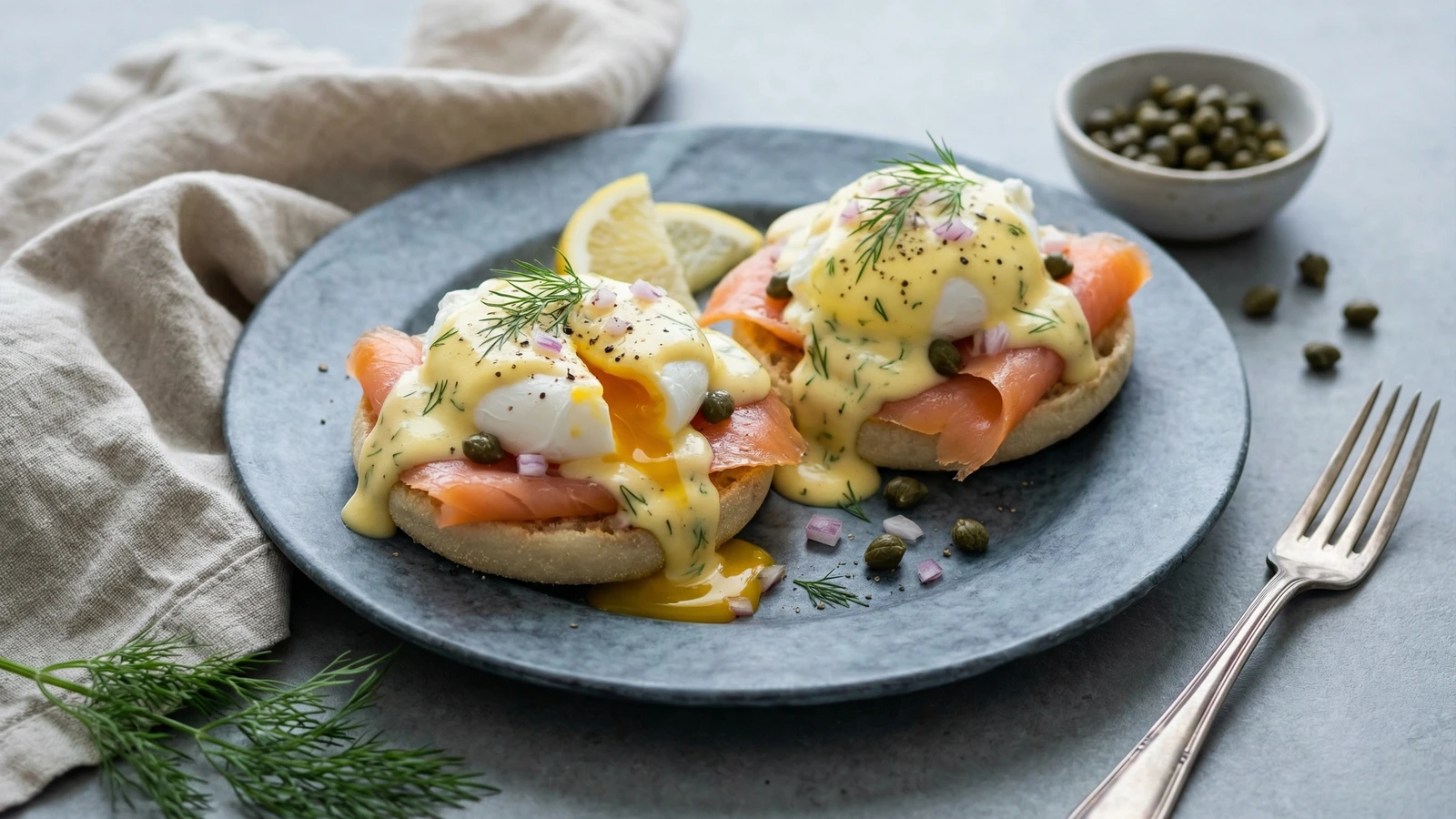
Smoked Salmon Benedict
Created by
Silky cold-smoked salmon draped over perfectly poached eggs, crowned with golden dill hollandaise on a crisp English muffin. This is Pacific Northwest brunch at its most honest and elegant.
The Pacific Northwest wrote its culinary identity on the backs of salmon. Long before European settlers arrived, Coast Salish peoples had perfected the art of smoking fish over alder wood, preserving the summer's abundance for winter months. Scandinavian immigrants recognized kinship with their own gravlax traditions. Chinese and Japanese fishermen brought different techniques to the same waters. This dish honors all of them.
Smoked salmon Benedict represents everything I love about regional American cooking. It takes a European classic and makes it unmistakably ours. The hollandaise gets brightened with fresh dill rather than tarragon. The Canadian bacon yields to translucent sheets of cold-smoked salmon. The result tastes like a foggy morning on Puget Sound, like something you'd eat watching fishing boats return to harbor.
The technique here demands your attention but rewards it generously. Hollandaise intimidates home cooks unnecessarily. It's an emulsion, nothing more. Keep your heat gentle, your whisking steady, and your butter additions gradual. The poached eggs require similar patience. Once you've mastered these two skills, you'll make this dish for every special occasion and several ordinary Sundays besides.
Seek out sustainably caught or farmed salmon. The Monterey Bay Aquarium's Seafood Watch program can guide you. Wild salmon runs in the Pacific Northwest have dwindled to a fraction of their historical abundance. Choosing responsibly isn't just ethics; it's self-preservation. We protect what we want to keep eating.
The technique, the tradition, and the story behind every dish.
Discover Culinary AdvisorIngredients
English muffins
Quantity
4
split
cold-smoked salmon (lox-style)
Quantity
8 ounces
large eggs, very fresh
Quantity
8
white wine vinegar
Quantity
2 tablespoons
large egg yolks
Quantity
3
fresh lemon juice
Quantity
1 tablespoon
cold water
Quantity
1 tablespoon
unsalted butter
Quantity
1 cup (2 sticks)
melted and warm
fresh dill
Quantity
2 tablespoons
finely chopped, plus fronds for garnish
cayenne pepper
Quantity
1/4 teaspoon
kosher salt
Quantity
to taste
capers (optional)
Quantity
2 tablespoons
drained
red onion (optional)
Quantity
2 tablespoons
finely minced
black pepper (optional)
Quantity
freshly cracked
| Ingredient | Quantity |
|---|---|
| English muffinssplit | 4 |
| cold-smoked salmon (lox-style) | 8 ounces |
| large eggs, very fresh | 8 |
| white wine vinegar | 2 tablespoons |
| large egg yolks | 3 |
| fresh lemon juice | 1 tablespoon |
| cold water | 1 tablespoon |
| unsalted buttermelted and warm | 1 cup (2 sticks) |
| fresh dillfinely chopped, plus fronds for garnish | 2 tablespoons |
| cayenne pepper | 1/4 teaspoon |
| kosher salt | to taste |
| capers (optional)drained | 2 tablespoons |
| red onion (optional)finely minced | 2 tablespoons |
| black pepper (optional) | freshly cracked |
Equipment Needed
- •Medium heatproof bowl for hollandaise
- •Wire whisk
- •Wide shallow pot or deep skillet for poaching
- •Slotted spoon
- •Small ramekins or cups for eggs
- •Instant-read thermometer (optional but helpful)
Instructions
- 1
Prepare your mise en place
Set out all ingredients before you begin. Melt the butter in a small saucepan over low heat and keep it warm but not hot. Separate your egg yolks into a heatproof bowl, reserving the whites for another use. Chop your dill. Bring a wide, shallow pot of water to a gentle simmer. This organization matters because once hollandaise begins, you cannot walk away.
Fresh eggs poach better than old ones. The whites of fresh eggs cling tightly to the yolks rather than feathering into wisps. - 2
Build the hollandaise base
Set the bowl with egg yolks over a pot of barely simmering water. The bowl should not touch the water. Add the lemon juice and cold water. Whisk constantly in a figure-eight pattern until the yolks turn pale yellow and thicken enough to leave ribbons when the whisk is lifted. This takes three to four minutes. The mixture should feel warm to the touch but never hot. If it scrambles, you've gone too far. Start over.
The cold water provides insurance against curdling. It gives you a wider temperature window to work within. - 3
Emulsify with butter
Remove the bowl from heat. Begin adding warm melted butter in a thin, steady stream while whisking vigorously. Add only a tablespoon at first, whisking until fully incorporated before adding more. The sauce will transform from thin and pale to thick and glossy. Once half the butter is in, you can add the rest more quickly. The finished hollandaise should coat a spoon and hold soft peaks.
If the sauce breaks (looks greasy or curdled), add a tablespoon of hot water and whisk vigorously. This usually saves it. - 4
Season the hollandaise
Whisk in the chopped dill, cayenne, and salt to taste. The sauce should be bright with lemon, herbaceous from dill, and carry just enough heat to warm your tongue. Cover with plastic wrap pressed directly onto the surface and set in a warm spot while you poach the eggs. It will hold for twenty minutes.
- 5
Prepare the poaching water
Add the white wine vinegar to your simmering water. The water should show small bubbles rising from the bottom but never a rolling boil. Violent water tears eggs apart. Gentle water embraces them. Crack each egg into a small ramekin or cup. This allows you to slide them into the water smoothly.
- 6
Poach the eggs
Create a gentle whirlpool by stirring the water in one direction. Slide an egg into the center of the vortex. The spinning water helps the white wrap around the yolk. Poach for exactly three minutes for a runny yolk, four minutes for jammy. Remove with a slotted spoon to a plate lined with a clean kitchen towel. Repeat with remaining eggs, working in batches of two or three at most.
Trim any ragged edges from the poached eggs with kitchen scissors for a cleaner presentation. The restaurants do this. Now you know their secret. - 7
Toast the muffins
While poaching the final eggs, toast the English muffin halves until golden and crisp. Use a toaster, or better yet, butter them lightly and toast cut-side down in a hot skillet. The skillet method produces superior crunch and a layer of butter that prevents the muffin from becoming soggy under the sauce.
- 8
Assemble the Benedict
Place two muffin halves on each plate. Drape two or three slices of smoked salmon over each half, letting the edges fold naturally into gentle waves. The salmon should not lie flat like wallpaper. Place a poached egg on top of each. Spoon hollandaise generously over the eggs, allowing it to cascade down the sides. Scatter capers, red onion, and fresh dill fronds over the top. Finish with cracked black pepper.
- 9
Serve immediately
Bring the plates to the table while the hollandaise still gleams and the eggs remain warm. Encourage your guests to cut into the eggs immediately, releasing the golden yolk to mingle with the buttery sauce. This is a dish that does not wait. It rewards promptness and punishes delay.
Chef Tips
- •Cold-smoked salmon and hot-smoked salmon are entirely different products. For this dish, you want cold-smoked: translucent, silky, and pliable. Hot-smoked salmon flakes and has a firmer, cooked texture. Ask your fishmonger if uncertain.
- •Seek out salmon from Alaska, where wild fisheries remain relatively healthy, or look for certified sustainable farmed salmon from operations with strong environmental practices. The fish should smell clean, like the ocean, never ammonia or fish oil.
- •Hollandaise can be made up to two hours ahead if kept warm in a thermos. This trick saves sanity when cooking for a crowd.
- •If fresh dill isn't available, chives make a worthy substitute. Dried dill does not. Some ingredients simply cannot be replaced by their dried equivalents.
- •Pair this with a crisp sparkling wine or a bright Grüner Veltliner. The acidity cuts through the richness of the hollandaise beautifully.
Advance Preparation
- •Eggs can be poached up to one day ahead. Undercook them slightly (two and a half minutes), transfer to ice water, then refrigerate in cold water. Reheat in simmering water for one minute before serving.
- •Hollandaise can be held warm in a thermos for up to two hours, though it's best made fresh.
- •Prep all garnishes the night before: mince the onion, drain the capers, pick the dill fronds. Store separately, covered, in the refrigerator.
Frequently Asked Questions
Nutrition Information
1 serving (about 350g)
Where cooking meets culture.
Culinary mentorship, cultural storytelling, and the editorial depth that makes cooking meaningful.
Explore Culinary Advisor