Culinary Advisor
A cooking platform built around craft, culture, and the stories behind what we eat.
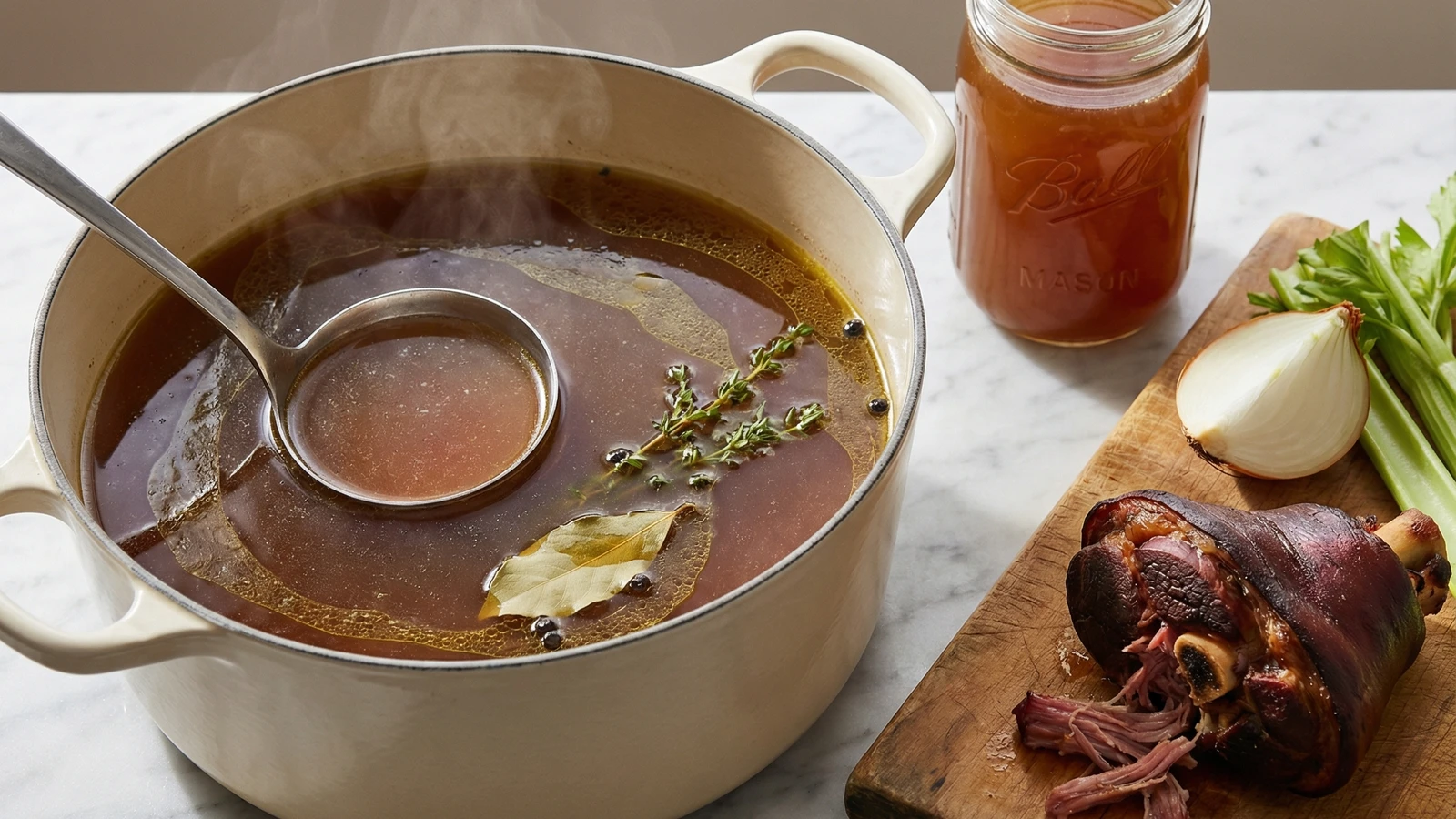
Slow-Simmered Smoked Ham Hock Stock
Created by
A mahogany-hued Southern foundation stock that transforms humble dried beans, braised greens, and rice dishes into something that tastes like generations of cooks had a hand in it.
This is the quiet workhorse of Southern cooking. No dish announces its presence, yet every pot of collards, every bowl of hoppin' john, every summer pot of field peas depends on what you're about to make. The smokehouse tradition runs deep in this country, and when those cured hocks meet water over gentle heat, they surrender everything: collagen, salt, woodsmoke, and that particular richness that no bouillon cube can replicate.
I learned to make this stock from a woman in Charleston who kept a pot going most of the week, adding water as she ladled portions out for whatever she was cooking. Her method was continuous, almost medieval in its simplicity. Mine is more practical for modern kitchens. You'll make a batch, strain it, portion it, and have the foundation for a dozen meals waiting in your freezer.
The technique demands almost nothing from you except time. Four hours of gentle simmering while you go about your business. The hocks do the work. Your job is simply to start them properly and leave them alone. What emerges is liquid gold: deeply savory, faintly smoky, and honest in a way that commercial stocks can never match.
The technique, the tradition, and the story behind every dish.
Discover Culinary AdvisorIngredients
smoked ham hocks
Quantity
2 1/2 pounds (2-3 hocks)
yellow onion
Quantity
1 large
quartered
celery stalks
Quantity
3
cut into 3-inch pieces
head of garlic
Quantity
1
halved crosswise
bay leaves
Quantity
3
black peppercorns
Quantity
1 teaspoon
fresh thyme
Quantity
4 sprigs
parsley stems
Quantity
1 small bunch
cold water
Quantity
4 quarts
| Ingredient | Quantity |
|---|---|
| smoked ham hocks | 2 1/2 pounds (2-3 hocks) |
| yellow onionquartered | 1 large |
| celery stalkscut into 3-inch pieces | 3 |
| head of garlichalved crosswise | 1 |
| bay leaves | 3 |
| black peppercorns | 1 teaspoon |
| fresh thyme | 4 sprigs |
| parsley stems | 1 small bunch |
| cold water | 4 quarts |
Equipment Needed
- •8-quart stockpot or large Dutch oven
- •Fine-mesh strainer
- •Large heatproof bowl
- •Ladle
- •Quart containers or freezer bags for storage
Instructions
- 1
Rinse the ham hocks
Hold each ham hock under cold running water, rubbing the surface to remove any surface salt or debris from the smoking process. This brief rinse prevents your finished stock from becoming too salty. Pat them dry and set aside.
Look for meaty ham hocks with a good layer of skin and fat. Avoid those that appear dried out or have very little meat clinging to the bone. - 2
Build the pot
Place the ham hocks in a large stockpot or Dutch oven. Add the quartered onion, celery pieces, and halved garlic head. Tuck the bay leaves, peppercorns, thyme sprigs, and parsley stems around the hocks. Pour the cold water over everything. The hocks should be submerged by at least two inches.
Starting with cold water extracts more flavor and gelatin from the bones than adding hocks to hot water. - 3
Bring to a gentle simmer
Set the pot over medium-high heat and bring to a boil. Watch carefully. As the water heats, gray foam will rise to the surface. This is protein coagulating, and you want it out of your stock. Skim this foam with a large spoon and discard it. Continue skimming until the foam subsides, about ten minutes.
- 4
Reduce and simmer slowly
Once the foam is skimmed, reduce the heat to low. You want the barest simmer: a few lazy bubbles breaking the surface every few seconds, nothing more. A rolling boil will make your stock cloudy and give it a muddy flavor. Adjust your burner until you find that sweet spot. Leave the pot uncovered.
- 5
Simmer for four hours
Let the stock simmer undisturbed for four hours. The kitchen will fill with the smell of smokehouse and celery. Check occasionally to ensure the simmer remains gentle and the liquid hasn't dropped below the hocks. Add a cup of water if needed. By the end, the meat will be falling from the bones and the liquid will have turned a deep amber.
- 6
Strain the stock
Remove the pot from heat. Using tongs, transfer the ham hocks to a cutting board. Set a fine-mesh strainer over a large heatproof bowl or clean pot. Ladle the stock through the strainer, pressing gently on the vegetables to extract their flavor. Discard the solids.
Don't discard that meat. Once cool enough to handle, pull the meat from the bones and save it for beans, fried rice, or scrambled eggs. - 7
Cool and defat
Let the stock cool at room temperature for thirty minutes, then refrigerate uncovered until completely cold, at least four hours or overnight. A thick cap of white fat will solidify on the surface. Lift this off with a spoon and discard it (or save it for cooking). What remains is your finished stock: clear, deeply flavored, and ready to use.
- 8
Portion and store
Transfer the stock to quart containers or freezer bags, leaving an inch of headspace for expansion. Label with the date. Refrigerated stock keeps for five days. Frozen, it holds for six months. Thaw overnight in the refrigerator before using.
Chef Tips
- •Seek out ham hocks from a proper butcher or Southern grocery rather than the supermarket meat case. The difference in quality is substantial. Good hocks come from heritage breed pigs and real smokehouse operations.
- •This stock is intentionally unsalted beyond what the hocks contribute. The salt level is perfect for cooking dried beans and greens, which will reduce and concentrate the liquid. Taste before using in other applications and adjust accordingly.
- •For a clearer stock, avoid stirring during the simmer. Movement clouds the liquid. Let it sit still and do its work.
- •Freeze stock in ice cube trays for small additions to sautéed greens, pan sauces, or anywhere you need a hit of smoky depth without committing to a full batch.
- •The rendered fat you skim makes exceptional fried potatoes or cornbread. Store it separately in a jar in the refrigerator for up to a month.
Advance Preparation
- •Stock improves after a day in the refrigerator as flavors meld. Make it two days before you need it for best results.
- •Frozen stock can be thawed in the refrigerator overnight or in a bowl of cold water for faster results.
- •The pulled ham hock meat can be refrigerated for 3 days or frozen for 2 months.
Frequently Asked Questions
Nutrition Information
1 serving (about 240g)
Where cooking meets culture.
Culinary mentorship, cultural storytelling, and the editorial depth that makes cooking meaningful.
Explore Culinary Advisor