Culinary Advisor
A cooking platform built around craft, culture, and the stories behind what we eat.
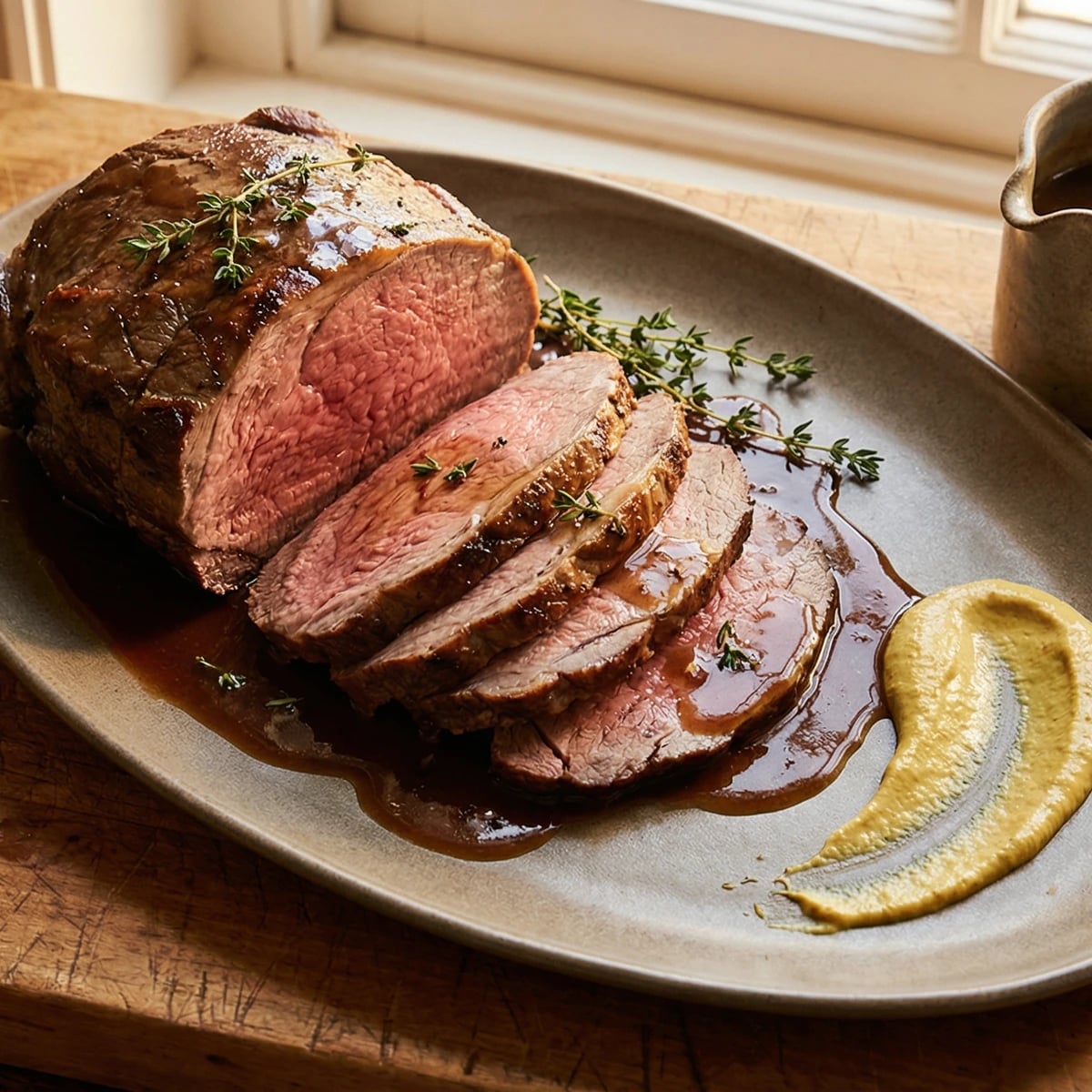
Slow-Roast Topside of Beef
Created by Chef Thomas
A patient, thrifty joint of topside surrendered to a low oven for hours, resting on a bed of root vegetables until the kitchen smells like the kind of Sunday that makes Monday bearable.
The butcher had topside on Saturday. Not the glamorous cut, not the one people write poems about. But it was a good piece, deep red, well-tied, and the price was honest. I carried it home in a paper bag and left it on the counter while I put the kettle on.
Topside gets a bad reputation because people roast it like sirloin and wonder why it comes out dry. It isn't sirloin. It's a working muscle, lean and tight-grained, and if you blast it in a hot oven it will punish you for the misunderstanding. But give it time, a low oven, and a little liquid to keep things kind, and it becomes something else entirely. Tender enough to carve thinly. Flavourful in the way that only a well-raised, properly rested piece of beef can be.
This is a cold-weather roast. November, December, January. The sort of cooking that fills the house with a smell you can't manufacture and wouldn't want to. Onions and beef and thyme and the slow, patient warmth of an oven doing its work while you read the paper or walk the dog. I wrote it down in the notebook years ago: topside, low and slow, Sunday. The leftovers made Monday sandwiches with mustard and watercress, and I remember thinking the second day might have been better than the first.
A recipe is a conversation, not a contract. Use the vegetables you have. Pour in whatever wine is open. Trust your nose. It knows before you do.
Ingredients
topside of beef
Quantity
1.2-1.5kg
tied by the butcher
beef dripping or olive oil
Quantity
2 tablespoons
onions
Quantity
2
quartered
| Ingredient | Quantity |
|---|---|
| topside of beeftied by the butcher | 1.2-1.5kg |
| beef dripping or olive oil | 2 tablespoons |
| onionsquartered | 2 |