Culinary Advisor
A cooking platform built around craft, culture, and the stories behind what we eat.
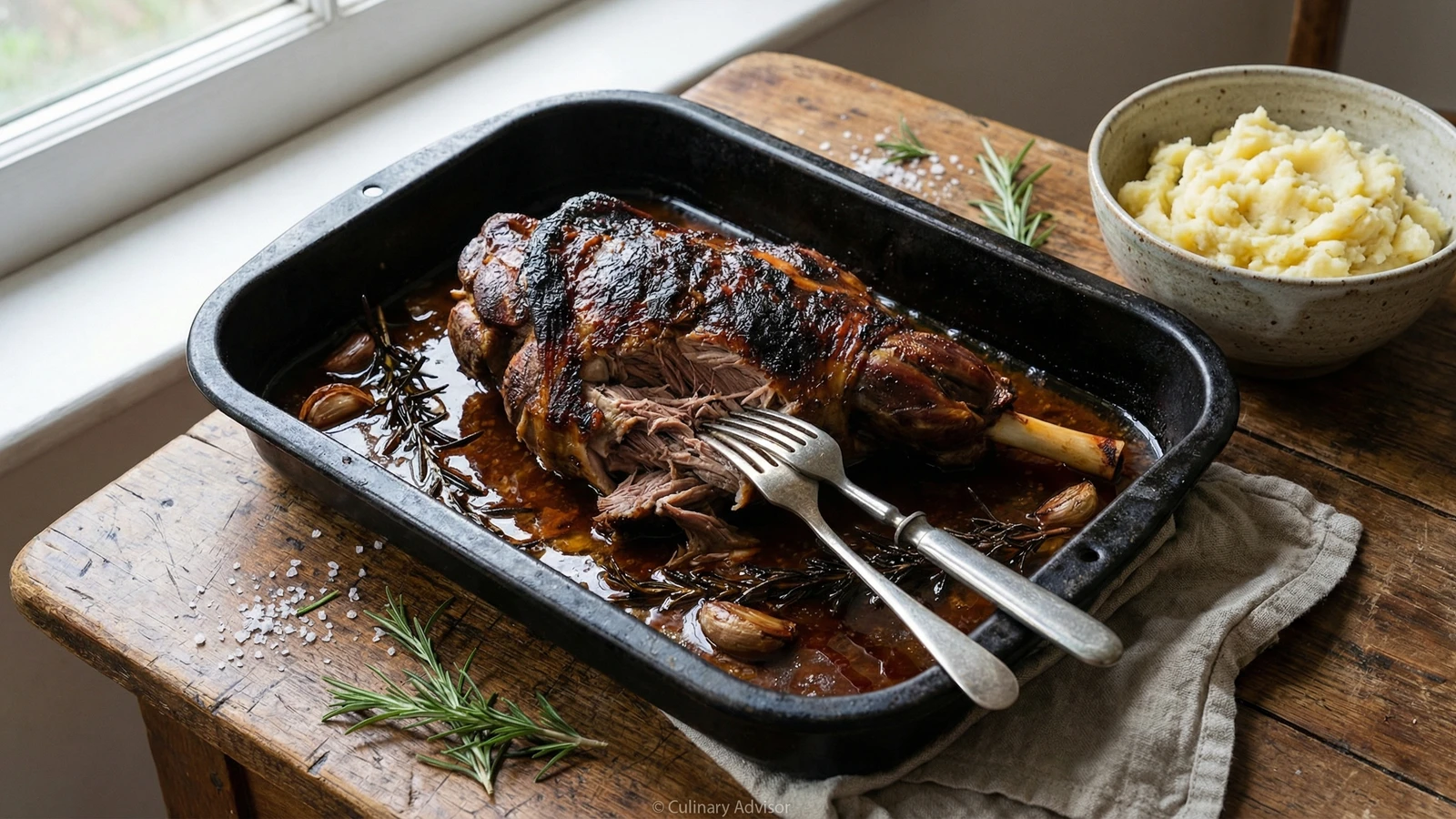
Slow-Roast Shoulder of Lamb with Anchovy and Rosemary
Created by Chef Thomas
A lamb shoulder rubbed with anchovy and rosemary, surrendered to a low oven for four hours until the meat gives way and the kitchen smells like the kind of evening you want to fall into.
There's a point, about three hours in, when the kitchen changes. You stop noticing the smell because it's everywhere: rosemary gone warm and resinous, the lamb quietly rendering its fat, the anchovies long since dissolved into the juices. It smells like the kind of Saturday where nothing else needs doing.
I make this when the evenings draw in and the house needs warming. Not just with heat, though the oven does that too, but with the particular comfort of something that's been cooking slowly all afternoon. A lamb shoulder is a forgiving cut. It wants time and low heat, and in return it gives you meat that falls from the bone and juices so deep and savoury they barely need anything alongside. The anchovies are the secret. They melt into the lamb completely, leaving no trace of fish, only a salty, savoury depth that you can't quite place but would miss if it weren't there.
This is not a complicated dish. You stud the lamb, brown it, cover it, and walk away for four hours. The oven does the work. Your job is to put it in the middle of the table, still in its roasting tin, with the juices pooling around it, and let people pull it apart. There are few better feelings than putting a warm plate in front of someone and watching them reach for a second helping before the first is finished.
I wrote it down in the notebook years ago: lamb, anchovy, rosemary, Saturday. It hasn't needed revising since.
The technique, the tradition, and the story behind every dish.
Discover Culinary AdvisorIngredients
lamb shoulder
Quantity
1, bone in (roughly 2kg)
anchovy fillets in olive oil
Quantity
8
fresh rosemary
Quantity
4 sprigs
garlic
Quantity
6 cloves
peeled
olive oil
Quantity
2 tablespoons
white wine
Quantity
1 large glass
fine sea salt
Quantity
to taste
black pepper
Quantity
to taste
| Ingredient | Quantity |
|---|---|
| lamb shoulder | 1, bone in (roughly 2kg) |
| anchovy fillets in olive oil | 8 |
| fresh rosemary | 4 sprigs |
| garlicpeeled | 6 cloves |
| olive oil | 2 tablespoons |
| white wine | 1 large glass |
| fine sea salt | to taste |
| black pepper | to taste |
Equipment Needed
- •Heavy roasting tin or cast-iron casserole large enough to hold the shoulder
- •Heavy-duty aluminium foil
- •Two forks for pulling the meat
Instructions
- 1
Stud the lamb
Take the lamb out of the fridge a good hour before you start. Cold meat in a hot oven tightens and fights you. While it comes to room temperature, use a sharp knife to make deep incisions all over the shoulder, a dozen or so, roughly an inch deep. Into each slit, push half an anchovy fillet, a small piece of garlic, and a few rosemary needles stripped from the sprig. The anchovies will vanish entirely during cooking. Nobody will know they're there, but everybody will notice the depth they leave behind.
Don't be timid with the knife. Shallow cuts won't carry the flavour into the meat. Push down to the first knuckle of your finger and work the anchovy in. The lamb can take it. - 2
Season and sear
Set the oven to 160C/140C fan. Rub the shoulder all over with olive oil, then season generously with salt and pepper. Get a heavy roasting tin or casserole on the hob over a high heat and brown the lamb on all sides. You want proper colour here, a deep, caramelised crust that smells of Sunday roasts and good intentions. This takes a few minutes per side. Don't rush it. The fond left in the pan is flavour you'll want later.
- 3
Add wine and cover
With the lamb still in the tin, pour in the glass of white wine. Let it bubble and spit for a minute, scraping any sticky bits from the bottom with a wooden spoon. Tuck the remaining rosemary sprigs and any leftover garlic around the meat. Cover the tin tightly with a double layer of foil, or a lid if you have one that fits. The seal matters. You're trapping the moisture in, and the lamb will braise in its own juices and the wine, going slowly from tough to tender over the next few hours.
- 4
Slow roast for four hours
Put the tin in the oven and leave it alone. This is the difficult part, not doing anything. After about three hours, you'll start to smell it: rich, savoury, the rosemary gone warm and resinous, the whole kitchen turning into the kind of room people wander into without quite knowing why. At the four-hour mark, remove the foil. The meat should be completely yielding, pulling away from the bone when nudged with a fork. If it resists, cover it again and give it another thirty minutes. It'll get there.
Every oven is different and every shoulder is a different size. Trust the meat, not the clock. When it gives way under a fork with no resistance at all, it's done. - 5
Rest and finish
Turn the oven up to 220C/200C fan and put the uncovered lamb back in for fifteen to twenty minutes. The outside will crisp and colour while the inside stays soft and giving. When it comes out, let it rest in the tin for at least fifteen minutes. The juices in the bottom of the pan are extraordinary: dark, savoury, salty from the anchovies, fragrant from the rosemary. Spoon off any excess fat if you like, or don't. Bring the whole tin to the table. This isn't a dish you carve. You pull it apart with two forks and let people help themselves.
Chef Tips
- •Ask your butcher for a shoulder on the bone. Bone-in is essential here. The bone conducts heat through the centre of the joint and the marrow enriches the pan juices. A boneless shoulder will work, but you'll lose something you can't get back.
- •The anchovies are not optional, even if you think you don't like them. They dissolve entirely during the long cooking, leaving behind a savoury richness that has nothing to do with fish. Think of them as seasoning, not an ingredient. Nobody at the table will guess they're there.
- •Serve this with something simple that will soak up the juices. A bowl of buttery mashed potato is hard to beat. Or torn bread, warmed in the oven, for dragging through the bottom of the tin. A green salad afterwards, dressed with lemon and oil, to cut through the richness. That's a complete evening.
- •Leftovers, pulled into shreds and stirred through pasta with a little of the cooking liquid and some grated pecorino, make one of the best Monday suppers I know.
Advance Preparation
- •The lamb can be studded with anchovy, rosemary, and garlic the night before, covered, and refrigerated. Bring it to room temperature for an hour before cooking.
- •The finished dish reheats beautifully. Pull the meat from the bone, store it in its juices, and refrigerate for up to three days. Warm gently in a covered pan on the hob. It may even improve.
Frequently Asked Questions
Nutrition Information
1 serving (about 250g)
Where cooking meets culture.
Culinary mentorship, cultural storytelling, and the editorial depth that makes cooking meaningful.
Explore Culinary Advisor