Culinary Advisor
A cooking platform built around craft, culture, and the stories behind what we eat.
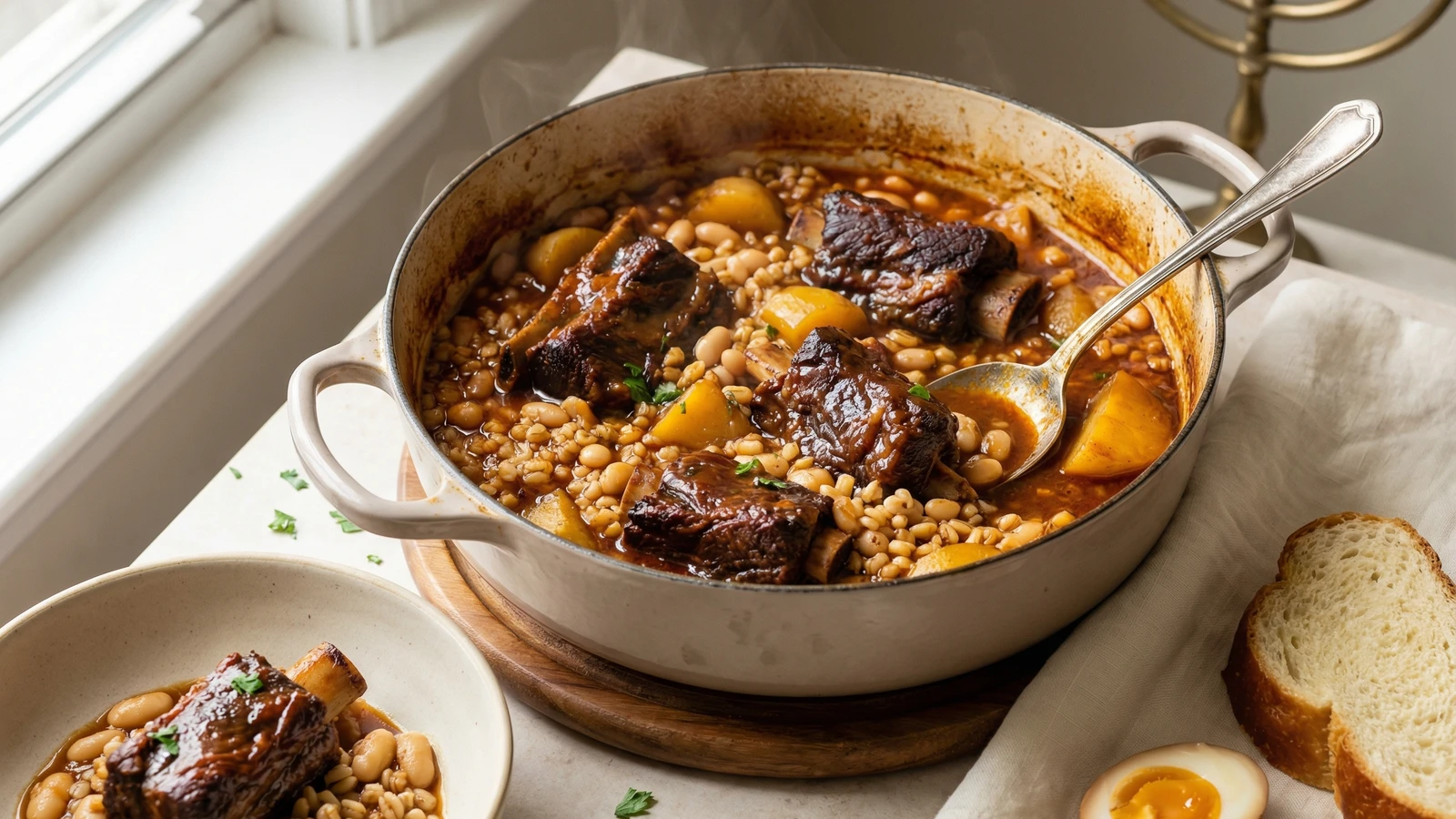
Short Rib Cholent
Created by
A magnificent overnight stew where beef short ribs surrender their richness into beans, barley, and potatoes, emerging fork-tender after hours of gentle heat. This is food that feeds both body and tradition.
Cholent exists because of faith and ingenuity. Jewish law prohibits cooking on the Sabbath, so for centuries cooks assembled their stews on Friday afternoon, sealed the pot, and let the hearth do its slow work through Saturday's midday meal. The result is one of the world's great braises. Nothing rushed. Nothing forced. Just time working its patient magic on humble ingredients.
I've adapted the traditional version with bone-in short ribs instead of brisket or chuck. The marbling in short ribs renders down over those long hours, enriching the broth with body that coats your spoon. The bones add collagen and depth. When you lift a rib from the pot, the meat will slide from the bone without resistance. That's when you know you've done it right.
This is perfect food for Hanukkah gatherings, when you want something magnificent waiting in the oven while you light candles and play dreidel with the children. Assemble it in the morning, forget about it for the day, and return to a kitchen that smells like your grandmother's house should have. The beans will be creamy, the barley plump, the potatoes falling apart at the edges.
Don't let anyone tell you this dish is difficult. It isn't. You're doing almost nothing while time does almost everything. Your job is simply to respect the process and trust that twelve hours of gentle heat will transform ordinary ingredients into something extraordinary.
The technique, the tradition, and the story behind every dish.
Discover Culinary AdvisorIngredients
bone-in beef short ribs
Quantity
4 pounds
cut into 3-inch pieces
vegetable oil or schmaltz
Quantity
2 tablespoons
large onions
Quantity
2
sliced into thick rings
garlic
Quantity
8 cloves
smashed
dried kidney beans
Quantity
1 cup
soaked overnight and drained
dried navy beans
Quantity
1 cup
soaked overnight and drained
pearl barley
Quantity
3/4 cup
Yukon Gold potatoes
Quantity
2 pounds
peeled and quartered
sweet paprika
Quantity
2 tablespoons
smoked paprika
Quantity
1 tablespoon
kosher salt
Quantity
2 teaspoons
freshly ground black pepper
Quantity
1 teaspoon
cayenne pepper
Quantity
1/4 teaspoon
honey
Quantity
2 tablespoons
beef stock or water
Quantity
6 cups
eggs in shell (optional)
Quantity
4
scrubbed clean
fresh parsley (optional)
Quantity
for serving
chopped
| Ingredient | Quantity |
|---|---|
| bone-in beef short ribscut into 3-inch pieces | 4 pounds |
| vegetable oil or schmaltz | 2 tablespoons |
| large onionssliced into thick rings | 2 |
| garlicsmashed | 8 cloves |
| dried kidney beanssoaked overnight and drained | 1 cup |
| dried navy beanssoaked overnight and drained | 1 cup |
| pearl barley | 3/4 cup |
| Yukon Gold potatoespeeled and quartered | 2 pounds |
| sweet paprika | 2 tablespoons |
| smoked paprika | 1 tablespoon |
| kosher salt | 2 teaspoons |
| freshly ground black pepper | 1 teaspoon |
| cayenne pepper | 1/4 teaspoon |
| honey | 2 tablespoons |
| beef stock or water | 6 cups |
| eggs in shell (optional)scrubbed clean | 4 |
| fresh parsley (optional)chopped | for serving |
Equipment Needed
- •7-quart Dutch oven with tight-fitting lid
- •Heavy-bottomed skillet if browning in batches
- •Instant-read thermometer to verify oven temperature
Instructions
- 1
Season and sear the short ribs
Pat the short ribs thoroughly dry with paper towels. Combine the sweet paprika, smoked paprika, salt, black pepper, and cayenne in a small bowl. Rub this mixture generously over all surfaces of the meat. Heat the oil or schmaltz in a large Dutch oven over medium-high heat until it shimmers and just begins to smoke. Working in batches to avoid crowding, sear the ribs until deeply browned on all sides, about 3-4 minutes per side. The crust should be almost black at the edges. This is flavor you're building. Transfer the seared ribs to a platter.
Schmaltz (rendered chicken fat) is traditional and adds remarkable depth. Find it at Jewish delis or render your own from chicken skin. - 2
Build the aromatic base
Reduce heat to medium. Add the sliced onions to the pot, stirring to coat them in the rendered fat. Cook until softened and beginning to caramelize at the edges, about 8 minutes. Add the smashed garlic and cook for another minute until fragrant. The onions will pick up all those beautiful brown bits from the meat. That's the foundation of your sauce.
- 3
Layer the stew components
Spread the drained beans evenly over the onions. Scatter the barley over the beans. Nestle the quartered potatoes around the edges. Return the short ribs to the pot, tucking them into the beans and barley so they're partially submerged. If using the traditional eggs, tuck them into the stew between the ribs. They'll emerge deeply bronzed with creamy, almost fudgy yolks after the long braise.
The eggs are optional but beloved. Called 'huevos haminados' in Sephardic tradition, they develop an extraordinary texture and color during the overnight cook. - 4
Add liquid and seal
Drizzle the honey over everything. Pour in the beef stock or water. The liquid should come about three-quarters up the sides of the ingredients but not cover them completely. The exposed meat and potatoes will develop a beautiful crust. Bring the liquid to a gentle simmer over medium heat.
- 5
Begin the long braise
Preheat your oven to 200°F. Once the stew reaches a simmer, cover the Dutch oven with a tight-fitting lid. For extra insurance against moisture loss, place a sheet of aluminum foil over the pot before adding the lid. Transfer to the oven. Now walk away. This is the hard part for most cooks, but the cholent needs 10-12 hours of uninterrupted time. Do not lift the lid. Do not check on it. Trust the process.
If your oven runs hot, reduce to 180°F. The goal is the barest simmer, not active bubbling. A too-hot oven will dry out the stew. - 6
Check and adjust
After 10-12 hours, remove the lid. The stew should have a thick, mahogany sauce. The meat should be falling from the bones. The beans should be creamy and the barley plump. If the stew looks too thin, remove the lid and increase the oven temperature to 300°F for the final 30 minutes to reduce the liquid. If it looks too thick, stir in a splash of hot water. Taste and adjust seasoning. Cholent almost always needs more salt at the end.
- 7
Rest and serve
Let the cholent rest for 15 minutes before serving. This allows the sauce to settle and thicken slightly. Serve directly from the pot at the table, family style. Place each portion in a shallow bowl: a short rib, a generous spoonful of beans and barley, several potato pieces, and plenty of the rich sauce. If you used eggs, peel them and cut in half to show off that gorgeous interior. Finish with chopped parsley for color and freshness.
Chef Tips
- •Ask your butcher for English-cut short ribs with the bone running parallel to the meat. They hold together better during the long braise than flanken-style cross-cut ribs.
- •Soaking the beans overnight is non-negotiable. Unsoaked beans will never fully soften in the low-temperature braise, leaving you with hard, unpleasant pellets in an otherwise magnificent dish.
- •A slow cooker works beautifully if your oven can't maintain such a low temperature. Set it to low and let it go for 10-12 hours. The results are nearly identical.
- •Cholent reheats extraordinarily well. Add a splash of stock to loosen the sauce and warm gently over low heat or in a 300°F oven. Many families insist it's better the second day.
- •For a complete Hanukkah meal, serve alongside latkes. The richness of the stew and the crispy potatoes complement each other perfectly.
Advance Preparation
- •Beans must be soaked overnight in cold water, at least 8 hours. Plan accordingly.
- •The entire stew can be assembled in the Dutch oven up to 24 hours ahead, covered, and refrigerated. Add an extra 30 minutes to the cooking time if starting from cold.
- •Leftover cholent keeps refrigerated for 5 days and freezes beautifully for up to 3 months. The flavors deepen and meld with time.
- •For a Hanukkah dinner party, start the cholent early morning (around 7 AM) for an evening meal (7 PM), or the night before for a midday gathering.
Frequently Asked Questions
Nutrition Information
1 serving (about 1040g)
Where cooking meets culture.
Culinary mentorship, cultural storytelling, and the editorial depth that makes cooking meaningful.
Explore Culinary Advisor