Culinary Advisor
A cooking platform built around craft, culture, and the stories behind what we eat.
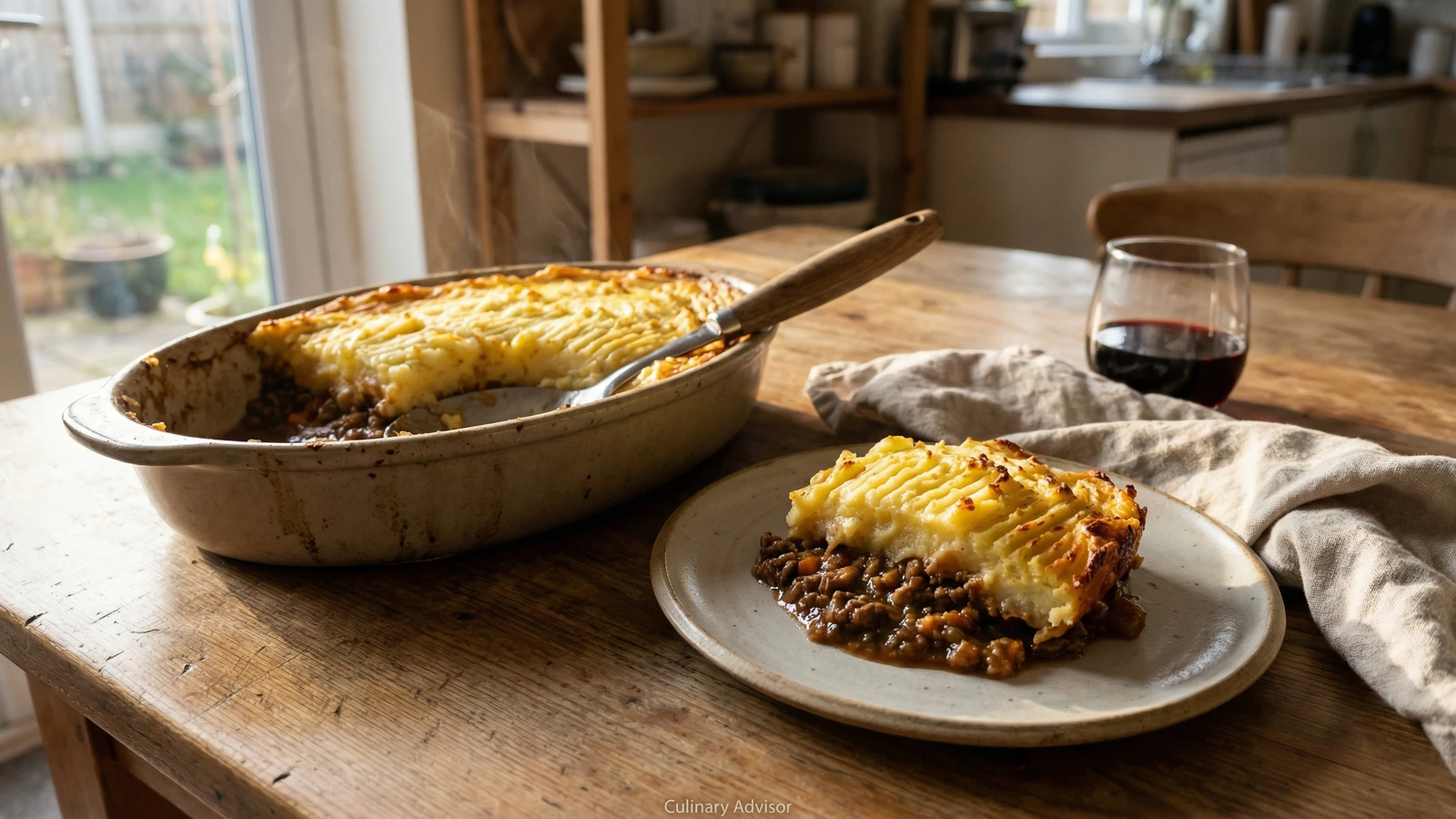
Shepherd's Pie
Created by Chef Thomas
Lamb mince cooked slowly with rosemary and good stock, sealed under a rough golden lid of buttery mash and baked until the edges bubble. A Tuesday evening, put right.
Rain on the window. The heating has just come on and the kitchen is the warmest room in the house. This is a shepherd's pie evening. You know the sort.
A shepherd's pie is lamb. Always lamb. If you use beef, it's a cottage pie, and that's a different conversation. The lamb mince goes into a hot pan and stays there until it's properly browned, dark and sticky, because the colour is where the flavour lives. Then the carrots, the celery, the onion. A splash of wine if there's a bottle open. Rosemary and bay, because lamb asks for both and is better for it. The filling simmers until it's rich and loose and smells like the sort of kitchen you want to walk into.
The mash goes on top. Not piped, not smoothed flat. Forked up into rough peaks so the ridges catch the heat and go golden and crisp while the filling bubbles underneath. There are few better feelings than carrying this to the table on a cold evening, setting it down on a wooden board, and watching someone dig a spoon through that golden crust into the dark, savoury lamb below.
I wrote it down in the notebook years ago: lamb, mash, Tuesday, rain. It hasn't changed. I see no reason it should.
The technique, the tradition, and the story behind every dish.
Discover Culinary AdvisorIngredients
lamb mince
Quantity
500g
olive oil
Quantity
1 tablespoon
onion
Quantity
1 large
finely diced
carrots
Quantity
2
peeled and diced small
celery
Quantity
2 sticks
finely diced
garlic
Quantity
2 cloves
finely chopped
tomato purée
Quantity
1 tablespoon
plain flour
Quantity
1 tablespoon
red wine or extra stock
Quantity
200ml
lamb or chicken stock
Quantity
300ml
Worcestershire sauce
Quantity
1 tablespoon
fresh rosemary
Quantity
2 sprigs
leaves picked and finely chopped
bay leaves
Quantity
2
fine sea salt and black pepper
Quantity
to taste
floury potatoes (Maris Piper or King Edward)
Quantity
1kg
peeled and cut into chunks
unsalted butter
Quantity
50g
whole milk
Quantity
75ml
warmed
nutmeg
Quantity
a grating
| Ingredient | Quantity |
|---|---|
| lamb mince | 500g |
| olive oil | 1 tablespoon |
| onionfinely diced | 1 large |
| carrotspeeled and diced small | 2 |
| celeryfinely diced | 2 sticks |
| garlicfinely chopped | 2 cloves |
| tomato purée | 1 tablespoon |
| plain flour | 1 tablespoon |
| red wine or extra stock | 200ml |
| lamb or chicken stock | 300ml |
| Worcestershire sauce | 1 tablespoon |
| fresh rosemaryleaves picked and finely chopped | 2 sprigs |
| bay leaves | 2 |
| fine sea salt and black pepper | to taste |
| floury potatoes (Maris Piper or King Edward)peeled and cut into chunks | 1kg |
| unsalted butter | 50g |
| whole milkwarmed | 75ml |
| nutmeg | a grating |
Equipment Needed
- •Wide, heavy-based frying pan or sauté pan
- •Large saucepan for the potatoes
- •Potato masher or ricer
- •25cm x 20cm ovenproof baking dish
Instructions
- 1
Brown the lamb
Get a wide, heavy pan properly hot over a high flame. Add the oil and then the lamb mince, breaking it up with a wooden spoon. Leave it alone for a minute or two. Let it catch and colour. You want real browning here, not grey steaming. Work in two batches if your pan isn't big enough to give the mince room to breathe. When the meat has gone dark and sticky at the edges and the kitchen smells savoury and almost nutty, scrape it onto a plate and set it aside.
If the mince is wet from the packet, pat it dry with kitchen paper first. Wet meat steams instead of browning, and the colour is where the flavour lives. - 2
Soften the vegetables
Turn the heat down to medium. In the same pan, with whatever fat the lamb has left behind, add the onion, carrots, and celery. A pinch of salt. Stir them through the lamb drippings and let them cook gently for eight to ten minutes. The onion should go soft and translucent, the carrots starting to yield. Don't rush this. Add the garlic for the last minute, just until it smells warm and sweet rather than sharp.
- 3
Build the filling
Stir in the tomato purée and cook for a minute, letting it catch slightly on the bottom of the pan. It deepens in colour and loses its raw, tinny edge. Scatter in the flour and stir it through. Return the browned lamb to the pan. Pour in the wine, if using, and let it bubble fiercely for a minute until it has mostly cooked away. Then add the stock, Worcestershire sauce, rosemary, and bay leaves. Stir everything together, bring to a gentle simmer, and cook uncovered for twenty to twenty-five minutes. The liquid should reduce to a rich, loose gravy that coats the meat. Not too thick, not too thin. It will thicken further in the oven. Season well. Taste it. Then taste it again.
The filling should be well seasoned at this stage, perhaps even slightly over-seasoned to your taste. The potato on top is bland and generous and will absorb some of that flavour. Meet it halfway. - 4
Make the mash
While the filling simmers, put the potatoes in a large pan of cold, well-salted water. Bring to a boil and cook until they fall apart when prodded with a knife, roughly fifteen to twenty minutes. Drain well and let them sit in the colander for a minute so the steam escapes. Return them to the warm pan and mash until completely smooth. No lumps. None. Beat in the butter, then the warm milk, then a grating of nutmeg and a good seasoning of salt and pepper. The mash should be soft but hold its shape on a spoon. If it slumps, it's too wet. If it's stiff, add a splash more milk.
A floury potato is essential. Maris Piper or King Edward will give you the light, fluffy mash this wants. A waxy potato makes a dense, gluey lid and the whole thing suffers for it. - 5
Assemble the pie
Set the oven to 200C/180C fan. Fish out the bay leaves and spoon the lamb filling into a baking dish, roughly 25cm by 20cm. It should come about two-thirds of the way up. Spread the mash over the top in generous spoonfuls, then use a fork to rough it up, dragging ridges and peaks across the surface. These are the bits that will go golden and crisp under the heat. Dot the top with a few small pieces of butter if you like. It's not strictly necessary, but it helps.
- 6
Bake until golden
Place the dish on a baking tray to catch any drips and bake in the centre of the oven for twenty-five to thirty minutes. The potato should be golden on its ridges and the filling just starting to bubble at the edges, thick and slow. If the top needs more colour, finish it under a hot grill for two or three minutes, watching it the whole time. The line between golden and burnt is a short one. Let it rest for five minutes before serving. It needs the time to settle, and it will be too hot to eat comfortably otherwise.
Chef Tips
- •Don't stint on the browning of the lamb. Grey mince makes a grey pie. Get proper colour on it, even if it means doing two batches and being patient. The caramelised bits stuck to the pan are the foundation of the whole dish. The wine or stock will lift them off and carry all that flavour into the gravy.
- •Let the filling cool slightly before topping with the mash. If it's bubbling hot, the mash sinks and you lose the clean layers. Ten minutes off the heat is enough. You want warm filling and warm mash meeting in the middle.
- •The fork marks on the mash are not decoration. The ridges and peaks catch the oven heat and crisp up into golden edges. Smooth mash just sits there. Rough mash rewards you. A couple of minutes under the grill at the end finishes the job.
- •This reheats beautifully. Make the whole thing on a Sunday, portion it into dishes, and you've got two or three weeknight dinners that only need thirty minutes in the oven. It also freezes well for up to three months. Cover tightly, defrost overnight, and bake until hot all the way through.
Advance Preparation
- •The lamb filling can be made up to two days ahead and refrigerated. Reheat gently before assembling with fresh mash, or assemble cold and add ten minutes to the oven time.
- •A fully assembled shepherd's pie freezes well for up to three months. Cover tightly with foil and cling film. Defrost overnight in the fridge and bake at 180C fan for forty to forty-five minutes until hot through and golden on top.
- •The mash is best made fresh, but leftover mash from another meal works fine here. Warm it gently with a splash of milk to loosen before spreading.
Frequently Asked Questions
Nutrition Information
1 serving (about 475g)
Where cooking meets culture.
Culinary mentorship, cultural storytelling, and the editorial depth that makes cooking meaningful.
Explore Culinary Advisor