Culinary Advisor
A cooking platform built around craft, culture, and the stories behind what we eat.
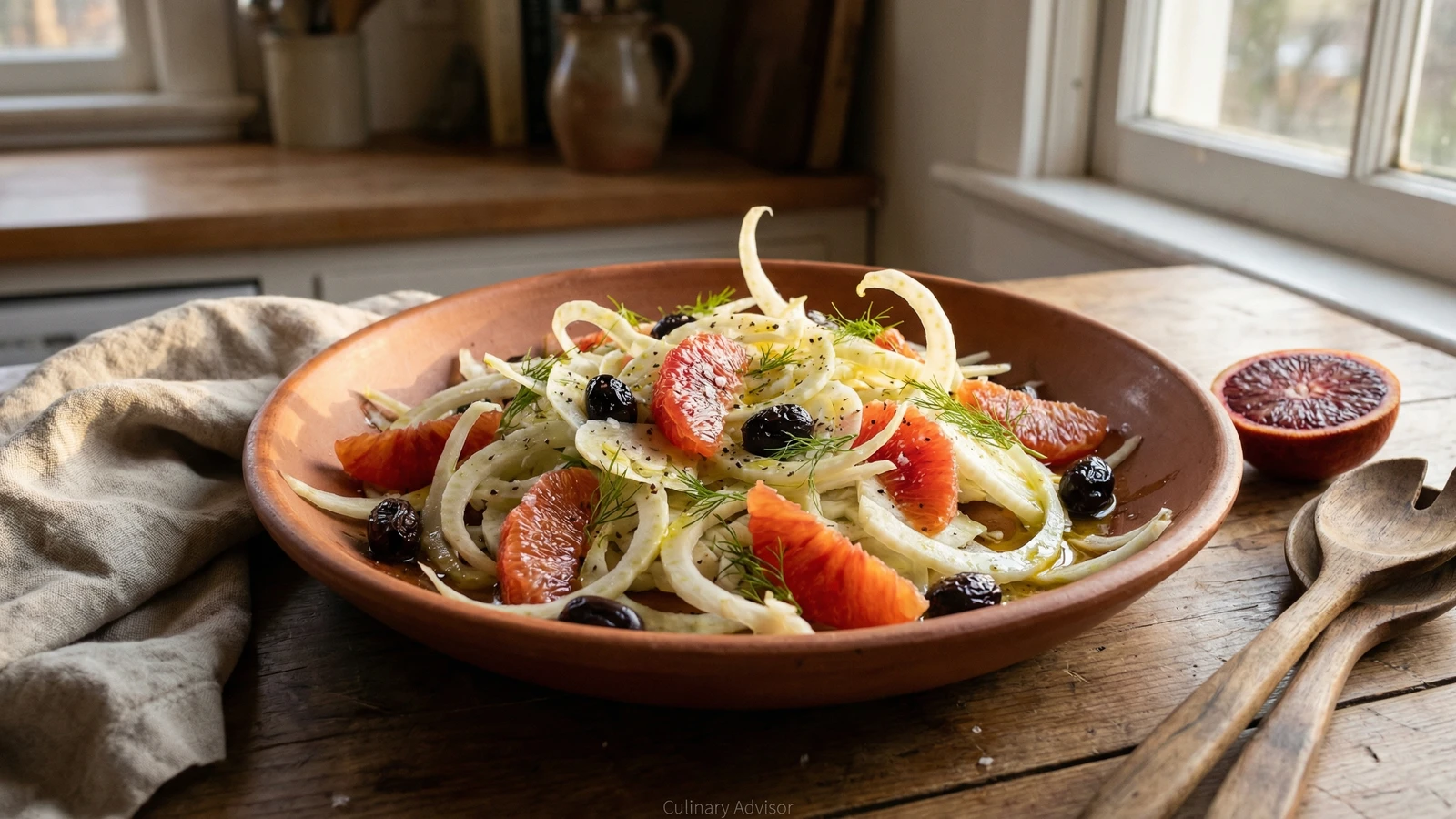
Shaved Fennel with Citrus and Olives
Created by Chef Ally
Crisp fennel shaved impossibly thin, tossed with jewel-toned citrus segments and wrinkled oil-cured olives, dressed in nothing more than good olive oil and a squeeze of lemon. A winter salad that proves restraint is its own kind of generosity.
Fennel in winter is a revelation. While the summer garden sleeps, this pale bulb arrives at the market with its feathery fronds intact, smelling faintly of licorice and possibility. Buy it from someone who pulled it from the ground that morning. The difference between fennel cut yesterday and fennel cut last week is the difference between something alive and something merely edible.
Shave the bulb so thin you can nearly read through it. This is where a mandoline earns its place in your kitchen. Paper-thin slices turn crisp and almost sweet, their anise flavor softened into something delicate. Thick cuts taste harsh and fibrous. The tool matters.
Pair this with citrus at its peak, the blood oranges and cara caras that arrive in January and February, their flesh ranging from ruby to coral to gold. Add olives that taste of the sun, oil-cured and wrinkled, intensely salty and rich. Then step back. A drizzle of your best olive oil, a squeeze of lemon, flaky salt. Let things taste of what they are.
This salad teaches patience. It asks you to wait for the right moment in the season, to seek out the best ingredients, and then to do almost nothing to them. Every meal is a meaningful choice. This one chooses restraint.
The technique, the tradition, and the story behind every dish.
Discover Culinary AdvisorIngredients
fennel bulbs with fronds
Quantity
2 medium
blood oranges or cara cara oranges
Quantity
2
grapefruit (optional)
Quantity
1 small
oil-cured black olives
Quantity
1/2 cup
pitted
extra-virgin olive oil
Quantity
1/4 cup
fresh lemon juice
Quantity
1 tablespoon
flaky sea salt
Quantity
to taste
black pepper
Quantity
to taste
freshly cracked
fennel fronds
Quantity
small handful
for finishing
| Ingredient | Quantity |
|---|---|
| fennel bulbs with fronds | 2 medium |
| blood oranges or cara cara oranges | 2 |
| grapefruit (optional) | 1 small |
| oil-cured black olivespitted | 1/2 cup |
| extra-virgin olive oil | 1/4 cup |
| fresh lemon juice | 1 tablespoon |
| flaky sea salt | to taste |
| black pepperfreshly cracked | to taste |
| fennel frondsfor finishing | small handful |
Equipment Needed
- •Mandoline slicer
- •Salad spinner
- •Wide shallow serving bowl or platter
Instructions
- 1
Prepare the fennel
Trim the stalks from the fennel bulbs, reserving the feathery fronds for finishing. Cut each bulb in half through the root end, then slice out the tough triangular core. Place each half cut-side down on your mandoline and shave into paper-thin half-moons, turning the bulb as you work. The slices should be translucent, thin enough that they curl slightly at the edges. Drop them immediately into a bowl of ice water.
The ice bath crisps the fennel and softens its raw bite. Even ten minutes makes a difference. You can hold it here for up to two hours. - 2
Segment the citrus
Cut the top and bottom from each orange and grapefruit to create flat surfaces. Stand the fruit upright and slice away the peel and white pith in curved strokes, following the shape of the fruit. Hold the naked fruit over a bowl to catch the juice, then cut along each membrane to release the segments. They should drop out cleanly, jewel-bright and free of any bitter pith. Squeeze the remaining membrane over the bowl to extract every drop of juice.
- 3
Prepare the olives
If your olives still have pits, press each one gently with the flat of your knife until it splits, then pull out the pit. Tear larger olives in half. Oil-cured olives are intensely salty, so taste one before adding more salt to the finished dish. Their wrinkled, concentrated flavor is what you want here.
- 4
Compose the salad
Drain the fennel thoroughly and spin it dry in a salad spinner, or spread it on a clean kitchen towel and pat gently. Wet fennel will not hold the dressing. Scatter the fennel across a wide, shallow serving platter or bowl. Arrange the citrus segments over and among the fennel, letting the colors show. Tuck the olive pieces throughout.
- 5
Dress and finish
Drizzle the olive oil over the salad in a slow, thin stream, moving your hand to distribute it evenly. Add the lemon juice and two tablespoons of the reserved citrus juice. Season with flaky salt and several grinds of black pepper. Scatter the reserved fennel fronds over everything. Serve immediately.
This salad must be dressed moments before serving. The acid wilts the fennel quickly. Prepare everything ahead, but combine at the last minute.
Chef Tips
- •Seek fennel with bright white bulbs and no browning at the edges. The fronds should be vibrant green and smell distinctly of anise. If the fronds are yellowed or limp, the fennel was cut too long ago.
- •Blood oranges and cara caras are at their peak from January through March. Outside this window, use navel oranges, but know the salad will be different. Seasonality is not a limitation. It is the point.
- •Oil-cured olives have a concentrated, almost meaty flavor that stands up to the citrus. Kalamata or Castelvetrano will work, but they are milder. Adjust the quantity if you substitute.
- •Your olive oil matters here more than in almost any other dish. This is the place for the bottle you have been saving, the one that smells like grass and pepper and makes you want to drink it from a spoon.
Advance Preparation
- •Fennel can be shaved and held in ice water for up to two hours before serving. It will stay crisp and ready.
- •Citrus can be segmented up to four hours ahead and refrigerated, covered, with its juices.
- •Do not dress the salad until the moment you bring it to the table. The acid begins breaking down the fennel immediately.
Frequently Asked Questions
Nutrition Information
1 serving (about 265g)
Where cooking meets culture.
Culinary mentorship, cultural storytelling, and the editorial depth that makes cooking meaningful.
Explore Culinary Advisor