Culinary Advisor
A cooking platform built around craft, culture, and the stories behind what we eat.
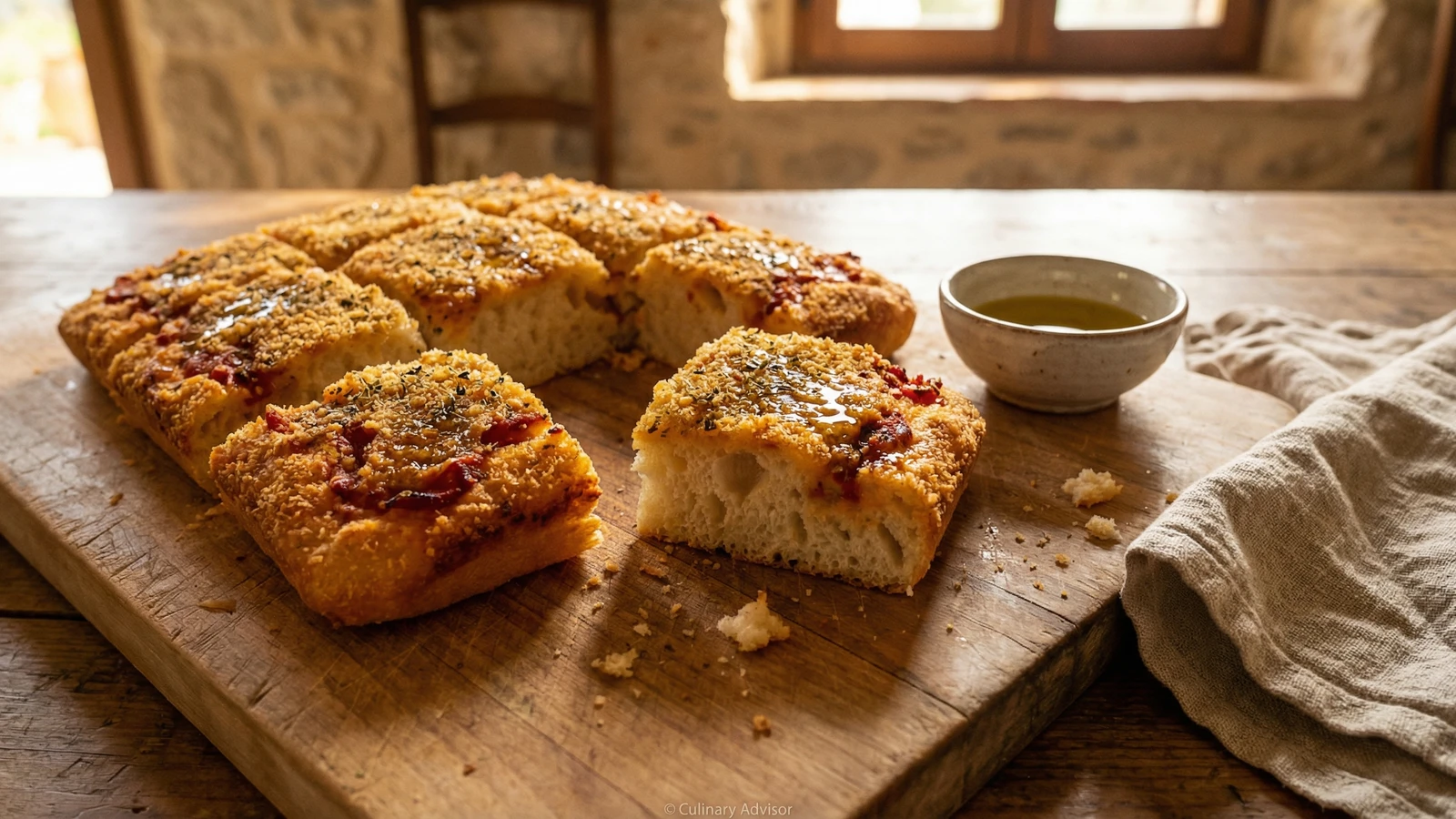
Sfincione Palermitano
Created by Chef Graziella
Palermo's spongy street bread, blanketed with slow-cooked onions, tomato, anchovies, and the golden crunch of breadcrumbs. This is not pizza. This is something older and stranger.
Sfincione confuses Americans who want to call it Sicilian pizza. It is not pizza. It shares ancestors with pizza, perhaps, but it evolved differently in Palermo's narrow streets and ancient markets. The name comes from the Latin for sponge, and that tells you what the bread should be: soft, airy, full of holes that catch the sauce and oil.
The topping is restrained but deliberate. Onions cooked until they surrender all their bite. Tomatoes simmered briefly. Anchovies that dissolve into the sauce, leaving only their savory depth behind. Caciocavallo, the stretched-curd cheese of southern Italy, and then the breadcrumbs that make this bread unmistakably Sicilian. The crumbs turn golden in the oven and create a texture no pizza can match.
Street vendors in Palermo have sold sfincione from wheeled carts for generations. They cut it into squares and wrap it in paper. You eat it walking through the Vucciria market or standing at the counter of a rosticceria. It is working-class food that demands no plate, no fork, no ceremony.
Sfincione appeared in Palermo's street markets by the 19th century, though similar topped breads existed in Sicily for centuries before. The word derives from the Latin 'spongia,' describing its characteristic airy texture. Traditionally prepared for the vigil of important feast days, it became daily fare sold from wheeled carts throughout the old city, where vendors still call 'u sfinciuni!' to attract customers.
The technique, the tradition, and the story behind every dish.
Discover Culinary AdvisorIngredients
bread flour
Quantity
500g (about 4 cups)
warm water
Quantity
325ml (about 1 1/3 cups)
active dry yeast
Quantity
7g (1 packet)
fine sea salt
Quantity
2 teaspoons
extra virgin olive oil
Quantity
3 tablespoons, plus more for pan
sugar
Quantity
1 teaspoon
extra virgin olive oil
Quantity
1/4 cup
for topping
yellow onions
Quantity
2 large (about 1 pound)
sliced thin
San Marzano tomatoes
Quantity
1 can (14 ounces)
crushed by hand
anchovy fillets
Quantity
8
chopped
dried oregano
Quantity
1 teaspoon
fine sea salt
Quantity
to taste
caciocavallo cheese
Quantity
150g
grated
coarse dry breadcrumbs
Quantity
3/4 cup
extra virgin olive oil
Quantity
2 tablespoons
for finishing
| Ingredient | Quantity |
|---|---|
| bread flour | 500g (about 4 cups) |
| warm water | 325ml (about 1 1/3 cups) |
| active dry yeast | 7g (1 packet) |
| fine sea salt | 2 teaspoons |
| extra virgin olive oil | 3 tablespoons, plus more for pan |
| sugar | 1 teaspoon |
| extra virgin olive oilfor topping | 1/4 cup |
| yellow onionssliced thin | 2 large (about 1 pound) |
| San Marzano tomatoescrushed by hand | 1 can (14 ounces) |
| anchovy filletschopped | 8 |
| dried oregano | 1 teaspoon |
| fine sea salt | to taste |
| caciocavallo cheesegrated | 150g |
| coarse dry breadcrumbs | 3/4 cup |
| extra virgin olive oilfor finishing | 2 tablespoons |
Equipment Needed
- •13x18 inch half sheet pan
- •Large skillet for the topping
- •Large bowl for the dough
- •Plastic wrap
Instructions
- 1
Activate the yeast
Combine the warm water and sugar in a large bowl. The water should feel pleasantly warm against your wrist, not hot. Sprinkle the yeast over the surface and let it stand until foamy, about 10 minutes. If it does not foam, your yeast is dead and you must start again with fresh yeast.
- 2
Make the dough
Add the flour, salt, and 3 tablespoons olive oil to the yeast mixture. Stir with a wooden spoon until a shaggy dough forms. Turn it onto a floured surface and knead for 8 to 10 minutes. The dough should become smooth, elastic, and slightly tacky but not sticky. It should spring back when you press it with your finger.
Sfincione dough is softer than pizza dough. Do not add too much flour. The softness is what creates the characteristic spongy texture that gives this bread its name. - 3
First rise
Oil a large bowl and place the dough inside, turning it to coat all surfaces. Cover tightly with plastic wrap and let rise in a warm place until doubled in size, about 1 1/2 hours. The dough should feel puffy and alive when you touch it.
- 4
Cook the onions
While the dough rises, prepare the topping. Heat 1/4 cup olive oil in a large skillet over medium-low heat. Add the sliced onions and cook slowly, stirring occasionally, until completely soft, golden, and sweet. This takes 25 to 30 minutes. Do not rush. The onions must surrender their sharpness entirely.
Sicilian grandmothers cook these onions until they nearly melt. Patience here is not optional. Quick-cooked onions will taste harsh against the soft bread. - 5
Build the sauce
Add the crushed tomatoes to the softened onions. Stir in the chopped anchovies and oregano. The anchovies will dissolve into the sauce. Simmer gently for 15 minutes until thickened. Season with salt, remembering that the anchovies and cheese will add salinity. Let the sauce cool while the dough completes its rise.
- 6
Shape the dough
Generously oil a 13x18 inch sheet pan (a half sheet pan). Turn the risen dough onto the pan and press it outward with oiled fingers, stretching it gently toward the edges. If it resists, let it rest 10 minutes and try again. The dough should reach the edges and have an even thickness throughout.
- 7
Second rise
Cover the pan loosely with oiled plastic wrap. Let the dough rise again until puffy and nearly doubled, about 45 minutes. When you press it gently, it should feel airy and full of life. Preheat your oven to 220°C (425°F) during the last 20 minutes of rising.
- 8
Dimple and top
Using your fingertips, press dimples all over the surface of the dough. These wells will catch the sauce and oil. Spread the cooled tomato-onion sauce evenly over the surface, leaving no bare spots. Scatter the grated caciocavallo over the sauce. Sprinkle the breadcrumbs evenly across the top. Drizzle the remaining 2 tablespoons olive oil over everything.
- 9
Bake
Bake until the bread is golden brown on top and underneath, the edges are crisp, and the breadcrumbs have turned deeply golden. This takes 25 to 30 minutes. The sfincione should pull away slightly from the sides of the pan when done.
- 10
Rest and serve
Let the sfincione cool in the pan for at least 15 minutes before cutting. This is not pizza. You do not eat it immediately from the oven. Cut into squares and serve warm or at room temperature. In Palermo, street vendors sell it from carts all day long. It does not need to be hot.
Sfincione improves as it sits. The bread absorbs the flavors of the topping. Many Sicilians prefer it several hours after baking, when everything has melded together.
Chef Tips
- •Caciocavallo is essential for authenticity. If you cannot find it, aged provolone is the closest substitute. Do not use mozzarella. The cheese must be sharp enough to stand against the anchovies and sweet enough to complement the onions.
- •Make your own breadcrumbs from stale bread dried in the oven. Commercial breadcrumbs are too fine and too uniform. You want coarse, irregular crumbs that create texture.
- •The dough benefits from a slow, cold rise. For deeper flavor, let it rise overnight in the refrigerator, then bring it to room temperature before shaping.
- •Those who claim to dislike anchovies have never tasted them dissolved into a proper Sicilian sauce. They do not taste of fish. They taste of the sea's depth and salt. Trust me on this.
Advance Preparation
- •The topping can be made one day ahead and refrigerated. Bring to room temperature before using.
- •The dough can rise overnight in the refrigerator for deeper flavor. Allow 2 hours at room temperature before shaping.
- •Baked sfincione keeps well at room temperature for one day, loosely covered. It is traditionally eaten at room temperature, so reheating is not necessary, though a brief warming in a low oven refreshes it.
Frequently Asked Questions
Nutrition Information
1 serving (about 150g)
Where cooking meets culture.
Culinary mentorship, cultural storytelling, and the editorial depth that makes cooking meaningful.
Explore Culinary Advisor