Culinary Advisor
A cooking platform built around craft, culture, and the stories behind what we eat.
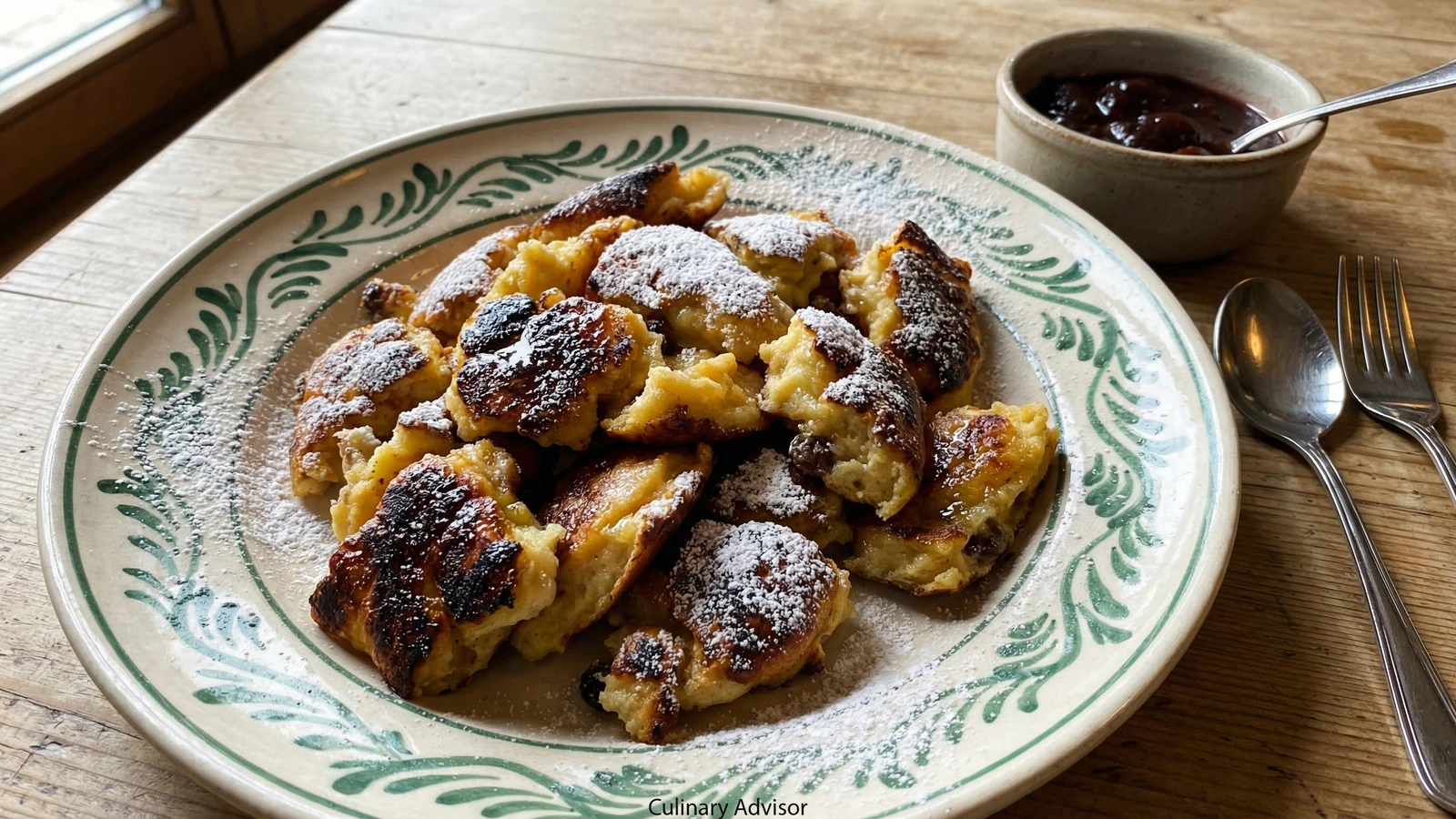
Semmelschmarrn
Created by Chef Elsa
Day-old bread rolls soaked in egg custard, torn and fried in butter until the edges go golden and crisp. Austrian farmhouse thrift that tastes like pure comfort, dusted with powdered sugar and served with warm fruit.
Gretel always said you can judge a cook by what she does with yesterday's bread. In Austria, nobody throws out a Semmel. The hard rolls go into Knödel, into Brösel for Schnitzel, into Scheiterhaufen. And if you're lucky, they go into Semmelschmarrn.
I grew up eating this in my grandmother Eva's kitchen in Kent before I ever understood it as a recipe. Eva would save the bread rolls from Saturday, slice them on Monday, and soak them in sweetened milk and eggs with a scrape of lemon zest. Then into a hot pan with too much butter, torn apart with two forks, and fried until the edges went dark and crispy and the soft middles stayed like warm custard. She'd shake powdered sugar over the top and put it in front of me with stewed apples. I didn't know it was frugal. I thought it was a treat.
That's the trick of Semmelschmarrn, and of so much Austrian farmhouse cooking. It was born from the rule that nothing good gets wasted, but it doesn't taste like making do. It tastes like butter and sugar and golden bread and the kind of warmth that makes you close your eyes. The technique is simple: soak, fry, tear, caramelize. If you can make scrambled eggs, you can make this. The only thing it asks of you is a bit of patience while the bread soaks and enough courage to use the full amount of butter.
Semmelschmarrn belongs to the Schmarrn family of dishes found throughout Austria and the Alpine regions, all variations on the theme of something torn apart in a hot pan. While Kaiserschmarrn used fresh pancake batter and earned imperial associations, Semmelschmarrn stayed rooted in Bauernküche, the practical farmhouse tradition where stale bread was too valuable to discard. The Semmel itself, Austria's iconic crusty bread roll, has been the daily bread of Vienna and Salzburg since at least the 17th century, and the culture of transforming yesterday's Semmeln into new dishes is as old as the rolls themselves.
The technique, the tradition, and the story behind every dish.
Discover Culinary AdvisorIngredients
day-old Semmeln (Austrian bread rolls)
Quantity
5, about 300g
sliced into thin rounds
whole milk
Quantity
300ml
warm
eggs
Quantity
3 large
granulated sugar
Quantity
40g
vanilla sugar (Vanillezucker)
Quantity
1 teaspoon
salt
Quantity
pinch
lemon zest
Quantity
from 1/2 lemon
raisins (optional)
Quantity
50g
soaked in rum
unsalted butter
Quantity
60g
granulated sugar (for caramelizing)
Quantity
1 tablespoon
powdered sugar
Quantity
for dusting
Zwetschkenröster (plum compote) or Apfelmus (apple sauce)
Quantity
for serving
| Ingredient | Quantity |
|---|---|
| day-old Semmeln (Austrian bread rolls)sliced into thin rounds | 5, about 300g |
| whole milkwarm | 300ml |
| eggs | 3 large |
| granulated sugar | 40g |
| vanilla sugar (Vanillezucker) | 1 teaspoon |
| salt | pinch |
| lemon zest | from 1/2 lemon |
| raisins (optional)soaked in rum | 50g |
| unsalted butter | 60g |
| granulated sugar (for caramelizing) | 1 tablespoon |
| powdered sugar | for dusting |
| Zwetschkenröster (plum compote) or Apfelmus (apple sauce) | for serving |
Equipment Needed
- •Wide heavy-bottomed pan or skillet (28cm)
- •Shallow bowl or dish for soaking
- •Two forks for tearing
Instructions
- 1
Slice and soak the Semmeln
Slice the day-old Semmeln into rounds about one centimeter thick. Don't tear them into chunks yet. Thin, even slices soak more uniformly, and uniform soaking is the difference between a Schmarrn that's custardy throughout and one with dry pockets hiding in the middle. Lay them in a wide shallow bowl so they aren't piled too deep. In a jug, whisk together the warm milk, eggs, sugar, Vanillezucker, salt, and lemon zest until the sugar dissolves. Pour the mixture over the bread slices. Press them down gently with your hand so every piece gets submerged. Let them soak for fifteen minutes.
The milk should be warm, not hot. Hot milk will cook the egg on contact and you'll get scrambled threads running through your bread. Blood-warm is right. You should be able to hold your finger in it comfortably. - 2
Check the soak
After fifteen minutes, the bread should feel heavy and saturated but still hold its shape when you pick up a slice. If the center of any piece still feels firm and dry, give it another five minutes. If your Semmeln were very stale and hard, they'll need the extra time. If they were only a day old, they'll be ready sooner. You're looking for bread that has drunk up the custard completely without falling apart into mush. Scatter the rum-soaked raisins through the mixture if you're using them.
- 3
Fry in butter
Melt half the butter in a wide, heavy pan over medium heat. When it foams and the foam begins to settle, the butter is hot enough. Tip the soaked bread into the pan, spreading it out gently. Don't press it flat. Let it cook without touching it for three to four minutes. You want the bottom layer to form a deep golden crust before you disturb it. Listen for a steady, quiet sizzle. If the pan is silent, your heat is too low. If it's spitting and popping, too high.
Use a pan wide enough that the bread sits in roughly one layer. Crowding it makes the Schmarrn steam instead of fry, and you'll end up with something soft and pale instead of golden and crisp at the edges. - 4
Tear and turn
Once the bottom has set and turned golden, use two forks or a spatula to tear and flip the bread in rough, uneven pieces. Don't be careful about it. Ragged edges are the point. They catch the butter and the heat and turn into the best bites. Add the remaining butter, letting it melt into the spaces between the torn pieces. Some pieces will be bigger, some smaller. Good. That variety gives you contrast in every mouthful: crispy edges here, custardy centers there.
- 5
Caramelize
Sprinkle the tablespoon of sugar over the top and keep turning the pieces gently for another two to three minutes. The sugar will melt and catch on the butter-soaked edges, giving them a thin caramel shell. Keep the pieces moving just enough that nothing burns but not so much that the crust can't form. When the Schmarrn is a patchwork of deep gold and brown with crispy edges and soft, custardy insides, it's done.
Trust your nose here. Butter and sugar caramelizing together smell like toffee. If it shifts toward bitter or smoky, pull the pan off the heat. The line between caramelized and burnt is thinner than you think. - 6
Dust and serve
Heap the Semmelschmarrn onto a warm plate or pile it into a warm bowl. Dust it generously with powdered sugar. Serve it with Zwetschkenröster or warm Apfelmus on the side. This is a dish that comes from farmhouse thrift and ends up tasting like something you'd pay good money for at a Gasthaus. That's Austrian cooking for you. Mahlzeit!
Chef Tips
- •The bread must be stale. Fresh Semmeln have too much moisture and will turn to paste when you soak them. If your rolls are still soft, slice them and leave them uncovered on the counter overnight. You want them dry enough that they drink up the custard like a sponge.
- •If you can't find Semmeln, use any good-quality crusty white bread roll with a tight crumb. Brioche is too rich and too soft. Baguette works in a pinch but won't hold the custard the same way. What you're after is a roll with a proper crust and a crumb that soaks without dissolving.
- •Don't skip the lemon zest. It seems like a small thing but it lifts the whole dish. Without it, Semmelschmarrn tastes flat and one-note. With it, there's a brightness underneath the butter and sugar that keeps you reaching for another bite.
- •This is a two-person dish served family style from the pan. If you're cooking for more, use two pans rather than overcrowding one. Overcrowding means the bread steams instead of fries, and then you've just got wet bread in a pan.
Advance Preparation
- •Slice the Semmeln the night before and leave them uncovered to dry out further. Drier bread absorbs the custard more evenly.
- •Zwetschkenröster or Apfelmus can be made up to three days ahead and refrigerated. Reheat gently before serving.
- •The soaked bread can sit for up to thirty minutes if you get interrupted, but don't leave it longer or it will break down too much.
Frequently Asked Questions
Nutrition Information
1 serving (about 270g)
Where cooking meets culture.
Culinary mentorship, cultural storytelling, and the editorial depth that makes cooking meaningful.
Explore Culinary Advisor