Culinary Advisor
A cooking platform built around craft, culture, and the stories behind what we eat.
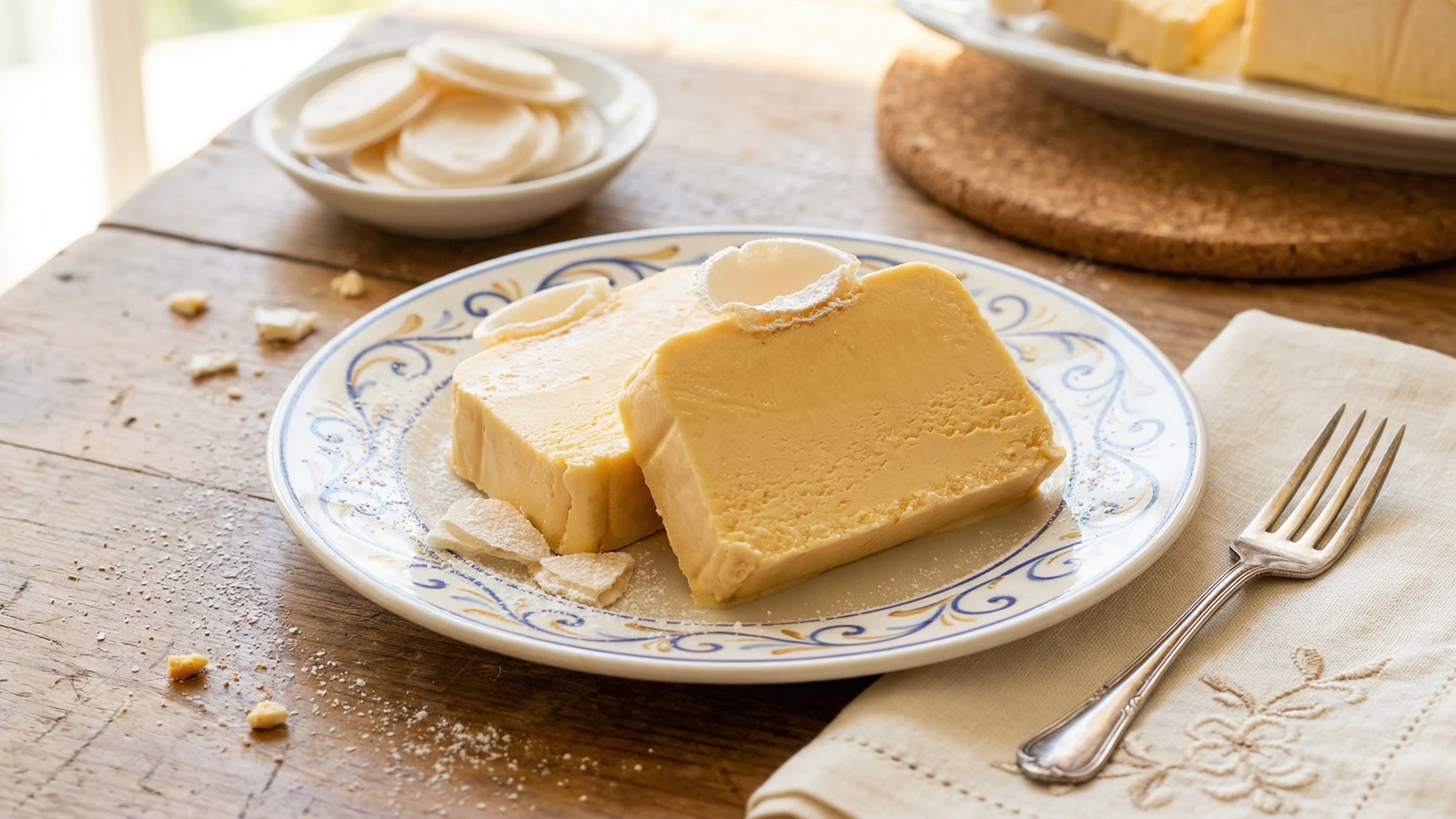
Semifreddo de Ovos Moles
Created by
The egg yolk sweets of Aveiro's convents, transformed into a silky frozen cream that melts on your tongue. Centuries of tradition in every spoonful, cold enough to slice, soft enough to surrender.
When the nuns of Aveiro needed to use the egg yolks left over from starching their habits, they created something extraordinary. Ovos moles. Soft eggs. A paste so rich, so intensely sweet, so purely about the egg that it became protected by European law.
I've watched the women at Aveiro's confeitarias make this by hand, stirring copper pots of yolks and sugar until the mixture pulls from the sides. They pipe it into delicate hóstia shells shaped like fish and barrels and seashells, a reference to the town's maritime history. It's patient work. Sacred work, really.
This semifreddo takes that same soul and freezes it just enough to slice, just enough to hold its shape on the plate, but soft enough to melt the moment it touches your tongue. It's not traditional. Avó Leonor never made this. But she would understand it. She'd recognize the color, that deep golden yellow that only comes from proper egg yolks. She'd taste the first bite and nod. This is still ovos moles. Just wearing different clothes.
The technique matters here. Sugar points matter. Your yolks need to be room temperature. The syrup needs to reach the right consistency before it meets the eggs. Rush this and you'll have scrambled eggs in sugar water. But get it right and you'll have something that honors four centuries of convent tradition while being entirely your own.
Ovos moles originated in the convents of Aveiro during the 15th century, where nuns used surplus egg yolks to create sweets for sale and sustenance. The recipe became so identified with the city that it received Protected Geographical Indication status from the European Union in 2008, making it illegal to sell ovos moles made outside the Aveiro region under that name. The traditional hóstia wafer shells connect to the convents' access to communion wafer production.
The technique, the tradition, and the story behind every dish.
Discover Culinary AdvisorIngredients
egg yolks
Quantity
12 large
room temperature
sugar
Quantity
250g
water
Quantity
125ml
vanilla extract
Quantity
1 teaspoon
or seeds from 1/2 vanilla pod
fine sea salt
Quantity
pinch
heavy whipping cream
Quantity
400ml
very cold
hóstia wafers (optional)
Quantity
for serving
| Ingredient | Quantity |
|---|---|
| egg yolksroom temperature | 12 large |
| sugar | 250g |
| water | 125ml |
| vanilla extractor seeds from 1/2 vanilla pod | 1 teaspoon |
| fine sea salt | pinch |
| heavy whipping creamvery cold | 400ml |
| hóstia wafers (optional) | for serving |
Equipment Needed
- •1.5 liter loaf pan
- •Candy thermometer
- •Electric mixer with whisk attachment
- •Large heatproof mixing bowl
- •Heavy-bottomed small saucepan
Instructions
- 1
Prepare your equipment
Line a 1.5 liter loaf pan with plastic wrap, leaving generous overhang on all sides. Set aside. Place your mixing bowl and whisk attachment in the freezer for 10 minutes. Cold equipment makes better whipped cream.
A glass or ceramic loaf pan works well. Metal conducts cold faster but can make unmolding trickier. - 2
Make the sugar syrup
Combine the sugar and water in a small heavy saucepan. Stir over medium heat until the sugar dissolves completely. Stop stirring once it begins to boil. Let it cook until it reaches 114°C (237°F) on a candy thermometer, the soft ball stage. If you don't have a thermometer, drop a small amount into cold water. It should form a soft, pliable ball that flattens when pressed. This takes about 8 to 10 minutes. Watch it. Sugar goes from perfect to burned in seconds.
The nuns called this ponto de pérola, the pearl point. The syrup should look clear and form delicate threads when dripped from a spoon. - 3
Beat the yolks
While the syrup cooks, place the egg yolks in a large heatproof bowl. Beat with an electric mixer on medium-high speed until they become thick, pale, and doubled in volume, about 4 minutes. The yolks should fall in thick ribbons when you lift the beaters. Room temperature yolks are essential here. Cold yolks won't whip properly.
- 4
Combine syrup and yolks
With the mixer running on medium speed, pour the hot syrup in a very thin, steady stream down the side of the bowl, avoiding the beaters. Pour slowly. If the syrup hits the beaters, it will spin into threads and stick to the sides. Once all the syrup is added, increase speed to high and beat until the mixture is completely cool, thick, and mousse-like, about 8 to 10 minutes. The bowl should no longer feel warm to the touch. Add the vanilla and salt in the last minute of beating.
This is a pâte à bombe, the same technique French pastry uses. The hot syrup cooks the yolks gently, making them safe while keeping that incredible richness. - 5
Whip the cream
In your chilled bowl with the chilled whisk, beat the cold cream until it holds soft peaks. Not stiff peaks. Soft peaks that gently fold over when you lift the whisk. Overwhipped cream will make your semifreddo grainy instead of silky.
- 6
Fold together
Add about one quarter of the whipped cream to the cooled egg yolk mixture and stir it in to lighten the base. This sacrificial portion makes folding easier. Now add the remaining cream in two additions, folding gently with a large spatula. Use wide, sweeping motions from the bottom of the bowl up and over. You want to keep as much air as possible. Stop when you no longer see streaks of white. A few wisps are fine. Better undermixed than deflated.
- 7
Freeze
Pour the mixture into the prepared loaf pan. Smooth the top with a spatula. Fold the plastic wrap overhang over the surface to cover completely. Freeze for at least 5 hours or overnight. The semifreddo should be firm enough to slice but soft enough to yield easily to a spoon. This is not ice cream. It should never become rock hard.
- 8
Serve
When ready to serve, unwrap the top and invert the pan onto a serving platter. Lift off the pan and peel away the plastic wrap. Let it sit for 5 minutes before slicing with a knife dipped in hot water between each cut. Serve immediately. If you have hóstia wafers, tuck a few alongside each slice. The nuns would approve.
Chef Tips
- •The yolks must be room temperature. Take them out of the refrigerator at least an hour before you begin. Cold yolks won't emulsify properly with the hot syrup.
- •If you can find them, use pastured eggs with deep orange yolks. The color will be more authentic to traditional ovos moles, that sunset gold that tells you the chickens ate well.
- •A candy thermometer removes all guesswork from the sugar syrup. If you make Portuguese sweets regularly, invest in one. Sugar points are the difference between success and failure in convent desserts.
- •This keeps beautifully in the freezer for up to one week. After that, ice crystals begin to form and the texture suffers.
Advance Preparation
- •The semifreddo must freeze for at least 5 hours, so plan accordingly. Overnight is ideal.
- •This can be made up to one week ahead and kept frozen. Slice just before serving.
- •Remove from freezer 5 minutes before slicing for clean cuts.
Frequently Asked Questions
Nutrition Information
1 serving (about 120g)
Where cooking meets culture.
Culinary mentorship, cultural storytelling, and the editorial depth that makes cooking meaningful.
Explore Culinary Advisor