Culinary Advisor
A cooking platform built around craft, culture, and the stories behind what we eat.
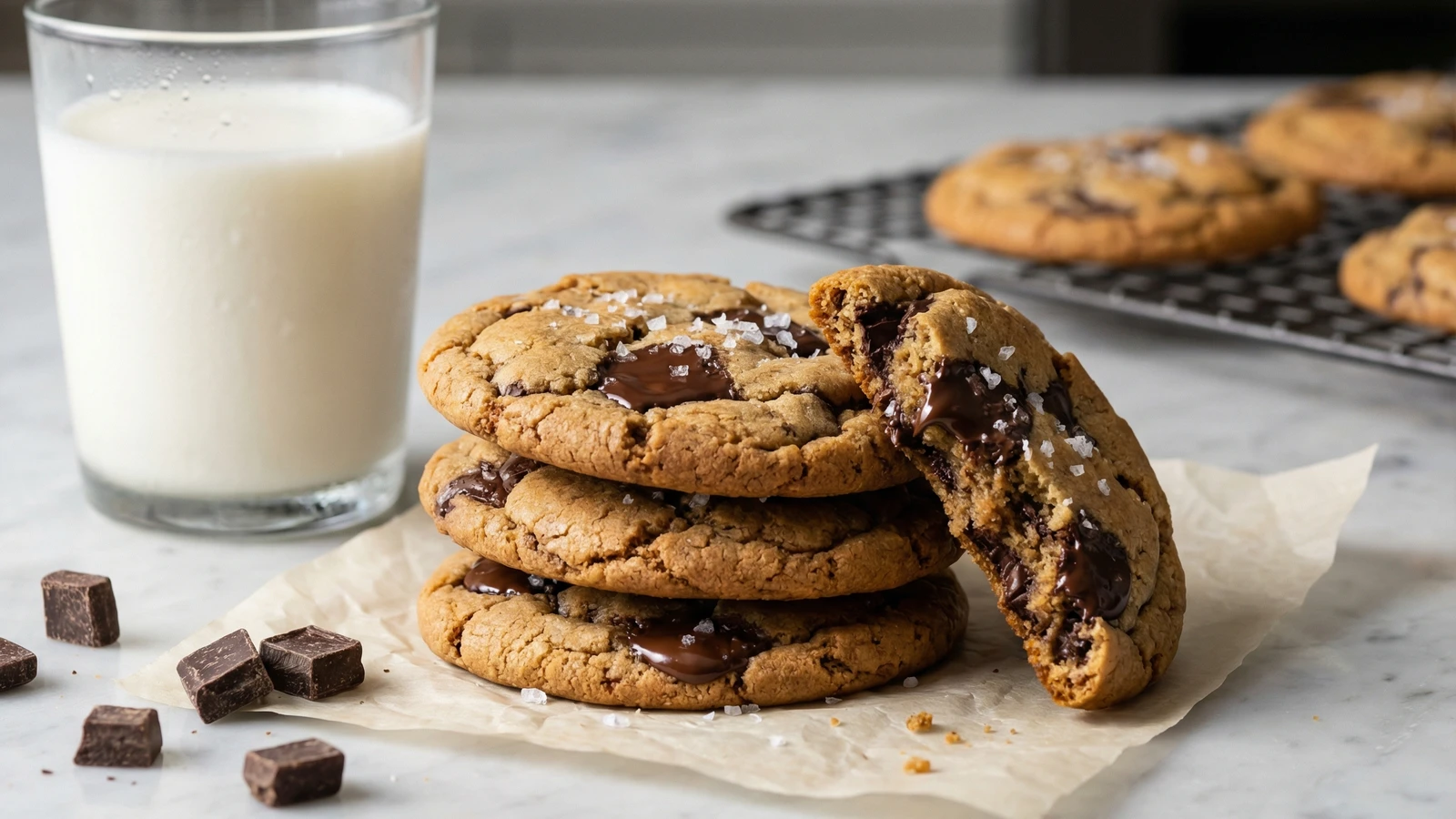
Sea Salt Dark Chocolate Chunk Cookies
Created by
Thick, chewy cookies studded with hand-chopped dark chocolate and finished with flaky sea salt crystals that crunch and sparkle against pools of melted chocolate. Brown butter deepens every bite.
The chocolate chip cookie was invented by accident. Ruth Wakefield at the Toll House Inn in Massachusetts expected her chopped chocolate to melt into the dough. It didn't. What emerged from her oven in 1938 became the most beloved cookie in American history.
This version honors that legacy while embracing what we've learned since. Brown butter replaces regular butter, adding a nutty depth that makes people pause mid-bite and wonder what's different. Dark chocolate, chopped roughly from bars rather than poured from a bag of chips, creates irregular pockets and dramatic shards. The higher cacao content cuts the sweetness and lets the butter and vanilla come through.
Then there's the salt. Flaky sea salt pressed into the warm surface of each cookie creates that sweet-salty contrast that's become essential to modern American baking. It's not subtle. It shouldn't be. Each crystal crunches between your teeth, amplifying the chocolate and cutting through the richness. These are cookies that demand your attention.
The recipe requires patience. Two hours of chilling at minimum, though three days produces the best results. The dough hydrates, the flavors meld, and the texture transforms. I've taught this recipe to hundreds of students. The ones who rest their dough always come back converted.
The technique, the tradition, and the story behind every dish.
Discover Culinary AdvisorIngredients
all-purpose flour
Quantity
2 cups plus 2 tablespoons (272g)
baking soda
Quantity
1 teaspoon
fine sea salt
Quantity
3/4 teaspoon
unsalted butter
Quantity
1 cup (2 sticks/227g)
dark brown sugar
Quantity
1 cup (200g)
packed
granulated sugar
Quantity
1/2 cup (100g)
eggs, at room temperature
Quantity
2 large
pure vanilla extract
Quantity
2 teaspoons
dark chocolate (70% cacao)
Quantity
8 ounces (227g)
roughly chopped
flaky sea salt (Maldon or similar)
Quantity
for finishing
| Ingredient | Quantity |
|---|---|
| all-purpose flour | 2 cups plus 2 tablespoons (272g) |
| baking soda | 1 teaspoon |
| fine sea salt | 3/4 teaspoon |
| unsalted butter | 1 cup (2 sticks/227g) |
| dark brown sugarpacked | 1 cup (200g) |
| granulated sugar | 1/2 cup (100g) |
| eggs, at room temperature | 2 large |
| pure vanilla extract | 2 teaspoons |
| dark chocolate (70% cacao)roughly chopped | 8 ounces (227g) |
| flaky sea salt (Maldon or similar) | for finishing |
Equipment Needed
- •Light-colored saucepan for browning butter
- •Large cookie scoop (3 tablespoons)
- •Rimmed baking sheets
- •Wire cooling rack
- •Kitchen scale (recommended)
Instructions
- 1
Brown the butter
Cut the butter into tablespoon-sized pieces and place in a light-colored saucepan over medium heat. The light color matters because you need to see the milk solids change. Swirl occasionally as the butter melts, foams, and begins to sputter. Watch for golden-brown flecks settling at the bottom and a nutty, toasted aroma filling your kitchen. This takes 5 to 7 minutes. The moment it smells like hazelnuts and the solids turn amber, pour it into a heatproof bowl. Scrape every last browned bit from the pan. That's flavor you've earned.
Brown butter can go from perfect to burnt in seconds. Stay at the stove and trust your nose more than the clock. - 2
Cool the butter slightly
Let the brown butter cool for about 10 minutes. It should be warm but not hot. If you add eggs to screaming-hot butter, you'll scramble them. The butter will look cloudy and have visible brown specks throughout. This is exactly what you want.
- 3
Combine dry ingredients
Whisk together the flour, baking soda, and fine sea salt in a medium bowl. Set it aside. This takes thirty seconds and prevents the tragedy of biting into a pocket of baking soda.
- 4
Mix wet ingredients
Add both sugars to the warm brown butter. Whisk vigorously until combined and slightly thickened, about one minute. The residual warmth helps the sugars begin to dissolve. Add the eggs one at a time, whisking well after each addition until the mixture looks glossy and emulsified. Stir in the vanilla. The batter should be smooth with a slight sheen.
- 5
Add flour and chocolate
Pour the dry ingredients into the wet and fold with a rubber spatula until just combined. You'll see streaks of flour. Keep folding. Stop the moment no dry flour remains. Add the chopped chocolate and fold until evenly distributed. The dough will be soft and glossy, not stiff like drop cookie dough. This is correct.
Overmixing develops gluten, which makes cookies tough. Fold with purpose, then stop. - 6
Rest the dough
Press plastic wrap directly onto the surface of the dough and refrigerate for at least 2 hours, or up to 72 hours. This rest is not optional. The flour hydrates fully, the butter solidifies, and the flavors deepen. Cookies baked from rested dough spread less and taste better. After 24 hours, you'll notice the dough darkens slightly. After 48 hours, the difference in flavor is remarkable. If you have patience, use it.
The 72-hour rest became famous from the New York Times recipe. It works. The cookies develop a more complex, almost toffee-like flavor. - 7
Portion the dough
Remove the dough from the refrigerator 10 minutes before scooping. Using a large cookie scoop or your hands, portion the dough into 3-tablespoon balls, roughly 65 grams each. These are substantial cookies. Place them on a parchment-lined baking sheet, leaving 3 inches between each ball. They will spread. Don't crowd them.
- 8
Bake the cookies
Position a rack in the center of your oven and preheat to 350°F (175°C). Bake one sheet at a time for 12 to 14 minutes. The edges will turn golden brown while the centers look pale, puffy, and slightly underdone. This is exactly right. The cookies continue baking on the hot sheet after you pull them from the oven. If the centers look fully set in the oven, you've gone too far.
Rotate the pan halfway through baking if your oven has hot spots. Most do. - 9
Finish with sea salt
The instant the cookies come out of the oven, while they're still soft and glossy, sprinkle each one with a generous pinch of flaky sea salt. Press the flakes gently so they adhere. The salt must go on now. It won't stick properly once the cookies cool and set. Let the cookies rest on the baking sheet for 5 minutes before transferring to a wire rack.
- 10
Cool and serve
Transfer cookies to a wire rack and let cool for at least 10 minutes. They'll firm up as they cool but remain chewy in the center. Serve warm if you can. The chocolate will still be soft, the edges will shatter slightly, and the salt crystals will crunch against your teeth. This is the cookie at its best.
Chef Tips
- •Buy chocolate bars and chop them yourself. The irregular pieces create a mix of chocolate pools, shards, and chunks that chips can't replicate. Guittard, Valrhona, and Ghirardelli all make excellent baking chocolate in the 70% range.
- •Weigh your flour if you can. Cup measurements vary wildly depending on how you scoop. Too much flour is the most common reason for dense, dry cookies.
- •The dough freezes beautifully. Portion into balls, freeze on a sheet pan until solid, then transfer to a freezer bag. Bake directly from frozen, adding 2 to 3 minutes to the bake time. You'll have fresh cookies whenever you want them.
- •Maldon salt is the gold standard for finishing, but any flaky sea salt works. Avoid fine table salt or kosher salt for the topping.You want crystals that stay distinct and crunch.
Advance Preparation
- •Dough can be refrigerated for up to 72 hours before baking. Longer resting produces deeper, more complex flavor.
- •Portioned dough balls freeze for up to 3 months. Bake from frozen, adding 2 to 3 minutes to the bake time.
- •Baked cookies keep in an airtight container at room temperature for 5 days, though they're best within the first 2 days.
Frequently Asked Questions
Nutrition Information
1 serving (about 64g)
Where cooking meets culture.
Culinary mentorship, cultural storytelling, and the editorial depth that makes cooking meaningful.
Explore Culinary Advisor