Culinary Advisor
A cooking platform built around craft, culture, and the stories behind what we eat.
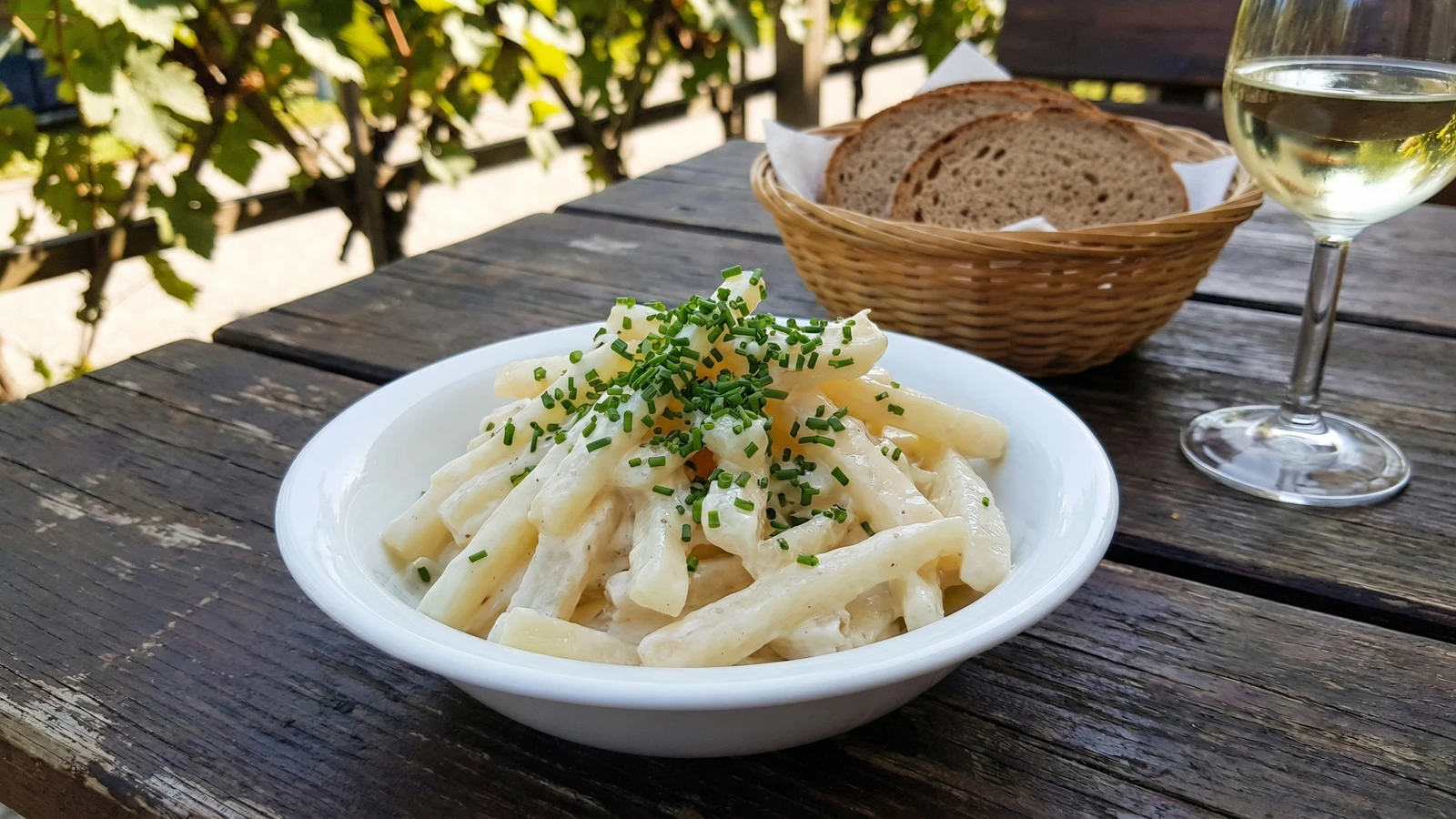
Schwarzwurzelsalat (Black Salsify Salad)
Created by Chef Elsa
Winter's quiet treasure: black salsify peeled, simmered until tender, and dressed in a tangy sour cream and yogurt Marinade with white wine vinegar and fresh chives. Heuriger food at its honest best.
Schwarzwurzel is one of those vegetables that tests your patience before it rewards you. It comes out of the ground looking like a dirty stick, rough and black-skinned, and the moment you peel it, a sticky white sap coats your fingers and the flesh starts turning brown in the open air. Your hands will look terrible. Your kitchen will need wiping down. None of this matters once you taste what's underneath.
Gretel always said that the best Austrian cooking hides behind unglamorous ingredients. Schwarzwurzel proves her right. Peel it, drop it into acidulated water so it stays pale, simmer it gently until a knife slides through without resistance, and dress it while it's still warm so the Marinade soaks in properly. The flavor is subtle, nutty, almost like a more refined artichoke heart. Austrians call it Spargel des armen Mannes, poor man's asparagus, but that undersells it. It's its own thing entirely.
At the Heuriger in Vienna, you'd find this salad in a ceramic bowl on the cold buffet counter alongside Erdäpfelsalat and Krautsalat, part of that spread of simple composed salads that the Viennese consider essential to a proper meal. You take a little of each, carry your plate to a wooden table in the garden, and order a Viertel of Grüner Veltliner. That's Gemütlichkeit. No recipe can give you the garden or the wine, but I can get the salad right for you, and that's a good start.
Schwarzwurzel (Scorzonera hispanica) has been cultivated in Austrian kitchen gardens since the 17th century, arriving via Spain and Italy and becoming a staple winter root vegetable across the Habsburg lands. It was a fixture of Viennese Bürgerküche, the solid middle-class cooking tradition, because it stored well in sand-filled cellar boxes through the cold months. The Heuriger tradition of serving composed salads alongside cold meats and fresh bread dates to a 1784 decree by Emperor Josef II permitting winemakers to sell their own wine directly, and the salad buffet evolved as the natural accompaniment.
The technique, the tradition, and the story behind every dish.
Discover Culinary AdvisorIngredients
fresh black salsify (Schwarzwurzel)
Quantity
800g
white wine vinegar or Hesperidenessig
Quantity
2 tablespoons
plus extra for cooking water
lemon juice
Quantity
1 tablespoon
granulated sugar
Quantity
1 teaspoon
fine salt
Quantity
1/2 teaspoon
Sauerrahm (sour cream)
Quantity
3 tablespoons
natural yogurt
Quantity
2 tablespoons
full-fat
mild white wine vinegar or Apfelessig
Quantity
2 tablespoons
sunflower oil or mild rapeseed oil
Quantity
2 tablespoons
Dijon mustard
Quantity
1/2 teaspoon
white pepper
Quantity
pinch
fresh chives
Quantity
2 tablespoons
finely cut
shallot
Quantity
1 small
very finely minced
| Ingredient | Quantity |
|---|---|
| fresh black salsify (Schwarzwurzel) | 800g |
| white wine vinegar or Hesperidenessigplus extra for cooking water | 2 tablespoons |
| lemon juice | 1 tablespoon |
| granulated sugar | 1 teaspoon |
| fine salt | 1/2 teaspoon |
| Sauerrahm (sour cream) | 3 tablespoons |
| natural yogurtfull-fat | 2 tablespoons |
| mild white wine vinegar or Apfelessig | 2 tablespoons |
| sunflower oil or mild rapeseed oil | 2 tablespoons |
| Dijon mustard | 1/2 teaspoon |
| white pepper | pinch |
| fresh chivesfinely cut | 2 tablespoons |
| shallotvery finely minced | 1 small |
Equipment Needed
- •Sturdy vegetable peeler
- •Large bowl for acidulated water
- •Medium saucepan (3-liter)
- •Kitchen gloves (recommended)
Instructions
- 1
Prepare the acidulated water
Fill a large bowl with cold water and stir in the lemon juice and a splash of vinegar. This is your holding bath. Schwarzwurzel oxidizes the moment the flesh hits air, turning from creamy white to dishwater brown in under a minute. The acid stops that reaction cold. Have this bowl ready before you pick up the peeler.
Wear kitchen gloves if you have them. The milky sap that bleeds from the cut salsify is sticky and stains. It washes off eventually, but your hands will look like you've been repairing bicycle tires. - 2
Peel the salsify
Scrub each root under running water to remove loose soil. Peel with a sturdy vegetable peeler, working from top to bottom in long strokes. The black skin comes off to reveal pale cream flesh underneath. Cut each peeled root into pieces about five centimeters long and drop them straight into the acidulated water. Don't let them sit on the board. Every second in the open air costs you color.
- 3
Simmer until tender
Bring a pot of salted water to a gentle boil with another tablespoon of vinegar and the teaspoon of sugar. The vinegar keeps the pieces pale during cooking and the sugar rounds out any bitterness. Drain the salsify from its holding bath and slide the pieces into the pot. Reduce to a steady simmer. Cook for fifteen to twenty minutes, depending on thickness. Test with the tip of a knife: it should slide through with almost no resistance, like testing a boiled potato. You want tender, not firm, not mushy. Drain and spread the pieces on a plate to cool slightly.
Don't boil aggressively. A hard boil batters the pieces and they'll start to break apart at the edges. Keep the surface of the water at a lazy simmer, just enough movement to see bubbles rising. - 4
Make the Marinade
While the salsify simmers, whisk together the sour cream, yogurt, vinegar, oil, mustard, salt, and white pepper in a bowl until smooth. The dressing should be pourable but not thin. Taste it. The vinegar should be forward and bright, the sour cream providing body without heaviness. The yogurt keeps it from feeling cloying. Adjust the salt and vinegar now, before it meets the salsify, because once dressed, the flavors set.
Austrian Marinade for salads is always vinegar-forward. If you're used to heavy, oily dressings, this will taste sharp on its own. Trust it. That acidity is exactly what the mild, nutty salsify needs to come alive. - 5
Dress while warm
Toss the still-warm salsify pieces gently with the Marinade and the minced shallot. Warm vegetables absorb a dressing better than cold ones. This is the same principle behind every good Austrian salad, from Erdäpfelsalat to Fissolensalat. The warmth opens the surface of the salsify and lets the tangy dressing soak in rather than just sitting on top. Fold gently. The pieces are tender and will break if you handle them roughly.
- 6
Rest and serve
Let the salad rest at room temperature for at least fifteen minutes so the flavors marry. Just before serving, scatter the chives generously across the top. Serve at room temperature, not fridge-cold. Cold kills the delicate nutty flavor of the salsify and mutes the dressing. This belongs on the table alongside bread and cold cuts, or as a side to a piece of roast pork. Mahlzeit!
Chef Tips
- •Choose salsify roots that are firm and heavy for their size. If they bend easily or feel hollow, they've been stored too long and the centers will be woody and fibrous. Fresh roots snap cleanly when you bend them.
- •Schwarzwurzel is in season from October through April. Don't bother looking for it in summer. Austrian cooking is seasonal and that's part of what makes it honest. If it's July, make Fissolensalat instead.
- •The Marinade is vinegar-forward by design. If you find it too sharp, add another half tablespoon of sour cream rather than cutting the vinegar. You need that acidity to balance the earthiness of the root.
- •If you can find Hesperidenessig, the citrus-infused vinegar from Vienna, use it here. It has a floral brightness that works beautifully with salsify. A good Apfelessig (apple cider vinegar) is the next best thing.
Advance Preparation
- •The salsify can be peeled and held in acidulated water for up to two hours before cooking. Don't go longer than that or the texture starts to soften.
- •The finished salad improves over an hour or two at room temperature as the Marinade soaks in. It keeps in the fridge for one day, but bring it back to room temperature for thirty minutes before serving, or the flavor goes flat.
Frequently Asked Questions
Nutrition Information
1 serving (about 195g)
Where cooking meets culture.
Culinary mentorship, cultural storytelling, and the editorial depth that makes cooking meaningful.
Explore Culinary Advisor