Culinary Advisor
A cooking platform built around craft, culture, and the stories behind what we eat.
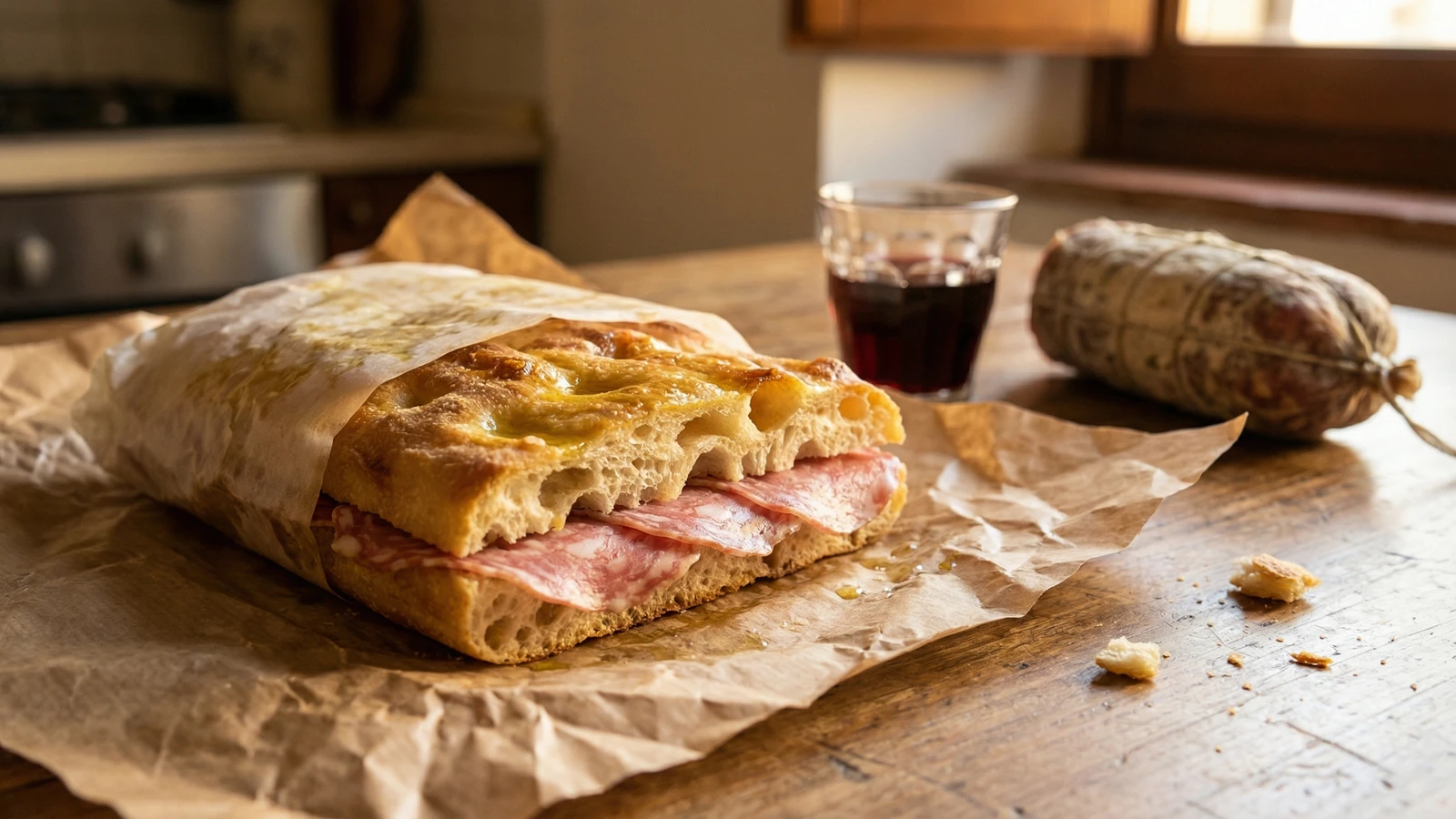
Schiacciata with Finocchiona
Created by Chef Graziella
The sandwich of Florentine markets, where excellent bread and fennel-scented salami require nothing more than each other and a drizzle of oil. Two ingredients. No cooking. No compromise.
In Florence, the schiacciata con finocchiona is not a recipe. It is an institution. Workers grab it from the salumeria at noon. Students eat it walking between classes. Tourists discover it and wonder why they have been eating such complicated sandwiches their entire lives.
The bread is everything. Schiacciata is Tuscany's answer to focaccia: flatter, crispier, brushed with olive oil, sometimes scattered with coarse salt. It must shatter when you bite it, then give way to a soft, open crumb. Bad bread cannot be rescued by any filling.
Finocchiona is the salami of Tuscany, perfumed with wild fennel seeds that grow along every roadside in the region. Young finocchiona is soft, almost spreadable, with a sweet anise perfume. Aged finocchiona is firmer, more concentrated. Both work here. What does not work is heating it. Italians do not grill quality cured meats. The fat should melt on your tongue, not in a pan.
Finocchiona dates to the Renaissance, when Tuscan salami makers discovered that fennel seeds masked the taste of inferior wine used to preserve the meat. The fennel worked so well that the salami became prized on its own merits. By the 19th century, schiacciata con finocchiona was standard fare in the markets of Florence, a quick lunch for artisans and merchants who had no time to sit.
The technique, the tradition, and the story behind every dish.
Discover Culinary AdvisorIngredients
schiacciata
Quantity
1 (about 10 by 14 inches)
finocchiona
Quantity
8 ounces
sliced thin
extra virgin olive oil
Quantity
for drizzling
| Ingredient | Quantity |
|---|---|
| schiacciata | 1 (about 10 by 14 inches) |
| finocchionasliced thin | 8 ounces |
| extra virgin olive oil | for drizzling |
Equipment Needed
- •Long serrated bread knife
- •Cutting board
Instructions
- 1
Select proper schiacciata
The bread must be excellent. Schiacciata should be thin, no more than one inch tall at its thickest point. The crust should crackle when you press it, the interior should be open and airy with irregular holes. If you cannot find proper schiacciata, a good focaccia will serve, though Florentines would never admit they are the same thing. The bread should be fresh, baked that morning if possible.
Never use bread that has been refrigerated. Cold bread is dead bread. If the schiacciata is a day old, warm it briefly in a hot oven to revive the crust. - 2
Split the bread
Using a long serrated knife, split the schiacciata horizontally through its middle. Work slowly and keep the knife level. You want two even pieces that will close neatly around the filling. Set the top half aside, cut side up.
- 3
Layer the finocchiona
Drizzle the cut surface of the bottom half with olive oil. Not too much; you are seasoning, not soaking. Lay the finocchiona slices in a single layer across the bread. They should overlap slightly but not pile up. The salami should cover the bread completely to the edges. Do not be stingy, but do not build a tower.
The finocchiona must be at room temperature. Cold salami has muted flavor. Remove it from the refrigerator 30 minutes before assembling. - 4
Close and cut
Place the top half of the schiacciata over the finocchiona. Press gently to compress the sandwich slightly. The bread should meet the salami; there should be no air gap. Cut into four portions using a sharp knife or pizza wheel. Serve immediately.
Chef Tips
- •Seek finocchiona at Italian specialty markets or order from a reputable salumeria. The supermarket salami labeled 'finocchiona' is often nothing of the sort. True finocchiona should smell distinctly of fennel when unwrapped.
- •If making schiacciata at home, use a focaccia recipe but stretch the dough thinner and bake it hotter. The goal is more crust relative to crumb.
- •Some add a few leaves of arugula or a smear of fresh ricotta. These additions are not wrong, but they are not necessary. The classic version needs nothing else.
- •Do not wrap this sandwich for later. The crust softens, the interior steams, and it becomes something ordinary. Eat it within the hour.
Advance Preparation
- •This sandwich cannot be made ahead. The schiacciata must be fresh, the salami at room temperature, the assembly done just before eating.
- •You can, however, source your ingredients in advance. Finocchiona keeps well wrapped in the refrigerator for two weeks. Bring it to room temperature before slicing.
Frequently Asked Questions
Nutrition Information
1 serving (about 165g)
Where cooking meets culture.
Culinary mentorship, cultural storytelling, and the editorial depth that makes cooking meaningful.
Explore Culinary Advisor