Culinary Advisor
A cooking platform built around craft, culture, and the stories behind what we eat.
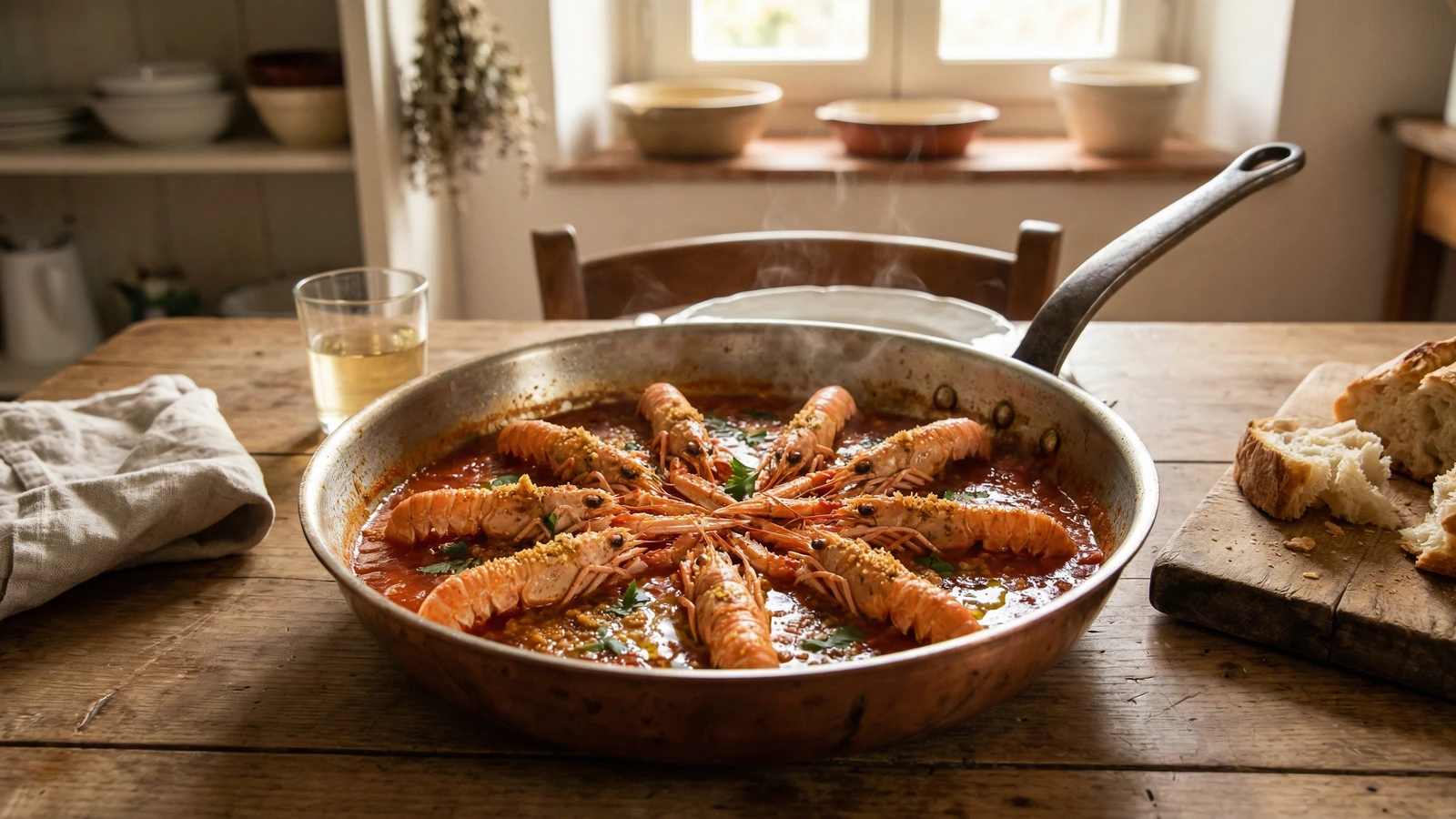
Scampi alla Busara
Created by Chef Graziella
The fishermen's supper from Trieste and the Istrian coast, where sweet Adriatic scampi meet a spirited sauce of tomatoes, wine, garlic, and breadcrumbs. You will need bread and napkins.
Busara is the cooking of the Adriatic fishing villages, where the catch goes from net to pan with nothing in between but a fisherman's hunger and his wife's practical wisdom. The word itself means something like "simple" or "peasant style" in the Venetian dialect, though there is nothing simple about the flavors this method produces.
The tomato here is present but restrained, a backdrop for the sweetness of impeccably fresh shellfish. The wine sharpens the sauce. The garlic, sliced thin and cooked only until fragrant, provides perfume rather than assault. And the breadcrumbs, toasted separately and scattered at the last moment, give texture and absorb the juices that would otherwise be lost.
This is not a dish for those who fear getting their hands dirty. You eat busara with your fingers, cracking shells, sucking heads, sopping up sauce with torn bread. It is the kind of meal that makes conversation stop and sleeves get rolled up. If you want refinement, order something else. If you want to taste the Adriatic, this is how.
Busara originated in the fishing communities along the Istrian peninsula and the Gulf of Trieste, where the borders of Italy, Slovenia, and Croatia now meet. Fishermen's wives developed the technique to cook whatever the day's catch yielded, always with tomato, wine, and the coarse breadcrumbs that stretched the meal and thickened the sauce. The dish survives in nearly identical form in trattorias on all three sides of the modern border.
The technique, the tradition, and the story behind every dish.
Discover Culinary AdvisorIngredients
whole scampi or large head-on prawns
Quantity
2 pounds
extra virgin olive oil
Quantity
1/3 cup
garlic cloves
Quantity
4
sliced thin
red pepper flakes
Quantity
1/2 teaspoon
dry white wine
Quantity
3/4 cup
San Marzano tomatoes
Quantity
1 can (14 ounces)
crushed by hand
fish stock or water
Quantity
1/2 cup
coarse fresh breadcrumbs
Quantity
1/2 cup
fresh flat-leaf parsley
Quantity
3 tablespoons
chopped
kosher salt
Quantity
to taste
crusty bread
Quantity
for serving
| Ingredient | Quantity |
|---|---|
| whole scampi or large head-on prawns | 2 pounds |
| extra virgin olive oil | 1/3 cup |
| garlic clovessliced thin | 4 |
| red pepper flakes | 1/2 teaspoon |
| dry white wine | 3/4 cup |
| San Marzano tomatoescrushed by hand | 1 can (14 ounces) |
| fish stock or water | 1/2 cup |
| coarse fresh breadcrumbs | 1/2 cup |
| fresh flat-leaf parsleychopped | 3 tablespoons |
| kosher salt | to taste |
| crusty bread | for serving |
Equipment Needed
- •Wide 12-inch skillet or braiser with lid
- •Kitchen shears
- •Small skillet for toasting breadcrumbs
Instructions
- 1
Prepare the scampi
Rinse the scampi under cold water and pat them thoroughly dry. Using kitchen shears, cut along the back of each shell from head to tail, just deep enough to expose the intestinal vein. Remove the vein with the tip of a knife. Leave the shells on. The shells give flavor to the sauce, and eating busara is meant to be an act of participation, not passive observation.
True scampi (Nephrops norvegicus) are langoustines from the Adriatic. Large head-on prawns or spot prawns substitute adequately. Avoid peeled, frozen shrimp. The dish depends on the shells. - 2
Toast the breadcrumbs
In a small dry skillet over medium heat, toast the breadcrumbs, stirring constantly, until golden and fragrant, about 3 minutes. Transfer immediately to a bowl. They will continue to darken if left in the hot pan. Set aside.
- 3
Build the sauce base
In a wide, heavy skillet or braiser large enough to hold the scampi in a single layer, warm the olive oil over medium heat. Add the sliced garlic and red pepper flakes. Cook, stirring, until the garlic is pale gold and fragrant, about 90 seconds. The garlic must not brown. Brown garlic turns bitter and ruins the dish.
- 4
Add wine and tomatoes
Pour in the white wine. It will sizzle and steam. Let it bubble vigorously until reduced by half, about 2 minutes. Add the crushed tomatoes and fish stock. Stir to combine and bring to a simmer. Season with salt. Let the sauce cook for 8 to 10 minutes until it thickens slightly and the raw tomato taste cooks out.
- 5
Cook the scampi
Nestle the scampi into the sauce in a single layer. Spoon sauce over them. Cover the pan and cook for 3 minutes. Uncover, turn each scampi, and cook uncovered for another 3 to 4 minutes, until the shells turn bright coral and the flesh is just opaque. The scampi are done when the meat pulls easily from the shell. Do not overcook. Rubbery scampi are an insult to the fisherman who caught them.
Cooking time depends entirely on size. Small prawns may need only 4 minutes total. Large langoustines may need 8. Watch the flesh, not the clock. - 6
Finish and serve immediately
Remove from heat. Scatter the toasted breadcrumbs and chopped parsley over the top. Bring the pan directly to the table while still sizzling. Serve with abundant crusty bread. The bread is not optional. It exists to mop up every drop of that sauce. Anyone who leaves sauce in the pan has missed the point entirely.
Chef Tips
- •Head-on shellfish release flavor compounds from their heads into the sauce that no headless shrimp can provide. Seek out whole langoustines, spot prawns, or head-on Gulf shrimp from a fishmonger you trust.
- •Make your own breadcrumbs from day-old bread. Tear the bread, pulse briefly in a food processor, and leave them coarse. The fine powder sold in canisters has no place in this dish.
- •Use a wine you would drink. The sauce concentrates everything. Cheap wine makes cheap sauce. A crisp Friulano or Malvasia from the region is traditional and correct.
- •Serve this with the same white wine you used in cooking. The pairing is already done for you.
Advance Preparation
- •The sauce base can be made several hours ahead through the simmering stage, then reheated before adding the scampi. The scampi must be cooked just before serving.
- •Toast the breadcrumbs up to a day ahead and store in an airtight container at room temperature.
- •This dish does not reheat. Do not attempt leftovers. Cook only what you will eat immediately.
Frequently Asked Questions
Nutrition Information
1 serving (about 200g)
Where cooking meets culture.
Culinary mentorship, cultural storytelling, and the editorial depth that makes cooking meaningful.
Explore Culinary Advisor