Culinary Advisor
A cooking platform built around craft, culture, and the stories behind what we eat.
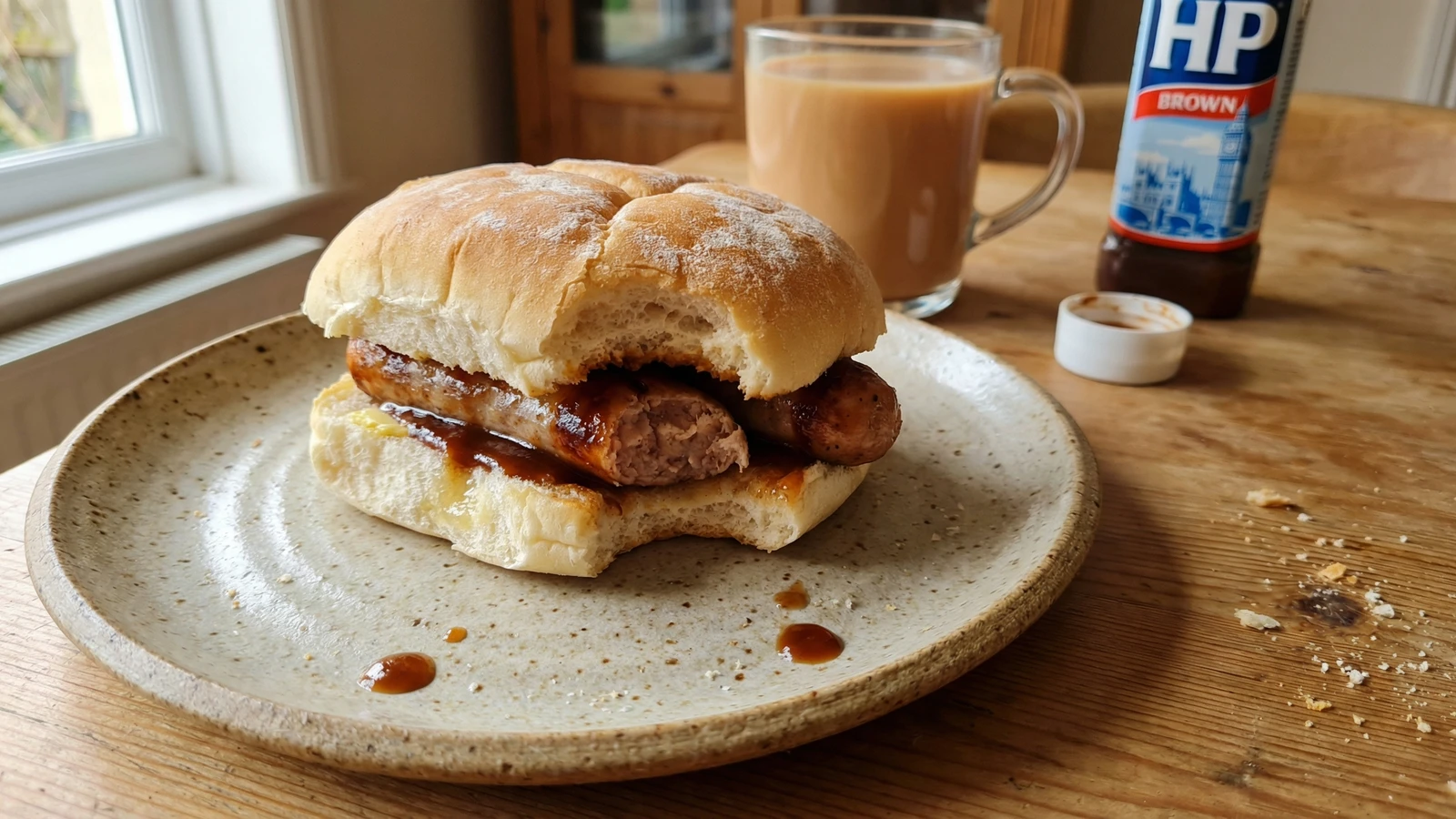
Sausage Sandwich with Brown Sauce
Created by Chef Thomas
A buttered white roll stuffed with fat, golden sausages and a long squeeze of brown sauce, made with fifteen minutes of patience and no pretension whatsoever.
The smell is the thing. Pork fat rendering in a heavy pan on a Saturday morning, the kitchen still cold, the kettle just clicked. Before the sausages have even turned their first side, the whole house knows what's happening. This is not a recipe that requires announcement.
I don't know when the sausage sandwich became something people felt they needed to improve. Caramelised onions, grain mustard, sourdough, a fried egg on top. All fine, all beside the point. The thing itself, the original proposition, is a fat pork sausage in a soft white roll with brown sauce. Two hands. No plate. The bread going slightly translucent where the butter meets the meat. That's it. That's the whole architecture.
The only skill involved is patience. Cook the sausages slowly, turning them often, letting the skins go properly golden and sticky all over. Most people cook sausages too fast, which is how you end up with something burnt on one side and pale on the other. A sausage that has been given time in a gentle pan is a different thing entirely: the skin crackles when you bite through it, the meat inside is juicy and seasoned all the way through, and the fat has rendered into the kind of flavour you can't buy in a bottle. Though you'll put brown sauce on it anyway, because that's non-negotiable.
I wrote it down in the notebook once, years ago: "Sausage sandwich. Saturday. Rain. Perfect." It didn't need more detail than that.
The technique, the tradition, and the story behind every dish.
Discover Culinary AdvisorIngredients
pork sausages
Quantity
4 fat
the best you can find
butter or oil
Quantity
a knob or splash
for the pan
soft white bread rolls
Quantity
2
or 4 slices thick white bread
brown sauce
Quantity
to taste
soft butter
Quantity
for the bread
| Ingredient | Quantity |
|---|---|
| pork sausagesthe best you can find | 4 fat |
| butter or oilfor the pan | a knob or splash |
| soft white bread rollsor 4 slices thick white bread | 2 |
| brown sauce | to taste |
| soft butter | for the bread |
Equipment Needed
- •Heavy-bottomed frying pan
- •Fish slice or spatula
Instructions
- 1
Cook the sausages slowly
Put a heavy pan over a medium heat. Add a knob of butter or a splash of oil, then lay the sausages in. Here's the thing: don't rush them. Turn the heat down a notch from where you think it should be. You want a steady, gentle sizzle, not a fierce crackle. Turn them every few minutes, letting each side go a deep, sticky golden brown before you move them on. This takes twelve to fifteen minutes, sometimes longer. The skins should be taut and burnished all over, and when you press one with a finger it should feel firm but give slightly. If you cut corners here and blast them on high heat, you'll get charred outsides and pink middles, which isn't a sandwich. It's a disappointment.
The sausage is everything. Find a proper butcher who makes their own, with a high meat content and natural casings. A good sausage will smell peppery and herby as it cooks. A bad one will smell of nothing much at all, and no amount of brown sauce can rescue it. - 2
Prepare the bread
While the sausages finish, split the rolls and butter them generously. Soft, cheap white rolls are correct here. This is not a sourdough occasion. If you're using sliced bread, toast it lightly or leave it soft, your kitchen, your rules. But the butter is not optional. It needs to be there, melting slightly from the heat of the sausage when it lands.
- 3
Assemble the sandwich
Take the sausages from the pan. You can leave them whole and tuck them into the roll as they are, or split them lengthways so they lie flat and make better contact with the bread. I split them. More surface area means more of that golden, caramelised skin against the soft, buttered roll, and that contrast is really the whole point. Press them in. Squeeze a good line of brown sauce along the top. Not a polite dab. A proper squeeze, the kind that leaves a thumbprint on the bottle. Close the roll. Press it down gently so the butter and the sauce and the sausage fat all merge into the bread. Eat immediately, standing up if necessary.
If there are sticky, caramelised bits left in the pan, tear off a piece of bread and press it into the pan to mop them up. The cook's reward. Nobody needs to know.
Chef Tips
- •Find a butcher. A real one, with sawdust on the floor or at least the memory of it. Ask what's in the sausages. You want a high pork content, seventy percent or more, and natural casings. The difference between a butcher's sausage and a supermarket one is the difference between cooking and assembling.
- •Brown sauce is a matter of deep personal conviction. HP is the classic, and I won't pretend otherwise. But if you have a bottle of something you prefer, use it. This isn't the place for ketchup, though. Ketchup is for bacon. Brown sauce is for sausages. These are ancient laws.
- •The bread must be soft and white. A floury bap, a cheap white roll, a slice of Mothers Pride if that's what's in the bread bin. Anything with a hard crust or too much character fights the sausage instead of yielding to it. The bread's job is to be soft, to absorb, to hold. Nothing more.
Advance Preparation
- •This is not a dish that waits. A sausage sandwich is assembled and eaten within the same minute. There is no advance preparation. There is no reheating. There is only the pan, the bread, the sauce, and now.
Frequently Asked Questions
Nutrition Information
1 serving (about 210g)
Where cooking meets culture.
Culinary mentorship, cultural storytelling, and the editorial depth that makes cooking meaningful.
Explore Culinary Advisor