Culinary Advisor
A cooking platform built around craft, culture, and the stories behind what we eat.
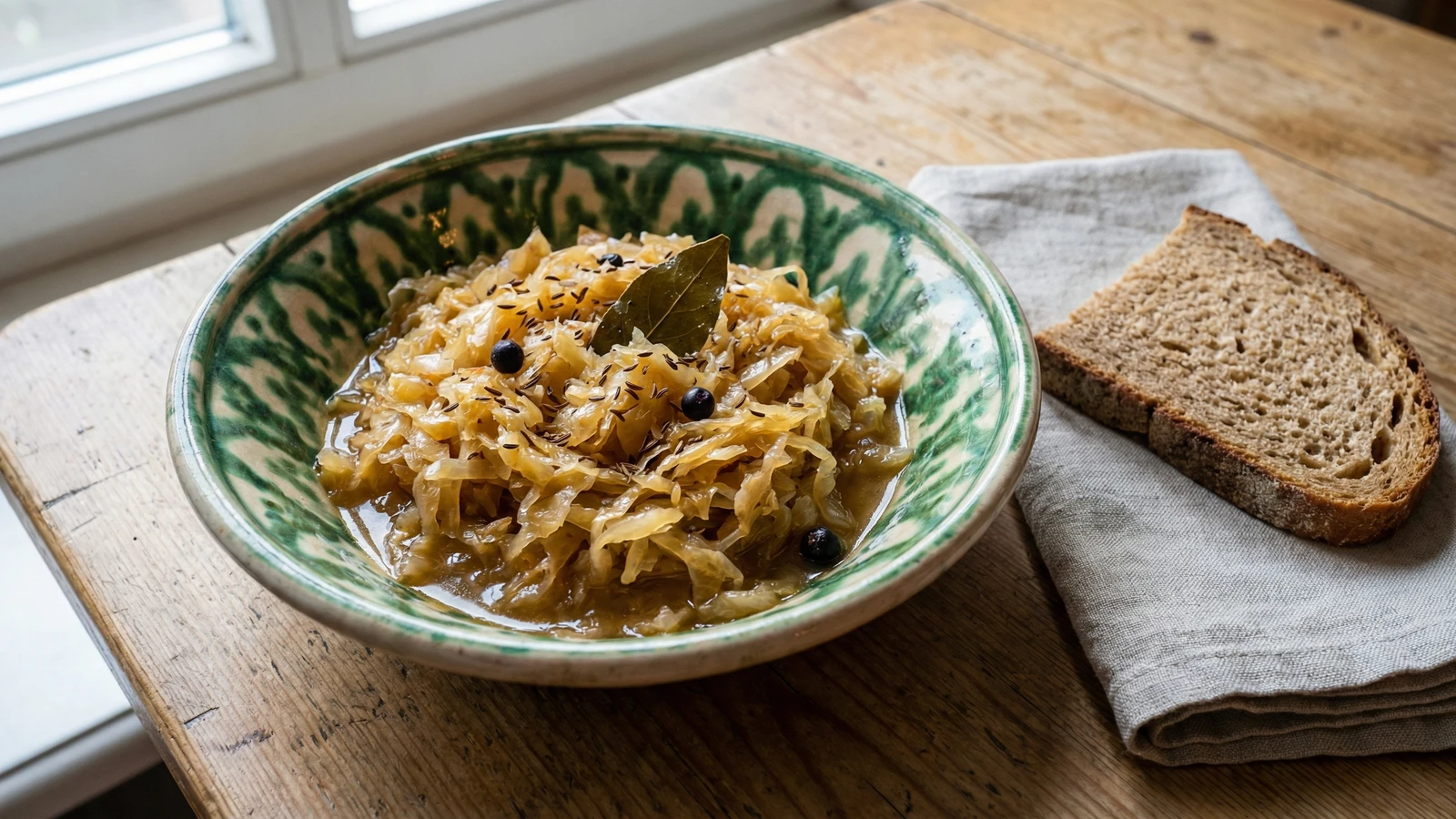
Sauerkraut nach Wiener Art
Created by Chef Elsa
White cabbage sauerkraut braised low and slow with caraway, juniper, and a bay leaf until it turns golden and mellow, the way every Gasthaus in Vienna has served it for centuries.
In my grandmother Eva's kitchen in Kent, the smell of sauerkraut braising on the stove meant company was coming. Eva and Gretel would stand at the cooker, one stirring, the other tasting from a wooden spoon, arguing gently about whether it needed another five minutes or another pinch of sugar. The sauerkraut was never the star. It was always the thing next to the star, the quiet partner beside a thick slice of Schweinsbraten or a plate of smoked Selchfleisch. But take it away and the whole meal falls apart.
Viennese sauerkraut is nothing like the sharp, raw stuff you get from a jar. You braise it slowly with onion, caraway seeds, juniper berries, and a bay leaf until the sourness softens into something round and golden. A grated potato melts into the liquid and gives it body. A pinch of sugar balances the acid without making it sweet. By the time it's done, about forty-five minutes of doing almost nothing, the kitchen smells like every Gasthaus I've ever loved.
Gretel always said that Austrian home cooking is simple food done well, and sauerkraut proves it. Three or four spices, one good fat, patience. That's the whole recipe. The technique is in the restraint: low heat, no rushing, trust that time will do the work your hands can't.
Sauerkraut has been a cornerstone of Austrian winter cooking since at least the medieval period, when fermenting cabbage was the primary means of preserving vegetables through the Alpine cold. The Viennese style, braised with caraway (Kümmel) and juniper, distinguishes itself from sharper Bavarian or Alsatian preparations by its deliberate mellowing through long, gentle cooking. During the Habsburg era, sauerkraut appeared on tables from farmhouse kitchens to imperial banquets, always alongside roasted or smoked pork, a pairing so fundamental to Austrian identity that a Schweinsbraten without sauerkraut is considered incomplete.
The technique, the tradition, and the story behind every dish.
Discover Culinary AdvisorIngredients
sauerkraut (from bag or barrel)
Quantity
750g
onion
Quantity
1 medium
finely diced
lard or Schmalz (goose fat)
Quantity
2 tablespoons
caraway seeds (Kümmel)
Quantity
1 teaspoon
juniper berries
Quantity
4
lightly crushed
bay leaf
Quantity
1
potato
Quantity
1 small (about 100g)
peeled and finely grated
granulated sugar
Quantity
1 teaspoon
chicken or pork broth
Quantity
250ml
salt and freshly ground black pepper
Quantity
to taste
| Ingredient | Quantity |
|---|---|
| sauerkraut (from bag or barrel) | 750g |
| onionfinely diced | 1 medium |
| lard or Schmalz (goose fat) | 2 tablespoons |
| caraway seeds (Kümmel) | 1 teaspoon |
| juniper berrieslightly crushed | 4 |
| bay leaf | 1 |
| potatopeeled and finely grated | 1 small (about 100g) |
| granulated sugar | 1 teaspoon |
| chicken or pork broth | 250ml |
| salt and freshly ground black pepper | to taste |
Equipment Needed
- •Heavy-bottomed pot with lid (3-liter minimum)
- •Fine grater for the potato
- •Colander for draining
Instructions
- 1
Prepare the sauerkraut
Tip the sauerkraut into a colander and let it drain. Don't squeeze it dry, just shake it gently and let excess liquid fall away. If the sauerkraut is very sour, rinse it briefly under cold water and drain again. Loosen it with your fingers so there are no tight clumps. You want it airy, not packed together like a brick. The braising liquid needs to reach every strand.
Taste the raw sauerkraut before you start. If it's sharp enough to make you wince, give it a quick rinse. If it's pleasantly tangy, leave it as it is. The final dish should be mellow, not aggressive. - 2
Soften the onion
Melt the lard or Schmalz in a heavy-bottomed pot over medium heat. Add the diced onion and cook slowly until it turns soft and translucent, about five minutes. Don't rush this and don't let the onion color. You're building a quiet, sweet base, not a caramelized one. Stir occasionally so nothing catches on the bottom.
Lard or Schmalz is traditional and gives the sauerkraut a richness that butter can't match. If you use butter, add a splash of neutral oil so it doesn't burn over the long braise. - 3
Toast the spices
Add the caraway seeds and crushed juniper berries to the soft onion. Stir them into the fat and let them toast for about thirty seconds until they smell warm and fragrant. Caraway is the soul of Viennese sauerkraut. Without it, you're just cooking cabbage. The juniper adds a piney, faintly resinous note that cuts through the richness of whatever pork you're serving alongside. Drop in the bay leaf.
- 4
Add the sauerkraut
Add the drained sauerkraut to the pot and stir everything together until the strands are coated in the spiced fat. Sprinkle the sugar over the top and stir it through. The sugar is not there to make the sauerkraut sweet. It's there to round off the sharp edges of the acid. One teaspoon. That's all you need.
- 5
Braise low and slow
Pour in the broth. Stir in the grated potato. The potato will dissolve as it cooks and thicken the liquid into a silky sauce that clings to the sauerkraut instead of pooling at the bottom of the plate. Bring everything to a gentle simmer, then turn the heat down low. Cover the pot and let it braise for forty to forty-five minutes, stirring once or twice. The surface should barely murmur. If you see vigorous bubbling, your heat is too high.
Gretel always said the grated potato was the secret nobody talks about. It disappears completely into the sauerkraut, but without it the texture is thin and watery. With it, the whole thing has body. - 6
Taste and finish
After forty-five minutes, remove the lid and taste. The sauerkraut should be tender and mellow, the sourness softened but still present, the caraway warm in the background. Season with salt and pepper. If it's too sharp, add another small pinch of sugar. If the liquid hasn't reduced enough, cook uncovered for five more minutes. Fish out the bay leaf. The sauerkraut should be moist but not soupy, able to hold its shape on a spoon without dripping. Serve it warm, piled beside Schweinsbraten, Selchfleisch, or a good pair of Frankfurter Würstl. Mahlzeit!
Chef Tips
- •Buy your sauerkraut from a bag or a barrel at a good deli, never from a can. Canned sauerkraut has a tinny, flat taste that no amount of braising can fix. The bagged stuff from Eastern European or German shops is usually excellent and costs next to nothing.
- •Caraway seeds (Kümmel) are not optional. They are the defining flavor of Viennese sauerkraut. If you leave them out, you've made something else entirely. If you find whole caraway too intense, crush them lightly in a mortar before adding.
- •This sauerkraut is better the next day. The flavors settle overnight and the texture becomes even silkier. Make it ahead when you can.
- •If you're serving this with Schweinsbraten, a spoonful of the pork's pan drippings stirred into the finished sauerkraut makes it extraordinary. The fat and the acid belong together.
Advance Preparation
- •Sauerkraut nach Wiener Art can be made two to three days ahead and stored in the fridge. Reheat gently on the stove with a splash of broth if it's thickened too much. It improves with time.
- •The finished sauerkraut freezes well for up to two months. Thaw overnight in the fridge and reheat slowly.
Frequently Asked Questions
Nutrition Information
1 serving (about 250g)
Where cooking meets culture.
Culinary mentorship, cultural storytelling, and the editorial depth that makes cooking meaningful.
Explore Culinary Advisor