Culinary Advisor
A cooking platform built around craft, culture, and the stories behind what we eat.
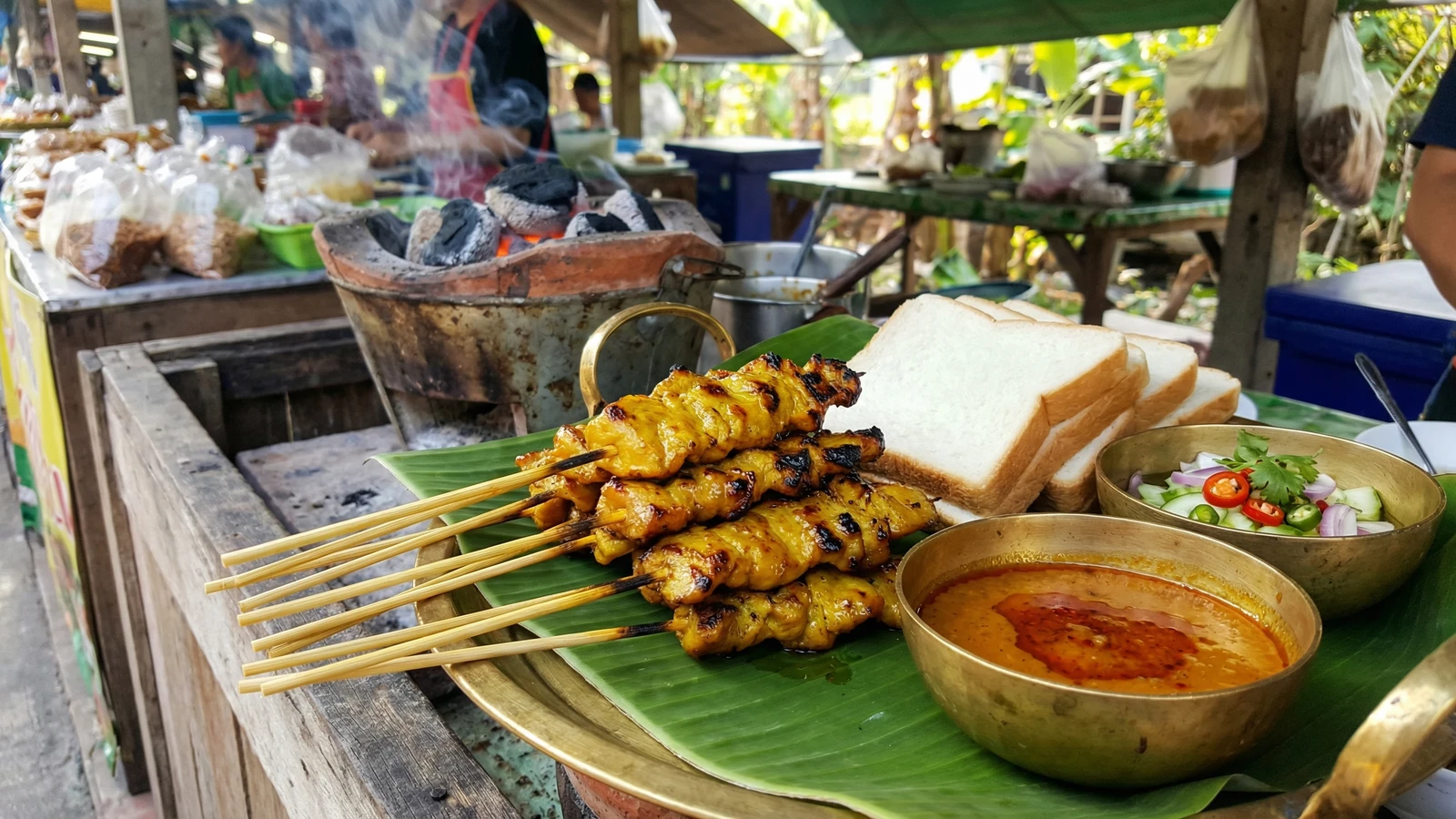
Southern Chicken Satay (Satay Gai)
Created by
The kreung tam doesn't always become a curry. Here it becomes a marinade: turmeric, cumin, coriander, coconut cream, pounded and rubbed into chicken thigh. Southern Thai Muslim food, from the deep south where Thailand meets Malaysia.
Satay gai is a kreung tam dish. Most people don't see it that way. They see skewered meat and think barbecue. But strip it back and look at what's happening: a pounded paste of turmeric, coriander root, cumin, lemongrass, garlic, and white pepper is worked into chicken and left to do its job overnight. That paste is the engine. The coconut cream carries it into the meat. The charcoal finishes it. Without the kreung tam, you have grilled chicken. With it, you have satay.
This is Southern Thai food. Not Central Thai. Not Bangkok street food. The deep south, Songkhla, Pattani, Yala, Narathiwat, where Thai Muslim communities have been cooking with a Malay-influenced spice profile for centuries. The dominant rhizome here isn't galangal. It's kamin (turmeric), and it stains everything gold. Cumin and coriander seed show up in quantities you won't find north of Surat Thani. Cardamom makes appearances. This is the spice trade made edible, cooked over charcoal at food stalls where the call to prayer is part of the soundtrack.
Ajarn always said: "Principles, not recipes." The principle here is that a kreung tam doesn't have to become a curry. It can become a marinade. The same pounding technique, the same release of essential oils from bruised aromatics, the same science of cell walls breaking and flavors merging. The mortar does the same work whether you're making gaeng or satay. The kreung tam is everything.
The peanut sauce (nam jim satay) is its own kreung tam. Pounded red curry paste cooked in coconut cream, then enriched with ground roasted peanuts, tamarind, and palm sugar. Two pastes in one dish. Two demonstrations of the same principle. The cucumber relish (ajat) brings the acid: vinegar, a touch of sugar, sliced shallots, chili. That's your sour pillar working alongside the skewers. The system is always present, even when the dish looks nothing like a curry.
Satay arrived in Thailand through the Malay Muslim communities of the southern provinces, likely traveling north from the Malay Peninsula and Indonesian archipelago where sate has ancient roots. The Thai-Malay border provinces (Pattani, Yala, Narathiwat, Songkhla) remain the heartland of Thai satay culture, where Muslim vendors grill skewers over coconut shell charcoal at night markets. The heavy use of turmeric, cumin, and coriander seed distinguishes Southern Thai satay from the lighter Central Thai versions that later spread to Bangkok, and the dish's identity is inseparable from the Muslim communities that brought it north.
The technique, the tradition, and the story behind every dish.
Discover Culinary AdvisorIngredients
boneless, skinless chicken thighs
Quantity
600g
cut into strips about 3 inches long and 1 inch wide
bamboo skewers
Quantity
20
soaked in water for at least 1 hour
turmeric root (kamin)
Quantity
1 tablespoon
peeled and sliced (or 1 teaspoon ground)
lemongrass (takhrai)
Quantity
2 stalks
tender inner core only, sliced thin
garlic
Quantity
4 cloves
shallots (hom daeng)
Quantity
3
roughly chopped
cilantro roots (rak phak chi)
Quantity
3
scraped and chopped
coriander seed (met phak chi)
Quantity
1 teaspoon
toasted
cumin seed (yira)
Quantity
1 teaspoon
toasted
white peppercorns (prik thai khao)
Quantity
1 teaspoon
salt
Quantity
1 teaspoon
fish sauce (nam pla)
Quantity
1 tablespoon
palm sugar (nam tan pip)
Quantity
1 tablespoon
coconut cream (hua kathi), thick head
Quantity
200ml
vegetable oil
Quantity
for basting
red curry paste (nam prik gaeng phet)
Quantity
2 tablespoons
coconut cream (hua kathi), for peanut sauce
Quantity
200ml
roasted peanuts
Quantity
100g
ground coarsely
tamarind paste (nam makham piak)
Quantity
2 tablespoons
palm sugar (nam tan pip), for peanut sauce
Quantity
2 tablespoons
fish sauce (nam pla), for peanut sauce
Quantity
1 tablespoon
salt, for peanut sauce
Quantity
pinch
cucumber
Quantity
1 small
quartered lengthwise and sliced thin
shallots (hom daeng), for relish
Quantity
2
sliced thin
bird's eye chili (prik khi nu), for relish
Quantity
1
sliced thin
white vinegar or rice vinegar
Quantity
3 tablespoons
sugar, for relish
Quantity
2 tablespoons
salt, for relish
Quantity
1/2 teaspoon
| Ingredient | Quantity |
|---|---|
| boneless, skinless chicken thighscut into strips about 3 inches long and 1 inch wide | 600g |
| bamboo skewerssoaked in water for at least 1 hour | 20 |
| turmeric root (kamin)peeled and sliced (or 1 teaspoon ground) | 1 tablespoon |
| lemongrass (takhrai)tender inner core only, sliced thin | 2 stalks |
| garlic | 4 cloves |
| shallots (hom daeng)roughly chopped | 3 |
| cilantro roots (rak phak chi)scraped and chopped | 3 |
| coriander seed (met phak chi)toasted | 1 teaspoon |
| cumin seed (yira)toasted | 1 teaspoon |
| white peppercorns (prik thai khao) | 1 teaspoon |
| salt | 1 teaspoon |
| fish sauce (nam pla) | 1 tablespoon |
| palm sugar (nam tan pip) | 1 tablespoon |
| coconut cream (hua kathi), thick head | 200ml |
| vegetable oil | for basting |
| red curry paste (nam prik gaeng phet) | 2 tablespoons |
| coconut cream (hua kathi), for peanut sauce | 200ml |
| roasted peanutsground coarsely | 100g |
| tamarind paste (nam makham piak) | 2 tablespoons |
| palm sugar (nam tan pip), for peanut sauce | 2 tablespoons |
| fish sauce (nam pla), for peanut sauce | 1 tablespoon |
| salt, for peanut sauce | pinch |
| cucumberquartered lengthwise and sliced thin | 1 small |
| shallots (hom daeng), for relishsliced thin | 2 |
| bird's eye chili (prik khi nu), for relishsliced thin | 1 |
| white vinegar or rice vinegar | 3 tablespoons |
| sugar, for relish | 2 tablespoons |
| salt, for relish | 1/2 teaspoon |
Equipment Needed
- •Heavy granite mortar and pestle (krok hin) for the marinade paste
- •Charcoal grill or gas grill at maximum heat
- •Bamboo skewers (soaked 1 hour minimum)
- •Small saucepan for peanut sauce
Instructions
- 1
Pound the satay kreung tam
Toast the coriander seed and cumin seed in a dry pan over medium heat until fragrant and just starting to darken. Thirty seconds, no more. Dump them into the granite mortar and pound to a powder. Add the white peppercorns and pound those in. Now the wet aromatics, in order: salt and garlic first, pound to a paste. Then the cilantro roots. Then the lemongrass. Then the shallots. Then the turmeric. Pound after each addition until fully incorporated before adding the next. The paste should be smooth, golden, and violently fragrant. Your hands will be stained yellow. Good. That's the kamin at work.
This is a Southern spice profile. Cumin and coriander seed in quantity, turmeric instead of galangal. If you're used to Central Thai curry pastes, this will smell different. That's the Malay influence. Respect it. - 2
Marinate the chicken
Combine the pounded paste with the coconut cream, fish sauce, and palm sugar in a bowl. Mix until the sugar dissolves. Add the chicken strips and work the marinade into every piece with your hands. You want full contact. The coconut cream is the vehicle: it carries the aromatics into the meat and will caramelize over the charcoal later. Cover and refrigerate for at least 4 hours. Overnight is better. The turmeric needs time to penetrate.
Use chicken thighs, not breast. Thighs have fat. Fat keeps the meat juicy over high charcoal heat. Breast dries out in seconds. Every satay vendor in the south uses thigh meat. There's a reason. - 3
Make the peanut sauce
Heat the coconut cream in a small saucepan over medium heat until the oil starts to separate, about 3 minutes. This is cracking the coconut cream. The surface should look broken and oily, not smooth. Add the red curry paste and fry it in the coconut oil for 2 minutes, stirring constantly. It should darken slightly and smell intensely aromatic. Add the ground peanuts, tamarind paste, palm sugar, fish sauce, and salt. Stir. Add a splash of water if it's too thick. You want it loose enough to drip off a skewer but thick enough to coat. Taste: it should be sweet, salty, sour from the tamarind, with the heat of the curry paste underneath. Adjust. Set aside.
Ajarn always said: crack the coconut cream first. If you dump everything in at once, the paste fries in liquid, not oil. The flavor is completely different. The oil separation is the step that builds depth. - 4
Make the cucumber relish
Dissolve the sugar and salt in the vinegar in a small bowl. Toss in the cucumber slices, shallots, and sliced chili. Let it sit while you grill. The ajat should be sharp, sweet, and cooling. It's the acid counterpoint to the rich, fatty skewers and the heavy peanut sauce. This is the sour pillar doing its job.
- 5
Skewer the chicken
Thread each strip of chicken onto a soaked bamboo skewer, weaving the skewer through the meat in two or three places so it lies flat. Don't bunch it into a ball. Flat meat means even cooking and maximum surface area touching the grill. Maximum surface area means maximum char. That's the goal.
- 6
Grill over charcoal
Get your charcoal grill screaming hot. If you're using a gas grill, crank it to maximum and get the grates blazing. Lay the skewers across the grill, leaving the exposed bamboo handles off the heat. Baste with a light coat of oil using a lemongrass stalk brush or a regular brush. Grill for 2 to 3 minutes per side. The coconut cream and turmeric paste will caramelize and char in spots. That's what you want: golden-brown with blackened edges, the sugar in the coconut cream turning to caramel against the heat. The chicken should be just cooked through, still juicy, never dry. Pull them the moment the juices run clear.
Southern satay vendors use coconut shell charcoal and fan the coals by hand. The smoke from coconut shell is part of the flavor. If you have access to coconut charcoal, use it. If not, lump hardwood charcoal is the next best. Briquettes are a last resort. - 7
Serve immediately
Stack the skewers on a plate. Set the warm peanut sauce alongside in a bowl. Set the cucumber relish next to it. That's the spread: protein, fat, acid, crunch. Each bite of satay gets dipped in the peanut sauce, then followed with a forkful of ajat to cut through the richness. The system is always present. Serve with sliced white bread (toast bread) if you want to be traditional. The bread soaks up peanut sauce. Southern vendors always have it on the table.
Chef Tips
- •This is Southern Thai Muslim food. The spice profile is completely different from Central Thai. Turmeric (kamin) is the backbone, not galangal. Cumin and coriander seed appear in quantities that would overwhelm a green curry but are essential here. This is the Malay border talking. Don't try to make it taste like Bangkok satay. Bangkok satay is a watered-down version of what the south has been cooking for centuries.
- •The marinade needs time. Four hours minimum, overnight is the standard. The turmeric and coconut cream work together: the coconut fat absorbs the turmeric's fat-soluble curcumin and carries it deep into the protein. A 30-minute marinade gives you yellow chicken. An overnight marinade gives you satay that's golden all the way through. Science, not magic.
- •Peanut sauce is a kreung tam in disguise. You're cracking coconut cream, frying a curry paste in the separated oil, then building a sauce. The same technique you'd use to start a gaeng. The peanuts are just the protein component. If your peanut sauce tastes flat, you probably skipped the step of cracking the coconut cream and frying the paste properly.
- •Toast bread (white sandwich bread, lightly grilled) is the traditional accompaniment in the south. It sounds strange until you dip a corner into the peanut sauce. It soaks up everything. Thai Muslim satay stalls always serve it. Don't skip it just because it looks un-photogenic.
- •The ajat (cucumber relish) is not optional. It's the sour-sweet counterbalance that makes the rich, fatty, charred satay work as a complete dish. Without it, you have half the equation. With it, you have the four pillars in play: nam pla in the marinade for salt, palm sugar for sweet (sparingly, this is southern), vinegar in the ajat for sour, and chili throughout for heat.
Advance Preparation
- •The satay kreung tam (marinade paste) can be pounded up to 2 days ahead and refrigerated. The flavors deepen as the toasted spices meld.
- •Chicken should be marinated at least 4 hours ahead, ideally overnight. Skewer the marinated chicken up to 2 hours before grilling and keep refrigerated.
- •Peanut sauce can be made a day ahead and gently rewarmed. Add a splash of water when reheating to loosen it back to dipping consistency.
- •The ajat (cucumber relish) should be assembled no more than 30 minutes before serving. The cucumber releases water and dilutes the dressing if it sits too long.
Frequently Asked Questions
Nutrition Information
1 serving (about 300g)
Where cooking meets culture.
Culinary mentorship, cultural storytelling, and the editorial depth that makes cooking meaningful.
Explore Culinary Advisor