Culinary Advisor
A cooking platform built around craft, culture, and the stories behind what we eat.
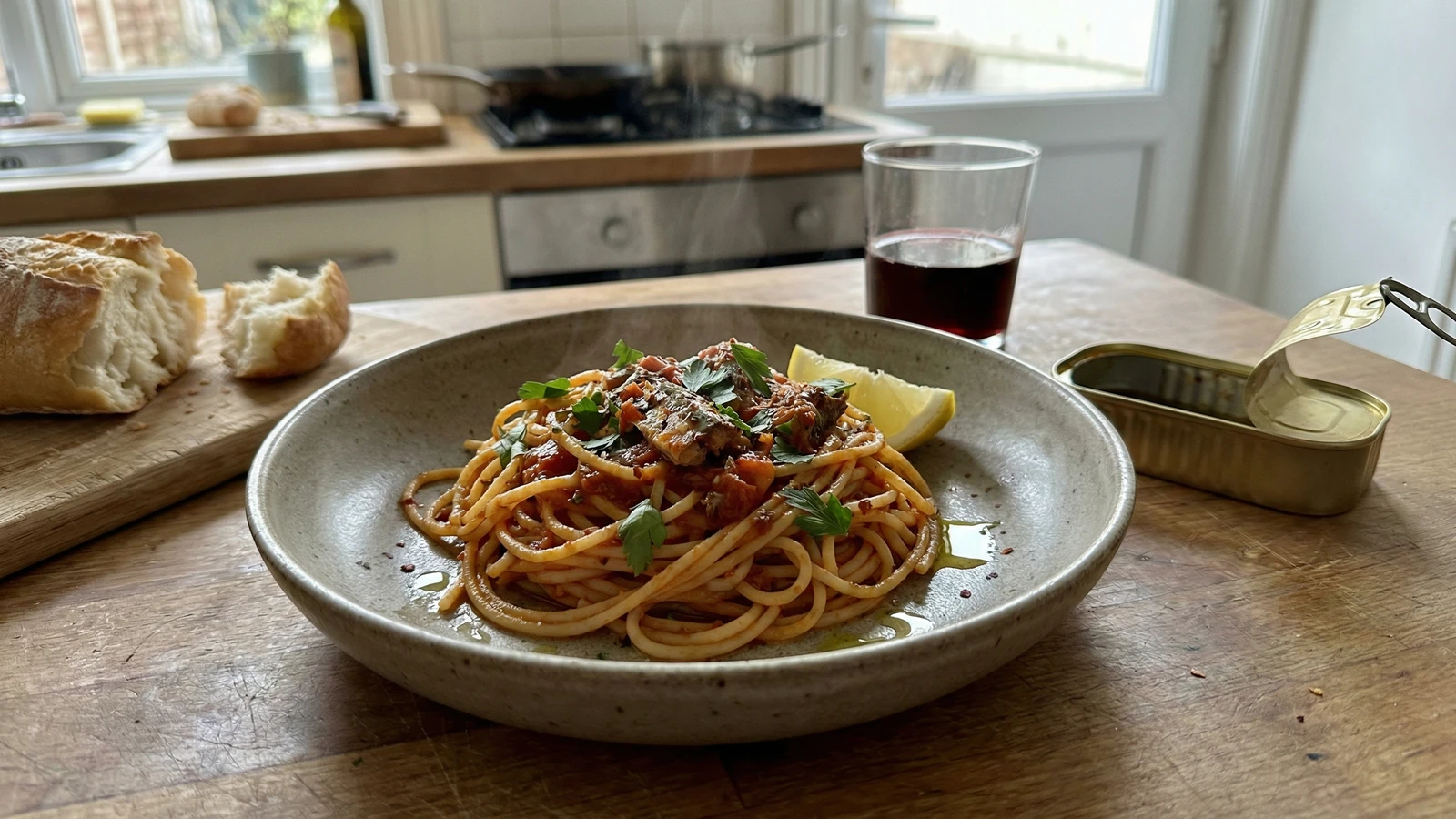
Sardine and Tomato Pasta
Created by Chef Thomas
A tin of sardines, a tin of tomatoes, some garlic, and a handful of spaghetti. A store-cupboard supper that tastes like someone cared, because someone did.
There's a kind of evening, usually midweek, when the fridge offers little and the ambition offers less, and you stand in the kitchen wondering whether it's worth cooking at all. This is the meal for that evening.
Two tins. A head of garlic. Some dried pasta. It sounds like a concession, like something you'd apologise for when putting it on the table. It isn't. Sardines are one of the most undervalued things you can eat: rich, savoury, full of the kind of depth that takes hours to build in other dishes and comes here already done, sealed in a tin for less than a pound. Good tinned sardines in good olive oil are a proper ingredient. Treat them that way.
The tomatoes cook down quickly into something thick and sweet. The garlic goes in sliced, not crushed, because you want to find it on the fork. A pinch of chilli. A squeeze of lemon at the end. The pasta water does the rest, pulling everything together into a sauce that clings and shines. Fifteen minutes, start to finish. I wrote it down in the notebook once: sardines, tomatoes, Tuesday, rain. It needed no more than that.
We're only making dinner. But this is the kind of dinner that reminds you the cupboard is more generous than you thought, and that cooking well has nothing to do with spending well. A warm plate, a glass of something rough and red, and the quiet satisfaction of having made something real from almost nothing.
The technique, the tradition, and the story behind every dish.
Discover Culinary AdvisorIngredients
spaghetti
Quantity
200g
tinned sardines in olive oil
Quantity
1 tin (about 120g)
drained, oil reserved
tinned chopped tomatoes
Quantity
400g (1 tin)
garlic
Quantity
3 cloves
sliced thinly
dried chilli flakes
Quantity
a good pinch
flat-leaf parsley (optional)
Quantity
a handful
roughly chopped
good olive oil
Quantity
a generous glug
fine sea salt
Quantity
to taste
black pepper
Quantity
to taste
lemon juice
Quantity
a squeeze
| Ingredient | Quantity |
|---|---|
| spaghetti | 200g |
| tinned sardines in olive oildrained, oil reserved | 1 tin (about 120g) |
| tinned chopped tomatoes | 400g (1 tin) |
| garlicsliced thinly | 3 cloves |
| dried chilli flakes | a good pinch |
| flat-leaf parsley (optional)roughly chopped | a handful |
| good olive oil | a generous glug |
| fine sea salt | to taste |
| black pepper | to taste |
| lemon juice | a squeeze |
Equipment Needed
- •Large saucepan for the pasta
- •Wide skillet or frying pan for the sauce
- •Wooden spoon
Instructions
- 1
Start the pasta water
Put a large pan of water on to boil and salt it properly. It should taste like the sea. Not a timid seasoning, a real commitment. This is the only chance you get to season the pasta itself, and it matters more than people think. When it's at a rolling boil, add the spaghetti and cook it until it still has some bite left, a minute or so short of what the packet says.
- 2
Build the sauce base
While the pasta cooks, pour the reserved sardine oil into a wide pan or skillet over a medium heat. Add a glug of olive oil alongside it. When the oil is warm and shimmering, add the sliced garlic and the chilli flakes. Let them sizzle gently for a minute, no more, until the garlic is pale gold and the kitchen smells sharp and good. The garlic should not brown. If it does, you've lost it, the bitterness will carry through the whole dish. Start again if you must. It costs you a clove of garlic and thirty seconds.
The oil from the sardine tin is flavour you've already paid for. Use it. It carries the taste of the fish into the sauce before the sardines themselves go anywhere near the pan. - 3
Add tomatoes and sardines
Tip in the tinned tomatoes and let them bubble for five or six minutes, stirring now and then, until the sauce thickens slightly and loses that raw, tinny edge. You'll know because it starts to smell more like something you'd want to eat and less like something straight from the tin. Season with salt and pepper. Now add the sardines, breaking them into rough pieces with a wooden spoon as they go in. Not a paste, not pristine fillets. Somewhere between. You want to find a piece of fish in every other forkful.
Don't stir the sardines too much once they're in. They'll break down on their own. You want chunks with character, not a uniform fish sauce. - 4
Bring it together
When the spaghetti is ready, save a mugful of the starchy cooking water before you drain it. Tip the pasta straight into the sauce and toss everything together over the heat for a minute, adding splashes of the pasta water until the sauce clings to every strand. It should look glossy and loose, not dry, not swimming. A squeeze of lemon juice now, enough to brighten things without making it taste of lemon. Scatter the parsley over if you have it. Serve straight from the pan onto warm plates.
Chef Tips
- •Buy the best tinned sardines you can find. Look for ones packed in olive oil, not sunflower, not brine. The difference between a good tin and a cheap one is fifty pence and a world of flavour. Portuguese or Spanish sardines in olive oil are worth seeking out.
- •Save the pasta cooking water. It's starchy, salty, and it turns a sauce from something sitting on top of the pasta into something that belongs with it. Add it a splash at a time until the sauce looks glossy and coats every strand. This is the quiet secret of good pasta.
- •A squeeze of lemon at the end lifts everything. Not enough to taste citrus, just enough to brighten the tomatoes and cut the richness of the fish. If you don't have a lemon, a splash of red wine vinegar will do the same job.
- •If you've got a few good olives in the fridge, slice them and add them with the tomatoes. Capers too. This is a recipe that rewards whatever you've got knocking about. Your kitchen, your rules.
Advance Preparation
- •The sauce can be made a day ahead and refrigerated. Reheat gently while you cook fresh pasta. It thickens as it sits, so loosen it with a splash of pasta water when you bring it back together.
- •This is not a dish that improves with reheating once the pasta is in. Cook the pasta fresh each time. The sauce waits; the spaghetti does not.
Frequently Asked Questions
Nutrition Information
1 serving (about 460g)
Where cooking meets culture.
Culinary mentorship, cultural storytelling, and the editorial depth that makes cooking meaningful.
Explore Culinary Advisor