Culinary Advisor
A cooking platform built around craft, culture, and the stories behind what we eat.
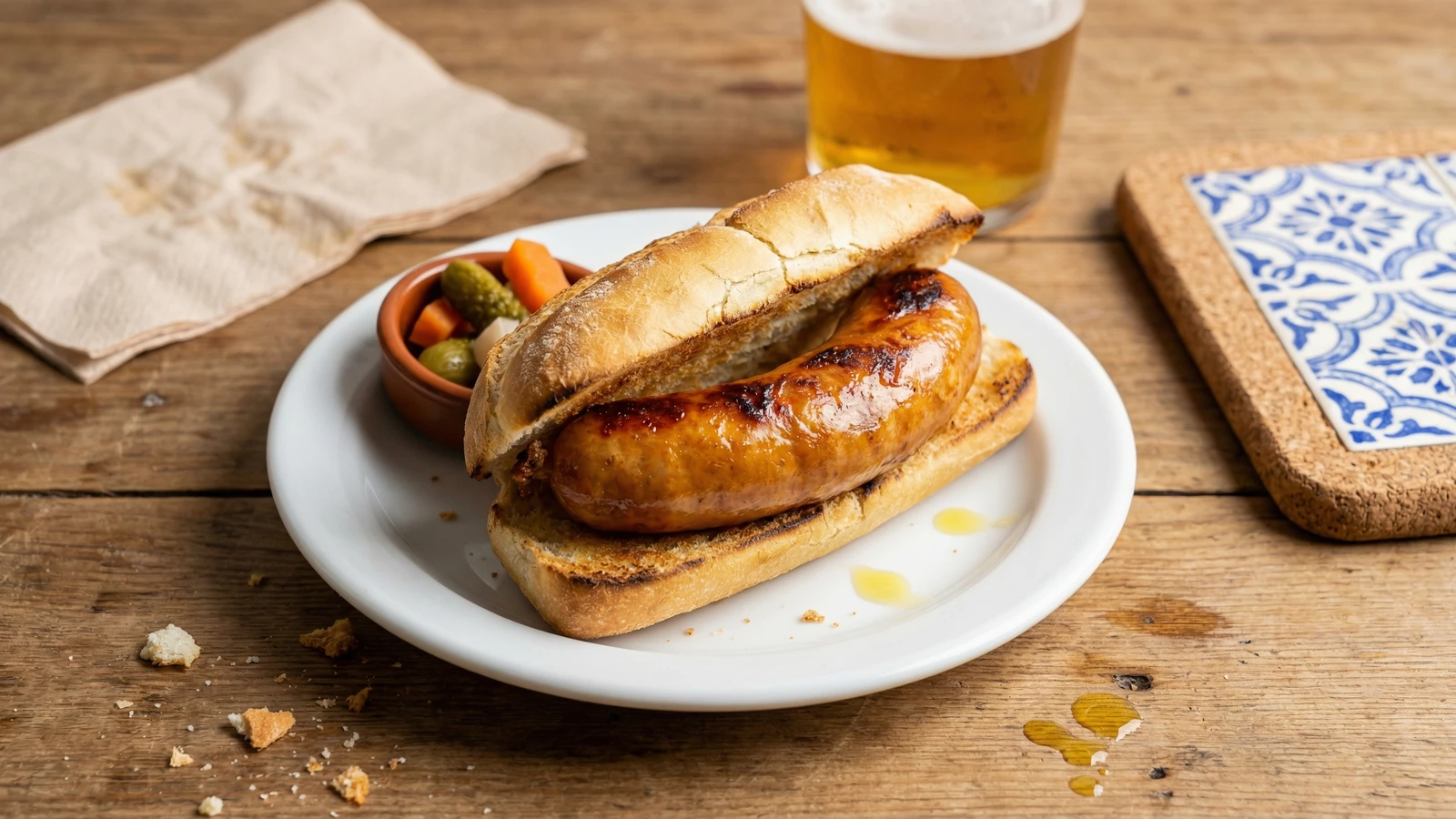
Sandes de Alheira
Created by
The sausage that saved lives during the Inquisition, grilled until the casing crisps, tucked into crusty bread. Street food with five centuries of history in every bite.
This is not just a sandwich. This is survival. This is resistance. This is a sausage that exists because people refused to disappear.
During the Inquisition, Portuguese Jews were forced to convert or flee. Those who stayed, the cristãos-novos, had to hide their faith. The Inquisitors watched what people ate. No pork on your table? You were suspect. So the Jews of Trás-os-Montes created alheira: a sausage that looked like the others hanging in every kitchen, but was made with poultry and bread instead of pork. It kept them alive. It kept their faith hidden.
Today alheira is beloved across Portugal, and yes, most versions now include pork (the irony isn't lost on anyone). But you can still find traditional ones made with duck, chicken, or game. The shape remains the same: horseshoe-curved, pale, delicate. The texture is unlike any other sausage you know, soft and bread-like inside, crispy when grilled right.
At Mesa da Avó dinners, I serve this sandwich and tell the story. People go quiet. They look at the food differently after that. A cozinha é memória. Sometimes that memory is painful. Sometimes it's heroic. This is both.
Alheira was invented by Portuguese Jews in Trás-os-Montes during the 15th century Inquisition, when refusing to eat pork could mean death. The village of Mirandela remains the spiritual home of alheira, holding an annual festival in its honor. The sausage was nearly lost to history until the 20th century, when it was rediscovered and protected as a regional specialty.
The technique, the tradition, and the story behind every dish.
Discover Culinary AdvisorIngredients
alheiras
Quantity
4 (about 100g each)
papo seco rolls or crusty bread rolls
Quantity
4
extra virgin olive oil (azeite)
Quantity
2 tablespoons
pickled vegetables
Quantity
for serving
hot sauce or piri-piri (optional)
Quantity
to taste
| Ingredient | Quantity |
|---|---|
| alheiras | 4 (about 100g each) |
| papo seco rolls or crusty bread rolls | 4 |
| extra virgin olive oil (azeite) | 2 tablespoons |
| pickled vegetables | for serving |
| hot sauce or piri-piri (optional) | to taste |
Equipment Needed
- •Grill pan or heavy skillet
- •Fork for pricking
Instructions
- 1
Prepare the alheira
Prick each alheira gently with a fork in 3 or 4 places. This prevents the casing from bursting as it heats. Don't go mad with the fork. A few small holes are enough to let steam escape. The casing is delicate, made from the same bread-based filling that's inside.
Some people remove the casing entirely and pan-fry the filling loose. This works, but you lose that satisfying snap of biting into a whole sausage. Your choice. - 2
Grill the alheira
Heat a grill pan or skillet over medium heat. Brush lightly with olive oil. Place the alheiras in the pan and cook slowly, turning every 2 to 3 minutes, until the casing is golden brown and crispy all over, about 8 to 10 minutes total. The heat must be moderate. Too high and the casing splits before the inside heats through. Too low and you won't get that crisp exterior. Listen for a gentle sizzle, not a violent sputter.
Alheira is already cooked when you buy it. You're not cooking it through; you're heating it and crisping the outside. Patience here. Don't rush. - 3
Toast the bread
While the alheiras finish, split the papo seco rolls and toast them cut-side down in the same pan, pressing lightly, until golden. The bread should pick up some of the fat from the alheira. This is the point. Don't wipe the pan clean first.
- 4
Assemble the sandes
Place one hot alheira in each toasted roll. That's it. Serve immediately with pickled vegetables on the side and hot sauce if you want it. Some add a fried egg on top. Some add nothing at all. Both are correct. The alheira is the star. Everything else is backup.
Chef Tips
- •Look for alheira de Mirandela if you can find it. It's the original, the benchmark. Other regions make good versions, but Mirandela is where the story began.
- •Never cook alheira over high heat. The casing is fragile. Medium heat, patience, and frequent turning give you that perfect golden exterior without splitting.
- •If you want to honor the original tradition, seek out alheira de caça (game) or alheira de galinha (chicken). They're harder to find but closer to what the cristãos-novos actually made.
- •The bread matters. A proper papo seco has a thin crust and soft interior that cradles the sausage. A baguette works if you can't find Portuguese rolls.
Advance Preparation
- •Alheira keeps well refrigerated for up to a week. Bring to room temperature before cooking for more even heating.
- •This sandwich cannot be made ahead. Eat it hot, standing at the counter if you must, the way they do at tascas across Portugal.
Frequently Asked Questions
Nutrition Information
1 serving (about 195g)
Where cooking meets culture.
Culinary mentorship, cultural storytelling, and the editorial depth that makes cooking meaningful.
Explore Culinary Advisor