Culinary Advisor
A cooking platform built around craft, culture, and the stories behind what we eat.
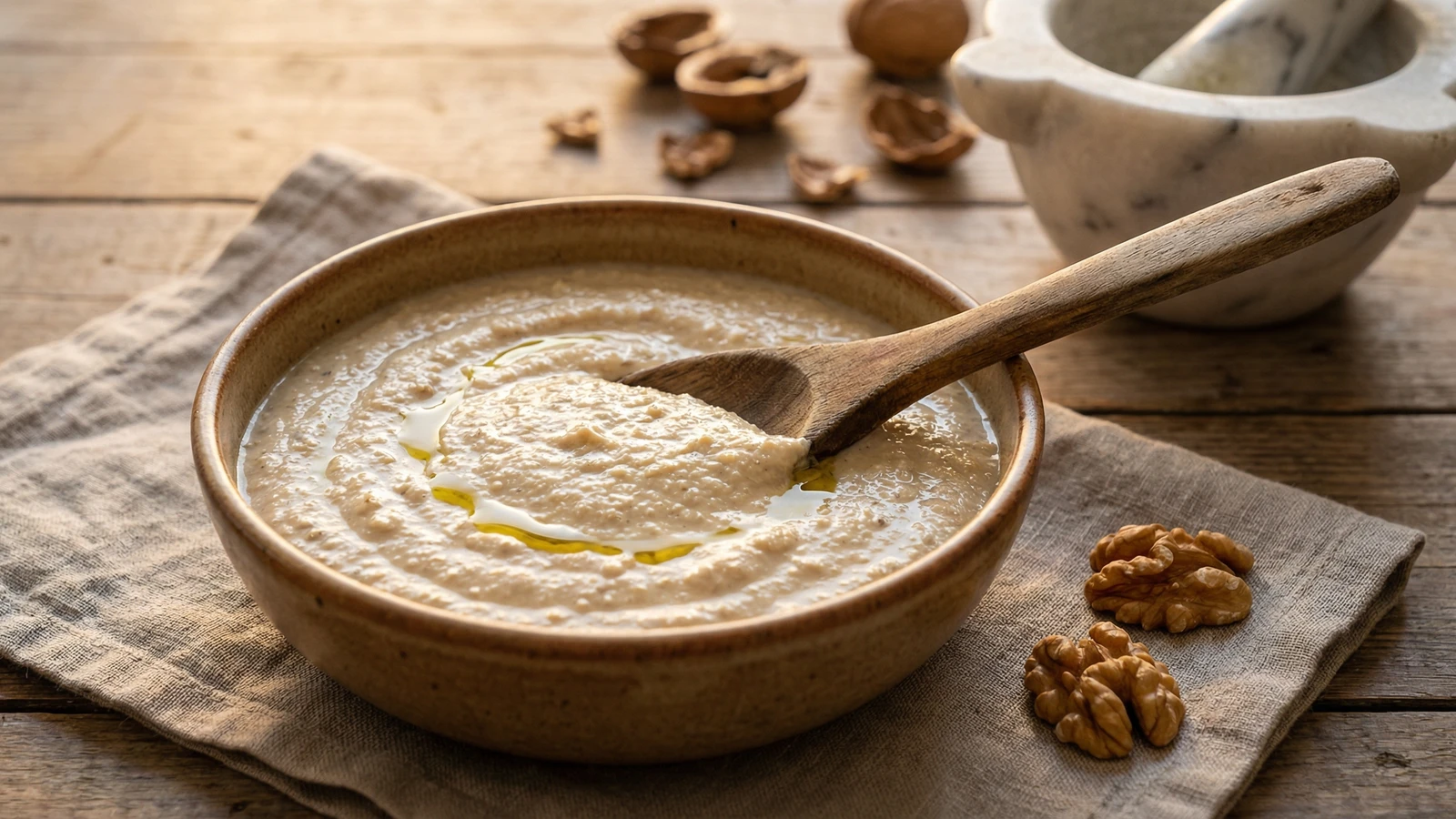
Salsa di Noci
Created by Chef Graziella
The ancient walnut sauce of the Ligurian hills, where walnuts are pounded with soaked bread and a whisper of garlic into a cream that clings to pasta like nothing else can.
This is not pesto's better-known cousin. Salsa di noci predates the basil sauce by centuries, born in the hills above Genoa where walnut trees grew thick and almonds were too expensive for everyday cooking. The Ligurians understood something essential: walnuts, when pounded properly, release their oils and become a sauce of remarkable depth.
The bread soaked in milk is not optional. It is the secret to the sauce's silken texture, the bridge between the coarse nuts and the smooth cream you seek. Without it, you have chopped walnuts in oil. With it, you have a sauce that coats pasta the way a proper sauce should.
Garlic appears here, but as a ghost. One small clove, pounded until it disappears into the mass. Americans will want more. They must resist. The walnut is delicate, almost sweet. Garlic overwhelms it in an instant. What you keep out is as significant as what you put in.
The mortar and pestle matters. A food processor heats the nuts and turns the sauce bitter. The slow pounding extracts oil without generating heat, preserving the walnut's gentle nature. If your arms tire, you are doing it correctly.
Salsa di noci appears in Ligurian manuscripts from the 14th century, served during Lent when meat was forbidden but the rich nut sauce provided sustenance. The sauce became inseparable from pansoti, the triangular pasta filled with preboggion (wild herbs), a pairing that remains obligatory at Christmas Eve dinner tables across the Ligurian coast.
The technique, the tradition, and the story behind every dish.
Discover Culinary AdvisorIngredients
shelled walnuts
Quantity
7 ounces (about 1¾ cups)
day-old white bread
Quantity
1 slice (about 1 ounce)
crusts removed
whole milk
Quantity
⅓ cup
garlic
Quantity
1 small clove
Parmigiano-Reggiano
Quantity
¼ cup
freshly grated
pine nuts
Quantity
2 tablespoons
extra virgin olive oil
Quantity
½ cup
warm water
Quantity
3 tablespoons, or as needed
fine sea salt
Quantity
to taste
| Ingredient | Quantity |
|---|---|
| shelled walnuts | 7 ounces (about 1¾ cups) |
| day-old white breadcrusts removed | 1 slice (about 1 ounce) |
| whole milk | ⅓ cup |
| garlic | 1 small clove |
| Parmigiano-Reggianofreshly grated | ¼ cup |
| pine nuts | 2 tablespoons |
| extra virgin olive oil | ½ cup |
| warm water | 3 tablespoons, or as needed |
| fine sea salt | to taste |
Equipment Needed
- •Large marble or stone mortar and pestle
- •Small saucepan for blanching
- •Clean kitchen towel for peeling walnuts
Instructions
- 1
Blanch and peel the walnuts
Bring a small pot of water to boil. Add the walnuts and blanch for 2 minutes. Drain and, while still warm, rub the walnuts in a clean kitchen towel to remove as much of the papery brown skin as possible. This step is tedious. It is also essential. The skins contain tannins that turn the sauce bitter and give it a muddy color. You will not remove every bit of skin. Remove what you can.
Work while the walnuts are warm. The skins slip off easily when hot, stubbornly when cool. If they cool before you finish, blanch them again briefly. - 2
Soak the bread
Place the bread in a small bowl and pour the milk over it. Let it soak for 10 minutes, turning once, until the bread is completely saturated and soft. Squeeze out the excess milk gently. The bread should be damp but not dripping. Reserve a tablespoon of the soaking milk.
- 3
Pound the garlic and salt
Place the garlic clove and a generous pinch of salt in a large mortar. Pound until the garlic is completely reduced to a paste, scraping down the sides as needed. There should be no visible pieces remaining. The salt acts as an abrasive. The garlic must disappear.
- 4
Add the pine nuts and walnuts
Add the pine nuts to the mortar and pound until they form a paste. Add the walnuts in three or four batches, pounding after each addition until the nuts break down and begin to release their oils. This takes time and effort. The mixture should become a coarse, slightly oily paste. Your forearm will protest. Continue.
A large mortar makes this work possible. If your mortar is small, work in smaller batches and combine in a bowl. A marble mortar is traditional; wood absorbs oils and retains flavors from previous preparations. - 5
Incorporate the bread and cheese
Add the soaked bread to the mortar. Pound and work it into the walnut paste until fully incorporated. The mixture will become noticeably creamier. Add the Parmigiano-Reggiano and continue pounding until the sauce is homogeneous, with a texture like coarse almond butter.
- 6
Add the oil
Begin adding the olive oil in a thin stream, stirring constantly with the pestle in a circular motion. Work it in gradually, as you would make mayonnaise. The sauce should emulsify and become creamy. Add the warm water to adjust consistency. The finished sauce should flow slowly from a spoon but not be thin. Taste and add salt as needed.
- 7
Rest before serving
Let the sauce rest at room temperature for at least 15 minutes before serving. This allows the flavors to marry and the texture to settle. If the sauce thickens too much, stir in a splash of the reserved milk or additional warm water. Serve at room temperature, never cold, tossed with hot pasta so the heat releases the walnut perfume.
Chef Tips
- •Fresh walnuts from the autumn harvest make the finest sauce. Stale walnuts turn rancid and bitter. Taste one before you begin. If it is sharp or musty, find better walnuts.
- •A food processor produces inferior results. The blade heats the nuts through friction, releasing bitter compounds and destroying the delicate texture. The mortar is not nostalgia. It is technique.
- •Some Ligurian cooks add a tablespoon of prescinsêua, the local curdled milk. Fresh ricotta thinned with milk approximates this. It adds a subtle tang that balances the richness.
- •This sauce is traditionally paired with pansoti, triangular pasta filled with wild herbs and ricotta. It is also magnificent with plain egg tagliatelle or potato gnocchi. Never serve it with dried pasta from a box.
Advance Preparation
- •The sauce can be made several hours ahead and kept at room temperature, covered with plastic pressed directly onto the surface to prevent oxidation.
- •Refrigerated, the sauce keeps two days. Bring to room temperature and stir well before serving. The oil will solidify when cold.
- •Freezing is possible but changes the texture. If you must freeze, do so before adding the cheese and incorporate it fresh after thawing.
Frequently Asked Questions
Nutrition Information
1 serving (about 125g)
Where cooking meets culture.
Culinary mentorship, cultural storytelling, and the editorial depth that makes cooking meaningful.
Explore Culinary Advisor