Culinary Advisor
A cooking platform built around craft, culture, and the stories behind what we eat.
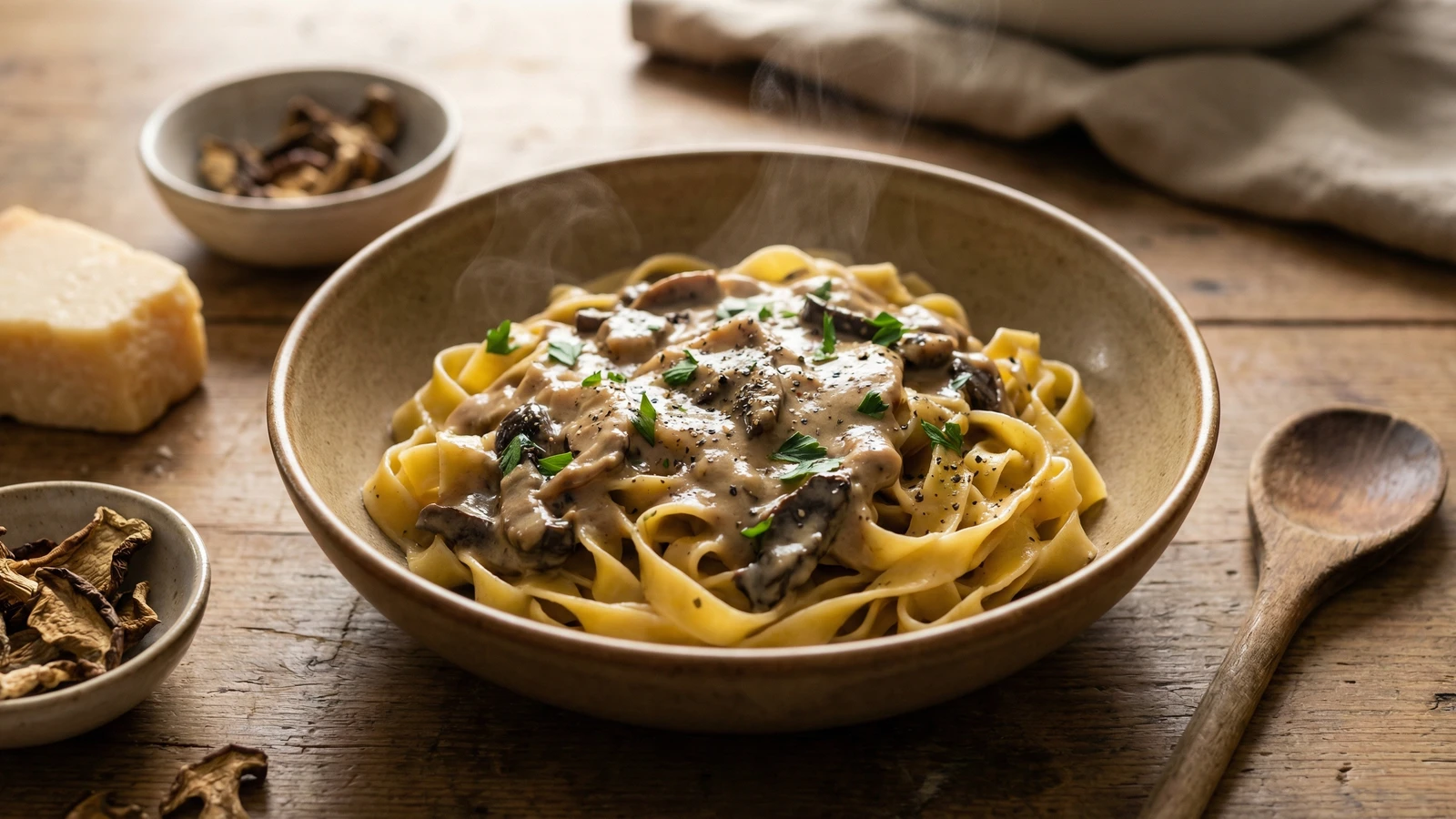
Salsa ai Funghi Porcini
Created by Chef Graziella
The woodsy, earthy sauce of Piedmont, where dried porcini surrender their concentrated essence to butter and cream. A foundation preparation that elevates fresh tagliatelle or soft polenta to something memorable.
Dried porcini are not a substitute for fresh. They are something else entirely: concentrated, intense, with a depth that fresh mushrooms cannot match. The Italian housewife understood this centuries ago, hanging mushrooms to dry in late autumn so that the forest's generosity could extend through winter.
The soaking liquid is the soul of this sauce. I have watched American cooks pour it down the drain. This is a tragedy. That murky brown water contains everything the mushroom released during soaking: the essence of the forest floor, the autumn rain, the oak and chestnut trees beneath which the porcini grew. Strain it carefully through cheesecloth and guard it like the treasure it is.
The garlic here is a whisper, not a shout. You crush the cloves, let them perfume the butter, then remove them before they can dominate. This is how garlic should be used in Italian cooking, and this is where most American cooks fail. The unbalanced use of garlic is the single greatest cause of failure in would-be Italian cooking.
Piedmontese cooks have dried porcini beneath the eaves of farmhouses since medieval times, when preserving the autumn harvest meant survival through winter. The practice of combining dried mushrooms with cream emerged from the dairy-rich valleys of the Alps, where butter replaced the olive oil of southern kitchens and cream was abundant from grazing cattle.
The technique, the tradition, and the story behind every dish.
Discover Culinary AdvisorIngredients
dried porcini mushrooms
Quantity
1 ounce
warm water
Quantity
1 1/2 cups
unsalted butter
Quantity
3 tablespoons
garlic cloves
Quantity
2
lightly crushed with the flat of a knife
dry white wine
Quantity
1/4 cup
heavy cream
Quantity
3/4 cup
kosher salt
Quantity
to taste
black pepper
Quantity
to taste
freshly ground
flat-leaf Italian parsley
Quantity
2 tablespoons
chopped
| Ingredient | Quantity |
|---|---|
| dried porcini mushrooms | 1 ounce |
| warm water | 1 1/2 cups |
| unsalted butter | 3 tablespoons |
| garlic cloveslightly crushed with the flat of a knife | 2 |
| dry white wine | 1/4 cup |
| heavy cream | 3/4 cup |
| kosher salt | to taste |
| black pepperfreshly ground | to taste |
| flat-leaf Italian parsleychopped | 2 tablespoons |
Equipment Needed
- •Heavy 10-inch skillet
- •Fine-mesh sieve
- •Cheesecloth or paper towel for straining
Instructions
- 1
Soak the porcini
Place the dried porcini in a bowl and cover with the warm water. Let them soak for 30 minutes, until they are soft and pliable. Do not rush this. The mushrooms must fully rehydrate, and the water must draw out their essence.
Use warm water, not hot. Hot water can toughen the mushrooms and create a bitter liquid. Warm water is patient; it extracts flavor gently. - 2
Lift and strain
Lift the mushrooms from the water with your fingers or a slotted spoon. Do not pour them through a strainer. Sediment and grit settle at the bottom of the bowl, and you do not want them. Squeeze the mushrooms gently over the bowl to release their liquid, then chop them coarsely. Strain the soaking liquid through a fine-mesh sieve lined with cheesecloth or a paper towel into a clean container. You should have about one cup of strained liquid. Set it aside.
- 3
Infuse the butter
Melt the butter in a heavy skillet over medium heat. When the foam subsides, add the crushed garlic cloves. Let them sizzle gently for two minutes, moving them around the pan. The butter should take on the faintest golden color and smell sweetly of garlic. Remove and discard the garlic before it browns. It has done its work.
Crushing the garlic rather than mincing releases its oils more gently. The flavor infuses the butter without creating the harsh, acrid notes that come from browned garlic bits. - 4
Sauté the mushrooms
Add the chopped porcini to the garlic-infused butter. Sauté over medium heat, stirring occasionally, for three to four minutes. The mushrooms should begin to color slightly at the edges and smell intensely of the forest.
- 5
Add the wine
Pour in the white wine and stir thoroughly. Let it bubble and reduce until the pan is nearly dry and you can no longer smell raw alcohol. This takes two to three minutes. The wine adds brightness that balances the earthiness of the mushrooms.
- 6
Add the soaking liquid
Pour in the strained porcini soaking liquid. Raise the heat slightly and let the liquid simmer until it reduces by half, about five to seven minutes. The sauce will darken and the mushroom flavor will concentrate. Stir occasionally to prevent sticking.
- 7
Finish with cream
Reduce the heat to medium-low and add the cream. Stir to combine and let the sauce simmer gently until it thickens enough to coat the back of a spoon, about four to five minutes. Do not let it boil vigorously or the cream may separate. Season with salt and pepper. The sauce should taste deeply of mushrooms with the cream providing body, not sweetness.
Taste the sauce before salting. The porcini soaking liquid sometimes contains natural salts. Add cautiously, tasting as you go. - 8
Add parsley and serve
Remove the pan from heat and stir in the chopped parsley. The parsley adds freshness and color but should not overwhelm the mushrooms. Serve immediately over fresh tagliatelle, pappardelle, or soft polenta. The sauce waits for no one.
Chef Tips
- •Seek out porcini from Italy if possible. Chilean and Chinese dried porcini exist but lack the complexity of those from Italian or French forests. The difference is not subtle.
- •If serving with pasta, cook the pasta while the sauce simmers and toss them together with a splash of pasta water. The starch helps the sauce cling.
- •For a more rustic version, omit the cream entirely. The butter and reduced soaking liquid create a lighter sauce that lets the porcini speak more directly.
- •A grating of Parmigiano-Reggiano is welcome at the table, though not strictly necessary. The sauce has sufficient depth on its own.
Advance Preparation
- •The porcini can be soaked and the liquid strained up to one day ahead. Refrigerate both separately.
- •The finished sauce can be made two hours ahead and reheated gently. Add a splash of cream if it has thickened too much.
- •This sauce does not freeze well. The cream breaks upon thawing. Make it fresh.
Frequently Asked Questions
Nutrition Information
1 serving (about 95g)
Where cooking meets culture.
Culinary mentorship, cultural storytelling, and the editorial depth that makes cooking meaningful.
Explore Culinary Advisor