Culinary Advisor
A cooking platform built around craft, culture, and the stories behind what we eat.
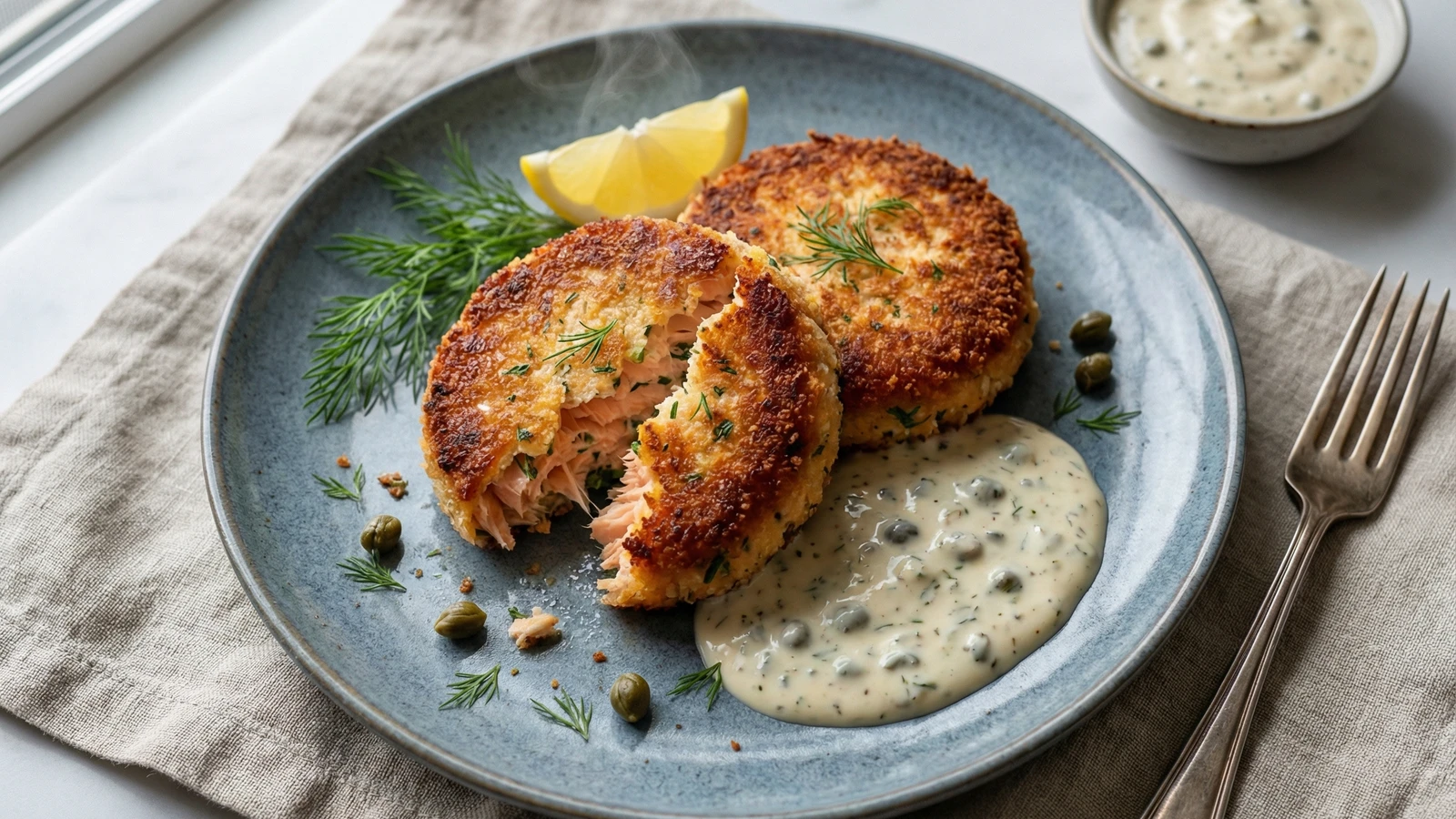
Salmon Cakes with Remoulade
Created by
Crisp-crusted salmon cakes with tender, flaky interiors and a bright caper remoulade that cuts through the richness. Pacific Northwest thrift meets French technique in a dish worthy of any table.
The salmon cake is an act of respect. Generations of Pacific Northwest cooks, from Chinook fishermen to Scandinavian settlers to the cannery workers of Astoria, understood that you honor a fish by using every bit of it. These cakes exist because someone looked at leftover salmon and saw possibility rather than waste.
I've eaten salmon cakes in diners along the Columbia River where the coffee was bitter and the linoleum cracked, and I've eaten them in dining rooms with white tablecloths and obsequious waiters. The best versions share a common virtue: restraint. Too many recipes bury the salmon under breadcrumbs and mayonnaise until you can't taste the fish at all. That's not cooking. That's camouflage.
The secret here is potato. A small amount of cold riced potato binds the mixture without making it dense or gluey. The salmon stays flaky, the exterior fries to a proper golden crust, and when you break one open with your fork, you see actual fish rather than some homogeneous paste. The remoulade, tangy with capers and bright with lemon, does what a good sauce should: it complements without competing.
Fresh salmon works beautifully, but don't dismiss canned. Wild sockeye in the can often surpasses mediocre fresh fish from a supermarket case. The canneries along Puget Sound have been putting up salmon for over a century. There's no shame in that pantry. There's wisdom.
The technique, the tradition, and the story behind every dish.
Discover Culinary AdvisorIngredients
cooked salmon, flaked
Quantity
1 pound
Yukon Gold potato
Quantity
1 medium (about 6 ounces)
boiled and riced
large egg
Quantity
1
lightly beaten
shallot
Quantity
3 tablespoons
finely minced
celery
Quantity
2 tablespoons
finely minced
fresh dill
Quantity
2 tablespoons
chopped
fresh flat-leaf parsley
Quantity
1 tablespoon
chopped
Dijon mustard
Quantity
1 teaspoon
kosher salt
Quantity
1/2 teaspoon
freshly ground black pepper
Quantity
1/4 teaspoon
cayenne pepper
Quantity
1/4 teaspoon
panko breadcrumbs
Quantity
1 cup, divided
neutral oil
Quantity
3 tablespoons
mayonnaise
Quantity
3/4 cup
capers
Quantity
2 tablespoons
drained and roughly chopped
cornichons
Quantity
2 tablespoons
finely minced
whole grain mustard
Quantity
1 tablespoon
Dijon mustard
Quantity
1 teaspoon
fresh lemon juice
Quantity
1 tablespoon
hot sauce
Quantity
1 teaspoon
fresh tarragon
Quantity
1 tablespoon
chopped
lemon wedges (optional)
Quantity
for serving
| Ingredient | Quantity |
|---|---|
| cooked salmon, flaked | 1 pound |
| Yukon Gold potatoboiled and riced | 1 medium (about 6 ounces) |
| large egglightly beaten | 1 |
| shallotfinely minced | 3 tablespoons |
| celeryfinely minced | 2 tablespoons |
| fresh dillchopped | 2 tablespoons |
| fresh flat-leaf parsleychopped | 1 tablespoon |
| Dijon mustard | 1 teaspoon |
| kosher salt | 1/2 teaspoon |
| freshly ground black pepper | 1/4 teaspoon |
| cayenne pepper | 1/4 teaspoon |
| panko breadcrumbs | 1 cup, divided |
| neutral oil | 3 tablespoons |
| mayonnaise | 3/4 cup |
| capersdrained and roughly chopped | 2 tablespoons |
| cornichonsfinely minced | 2 tablespoons |
| whole grain mustard | 1 tablespoon |
| Dijon mustard | 1 teaspoon |
| fresh lemon juice | 1 tablespoon |
| hot sauce | 1 teaspoon |
| fresh tarragonchopped | 1 tablespoon |
| lemon wedges (optional) | for serving |
Equipment Needed
- •Potato ricer or sturdy masher
- •12-inch cast iron or heavy-bottomed skillet
- •Thin flexible spatula for flipping
- •Wire cooling rack
Instructions
- 1
Make the remoulade
Combine the mayonnaise, chopped capers, cornichons, whole grain mustard, Dijon, lemon juice, hot sauce, and tarragon in a small bowl. Stir until uniform. Taste it. The sauce should be tangy and assertive, bright enough to stand up to the richness of the fried cakes. Adjust lemon or hot sauce as your palate dictates. Cover and refrigerate while you prepare the salmon cakes. The flavors will marry and improve as they sit.
Make the remoulade up to three days ahead. It only gets better. - 2
Prepare the salmon
If using fresh salmon, check for pin bones by running your fingers against the grain of the flesh. Remove any you find with tweezers or needle-nose pliers. Flake the fish into a large bowl, breaking it into rough half-inch pieces. You want texture, not paste. If using canned salmon, drain thoroughly and remove any skin or large bones (the small soft bones are edible and add calcium). Flake gently, keeping some larger pieces intact.
- 3
Combine the cake mixture
Add the riced potato to the salmon. The potato should be cold or at room temperature, never warm, or it will make the mixture gummy. Add the beaten egg, minced shallot, celery, dill, parsley, Dijon mustard, salt, black pepper, cayenne, and 1/4 cup of the panko. Fold everything together with a rubber spatula, using a gentle hand. Overmixing compacts the salmon and produces dense, heavy cakes. The mixture should just hold together when you squeeze a handful. If it feels too loose, add another tablespoon of panko.
The mixture improves with 30 minutes of refrigeration. The potato absorbs moisture and the cakes hold their shape better during frying. - 4
Form the cakes
Spread the remaining 3/4 cup panko on a plate. Divide the salmon mixture into 8 equal portions. With damp hands, form each portion into a cake about 3 inches across and 3/4 inch thick. Press gently to compact, then dredge each cake in panko, patting to adhere on both sides. The coating should be thin but complete. Set the coated cakes on a baking sheet or plate.
- 5
Fry the cakes
Heat the oil in a large cast iron or heavy-bottomed skillet over medium heat. Wait until the oil shimmers and a pinch of panko sizzles immediately on contact. This takes about 2 minutes. Lay the cakes in the pan without crowding, working in batches if necessary. Cook undisturbed for 3 to 4 minutes until the bottom turns deep golden brown. Listen for a steady, gentle sizzle. If the oil pops angrily, reduce the heat. Flip carefully with a thin spatula and cook another 3 minutes until the second side matches the first.
Resist the urge to press down on the cakes or move them around. Let the crust form undisturbed. - 6
Rest and serve
Transfer the finished cakes to a wire rack set over a baking sheet. This keeps the bottom crust crisp instead of steaming against a plate. Let them rest for 2 minutes while you fry any remaining batches. Serve two cakes per person with a generous spoonful of remoulade alongside (never on top, or you'll destroy your crust). Provide lemon wedges for those who want extra brightness. A simple green salad dressed with vinaigrette is all you need to complete the plate.
Chef Tips
- •Seek out wild-caught Pacific salmon, whether fresh or canned. Sockeye and coho have the flavor and color that farmed Atlantic salmon lacks. The fish counter may cost more, but the canned goods aisle offers wild salmon at reasonable prices. Read the label: look for Alaska or Pacific Northwest origins.
- •A potato ricer produces the lightest texture for binding. If you don't own one, mash the potato thoroughly and let it cool completely before adding. Lumps create uneven texture in the finished cakes.
- •Day-old cakes reheat beautifully in a 400 degree oven for 8 to 10 minutes. The crust crisps back up almost as well as fresh. Don't microwave them unless you enjoy soggy disappointment.
- •The remoulade works splendidly with crab cakes, fried oysters, or cold roast beef sandwiches. Make a double batch and keep it on hand.
Advance Preparation
- •Remoulade can be made up to 3 days ahead and refrigerated. The flavors develop and improve with time.
- •Salmon cake mixture can be prepared and refrigerated up to 8 hours ahead. Form and bread the cakes just before frying.
- •Formed, uncooked cakes can be refrigerated for up to 4 hours. Fry directly from the refrigerator, adding 1 minute per side to cooking time.
- •Cooked cakes keep refrigerated for 2 days. Reheat in a 400°F oven for 8 to 10 minutes until heated through and crisp.
Frequently Asked Questions
Nutrition Information
1 serving (about 280g)
Where cooking meets culture.
Culinary mentorship, cultural storytelling, and the editorial depth that makes cooking meaningful.
Explore Culinary Advisor