Culinary Advisor
A cooking platform built around craft, culture, and the stories behind what we eat.
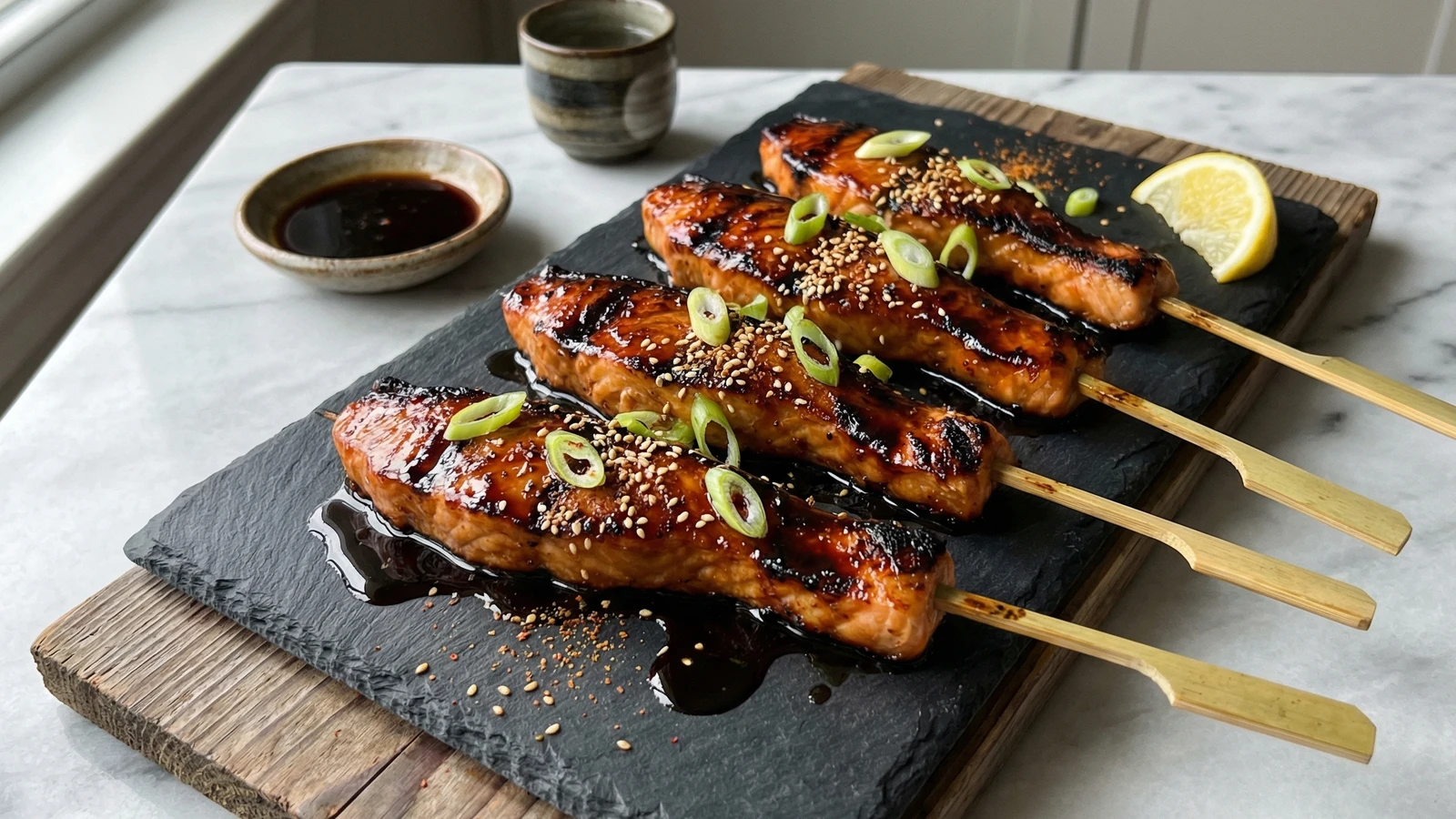
Salmon Belly Skewers
Created by
Rich, marbled salmon belly strips threaded on bamboo skewers, kissed by charcoal smoke and glazed with a soy-mirin tare that caramelizes into lacquered perfection. This is the Pacific Northwest meeting Osaka.
The salmon belly is the pork belly of the sea. Most fish markets trim it away, sell it cheap to those who know, or grind it for salmon burgers. What a waste. This is the fattiest, most succulent part of the fish, streaked with omega-rich oils that baste the flesh as it cooks. Japanese yakitori masters have understood this for generations. Seattle's Japantown vendors knew it too, threading belly strips onto cedar sticks and grilling them over binchōtan long before the rest of America caught on.
I first encountered these skewers at a tiny izakaya tucked behind Pike Place Market in the early 1970s. The cook, a Nisei woman whose family had fished Puget Sound for decades, made her tare from a recipe her grandmother brought from Wakayama Prefecture. She explained that the belly was traditionally considered trash by American buyers. Her family bought it by the crate. What the dominant culture discarded, immigrant communities transformed into something extraordinary.
This recipe honors that lineage. The tare is simple: soy, mirin, sake, and a whisper of sugar reduced until it coats a spoon. The technique is simpler still. Thread the belly onto soaked bamboo skewers, grill over screaming hot coals, and brush with glaze until the surface turns glossy and dark. The fat renders, the edges char, and the flesh stays impossibly moist. Serve them straight off the grill while the fat still glistens and the char still crackles.
Seek out wild-caught king salmon when the summer runs begin. The belly from a properly handled king is marbled like wagyu, coral-pink with ribbons of white fat. Ask your fishmonger to save the belly trimmings. They'll likely be grateful someone finally asked.
The technique, the tradition, and the story behind every dish.
Discover Culinary AdvisorIngredients
salmon belly
Quantity
1 1/2 pounds
trimmed from whole fish
bamboo skewers
Quantity
12
soaked 30 minutes
soy sauce
Quantity
1/2 cup
mirin
Quantity
1/2 cup
sake
Quantity
1/4 cup
brown sugar
Quantity
2 tablespoons
rice vinegar
Quantity
1 tablespoon
fresh ginger
Quantity
2 teaspoons
grated
garlic
Quantity
1 clove
minced
toasted sesame seeds (optional)
Quantity
for finishing
scallions
Quantity
2
sliced thin on the bias
shichimi togarashi (optional)
Quantity
for serving
lemon wedges (optional)
Quantity
for serving
| Ingredient | Quantity |
|---|---|
| salmon bellytrimmed from whole fish | 1 1/2 pounds |
| bamboo skewerssoaked 30 minutes | 12 |
| soy sauce | 1/2 cup |
| mirin | 1/2 cup |
| sake | 1/4 cup |
| brown sugar | 2 tablespoons |
| rice vinegar | 1 tablespoon |
| fresh gingergrated | 2 teaspoons |
| garlicminced | 1 clove |
| toasted sesame seeds (optional) | for finishing |
| scallionssliced thin on the bias | 2 |
| shichimi togarashi (optional) | for serving |
| lemon wedges (optional) | for serving |
Equipment Needed
- •Charcoal grill or gas grill
- •Chimney starter
- •12 bamboo skewers (8 to 10 inch)
- •Small saucepan for tare
- •Long-handled tongs
- •Silicone basting brush
- •Fish bone tweezers
Instructions
- 1
Build the tare
Combine soy sauce, mirin, sake, brown sugar, rice vinegar, ginger, and garlic in a small saucepan. Bring to a simmer over medium heat, stirring until the sugar dissolves. Reduce heat to medium-low and cook until the mixture thickens enough to coat the back of a spoon, about 8 to 10 minutes. The bubbles will become smaller and more viscous as it reduces. Remove from heat and let cool slightly. The tare will continue to thicken as it cools.
Reserve half the tare for brushing during grilling, half for serving. This prevents contamination from the raw fish. - 2
Prepare the salmon belly
Examine your salmon belly for any remaining pin bones by running your fingers against the grain of the flesh. Pull any bones you find with tweezers or needle-nose pliers. Slice the belly crosswise into strips about 1 inch wide and 4 inches long, working with the natural grain of the fat striations. Each strip should show visible marbling. Keep the pieces cold until ready to skewer.
Partially freezing the belly for 20 minutes firms the flesh and makes slicing cleaner. The fat content prevents it from freezing solid. - 3
Thread the skewers
Thread each salmon strip onto a soaked bamboo skewer in a gentle S-curve, weaving the skewer through the flesh three times. This accordion fold exposes maximum surface area to the heat while keeping the belly secure. The skewer should pass through both the fatty and lean portions. Leave about two inches of handle exposed on the thick end for easy turning.
- 4
Prepare your fire
Build a hot, direct fire using natural hardwood lump charcoal. For a charcoal grill, light a full chimney and spread the coals in an even layer once they're ashed over and glowing orange. You want intense, direct heat. Hold your hand 4 inches above the grate. If you can only tolerate 2 to 3 seconds, your fire is ready. For gas grills, preheat all burners to high for 10 minutes with the lid closed.
Binchōtan charcoal, the traditional Japanese choice, burns hotter and cleaner than briquettes. It's worth seeking out for this dish. - 5
Grill the first side
Oil your grate by folding a paper towel, dipping it in vegetable oil, and rubbing it across the hot grates with long tongs. Place skewers directly over the coals with the exposed bamboo handles extending beyond the heat. Grill without moving for 60 to 90 seconds. Listen for the aggressive sizzle and watch for the edges to turn opaque. Fat will drip and may cause flare-ups. This is good. The flames add char and smoke flavor.
- 6
Glaze and turn
Brush the top of each skewer generously with tare using a silicone brush or folded paper towel held with tongs. Flip the skewers. The glazed side should now face the coals, caramelizing immediately. The sugars in the tare will darken and turn lacquered. Grill 60 seconds more, then brush the exposed side with tare.
- 7
Build the glaze layers
Continue flipping and glazing every 30 to 45 seconds, building three to four layers of tare on each side. The total grilling time is 4 to 5 minutes. You want the exterior deeply caramelized with blackened edges while the interior remains just barely translucent at the center. The fat should be rendered and glistening, not raw and white. Remove when the skewers feel firm but still yield slightly when pressed.
- 8
Finish and serve
Transfer skewers to a warm platter. Drizzle with the reserved tare. Scatter toasted sesame seeds and sliced scallions over the top. Dust with shichimi togarashi for those who want heat. Serve immediately with lemon wedges alongside. These skewers wait for no one. Eat them while the glaze still shimmers and the fat pools on your plate.
Chef Tips
- •Wild king salmon belly from the Columbia River or Copper River runs offers the richest fat content. Farmed Atlantic salmon works but lacks the depth of flavor and the ethical standing of well-managed wild fisheries. Ask your fishmonger about the source.
- •The belly is often sold attached to the collar at Japanese fish markets. Buy the whole section and separate them yourself. Grill the collars separately for the cook's treat.
- •Tare improves with age. Make a double batch and store refrigerated in a glass jar. It keeps for months and gains complexity with each use as you add drippings from future grilling sessions.
- •If you cannot source salmon belly, skin-on salmon fillets cut into thick strips work respectably. They lack the unctuous richness but still take beautifully to this treatment.
- •Pair these skewers with cold Junmai sake or a dry Oregon Riesling. The acidity cuts through the richness while the clean finish refreshes the palate between bites.
Advance Preparation
- •Tare can be made up to 2 weeks ahead and refrigerated. Reheat gently before using.
- •Salmon belly can be sliced and skewered up to 4 hours ahead. Keep refrigerated on a parchment-lined sheet pan, covered tightly.
- •Soak bamboo skewers in water while you prepare other components. Minimum 30 minutes prevents burning.
Frequently Asked Questions
Nutrition Information
1 serving (about 145g)
Where cooking meets culture.
Culinary mentorship, cultural storytelling, and the editorial depth that makes cooking meaningful.
Explore Culinary Advisor