Culinary Advisor
A cooking platform built around craft, culture, and the stories behind what we eat.
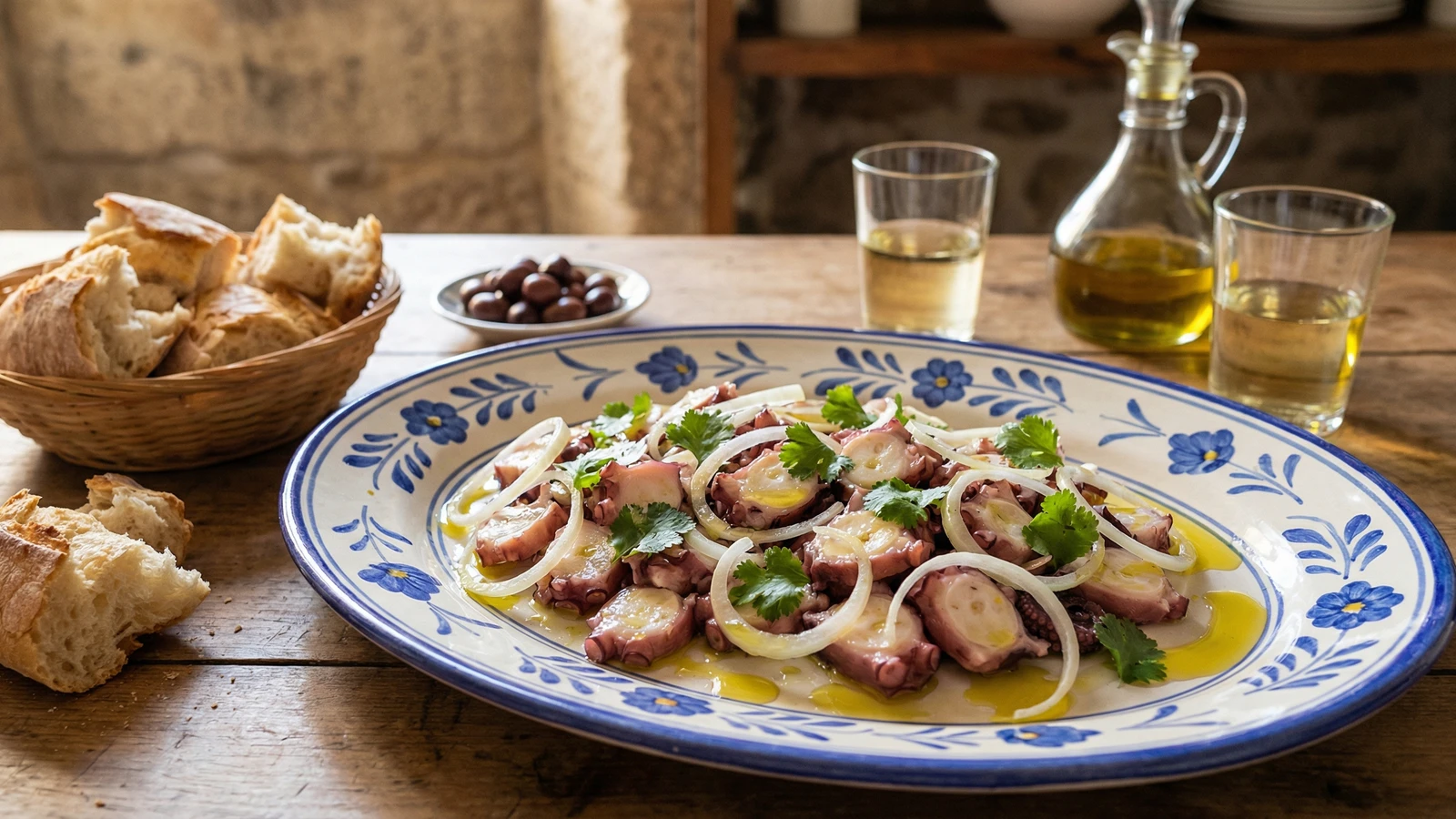
Salada de Polvo
Created by
The octopus salad that anchors every proper petisco spread, tender tentacles dressed simply with azeite, vinegar, and coentros. This is how the coast eats when the catch is good.
Ilearned this dish not from Avó Leonor but from the grandmothers of the coast. My grandmother was Alentejana through and through, more comfortable with porco preto than polvo. But when I started documenting recipes across Portugal, the coastal avós taught me what the sea provides.
In Setúbal, I watched a grandmother named Dona Celeste prepare salada de polvo for her grandson's baptism. She'd been making it for sixty years. Her hands moved without thinking: the three dips into boiling water, the patient simmering, the generous pour of azeite at the end. When I asked her for measurements, she laughed. "Olha, menina. You taste. You adjust. The polvo tells you what it needs."
This is petisco food, meant for sharing at a table with too many people and not enough chairs. You put it in the center, you tear bread, you reach across each other. Nobody owns a portion. Everyone eats from the same platter. That's the spirit of it.
The octopus must be tender. This is non-negotiable. Tough octopus is a failure of patience, not technique. Cook it gently, test it often, stop the moment a knife slides through. Then dress it while it's still slightly warm so it drinks the azeite and vinegar. Let it rest. The flavors need time to become friends.
Octopus fishing along the Portuguese coast dates to before recorded history, with clay pots used as traps since Phoenician times. The combination of polvo with azeite and vinegar is ancient, predating the arrival of New World ingredients. This preparation became the standard petisco in tascas across Lisbon, Porto, and the Algarve during the 19th century, when working-class taverns served simple seafood with bread and wine.
The technique, the tradition, and the story behind every dish.
Discover Culinary AdvisorIngredients
octopus
Quantity
1 whole (1.2-1.5 kg)
cleaned
bay leaf
Quantity
1
onion (for cooking)
Quantity
1 medium
halved
white onion (for salad)
Quantity
1 small
sliced paper-thin
extra virgin olive oil (azeite)
Quantity
3/4 cup
red wine vinegar
Quantity
3 tablespoons
garlic
Quantity
2 cloves
minced fine
fresh cilantro (coentros)
Quantity
1 large bunch
roughly chopped
flaky sea salt
Quantity
to taste
black pepper
Quantity
to taste
freshly ground
| Ingredient | Quantity |
|---|---|
| octopuscleaned | 1 whole (1.2-1.5 kg) |
| bay leaf | 1 |
| onion (for cooking)halved | 1 medium |
| white onion (for salad)sliced paper-thin | 1 small |
| extra virgin olive oil (azeite) | 3/4 cup |
| red wine vinegar | 3 tablespoons |
| garlicminced fine | 2 cloves |
| fresh cilantro (coentros)roughly chopped | 1 large bunch |
| flaky sea salt | to taste |
| black pepperfreshly ground | to taste |
Equipment Needed
- •Large pot (at least 6 liters)
- •Sharp knife for slicing
- •Wide serving platter or shallow bowl
Instructions
- 1
Prepare the octopus
Fill a large pot with water. Add the bay leaf and halved onion but no salt. Salt toughens the octopus. Bring to a rolling boil. Hold the octopus by its head and dip the tentacles into the boiling water for 3 seconds, then lift out. Repeat two more times. You'll see the tentacles curl beautifully. This is not superstition. Every coastal grandmother does it, and they know what they're doing.
The three-dip method tightens the skin and helps the octopus cook evenly. Dona Celeste in Setúbal taught me this. She said her mother taught her, and her grandmother taught her mother. - 2
Simmer until tender
After the third dip, lower the octopus fully into the water. Reduce heat to maintain a gentle simmer, not a boil. Cook for 45 minutes to 1 hour, depending on size. Start testing at 40 minutes: insert a knife into the thickest part of a tentacle. When it slides in with no resistance, like butter, the octopus is ready. Remove from water and let it cool for 10 minutes.
- 3
Make the dressing
While the octopus cools, whisk together the olive oil, red wine vinegar, and minced garlic in a small bowl. Season with salt and pepper. Taste it. The dressing should be bright and assertive. It needs to stand up to the octopus.
Use your best azeite here. You'll taste it directly, uncooked. This is not the moment for cheap oil. - 4
Slice the octopus
Cut the tentacles from the head. Slice them into pieces about 1 centimeter thick, cutting on a slight bias. The pieces should be bite-sized, easy to pick up with a fork or spear with bread. Discard the head or save it for another use (some fry it, some add it to rice).
- 5
Dress while warm
Place the sliced octopus in a wide bowl while still slightly warm. Pour the dressing over and toss gently. Add the paper-thin onion slices and most of the coentros, reserving some for garnish. Toss again. The octopus drinks the dressing best when it still has warmth. Season with more salt and pepper if needed.
- 6
Rest and serve
Cover and let the salad rest at room temperature for at least 30 minutes, up to 2 hours. This is when the magic happens: the flavors marry, the onion softens slightly, the vinegar mellows. Transfer to a serving platter, scatter the reserved coentros over top, and drizzle with a final thread of azeite. Serve with bread for mopping and plenty of napkins.
Chef Tips
- •Buy frozen octopus if you can. Freezing breaks down the muscle fibers and tenderizes the meat. If your fishmonger sells fresh, ask if it's been frozen previously. In Portugal, most has.
- •Serve at room temperature, never cold from the refrigerator. Cold mutes the flavor of the azeite and makes the octopus seem rubbery even when it's perfectly cooked.
- •Some add boiled potatoes, turning this into a heartier dish. Others add roasted red peppers. Both are traditional. The version here is the simplest, the one you'd find in a Lisbon tasca at 11 in the morning with a glass of vinho verde.
- •If the onion is too sharp for your taste, soak the slices in ice water for 10 minutes before adding. This mellows the bite while keeping the crunch.
Advance Preparation
- •The octopus can be cooked up to 2 days ahead. Refrigerate whole, then slice and dress when ready to serve.
- •The dressed salad keeps well for up to 24 hours, refrigerated. Remove from refrigerator 30 minutes before serving to bring to room temperature.
- •This is ideal make-ahead food for dinner parties. Prepare completely, refrigerate, then simply let it warm to room temperature while your guests arrive.
Frequently Asked Questions
Nutrition Information
1 serving (about 170g)
Where cooking meets culture.
Culinary mentorship, cultural storytelling, and the editorial depth that makes cooking meaningful.
Explore Culinary Advisor