Culinary Advisor
A cooking platform built around craft, culture, and the stories behind what we eat.
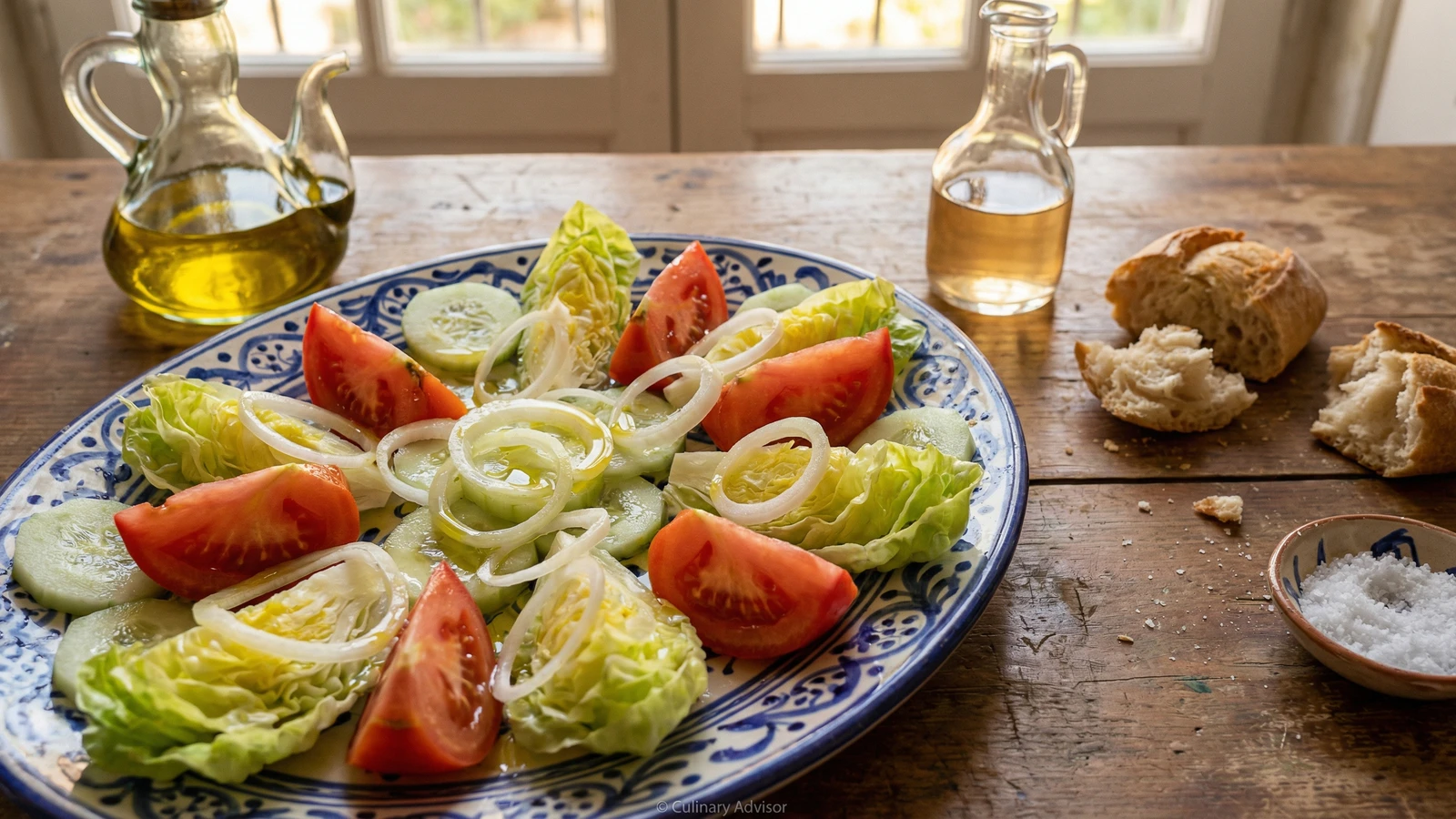
Salada à Portuguesa
Created by
The salad that sits on every Portuguese table, at every meal, in every season. Four vegetables, oil, vinegar, salt. Nothing more, nothing less. This is how we eat.
This is the salad I grew up with. The salad everyone in Portugal grew up with. It sat on Avó Leonor's table at lunch and dinner, every single day, without fail. Alface, tomate, pepino, cebola. Lettuce, tomato, cucumber, onion. Dressed with azeite and vinegar at the last possible moment.
There's no recipe to speak of. That's the point. You take what's ripe, what's fresh, what the garden gives you. You arrange it on a plate. You bring it to the table with oil and vinegar and let people dress their own. The skill isn't in technique. The skill is in choosing a tomato that actually tastes like something, an onion with bite, lettuce that crunches.
I've watched tourists order elaborate salads in Lisbon restaurants and ignore the salada mista sitting on every local's table. They don't understand what they're missing. When the tomatoes are good, when the azeite is proper Alentejano oil, this simple salad is better than anything you could construct. The juice from the tomatoes mixes with the oil and vinegar at the bottom of the bowl. You mop it up with bread. That's the best part.
At my Mesa da Avó dinners, this salad appears at every meal. Not as a starter, not as a side, but as a constant. Because that's what it is in Portugal. The thing that's always there. The thing you'd miss if it weren't.
Salada à Portuguesa predates any notion of salad as a separate course. It evolved from the Roman tradition of vegetables dressed with oil and vinegar, adapted over centuries to whatever grew in Portuguese kitchen gardens. The combination solidified after tomatoes arrived from the Americas in the 16th century, becoming the standard accompaniment to grilled fish and meat across the country.
The technique, the tradition, and the story behind every dish.
Discover Culinary AdvisorIngredients
crisp lettuce (alface)
Quantity
1 head
torn into pieces
ripe tomatoes
Quantity
3
cut into wedges
cucumber
Quantity
1 medium
peeled and sliced
white onion
Quantity
1 small
sliced into thin rings
extra virgin olive oil (azeite)
Quantity
1/4 cup
red wine vinegar
Quantity
2 tablespoons
coarse sea salt
Quantity
to taste
| Ingredient | Quantity |
|---|---|
| crisp lettuce (alface)torn into pieces | 1 head |
| ripe tomatoescut into wedges | 3 |
| cucumberpeeled and sliced | 1 medium |
| white onionsliced into thin rings | 1 small |
| extra virgin olive oil (azeite) | 1/4 cup |
| red wine vinegar | 2 tablespoons |
| coarse sea salt | to taste |
Equipment Needed
- •Wide serving platter or shallow bowl
- •Sharp knife
Instructions
- 1
Prepare the vegetables
Tear the lettuce into bite-sized pieces by hand. Never cut lettuce with a knife. The torn edges hold the dressing better, and besides, this is how it's done. Cut the tomatoes into wedges. Peel the cucumber and slice it into rounds about the thickness of a coin. Slice the onion into thin rings and separate them.
- 2
Arrange the salad
Spread the lettuce on a wide serving platter or in a shallow bowl. Arrange the tomato wedges and cucumber slices over the lettuce. Scatter the onion rings on top. Don't toss it yet. In Portugal, the salad comes to the table looking like something, not like a jumbled pile.
Avó Leonor arranged her salads the same way every time: lettuce as the bed, tomatoes in a circle, cucumber in the center, onion scattered like confetti. Presentation mattered even for the simplest things. - 3
Dress at the table
Bring the salad to the table undressed, with the olive oil, vinegar, and salt on the side. Each person dresses their own portion, or the head of the table does the honors: oil first, then vinegar, then salt. Toss gently at the last moment. The tomatoes release their juice into the dressing, mixing with the oil and vinegar. This is the magic. Mop it up with bread.
Chef Tips
- •The tomatoes matter more than anything else. Out of season, don't bother. A mealy winter tomato will ruin the whole thing. Wait for summer, or use cherry tomatoes which hold their flavor better year-round.
- •Use real azeite, good Portuguese olive oil, not something refined and flavorless. You taste the oil directly here. It should be green, slightly peppery, and smell like olives.
- •Slice the onion thin enough to see through. Thick onion rings overpower everything. If the onion is too sharp, soak the rings in cold water for ten minutes to mellow them.
- •Some families add green bell pepper, sliced thin. Others add a handful of olives. Avó Leonor never did, but your grandmother might have. Both are correct.
Advance Preparation
- •The vegetables can be prepared and arranged up to 30 minutes ahead. Keep at room temperature. Never refrigerate.
- •Do not dress the salad until the moment of serving. Dressed lettuce wilts. This is not negotiable.
Frequently Asked Questions
Nutrition Information
1 serving (about 275g)
Where cooking meets culture.
Culinary mentorship, cultural storytelling, and the editorial depth that makes cooking meaningful.
Explore Culinary Advisor